Rabat, Fes, Errachidia, Merzouga, Tinghir, Skoura, Ouarzazate, Ait Ben Haddou, Marrakech, Essaouira, Tifnit, Agadir
When
5 Aug 2017 – 14 Aug 2017 10 days · trip of 2017
Who
Let13 · @letizia13 · Roma
How
Travel diary
The story · 10 days
Setting off from Rabat, we hired a car and crossed all the symbolic places of this Country, which turned out to be wonderful for its artistic beauties, its unique cities and its breathtaking panoramas. Expectations met and exceeded.
Day 15 Aug 2017
Arriving in Rabat
We landed in the late afternoon in Rabat with a direct Ryanair flight from Rome and immediately went to pick up the car rented from Italy. At the desk they preferred to give us an SUV for free when they asked about our planned itinerary. After reading various forums, we chose to pay for full insurance on site, thus freeing ourselves from any worry about rigged thefts and traveling more peacefully in any case. A few premises/considerations/travel tips before getting into the details of our tour:
1) Morocco can easily be visited on your own; it is enough to take a few extra precautions compared to other destinations; knowing French definitely gives you an edge in the less touristy areas.
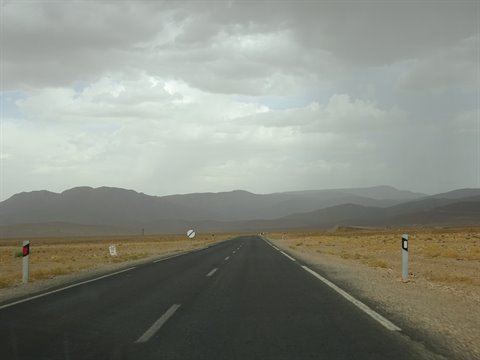
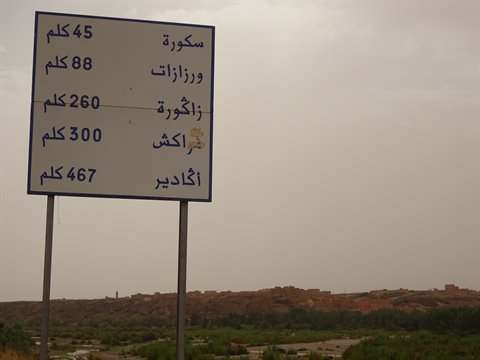
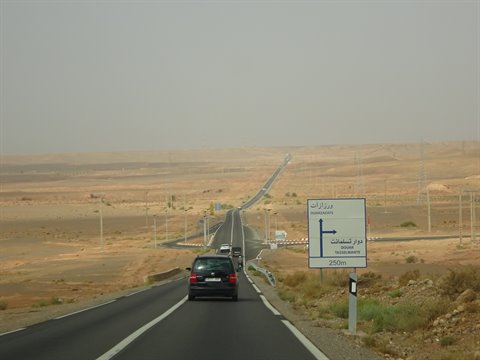
2) Driving is very good and problem-free; the main roads are all in good condition. In the south you need to factor in some dirt roads, which are passable with any car in any case. Marrakech deserves a separate mention, chaotic and full of traffic, where you need to be careful, especially not to enter the Medina area. But coming from Rome....you almost feel at home. The traffic police, so feared and about whom you hear all sorts of things, are absolutely on the tourist's side. There are countless checkpoints, practically at the entrance to every town, but no one ever stopped us for checks nor were we ever asked for money in any way. It is absolutely essential to have a good navigator with you, especially for some areas where the road signs are only in Arabic!
3) The country is safe. Only in rare moments did we feel particularly on alert. In the cities, plainclothes tourist police are present everywhere and a curt, peremptory, loud "NO, MERCI" is enough to ward off all the pests and touts looking for naive or disoriented tourists in the mazes of the Medinas.
4) Tying into the previous point, you have to admit that Moroccans can become quite pushy and will try to squeeze money out of you practically everywhere: from those who want to push you into their shop, to those who want to accompany you by inventing closed roads or nonexistent labyrinths, who want to act as your guide to the tourist attractions to explain the true history of the place, to those who invent false unmissable attractions to lead you out of more controlled areas and take advantage of the situation, and finally, all those who will run to ask you for money for having taken a simple photograph... We didn't give even one euro, but sometimes it is necessary to raise your voice.
5) The climate in August: to go or not to go? To do the car tour it is absolutely necessary to avoid winter, when the Atlas can become impassable. In August it goes without saying that Morocco is hot, but we can guarantee that it is absolutely manageable and not as hot as we might have imagined. The coastal areas are always cool and in the evening, both in Rabat and in Essaouira, we had to use a sweatshirt. Marrakech is comparable to Italy. The areas on the Atlas and those around Ouarzazate are above 1000 meters and the heat is always dry and not excessive. The only exceptions, where we really suffered, were the city of Fes and the night spent in the desert.
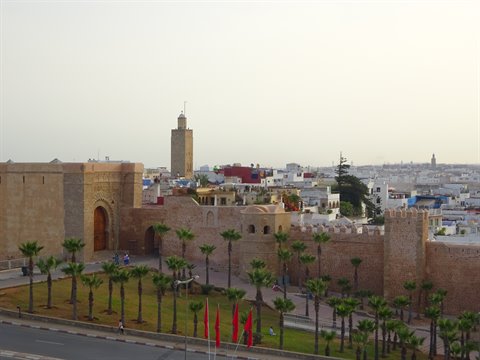
With the navigator set, heading for Rabat, we reached our first hotel, the Hotel Kasbah des Ouadaias, in an optimal position, in front of the Kasbah des Oudaias and a stone's throw from the city's seafront. One of them accompanied us to park the car in the parking lot in front (20 MAD/1.80 € per day) and took the luggage to the room. The hotel is in Moroccan style, very clean and with very kind staff. We spent our first evening on the city's crowded seafront. Right away we are catapulted into a reality so different from ours, that here already smells of Africa. We had dinner at LE DHOW, a beautiful restaurant on a large boat moored at the pier. Rather luxurious for the local average, food was standard, but it allowed us to enjoy a nice cold beer savoring the smell of the ocean at the same time, toasting to the vacation that has begun.
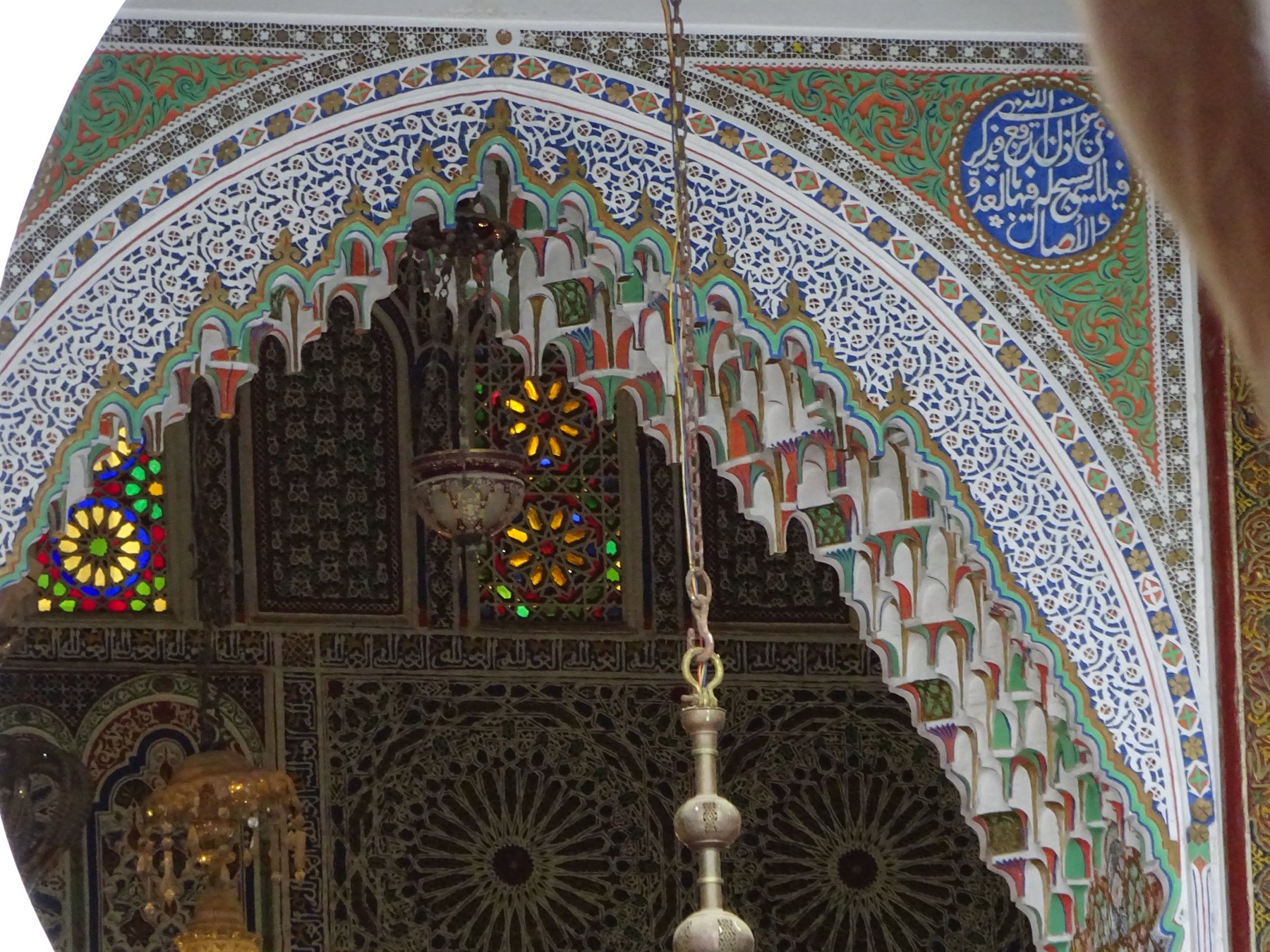
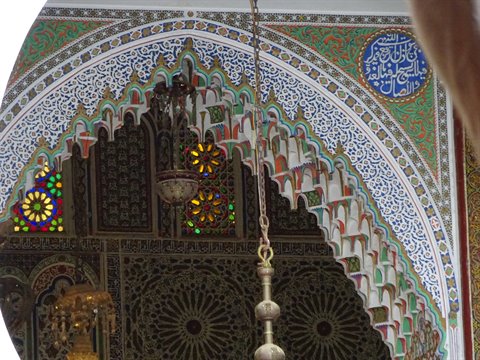
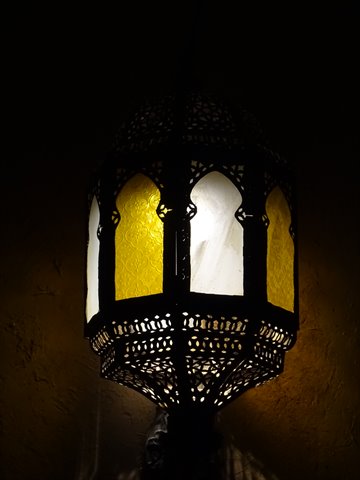
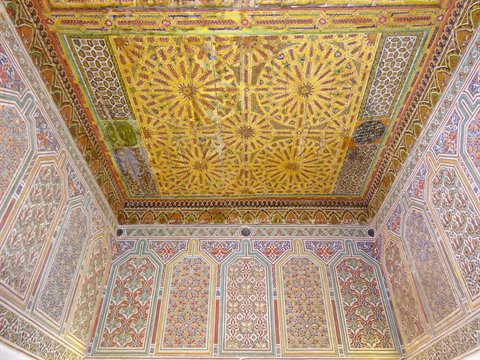
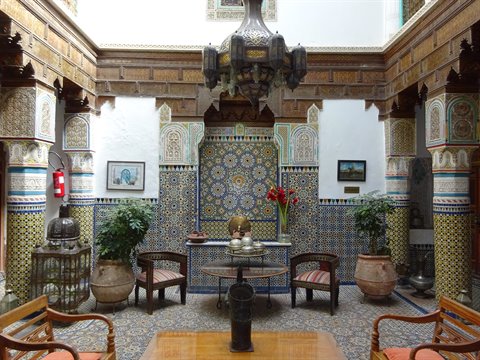
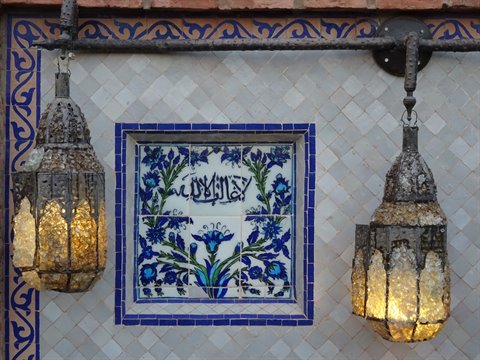
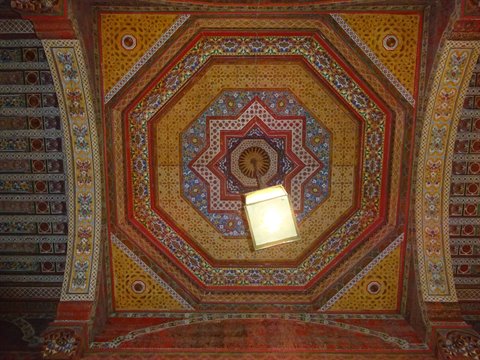
Arcata intagliata e dipinta con lampada ottone, zellige e vetro colorato, Fes
Day 26 Aug 2017
The beauty of Rabat and a first taste of Fes
It is 05:00 when we are woken by the prayer coming from a Minaret that seems to border our room, and by 8:00 we are already on the terrace for a rich breakfast with a sea view and a beautiful panorama over the Medina and the beauties of Rabat.
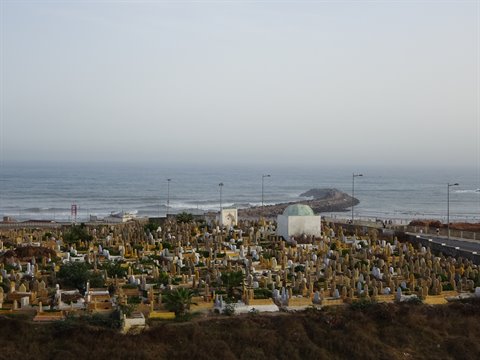
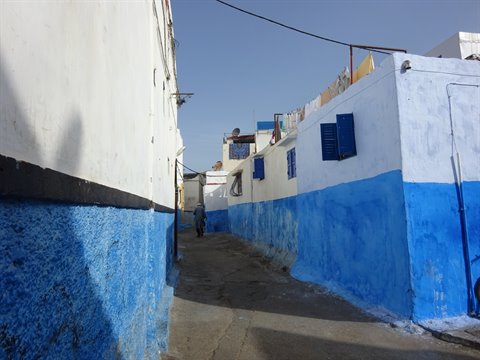
Before leaving the hotel, we walk to visit the KASBAH DES OUDAIAS, an unmissable attraction of the capital. Entering, you have the impression of being catapulted into a muffled, bygone world, of taking a leap back in time. There is practically no one there, except for a few elderly people strolling and many cats that populate it. A maze of alleys painted in white and blue, where ancient portals are on display. From the square you enjoy a beautiful panorama over the immense beaches of Rabat and of Salé opposite. We return toward the entrance walking through other alleys, captivated by the peace of the place and by beautiful photographic views (and, to be extremely honest, also by the not exactly defined smell in the air!)
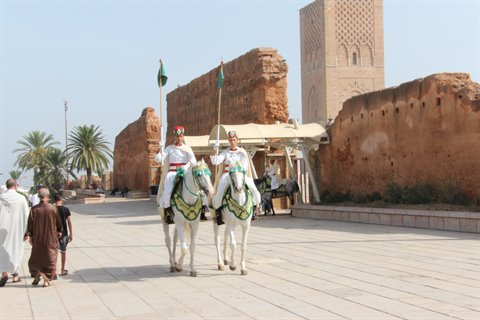
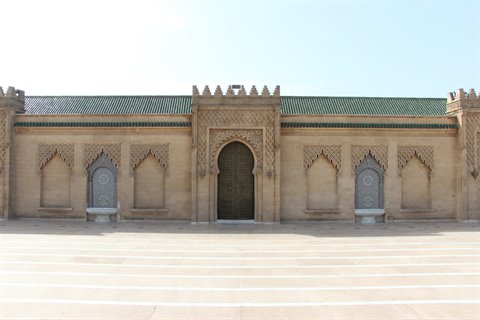
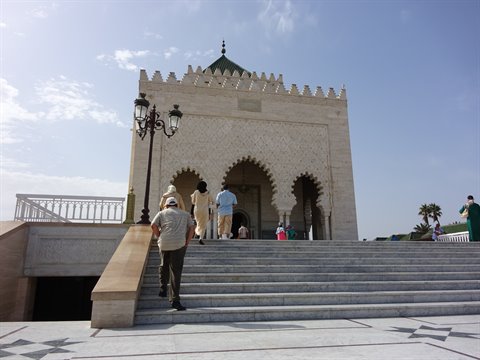
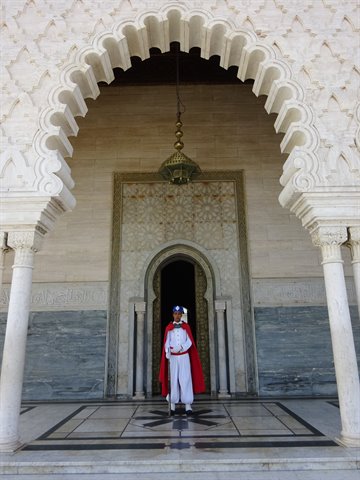
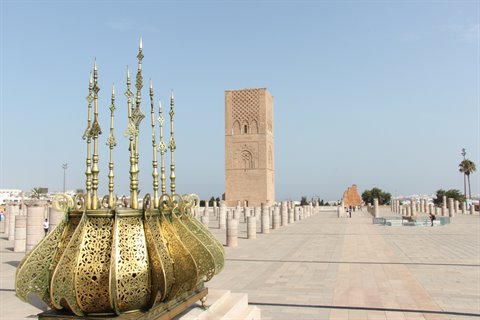
Once we have picked up our luggage and the car, we head for the complex of the HASSAN TOWER and the MAUSOLEUM OF MOHAMMED V, located in a beautiful residential area. Certainly the most beautiful place in the city. The entire area is guarded by royal guards in full dress uniform and on horseback. The Hassan Tower is the very symbol of the city; it stands at the end of a sea of columns left as evidence of the enormous unfinished mosque. In front of the tower is the Mausoleum of Mohammed V, a perfect architectural example of the Alawite dynasty, where the much-loved sovereign is buried. Beautiful. Entering inside and seeing the King's tomb below, my thoughts went to Les Invalides in Paris, and from the immediate comparison here Napoleon comes out the loser...
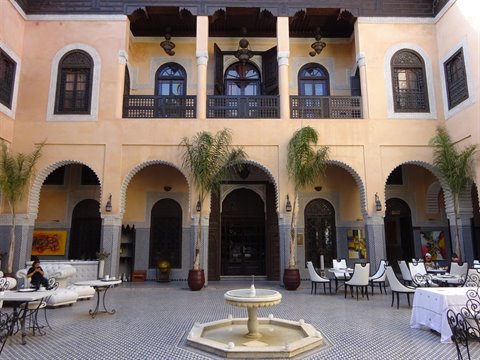
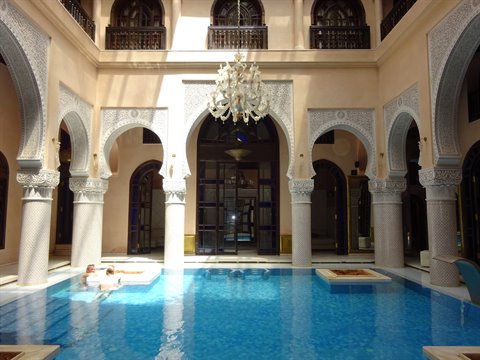
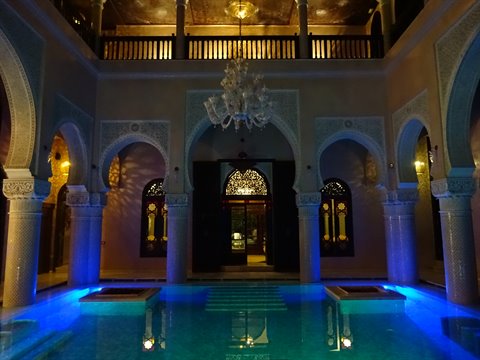
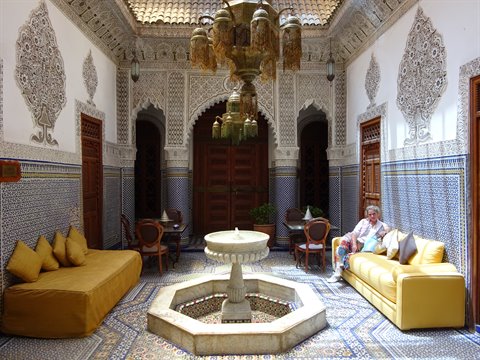
We go back to the car and set off toward Fes, with 215 kilometers to travel to reach our destination. This stretch is entirely covered by highway, with equipped service areas, clean and enormously well kept. Before 13:00 we are already in Fes, close to the Medina, where we park near our riad (20 MAD/1.80 € for 24 hours). Entering the Palais Sheherazade it feels like entering paradise... it is a bit more expensive than average, but the 120 euros per night are more than deserved! A luxury that in Europe we could not have afforded. Ideally positioned at the edge of the Medina, it can be reached by car and allows you to park comfortably. After thorough research on the Medina of Fes and driven by the prohibitive temperature of 48°, we ask the Riad for an official guide to visit the most complex areas.
For about 4 hours we spent 25 euros, with an official guide accredited by the Tourist Office. The advice is not to book it in advance; it costs more, it will be enough to ask upon arrival in Fes.
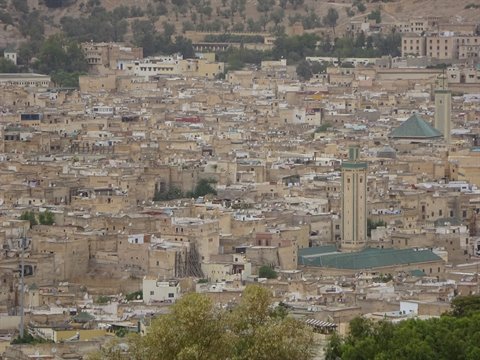
At 17:30, after enjoying the luxuries of our riad, right on time we set off for the tour of the Medina. First by taxi we went up into the surrounding hills, to get an overall view of the old city, the largest in Morocco, and then finally we are inside the walls...the first impression is that perhaps a guide here really is needed. Especially if you don't have an entire day to try to find your sense of direction in a labyrinth that has no sense. We see no other tourists, there are no tourist shops, but a city teeming with real life. The impact is strong, even for those like us who had already visited other Arab countries. The Medina of Fes is difficult to describe...it gets inside you, for better or for worse. You will love it or hate it, but you will not be able to forget the sounds, the colors, the smells.
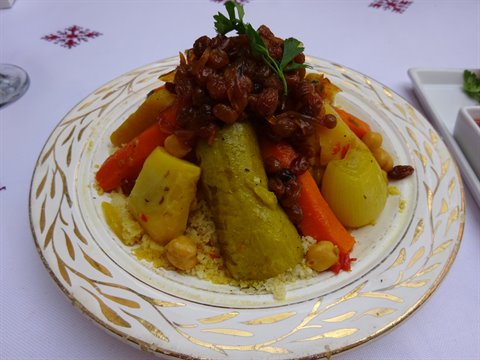
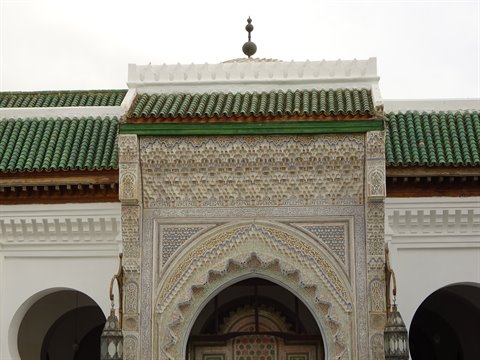
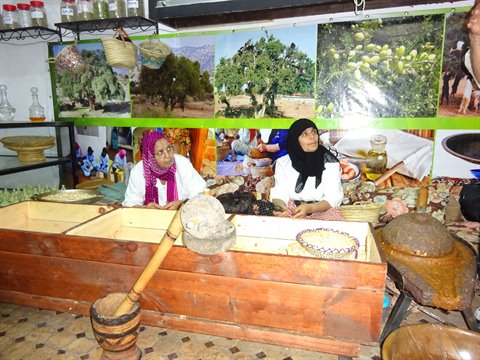
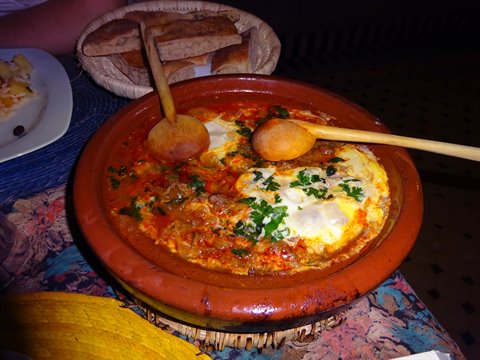
We wandered for about 3 hours, stopping outside the Karaouine Mosque and the Mausoleum of Moulay Idriss (both do not allow access to non-Muslims, but you will be able to take some nice photos). However accredited she may be, our guide also has her friends and shows us a cooperative where argan oil is produced and a fabric shop where agave fiber is worked. We go even deeper and visit the Sidi Moussa tanneries, the oldest in the city. The spectacle of the sun setting behind the minarets and on the colored vats gives us a beautiful postcard. We resume our walk and it is almost night when we return exhausted and satisfied to the Riad. We have dinner at the Palais Sheherazade, with Tajine and skewers accompanied by a good wine from Meknes.
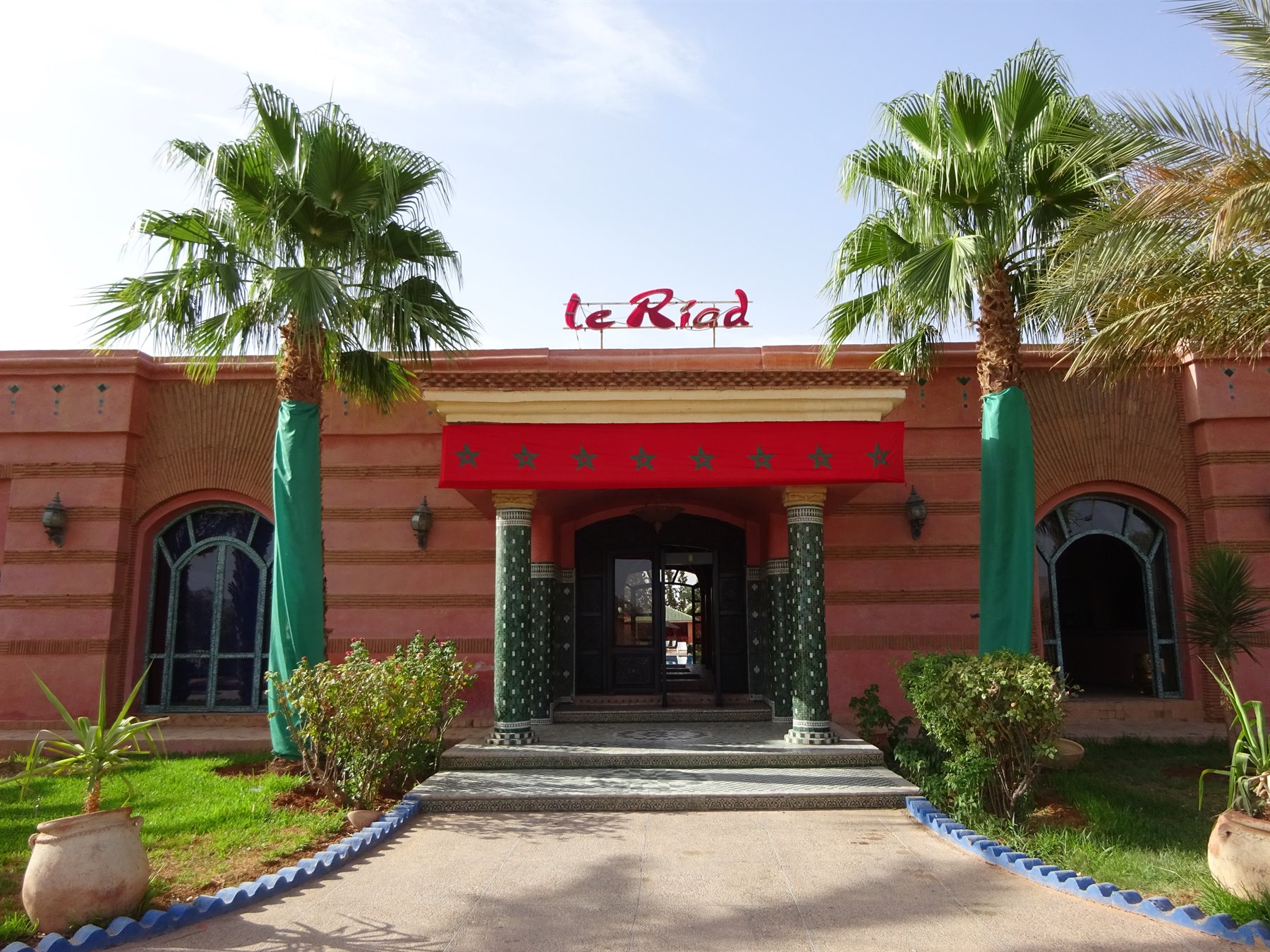
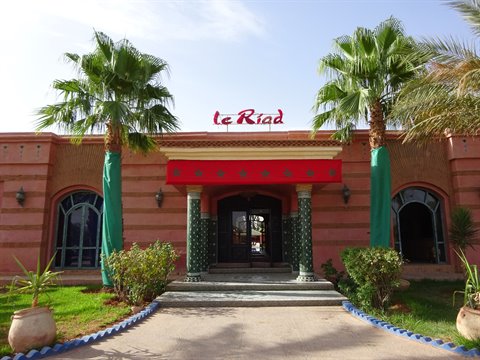
Entrance of Le Riad, pink facade with palm trees and green columns
Day 37 Aug 2017
The wonders of Fes and the journey to Errachidia
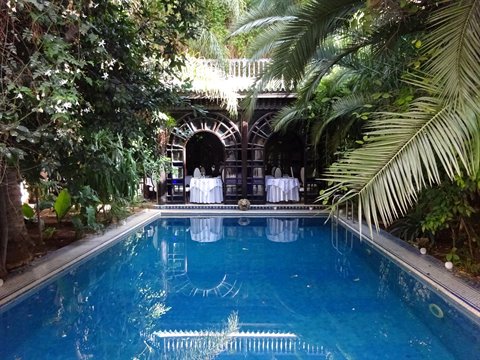
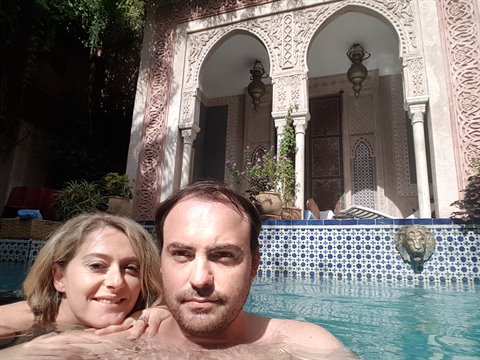
The first joy of the morning is a fairytale breakfast served by the pool in the Riad's patio. The entire morning is still dedicated to Fes and its wonders, deliberately not requested in the guided tour. Asking for advice on morning movements to minimise travel time as much as possible, a young guy from the Riad offered to accompany us, to avoid Fes's "annoying troublemakers" (free of charge and there was no way to give him anything, he was incorruptible in accepting any form of thanks)
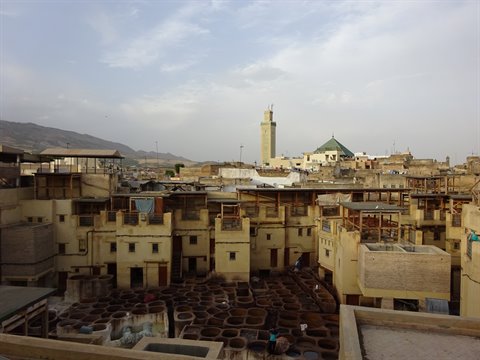
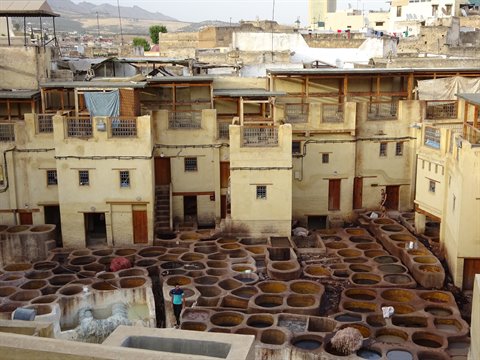
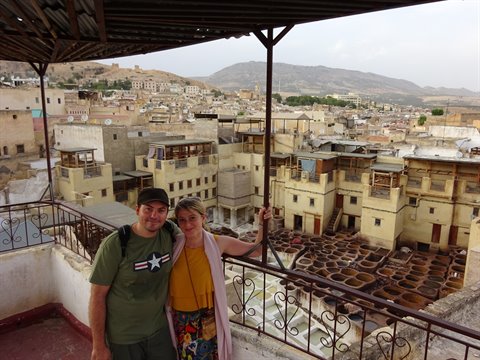
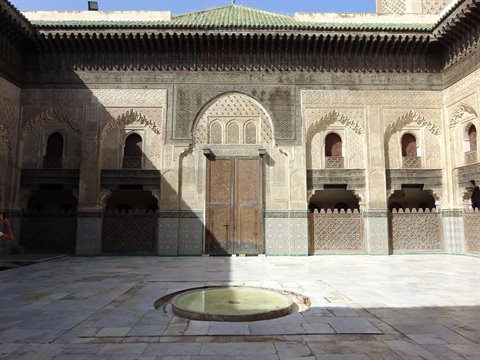
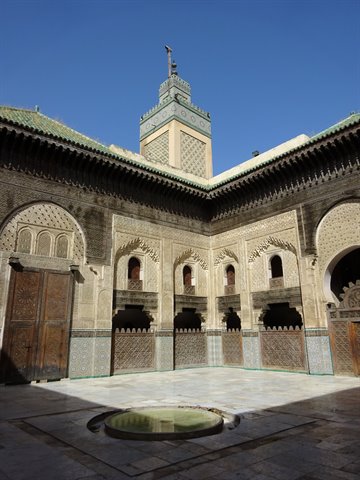
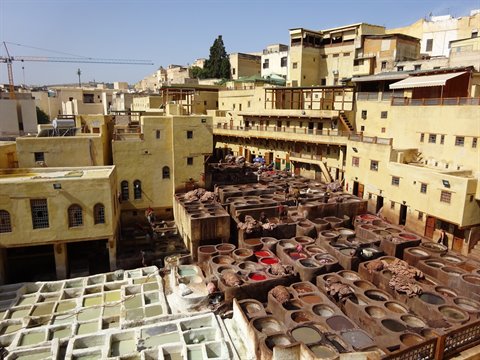
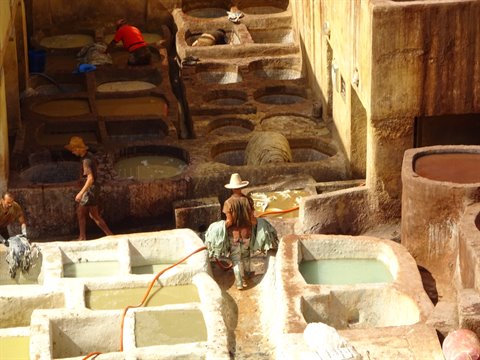
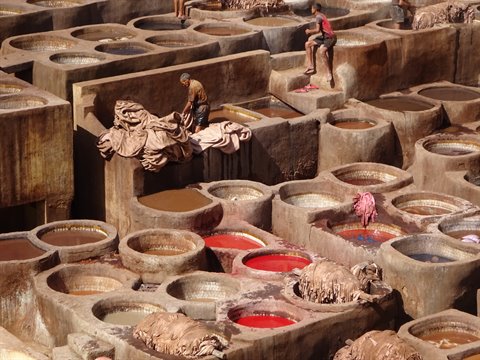
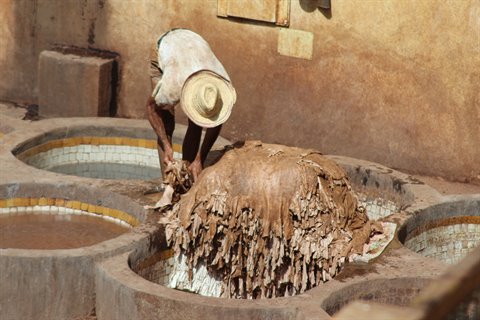
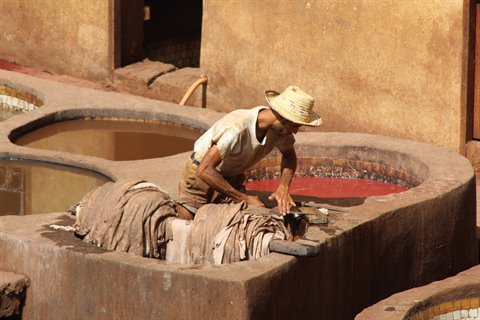
We walked to the gate BAB JALOUD, the most famous entrance to the Medina, from which you can glimpse the beautiful minaret of our destination, the MEDERSA BOU INANIA, a Quranic school that we are allowed to visit (entry 10 MAD/1 Euro). It's still early and there's no one around. The wonder of the courtyard and its decorations leaves us open-mouthed. We cross another stretch of the Medina and along the walls we look for a taxi to take us to the opposite side to visit the city's most famous tanneries: the CHOUWARA TANNERIES. We go up to a terrace on top of a leather goods shop, as happens with any other terrace, and we stay here for about half an hour, absolutely captivated by a scene that seems to come out of a time machine. I want to stress that the visit to the tanneries is free and to debunk the myth of the sprig of mint under your nose to endure the stench of the place.
There is a stench, it's true, but nothing so unbearable as it is usually described. Another small note is due to the shop that will host you: it's natural that they will try to sell you something, proudly showing you the five floors of displays...but with enormous kindness, many compliments on their work and playing on the crisis gripping Europe, we managed to get out without spending even a single euro! From the terrace you can see the vats where the hides are initially bleached in lime, then washed and subsequently dyed in the naturally coloured vats. It's incredible to watch these men using the same process for centuries, immersing themselves bare-legged in the vats. Calling it beauty would be inappropriate given the labour and living conditions before your eyes, but it represents such a stark difference that it cannot fail to leave you enchanted.
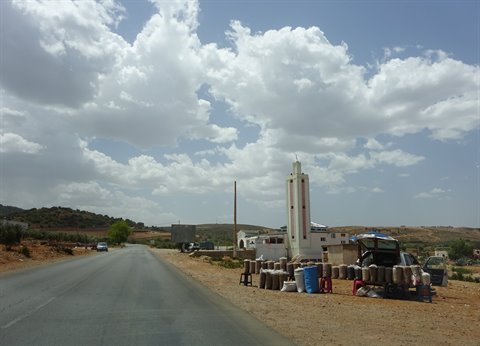
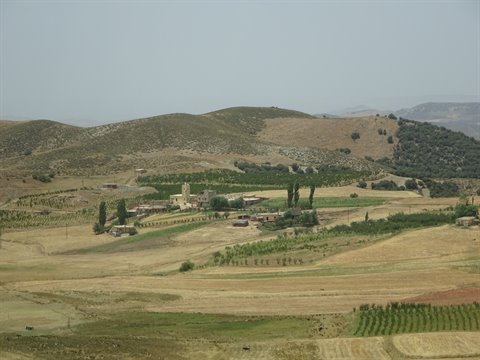
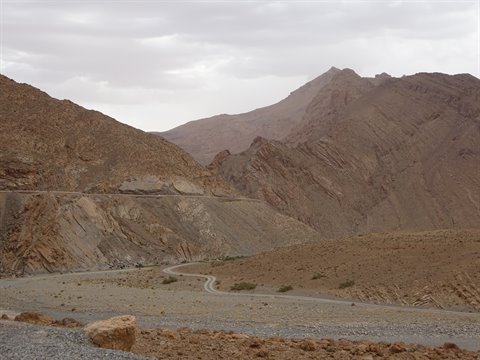
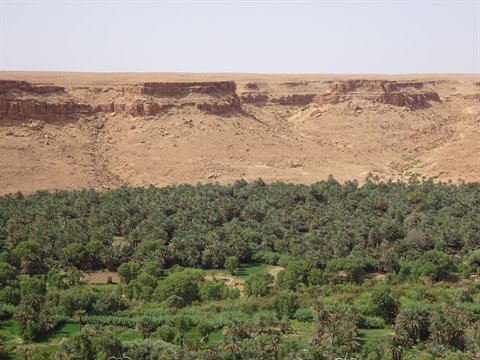
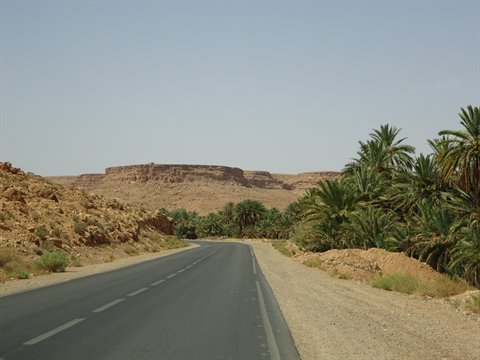
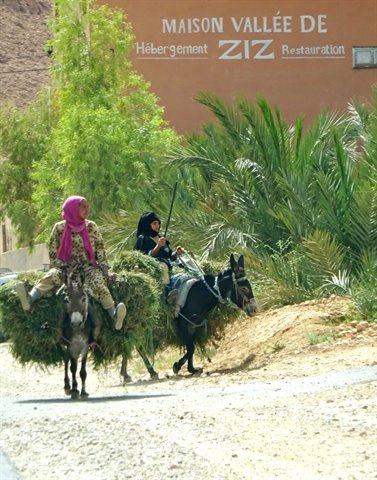
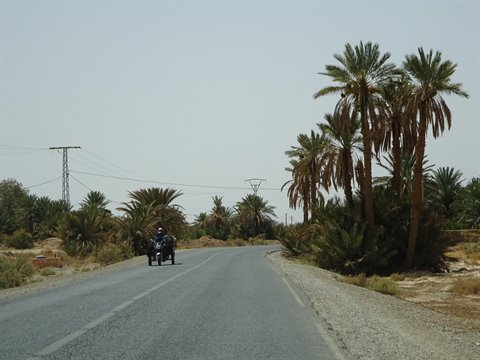
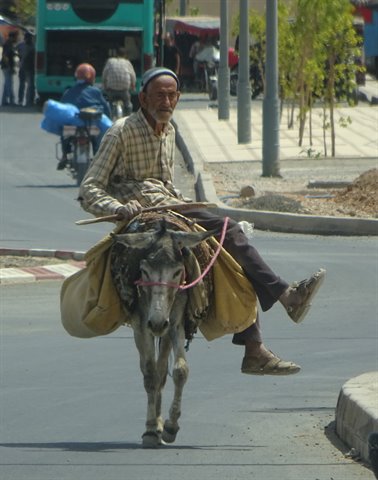
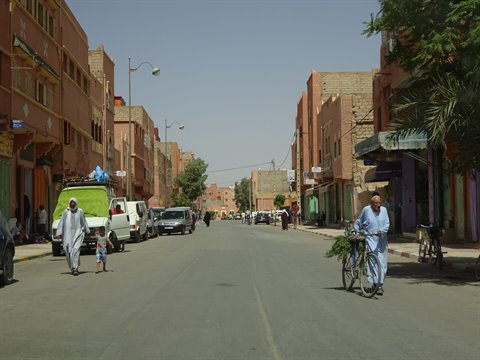
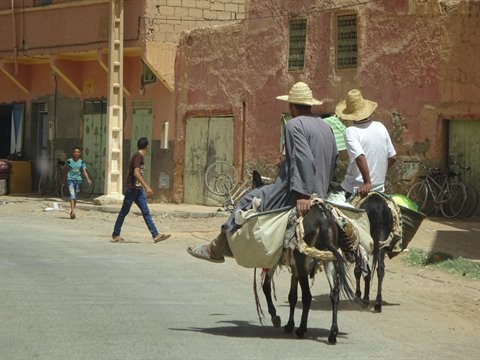
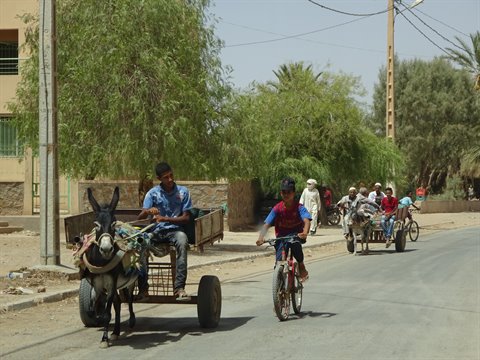
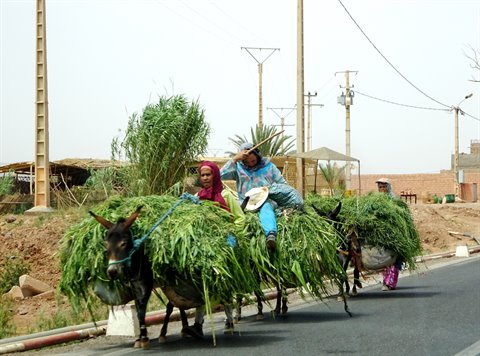
We take another taxi to return to the Riad, where we still have time for a swim in the pool and a shower before reluctantly leaving our dream room. We set off again, destination Errachidia, 341 km from Fes. From here the motorway no longer exists and as soon as we leave the city, we begin to discover the real Morocco, the one of villages perched on the Atlas mountains and the one of breathtaking panoramas that accompany us for the entire journey, moreover under the rain. We pass through Mouzzer du Kandaar, Midelt and further south the wonderful Ziz Gorges. From here we discover the art of patience, since the single-lane road is travelled by vehicles of every kind...trucks, carts, handcarts, donkeys and people on foot. So we enjoy the panoramas, watching in silence small settlements where time seems to have stopped.
We reach Errachidia at almost 19:00, the sun is shining again, and we take advantage of it for a swim in the beautiful pool of the Riad, where we spend the evening with aperitifs and dinner.
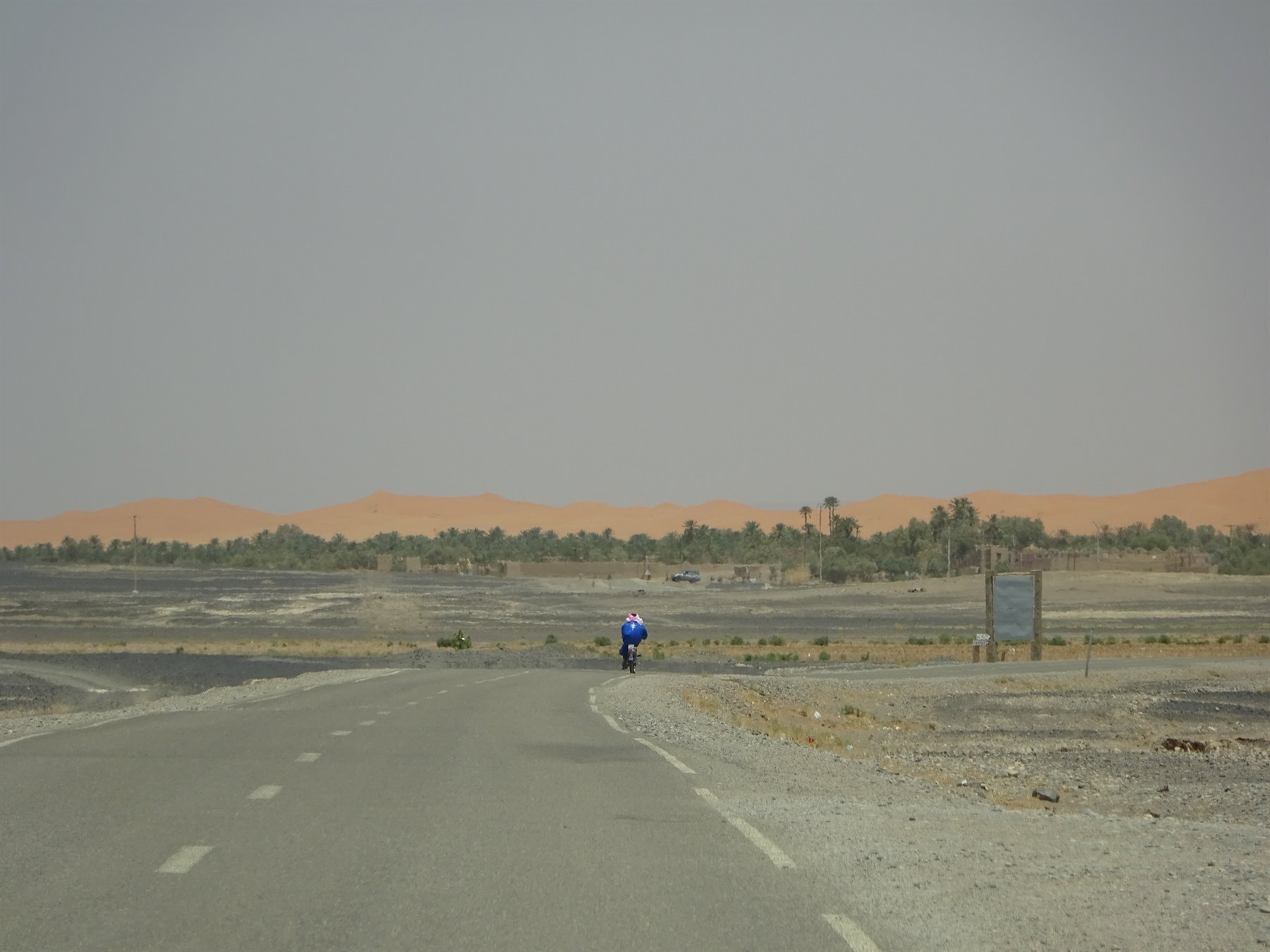
Ciclista solitario sull'asfalto verso le dune vicino a Merzouga
Day 48 Aug 2017
Destination Erg Chebbi
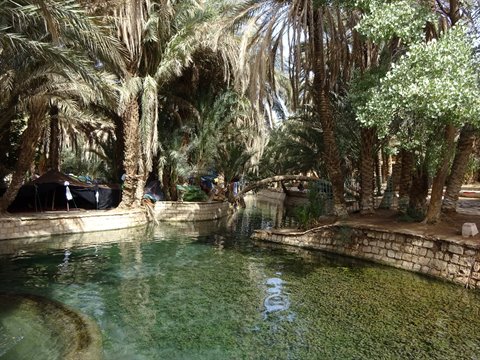
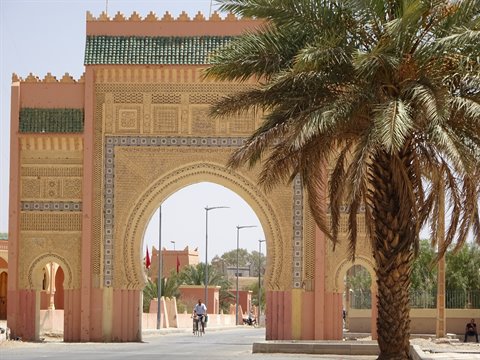
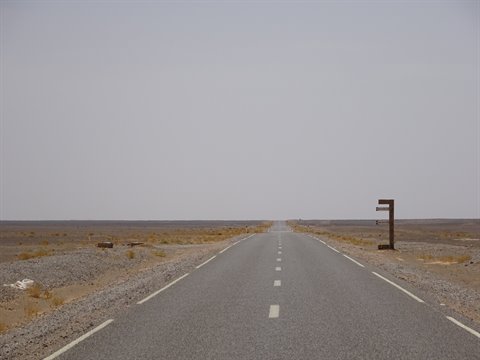
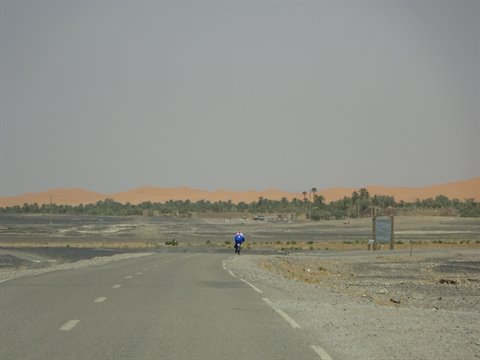
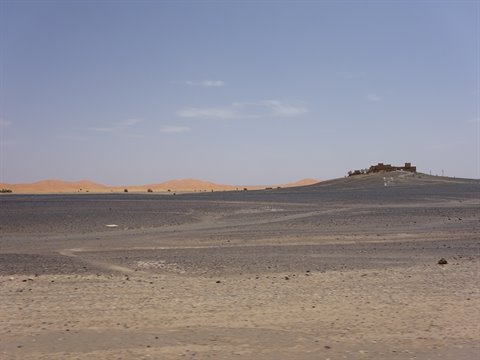
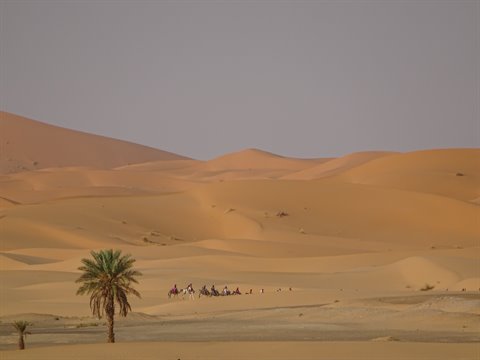
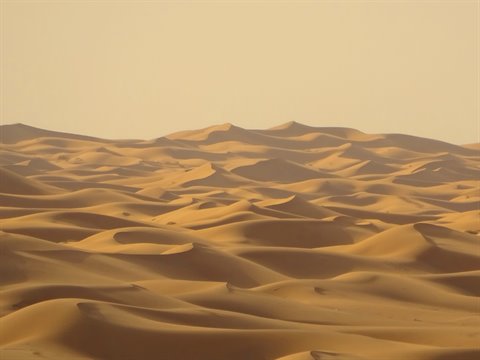
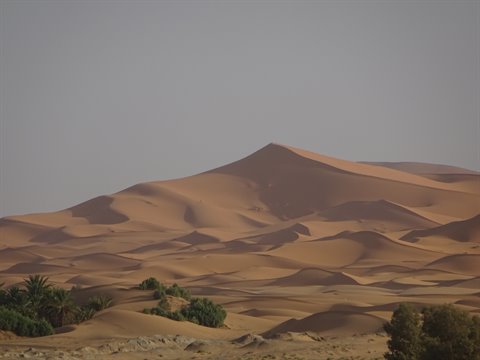
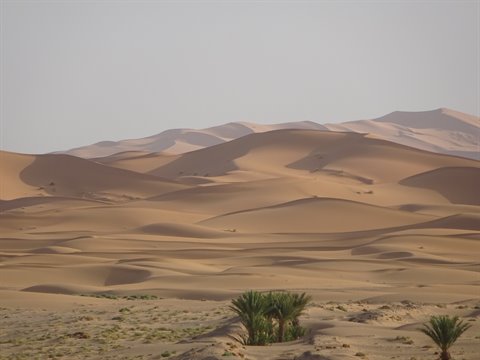
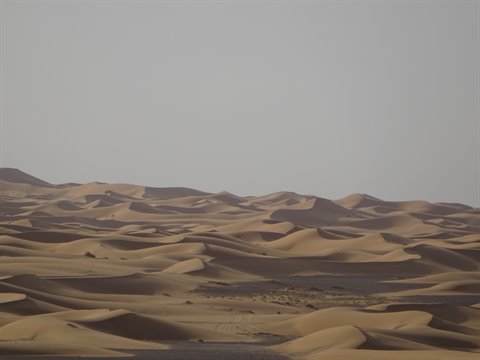
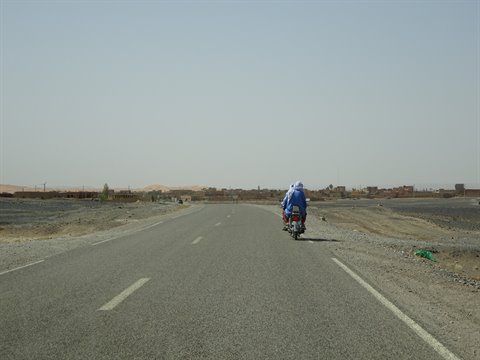
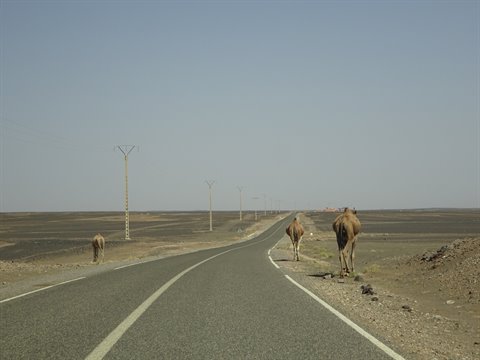
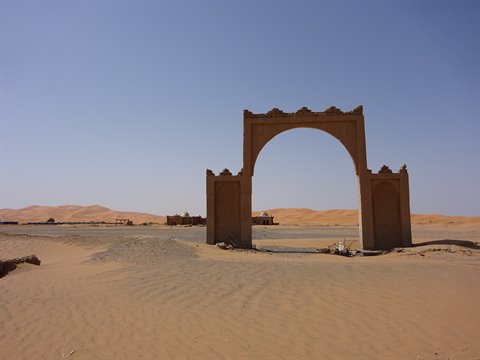
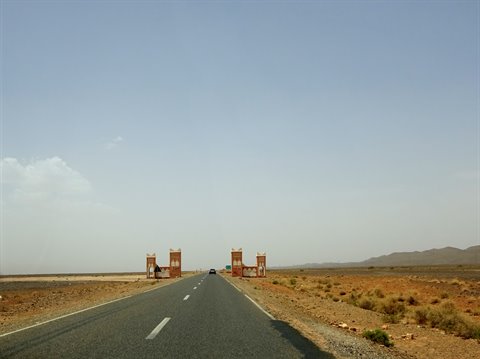
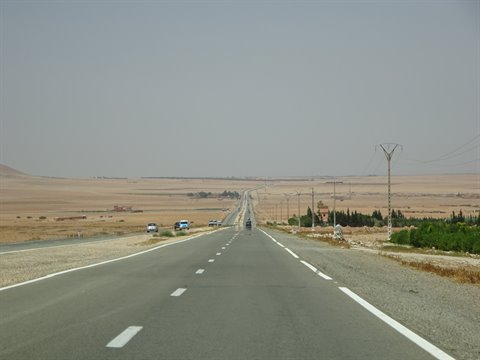
After a rich breakfast in the garden, we set off again heading south; today our destination is Merzouga, the gateway to the Sahara Desert, with 130 kilometers of spectacular road separating us. The first stop is the Blue Springs of Meski, a famous freshwater oasis located in the Ziz River valley, about 20 km south. Parking is paid and the area is mainly frequented by locals. The palm grove around the spring water is evocative, but honestly the pool built close by and the many stalls take away the charm of the area. The entire stretch of road to Erfoud winds along the Ziz canyon and is a true marvel with many scenic viewpoints for taking stunning photos. After Erfoud comes Rissani, with its wonderful desert gate. From here we take the 702, a ribbon of asphalt running straight into nothingness until the red dunes of the Sahara appear on the horizon.
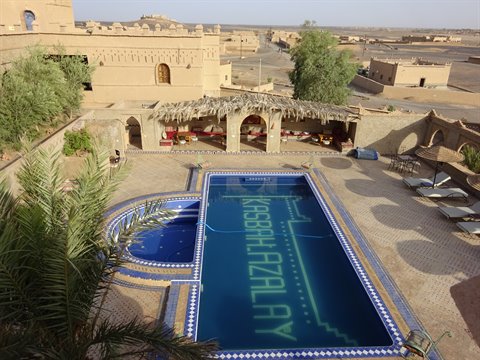
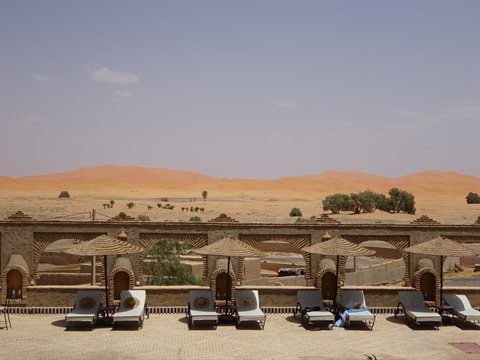
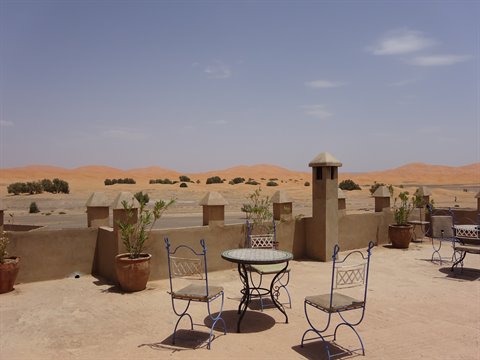
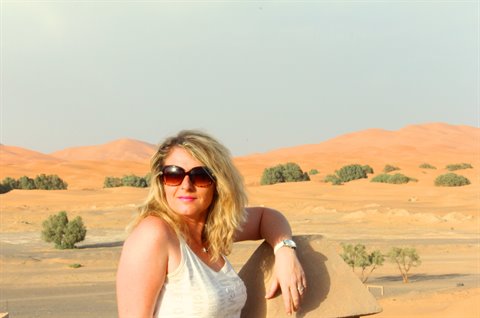
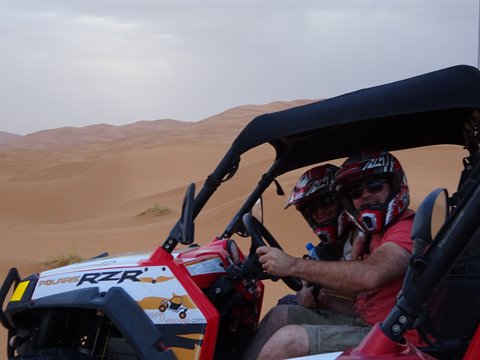
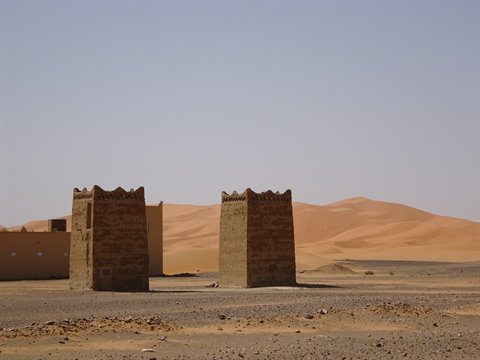
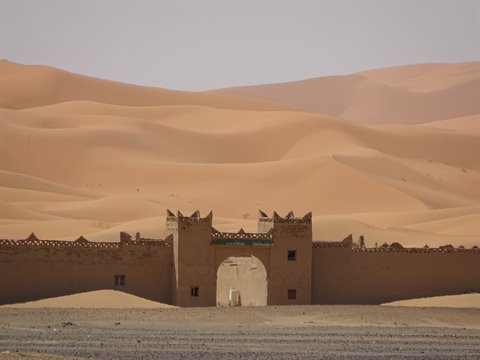
Upon reaching the settlement of Merzouga, we head to our accommodation, which we reach after kilometers of dirt road. We chose Kasbah Azalay, in traditional Berber style located directly at the foot of the golden dunes that begin here. We have lunch at the property and chat with the manager who organizes a traditional dinner and a buggy excursion in the desert at sunset for us. We spend an afternoon relaxing by the pool, enjoying the silence and the colors of the desert until it's time to leave for the evening adventure. Nearly two hours of pure adrenaline and fun lost among the dunes until we reach the Merzouga Oasis. We stop briefly because the weather is changing, the wind picks up and the boy accompanying us predicts a sandstorm...which arrives when we are a few kilometers from home, but fortunately it doesn't last long. Dinner is very good.
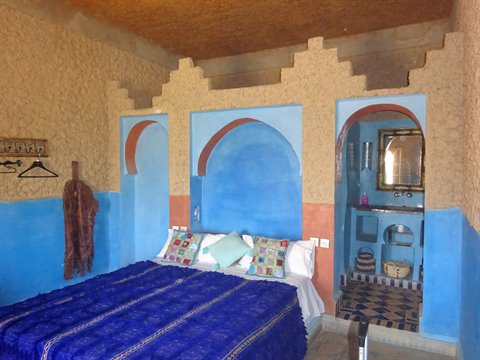
But the day doesn't want to end and we soon discover that in our room, with mud walls, the temperature doesn't drop and is so prohibitive that the solution is to move with pillows and sheets to the lounge chairs by the pool...and so we sleep here. We didn't have a bed but a sky so starry that we don't miss it.
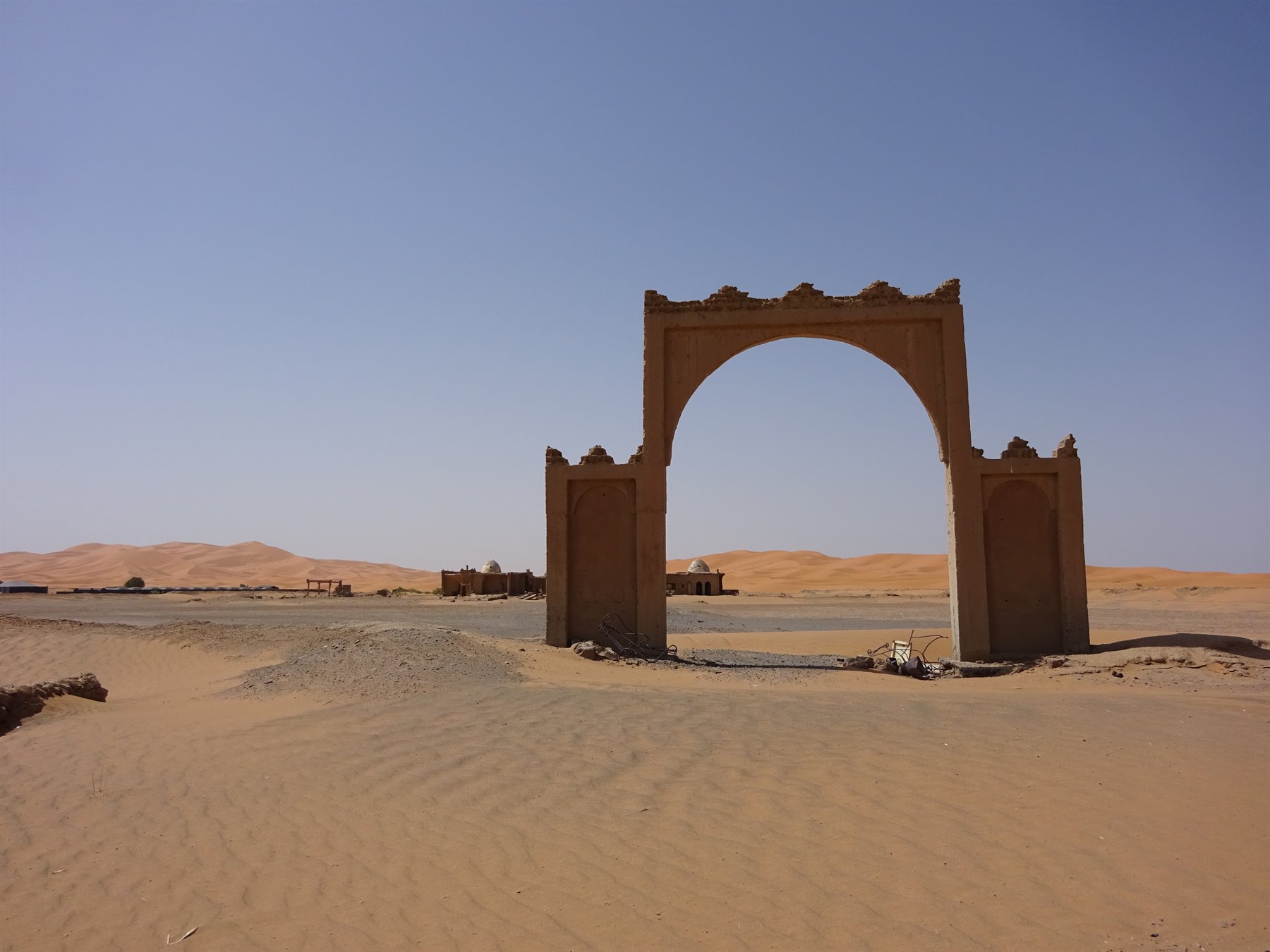
Adobe arch standing in Merzouga desert, dunes and houses under blue sky
Day 59 Aug 2017
On the road to Skoura
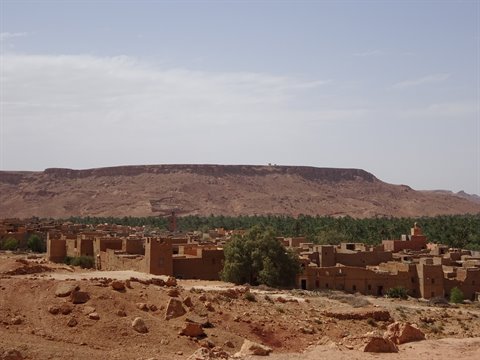
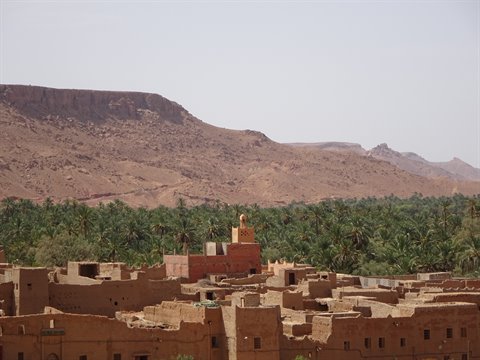
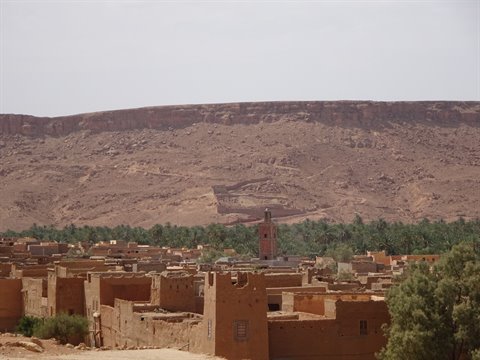
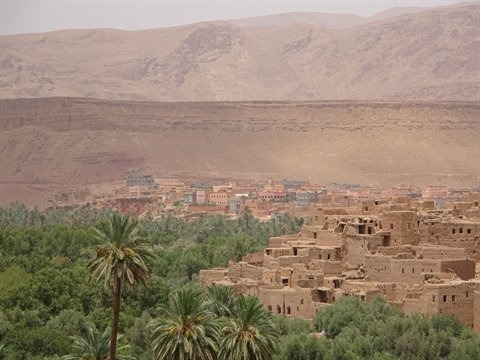
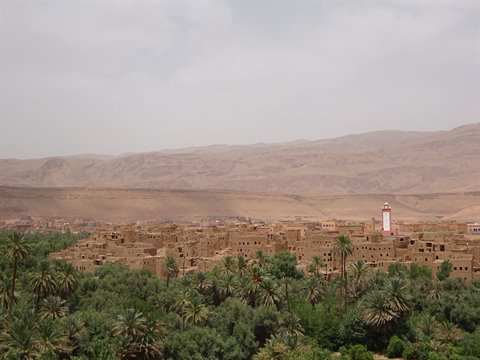
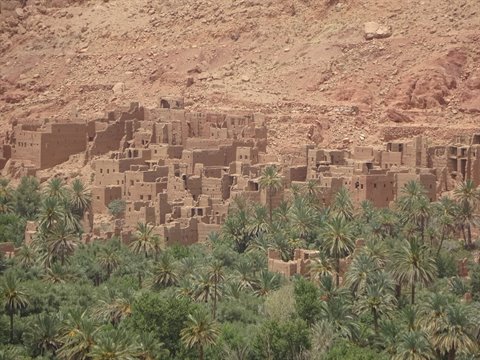
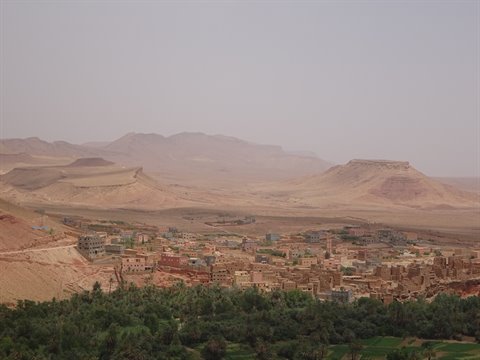
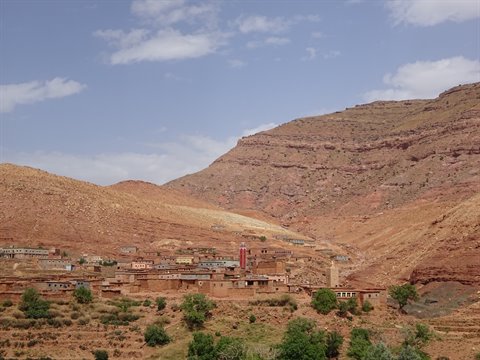
Sleeping outside allows us to witness the spectacle of sunrise over the dunes, which makes us forget the discomfort of the night just spent. We have breakfast and load up the car, saying goodbye to the guys at the Hotel. Today's program includes 355 km that separate us from Skoura. To return to Erfoud we take the P7111 this time, which initially cuts through the desert and allows us various detours to the dunes for more memorable photos. In Erfoud we take the 702 and the next stop is in Tinghir, one of the most spectacular oasis towns in southern Morocco, nestled between the High Atlas mountains and the Jebel Saghro massif. We have lunch here and are enchanted by its palm grove; the visual contrast between the brilliant green of thousands of date palms and the pink/red aridity of the surrounding mountains is breathtaking.
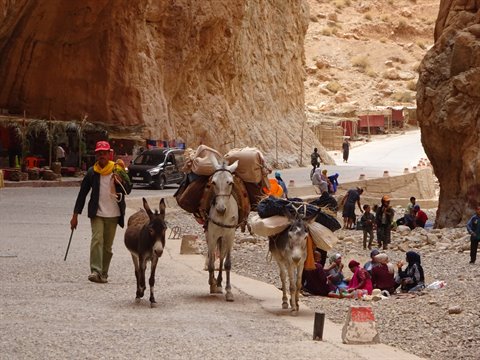
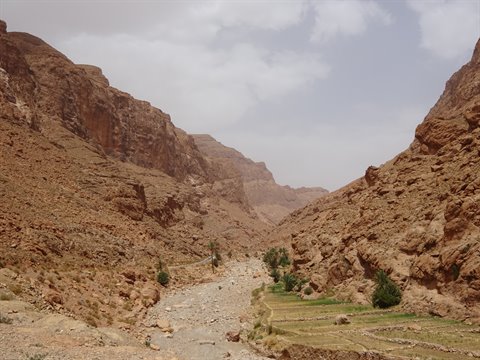
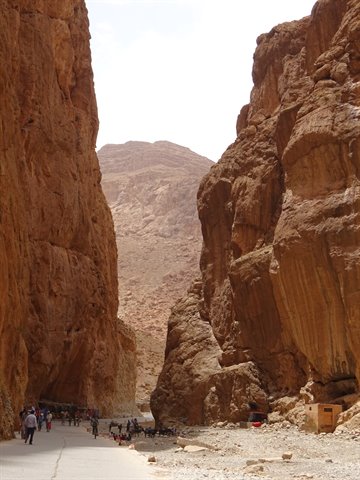
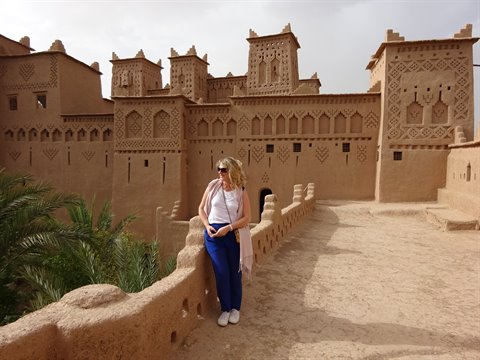
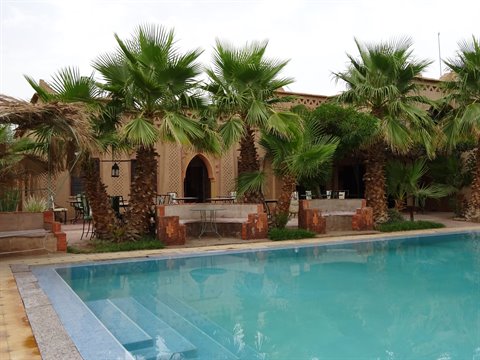
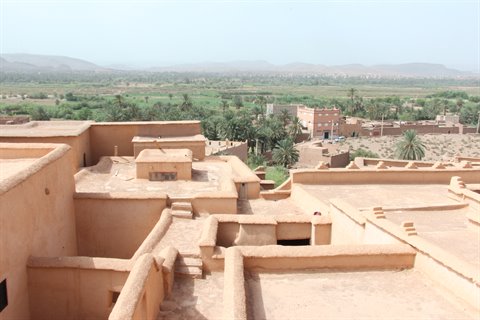
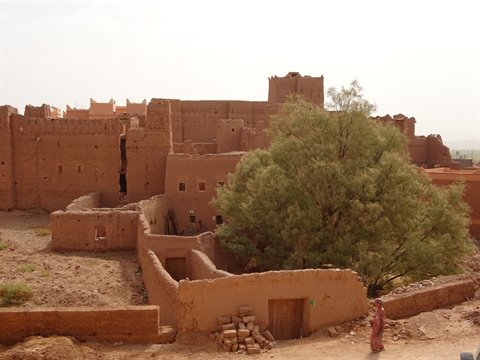
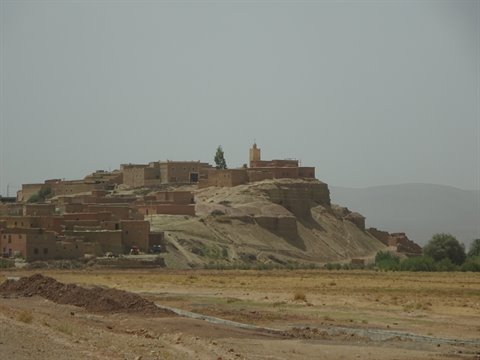
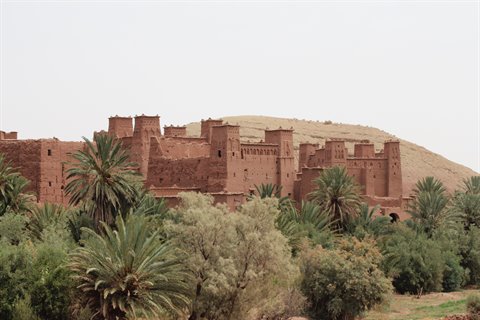
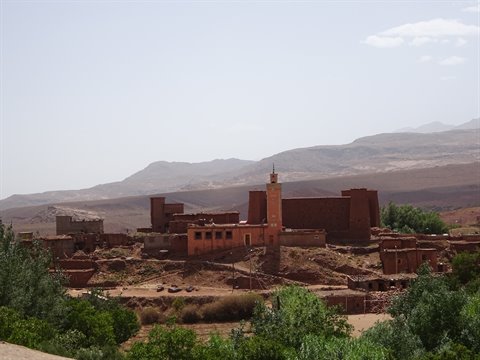
A few kilometers away we visit the Todra Gorges, overrun by local tourists. We set off again and on the road we make further stops at Boumalne Dades and Kelaat Mgouna. Upon reaching Skoura we immediately visit the Kasbah Amridil, one of the most famous, photographed and best-preserved masterpieces of rammed earth architecture in all of Morocco. Inside, an intricate system of courtyards, stables, traditional ovens and private rooms is spread over multiple levels. The arrow slits and walkways tell of its ancient defensive function against rival tribes. Our day draws to a close and so we immerse ourselves in the Palmeraie to reach the Sawadi Ecolodge, where we will stay overnight. We are the only guests and so we enjoy the beautiful pool in the garden and an excellent dinner prepared for us.
Praise to this establishment for its attention to sustainability and the careful, traditional design of its beautiful rooms.
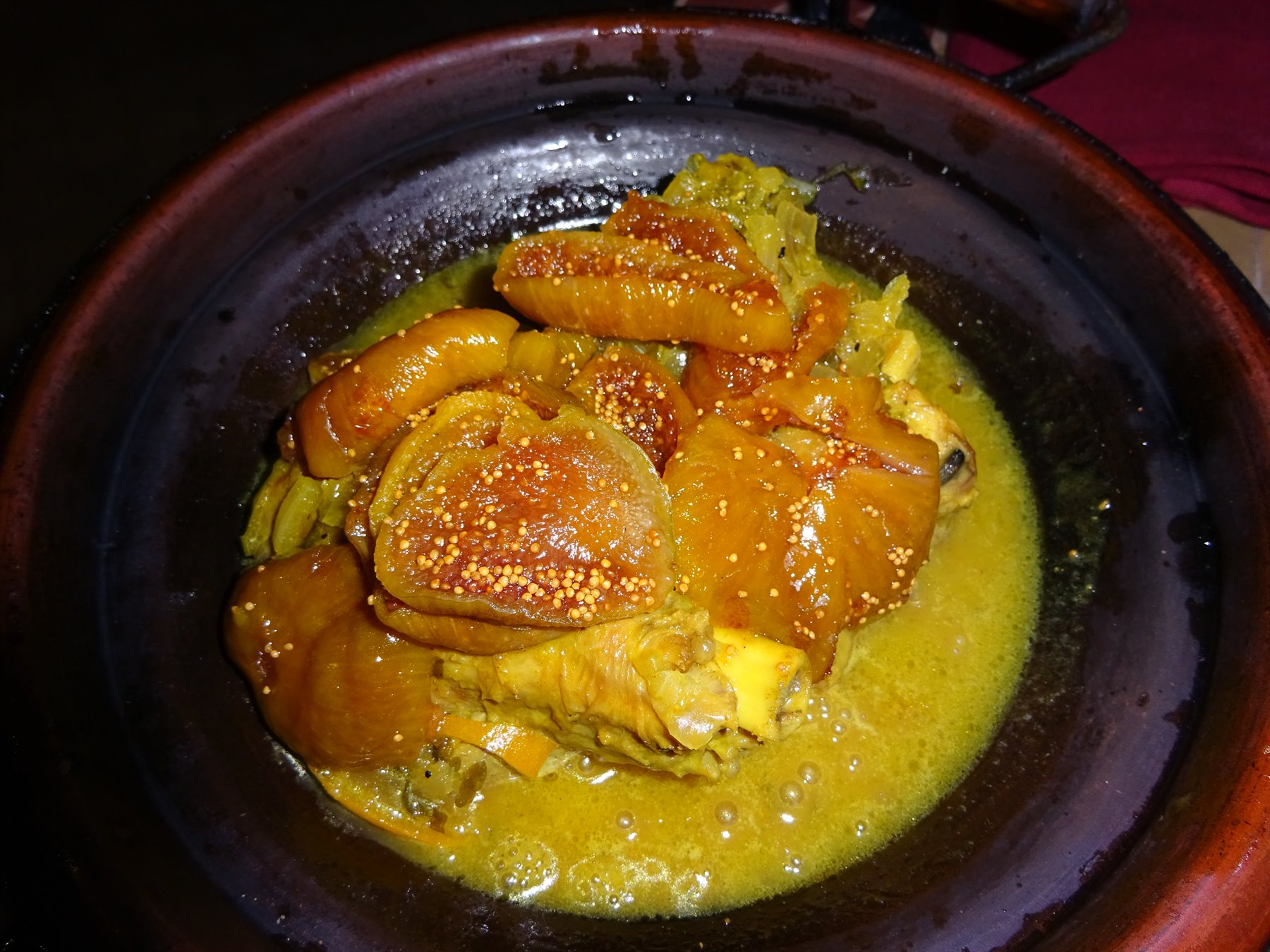
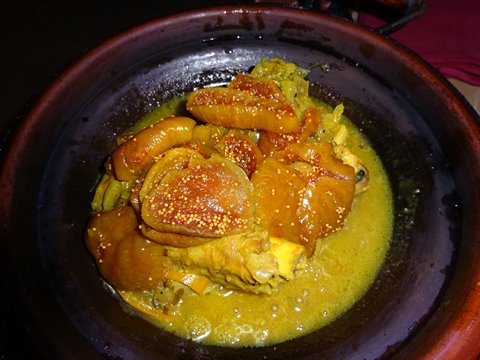
Tagine fumante nel piatto di terracotta, salse dorate e carne lucida
Day 610 Aug 2017
The way to Marrakech
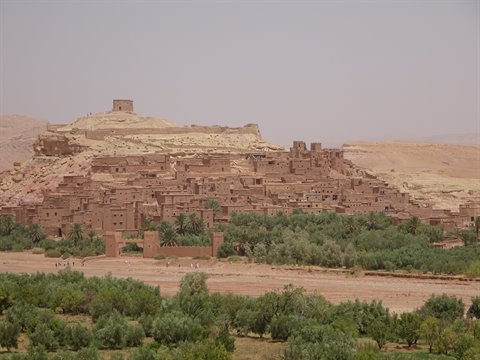
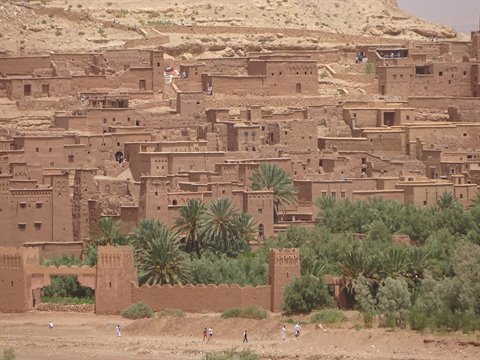
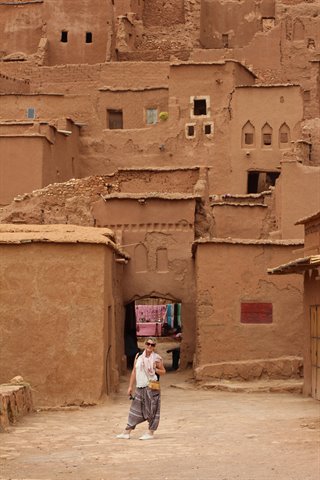
After breakfast we are back on the road. Today too we have about 300 km of road that will lead us to Marrakech. The first stop of the day is Ouarzazate, where we visit the Kasbah Taourirt, located right in the center, which is one of the most imposing earthen fortresses in Morocco. It was the fortified residence of the historic and powerful Glaoui clan (the lords of the Atlas). The interior is a maze of rooms decorated with stuccoes and painted cedar wood ceilings. Only 30 km then separate us from the legendary Ait Ben Haddou, a historic fortified Ksar, the most famous, iconic and photogenic in all of Morocco, declared a UNESCO World Heritage Site in 1987. After lunch we set off again to tackle the majestic High Atlas mountain range that we will cross to reach Marrakech.
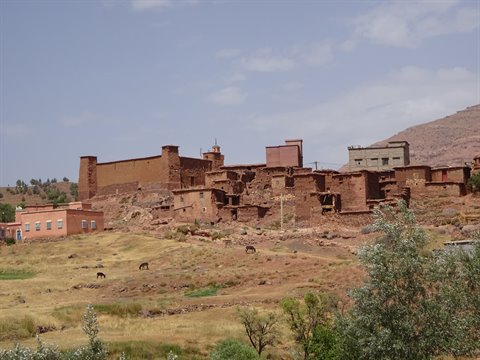
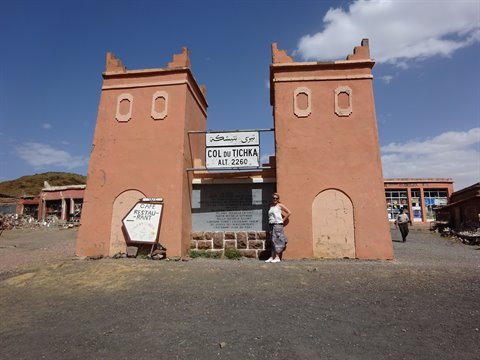
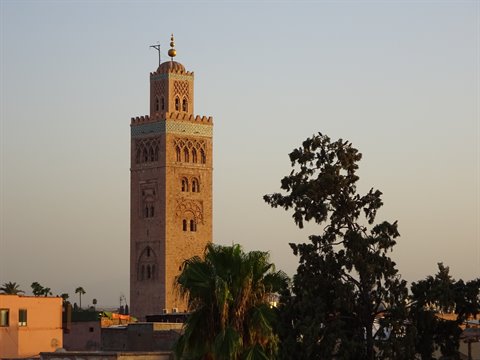
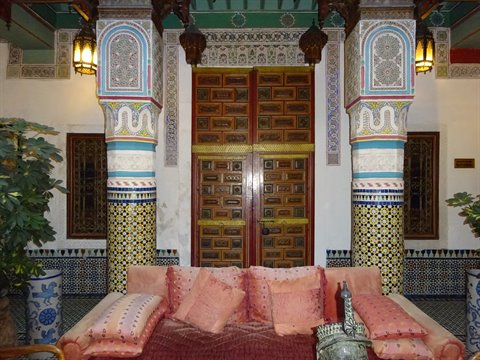
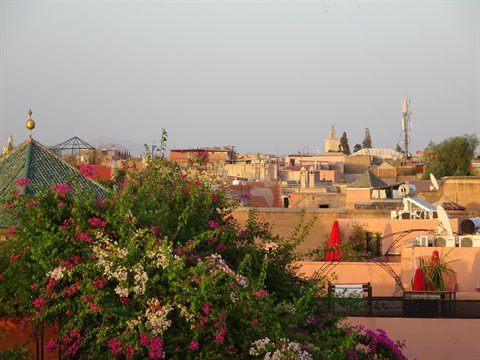
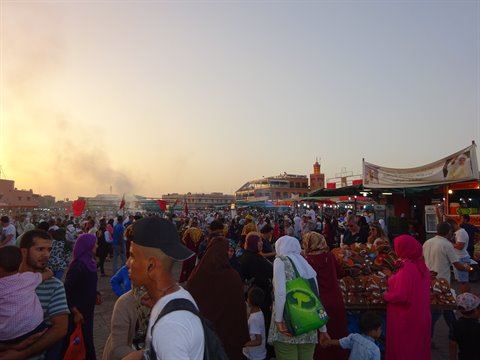
The N9 climbs with a very long and spectacular series of hairpin bends up to the famous Tizi n'Tichka Pass, the highest road pass in North Africa at a good 2,260 meters of altitude. Along the road one encounters villages forgotten by time and those hours in the car are the journey itself. We reach Marrakech around 6:00 PM and the first adventure is finding the Riad's affiliated parking. Mission accomplished, we make our way through the alleys of the Medina to the Riad Palais Sebban. When the gate opens we are catapulted into the Arabian Nights, super happy with our choice just a few steps from Jemaa el-Fna. After an aperitif on the terrace from which to savor the colors of the sunset over the medina and the Koutoubia minaret, we go right here to Jemaa el-Fna for our first evening in Marrakech.
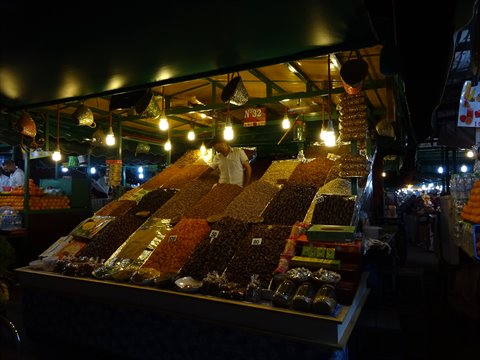
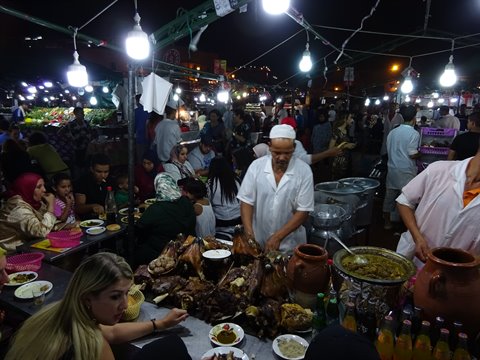
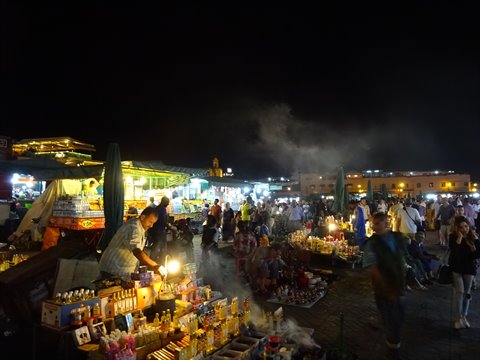
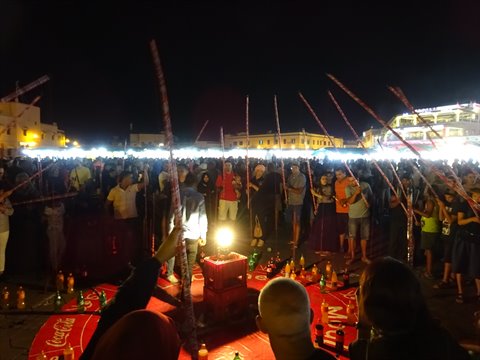
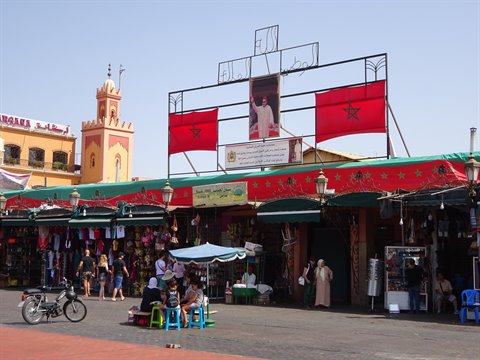
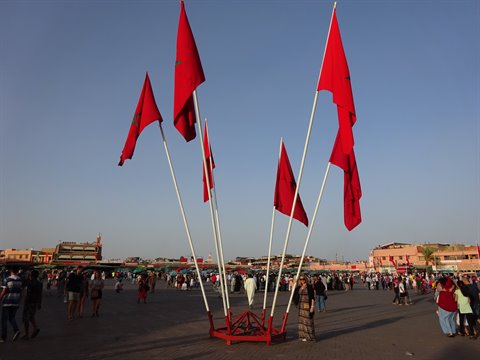
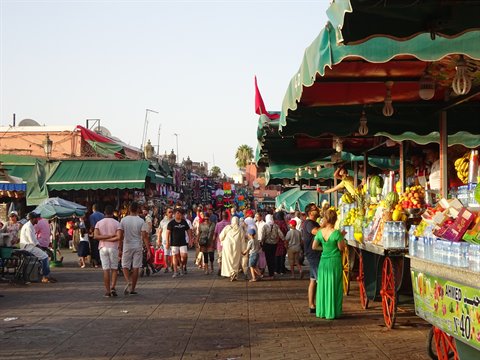
The beating heart of the city and one of the most famous squares in the world, declared a UNESCO Oral and Intangible Heritage of Humanity for its incredible and intact cultural tradition. At sunset the square changes face with dozens of numbered open-air restaurants, filling the air with smoke and the aromas of grilled meat. The Halqa (traditional storytellers) appear, along with fortune tellers, henna tattoo artists and impromptu boxing matches. It is a hypnotic and energetic chaos.
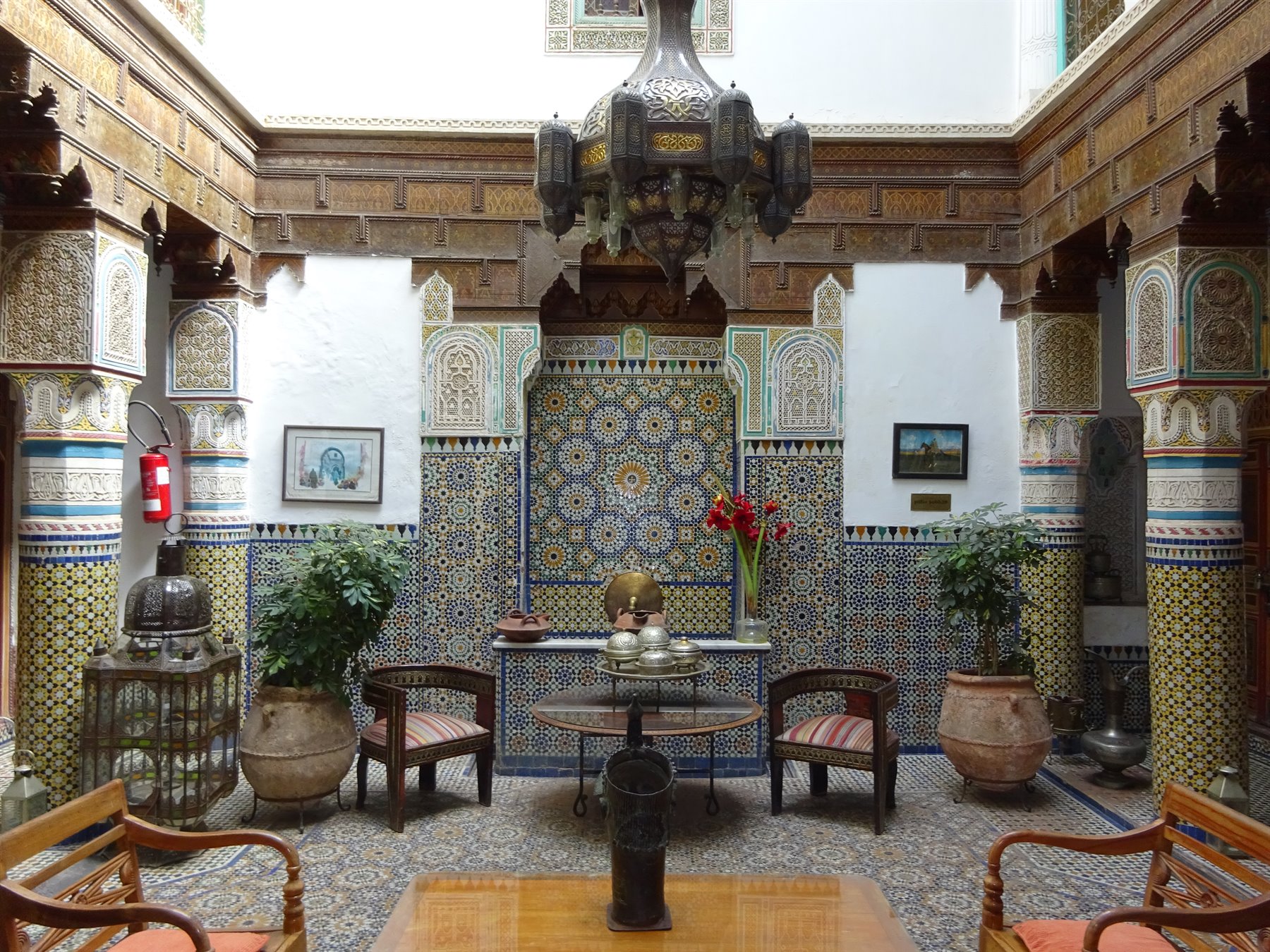
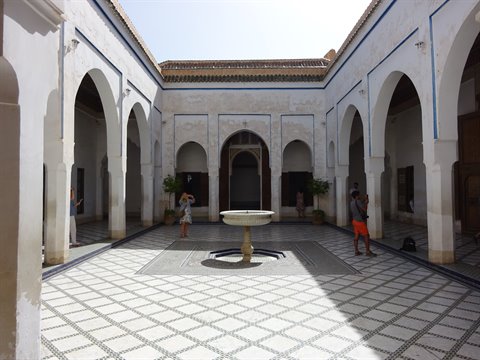
Riad a Fes, zellige colorato, lampadario in ottone, poltrone e piante intorno alla fontana
Day 711 Aug 2017
Marrakech
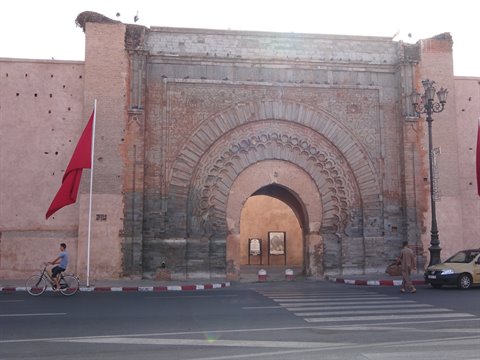
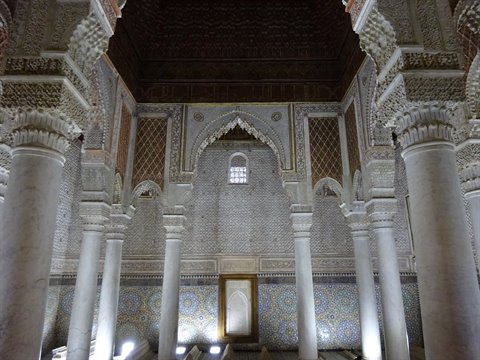
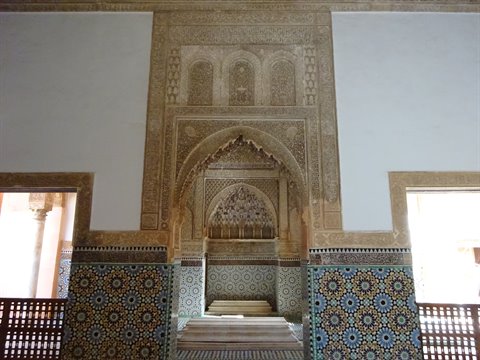
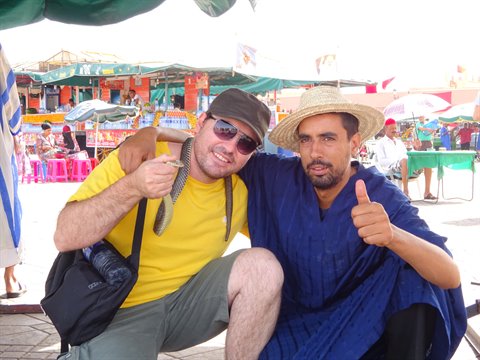
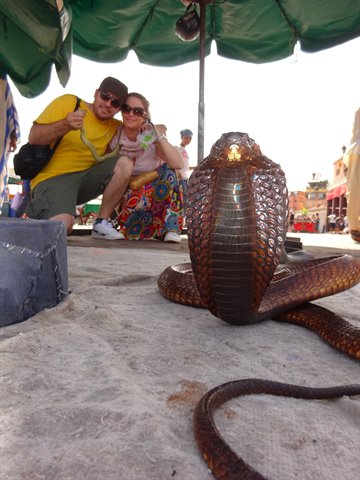
Today the entire day is dedicated to visiting the city, strictly on foot. Passing under the Koutoubia, we enter the Kasbah through the Bab Agnou gate and the first stop is the Saadian Tombs complex, with rooms in marble and pure gold. We then move on to the El Bahia Palace, an absolute masterpiece of Arabo-Andalusian architecture in Marrakech. We then immerse ourselves in the alleys of the Mellah until we return to Jemaa-El-Fna for a coffee break on one of the many terraces overlooking the square. Before venturing into the souks, we are practically held hostage by one of the snake charmers until we grant him a souvenir photo. Too bad that, despite the agreed sum close to two euros, he then wanted more than 10...but wanting is not getting and a firm tone and the threat of loudly calling the police were enough and he settled for the 2 euros initially requested.
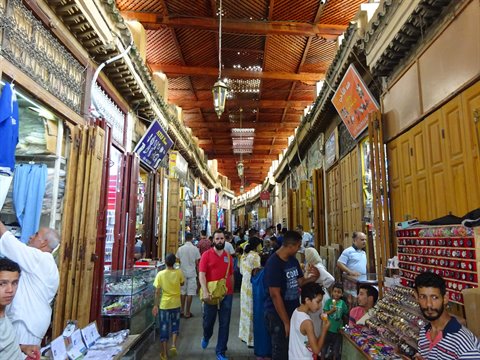
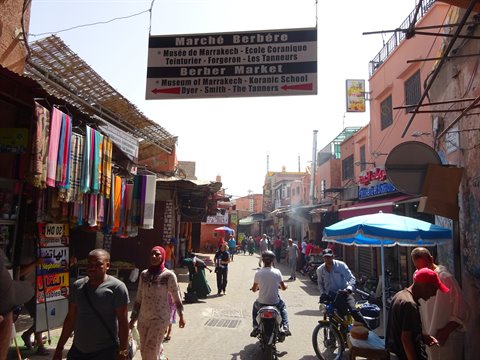
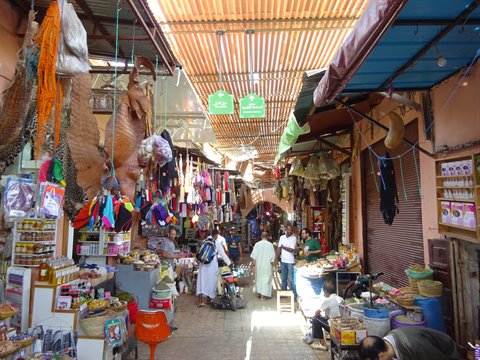
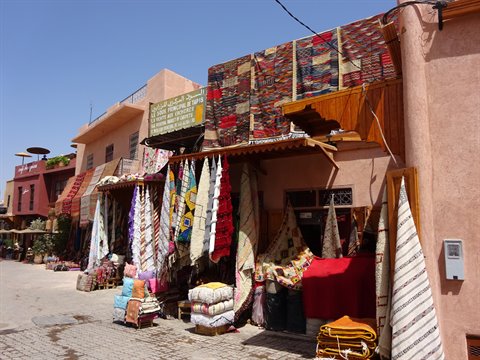
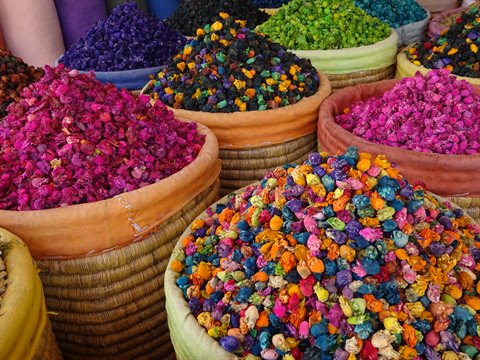
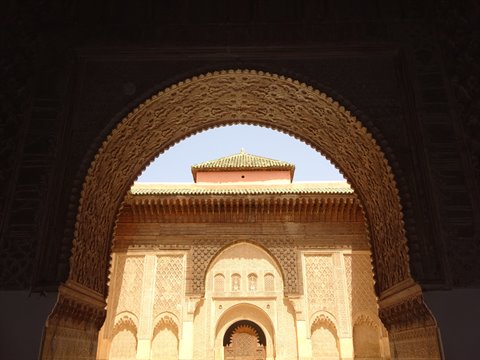
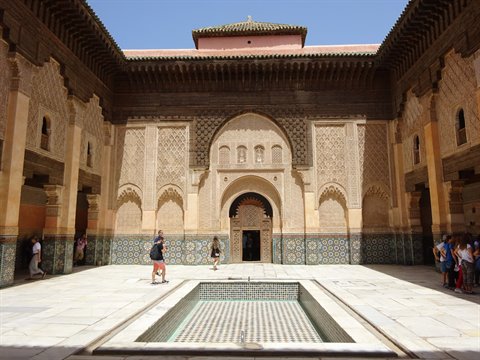
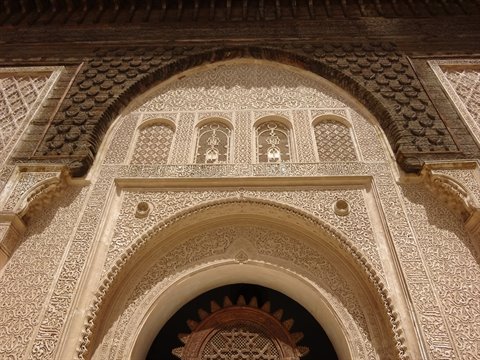
And so we finally lose ourselves in the medina, in its souks and alleys, where colors, sounds and smells provide an experience that involves all the senses. It's almost lunchtime when we reach the Ben Youssef Medersa, the largest Quranic school in all of Morocco, which represents one of the greatest masterpieces of Arabo-Andalusian art in the world. Originally founded in the 14th century and completely rebuilt in 1565 by the Saadian sultan Abdallah al-Ghalib, this Islamic university could accommodate up to 900 students at the same time, coming from all over North Africa, attracted by the prestige of its teachings of theology and Islamic law. The Great Central Courtyard is the most spectacular space of the site, dominated by a large central marble basin for ablutions.
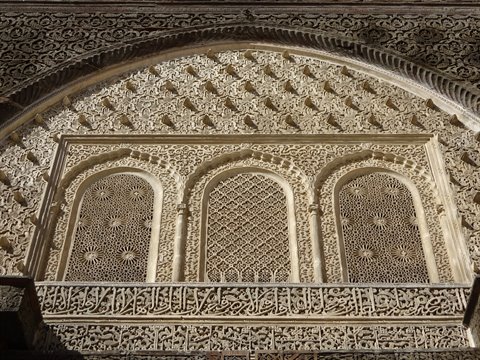
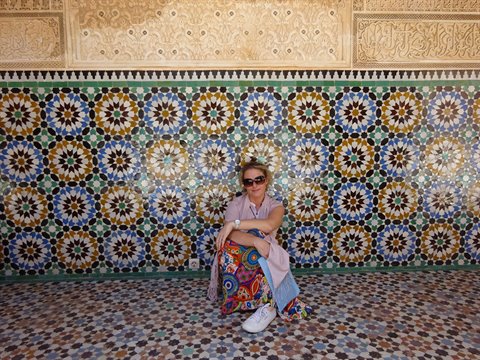
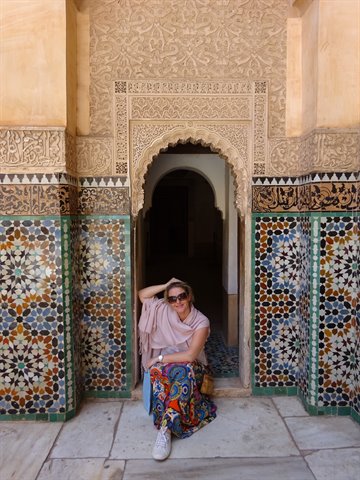
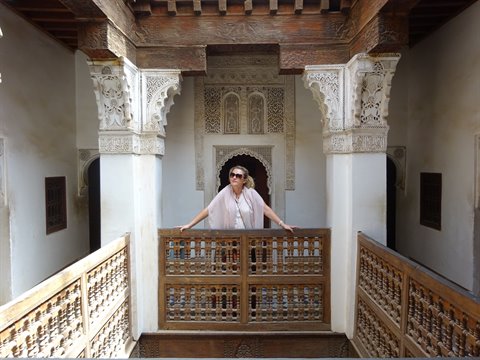
The surrounding walls are entirely covered by a breathtaking combination of three traditional materials: zellige (geometric mosaics of colored ceramics) at the base, finely hand-carved stucco in the middle (with floral motifs and calligraphic inscriptions) and majestic carved cedar wood cornices at the top. Wonderful. After the visit we look for a taxi, exiting from the opposite side of the Medina. The area north of the Medersa in the direction of the tanneries is practically deserted and the few people we meet are unfriendly, so we quickly go out and return to the Riad to spend the hottest hours relaxing and cooling off in the pool. In the late afternoon we return to Jemaa-El-Fna, this time to wait for sunset in the square sipping an aperitif and witnessing its transformation. A riot here too of sounds, smells and colors.
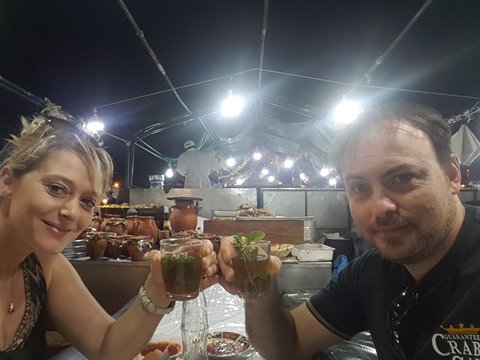
We have dinner at one of the stalls set up with grilled lamb and snails. Until late we wander aimlessly around, breathing in the most beautiful atmosphere of the city.
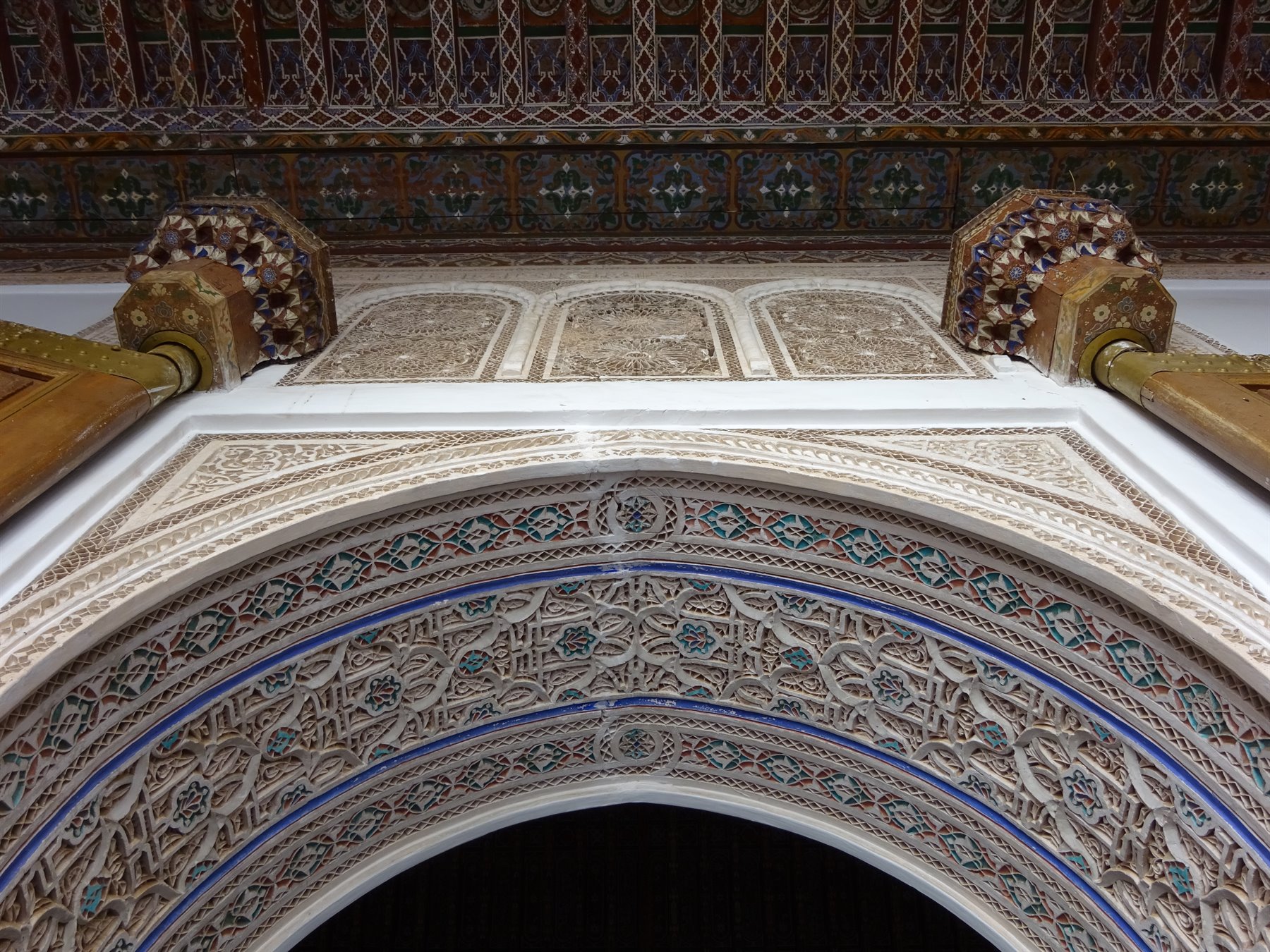
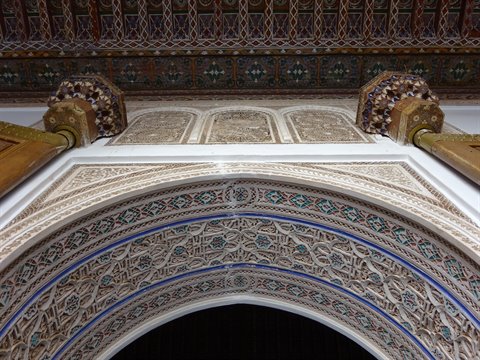
Arco di stucco intagliato e travi dipinte nel palazzo, Fes
Day 812 Aug 2017
From Marrakech to Essaouira
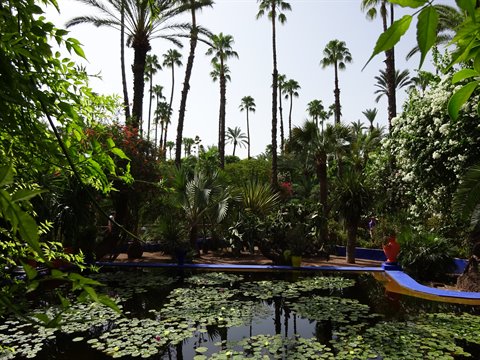
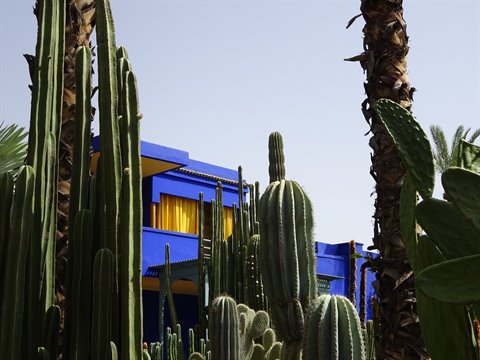
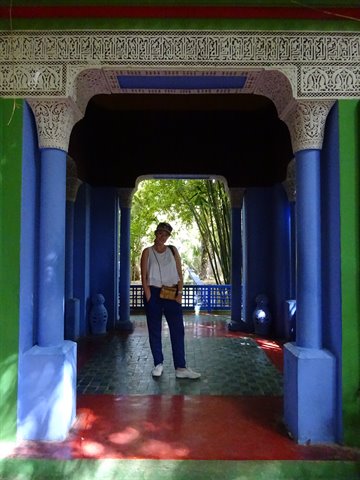
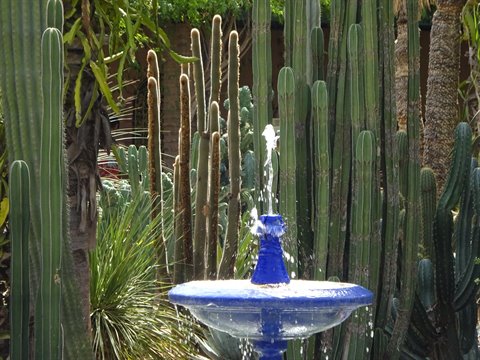
After a rich breakfast we get back in the car and before leaving the city we go to visit the Majorelle gardens. Located outside the walls of the Medina, in the modern Gueliz district, this botanical garden of about one hectare is an oasis of peace famous for the unmistakable contrast between the lush green of the plants and an intense shade of cobalt blue. The garden was designed by the French painter Jacques Majorelle, who settled in Marrakech and dedicated almost forty years of his life to collecting rare plants from the five continents. In 1931 he had his Art Deco-style villa-studio built and painted its walls that magnetic blue that today bears his name. After the painter's death, the garden was abandoned and risked being demolished to make room for a hotel complex.
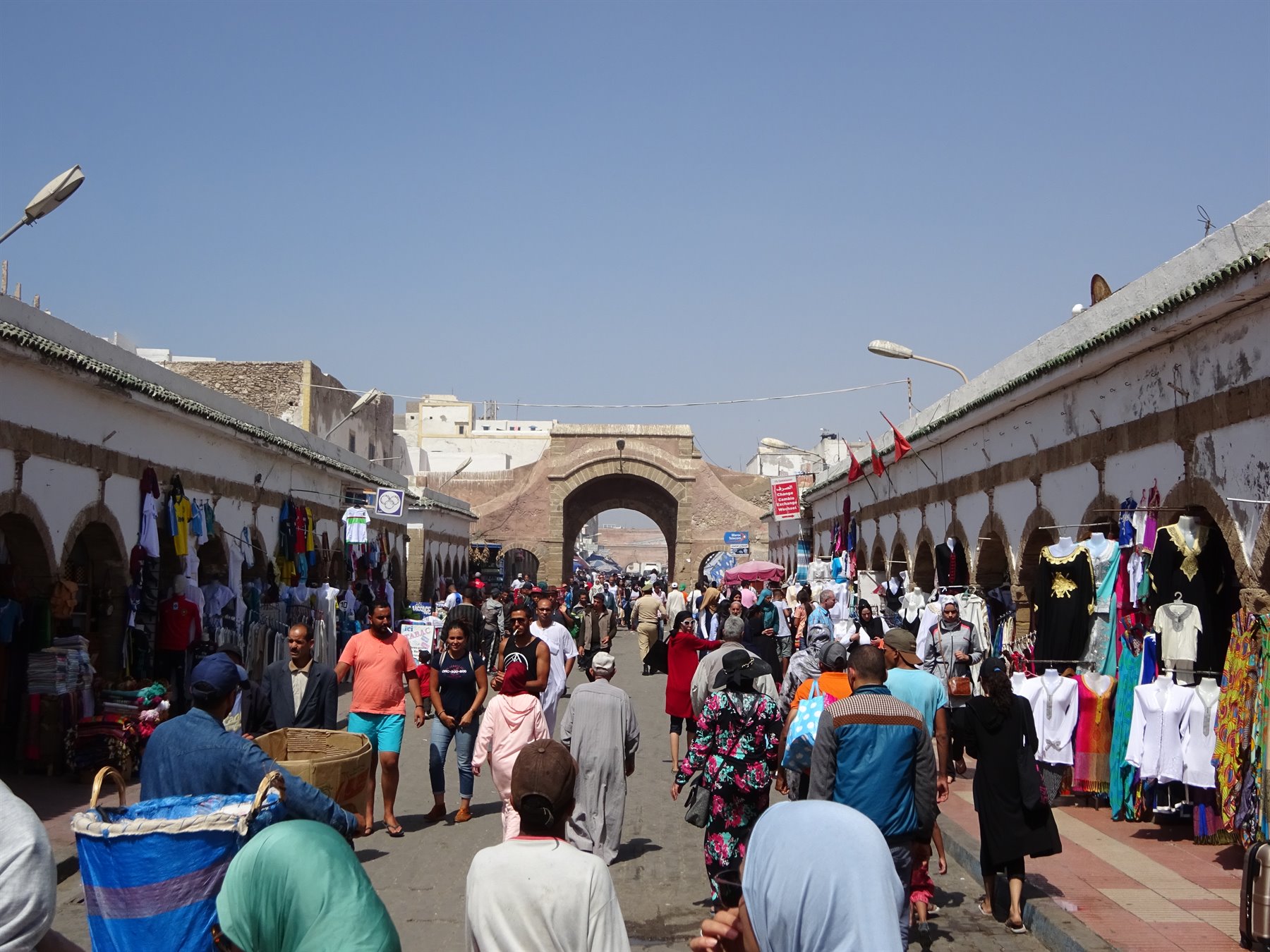
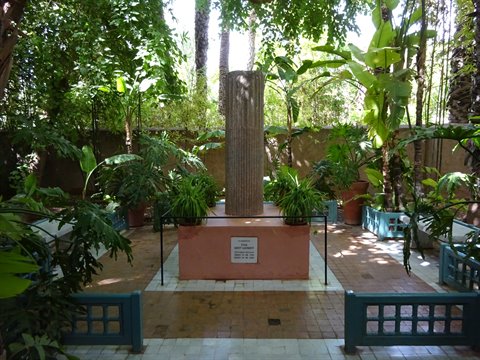
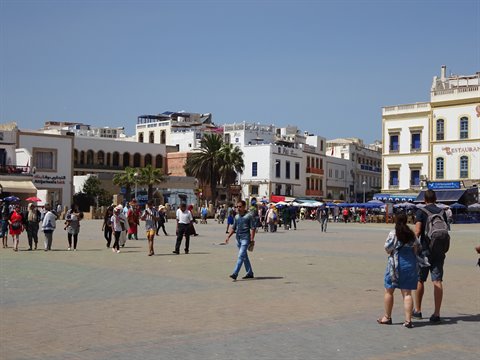
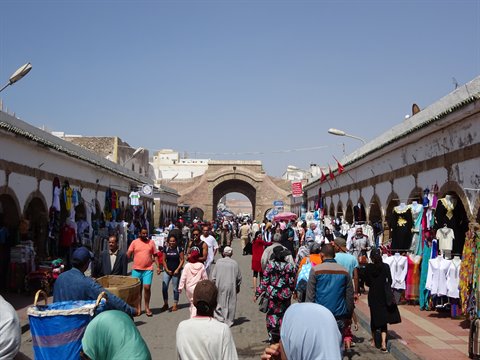
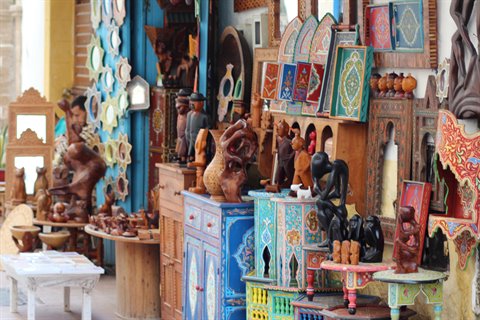
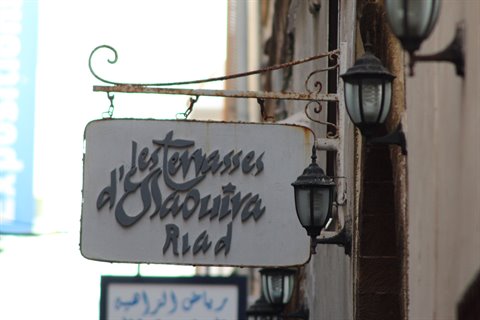
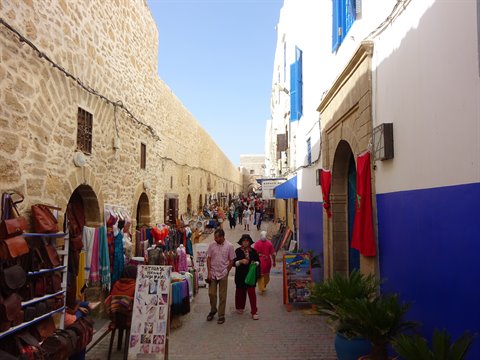
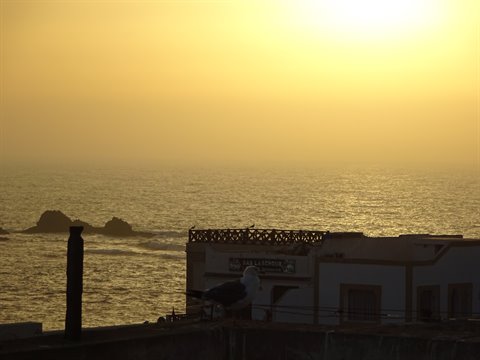
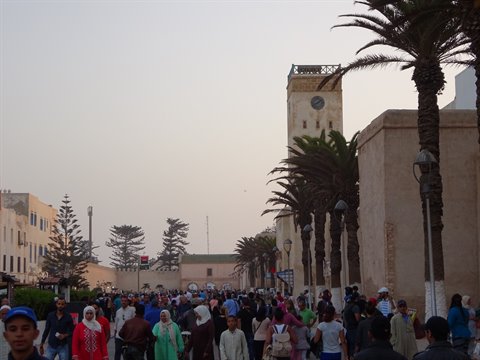
In 1980, the French fashion designer Yves Saint Laurent and his partner Pierre Bergé bought the property to save it, completely restoring it and opening it to the public. The designer's ashes were scattered right inside the garden's rose garden. And so we say goodbye to Marrakech and set off again in the direction of Essaouira, which we reach about three hours later. Arriving in the center we park the car and reach the very central and strategic Palazzo Desdemona, which reserves for us a terrace suite with a wonderful view over the Medina and the port. We take an hour to relax, before dedicating ourselves to visiting the town. The ancient Mogador is a splendid port city overlooking the Atlantic Ocean, famous for its fortified medina painted white and blue (UNESCO World Heritage since 2001). Essaouira offers an incredibly relaxed atmosphere and a vibrant artistic and musical soul.
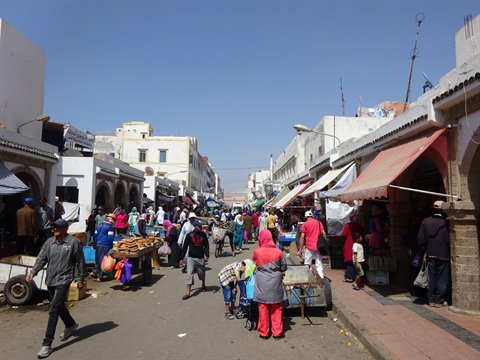
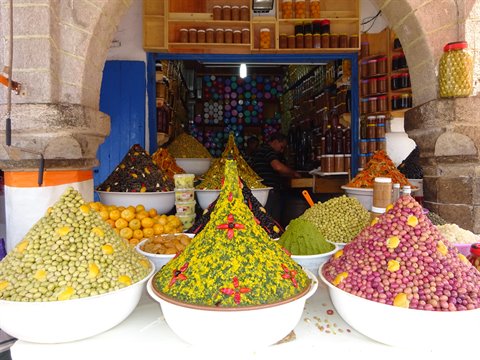
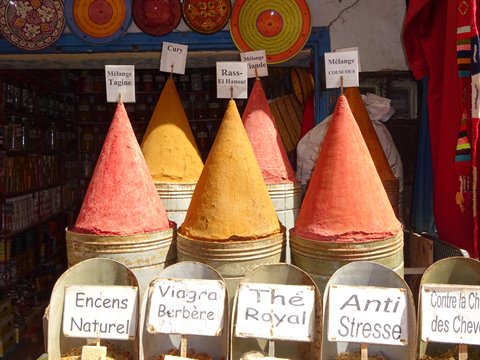
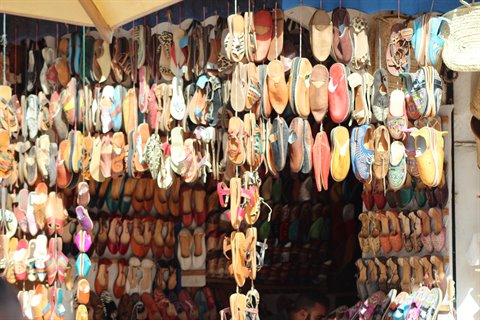
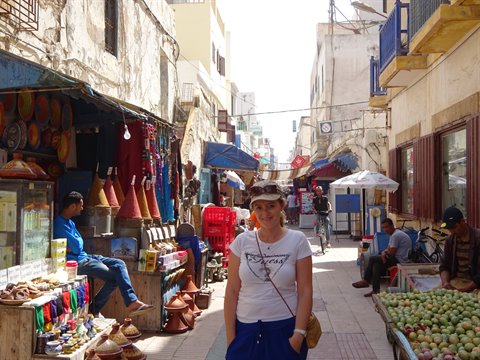
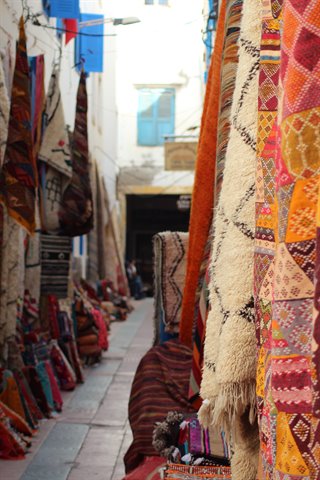
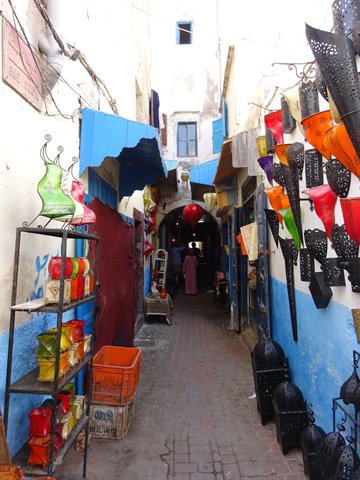
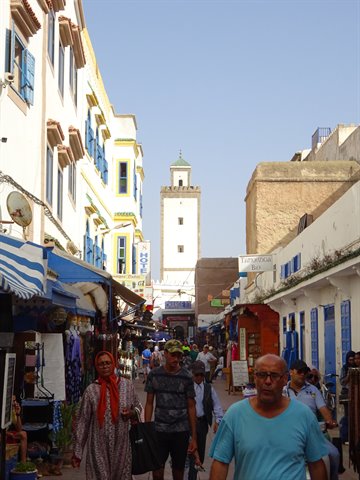
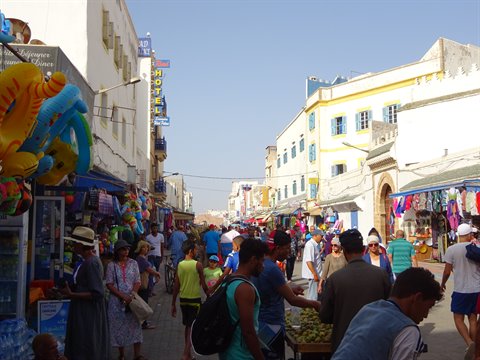
Its medina is different from all the others and you can feel the atmosphere of the sea. Lively and colorful, noisy, full of contrasts from one alley to another with the smell of the sea blending with spices and more. We wander until evening, captivated by this engaging and hypnotic atmosphere. We have dinner at the port: finally fish!
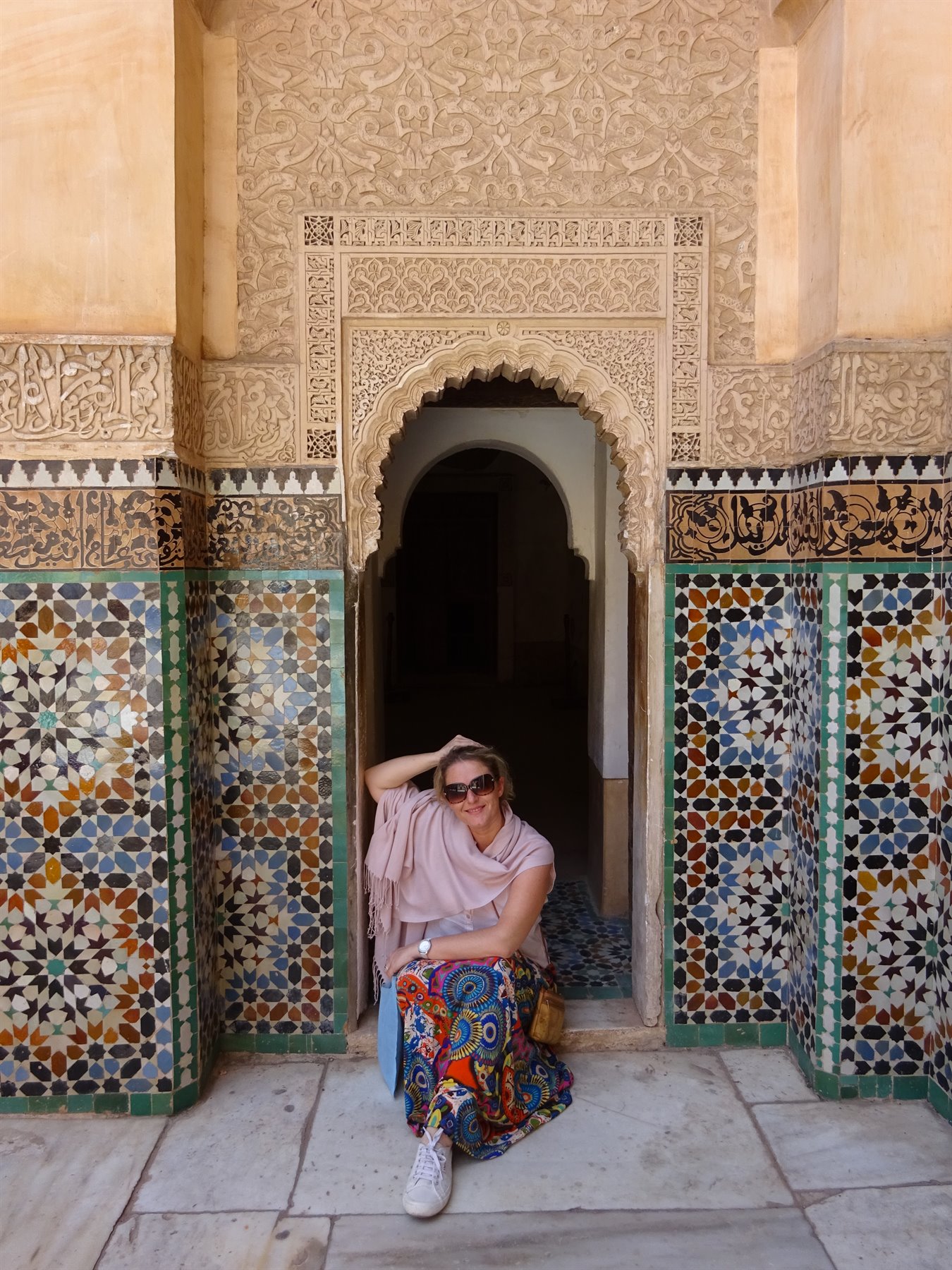
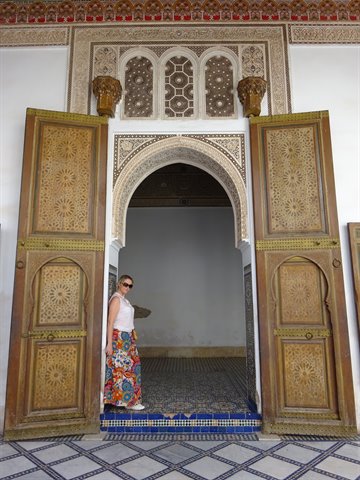
Donna sorridente accanto a porta ad arco con zellige a Fes
Day 913 Aug 2017
Towards Agadir &...
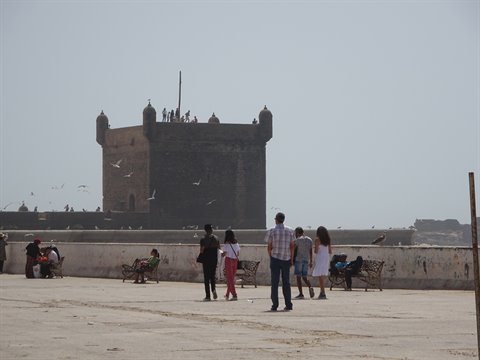
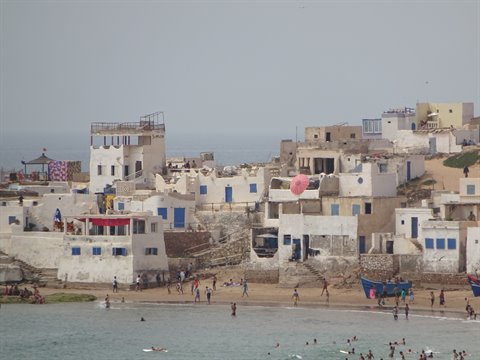
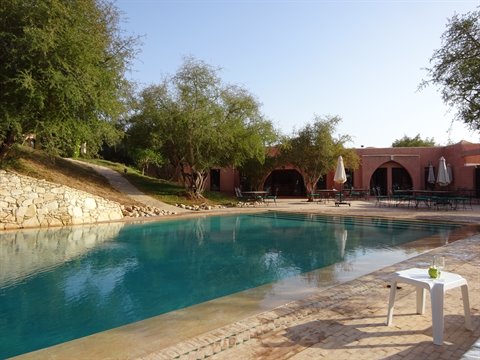
We get up early and dedicate a few more hours to beautiful Essaouira with a walk on the bastions to breathe in the scent of the ocean. We set off again south to reach Agadir, near which we will spend the last night in Morocco. We arrive in the city for a late lunch that we had imagined having on its infamous beach. But Agadir disappoints us right away. We don't quite understand where its fame that precedes it comes from. Perhaps from a bygone past, but after the marvel that has accompanied us so far we don't even stop and continue towards the small village of Tifnit, in the Sous-Massa park, a picturesque and decayed fishing village overlooking a wild sandy beach, with iconic blue wooden boats resting on the sand and contrasting with the white of the houses. More satisfied, we reach Paradis Nomade, the eco-resort of Azrarag, where we will spend this last night.
We end the day between relaxing by the pool and an excellent dinner in the garden, ready to say goodbye to Morocco.
Essaouira market crowds browsing stalls under arcades near the historic gate
Day 1014 Aug 2017
Flying to Fuerte!
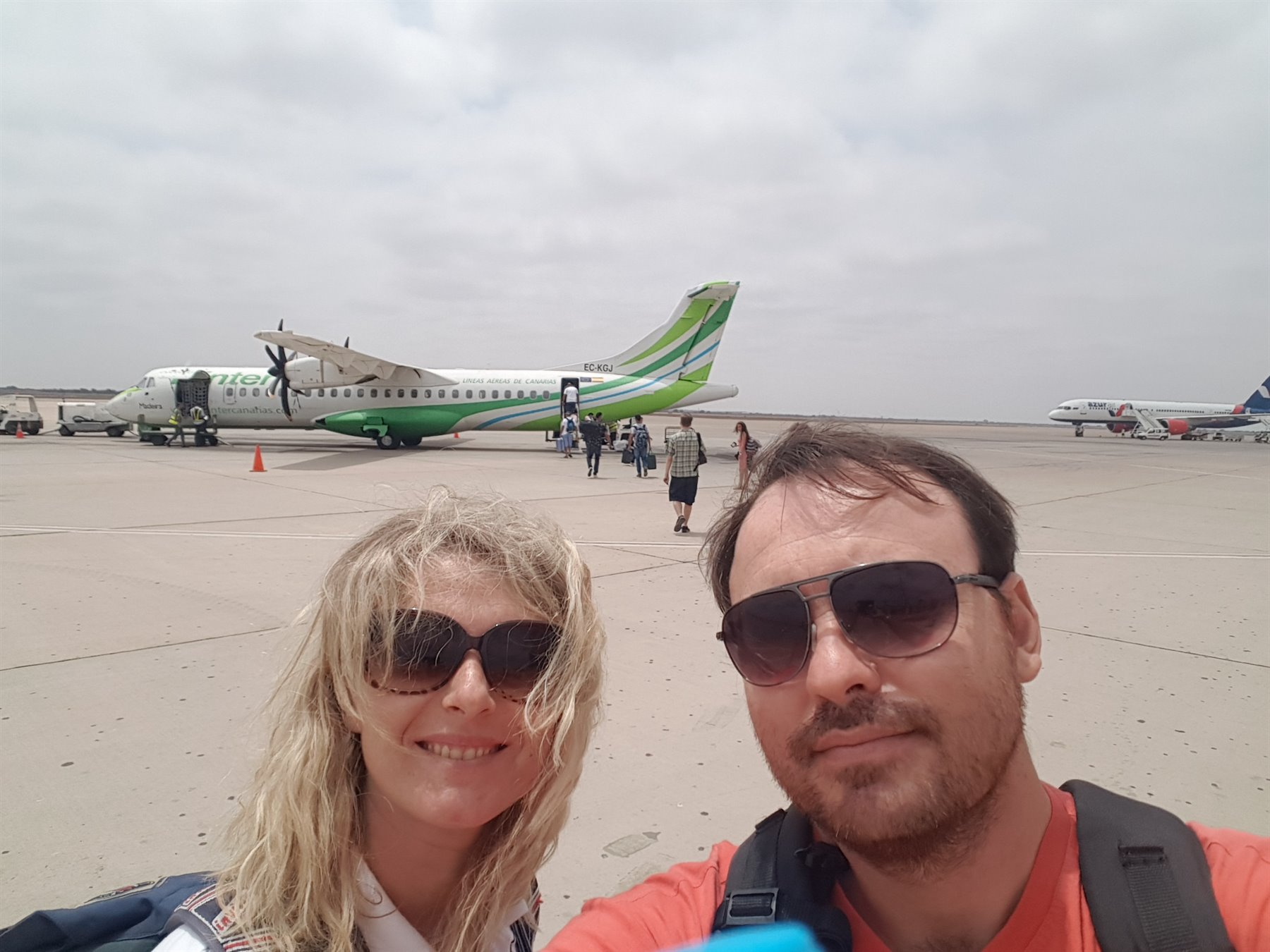
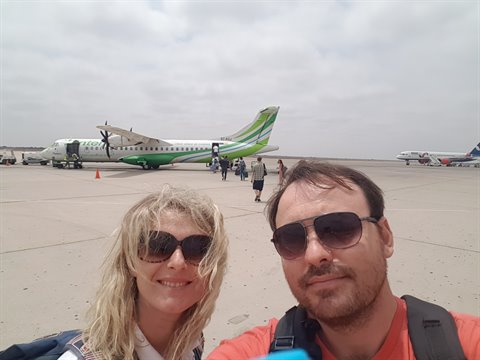
Early in the morning we leave the resort heading to Agadir airport, where we return the car that has accompanied us on this journey and board the Binter Canarias flight to Gran Canaria. Fuerteventura awaits us!
Couple selfie on Errachidia airport tarmac, parked green propeller plane
0 reader comments