Lusaka, South Luangwa, North Luangwa, Kasanka, Livingstone
When
21 Oct 2016 – 10 Nov 2016 21 days · trip of 2016
Who
Cip Civectitis Civetta · @tizimari · Sâo Tomé
How
Travel diary
The story · 3 days
5,200 km, 800 litres of petrol. Maximum temperature 48 degrees Celsius. Currencies: Zambia: Zambian Kwacha 1 USD = 9.9 ZK Malawi: Malawian Kwacha 1 USD = 730 MK Zimbabwe: the US Dollar is used Ethiopia: Birr 1 USD = 22 Bir Ghana: Cedis 1 USD = 3.98 GHS
Top five: North Luangwa National Park, Victoria Falls (Zimbabwe), South Luangwa National Park, Lake Malawi Cape Maclear, the leopard at the entrance to the wildlife camp in South Luangwa. Zambia and Malawi, even though planned a bit in a hurry without having had enough time to research, a quick look online had suggested that Zambia was not an easy country to visit self-driving, and the Bradt guide was also a bit alarmist about road conditions and the possibility of tackling some itineraries with a single vehicle. So we gathered the necessary information about road passability little by little along the way and all in all we encountered no difficulties and the roads turned out to be in better condition than expected. In any case it is an itinerary that should not be tackled lightly and above all you must avoid unnecessary risks in areas where traffic is limited to 1 or 2 vehicles a week.
It is therefore essential to have a vehicle in excellent condition and to check passability, especially at the fords, because getting bogged down in crocodile-infested waters is not much fun.
21/10/16 Departure from São Tomé, TAP flight to Accra, overnight at Accra Hotel airport view, 130 USD, even though we were only in transit, but since we had to leave the airport they asked us for a visa (50 USD per person). 22/10/16 Flight with Ethiopian Accra – Addis Ababa and Addis – Lusaka, arrival in Lusaka at 00:35 on 23/10, we had little hope of catching the connection in Addis Ababa with the flight to Lusaka having less than 30 minutes, but Ethiopian's service is very efficient and practically we went from one plane to the other without even entering the airport, we were worried about the luggage, but in Lusaka a welcome surprise: everything arrived safely. At one in the morning we take a taxi (30 USD) to the Cresta View Hotel (95 USD booked via booking).
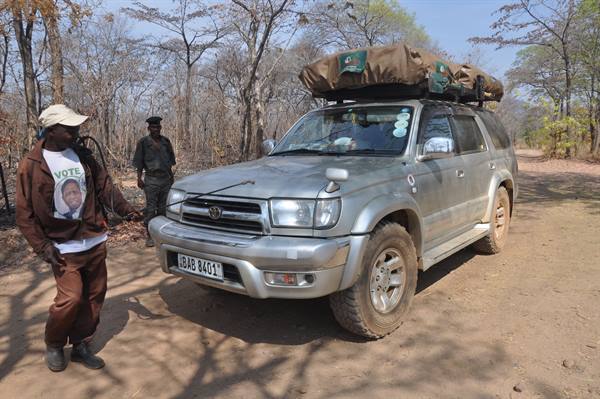
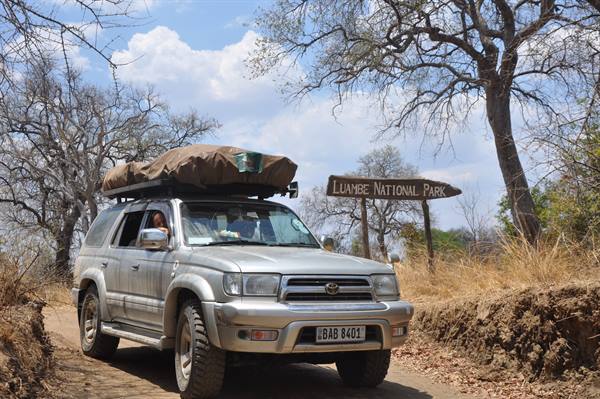
Day 1, 23/10/16 First day in Lusaka to organise the logistics of the trip and wait for our travel companions arriving from Italy, some shopping at the East Mall and Arcades shopping centres, where we can visit the craft market held every Sunday in the shopping centre car park. There are interesting pieces, especially ebony, teak and mahogany, the prices are quite affordable especially after a good bit of haggling which is a must. In the late afternoon they deliver the 4x4, a Toyota Surf, rented from City Drive rent a car (175 USD per day), equipped with two roof tents and all the camping gear, which fills almost the entire luggage rack, forcing us to reduce our luggage to the bare minimum.
The car is in good condition with a 2800 cc petrol engine and automatic transmission, equipped with a GPS that will prove very useful since road signs are practically non-existent in Zambia, especially when travelling in remote areas and where, surprisingly, even minor tracks are mapped in the GPS. Air conditioning is essential to handle the temperatures that range from 35 to 40 with a maximum of 48º. Overnight at the Cresta golfview. Day 2, 24/10/16 Lusaka – Kasanka National Park After breakfast at the Cresta in Lusaka, a short stop to buy a map of Zambia (Arcades shopping centre) and we set off from the centre of Lusaka onto the Great North Road. The outskirts of Lusaka stretch for several kilometres with a succession of markets and service areas.
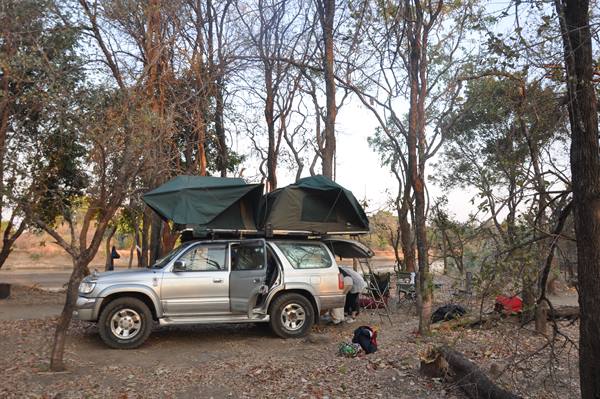
Passing through Kabwe, Kapiri Mposhi, on the border with the DRC, after Serenje we reach the turn-off north towards Lake Bangweulu and Kasanka park, famous for the migration of fruit bats that from mid-October migrate from the forests of neighbouring Democratic Congo to feed on the wild fruits of the trees of the Mushito Forest that ripen at this time, every evening offering a unique spectacle as they arrive in a group on the plain and completely darken the sky. At the Waza lodge they tell us that it is possible to see them in the morning at dawn too, so we plan an early start at 4:00 to reach the plain shortly before dawn. We stay overnight at the campsite Pontoon (25 USD per person), about 10 minutes from the Waza Lodge, they prepare the fire and hot water for the shower.
The campsite is located near the river bed and in the remaining pools the first hippos can be heard echoing, as in the rest of the campsites in Zambia, there are no fences and wild animals regularly frequent the camping areas, some sudden noise in the pitch darkness makes us jump, but the night passes peacefully.
Day 3, 25/10/16 Kasanka National Park to North Luangwa National Park, Wake-up before dawn to spot the bats, the plain where they can regularly be seen is about 10 minutes from the campsite, once there an armed ranger accompanies us into the marshy area furrowed with hippo tracks, these animals if approached too closely in the open can pose a serious danger and this justifies the presence of the armed ranger. Unfortunately we learn that the spectacle of the bats swarming is only visible in the evening and so with some disappointment we watch a few dozen bats returning to the areas where they spend the day, but nothing compared to the swarming of the roughly 5 million bats that appear to be present in this area. We console ourselves with a hearty breakfast at the Waza Lodge, well located on a waterhole full of hippos and crocodiles.
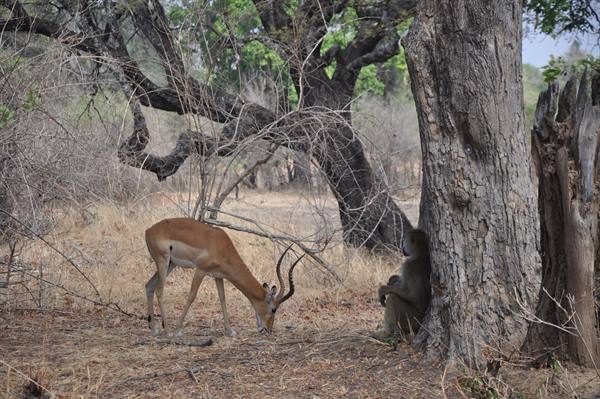
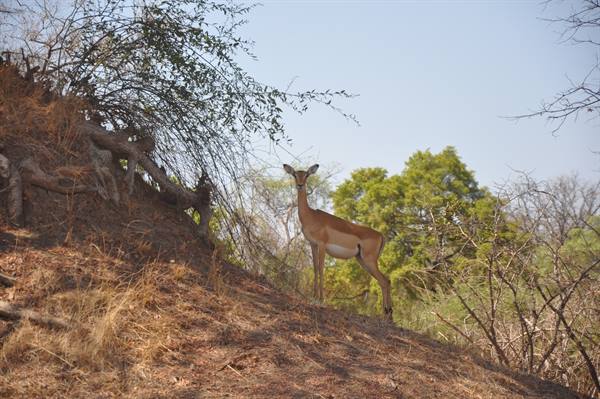
For the rest Kasanka does not offer the chance to see many other animals apart from a few impalas and other antelopes, the park is characterised by fairly dense miombo bush (Brachystegia). We continue our journey north to Mpika, have lunch and at the local market we find fried caterpillar larvae, apparently a local delicacy, I taste them and they are not bad, similar to shrimps but much saltier and tastier. We try to find out about the road conditions crossing the North Luangwa NP, we luckily manage to contact George, one of the people in charge of running the Natwange Community Camp, who assures us of the passability of the roads throughout the area as the rains have not yet started and all the rivers are still completely dry. The only ford will be the Luangwa River, which can be crossed at Chifunda or Chiweza.
A few km after Mpika we therefore take the right-hand turn-off (not shown on the TomTom maps) and begin the dirt track (about 90 km) that will take us to the park entrance near the village of Natwange. The Natwange Community camp site (15 USD per person) is located about 500 metres after the park entrance on the banks of a river, here too they prepare hot water and the usual fire. The camp is extremely basic, but the night temperature is perfect, waking up to a concert of birdsong.
Day 126 Oct 2016
4th day 26/10/16
Natwange, North Lwangwa NP to Chifunda NLNP, community camp 15 USD per person We head into North Lwangwa NP (4,634 km²), one of the parks considered among the wildest in Africa. Indeed the park is located in a very remote area and is little visited; moreover, a good part of the park cannot be visited. From the plateau we descend into the Rift Valley escarpment, the temperature rises considerably and we reach 39 degrees. Some areas are infested with tsetse flies and in many places they have installed blue and black flags soaked in permethrin, which attract the flies with the dark color and then cause their death. The road crosses numerous watercourses that are completely dry at this time of year, but hints at the difficulties that can be found after the first rains. The landscape is very beautiful but extremely dry and with several bushfires.
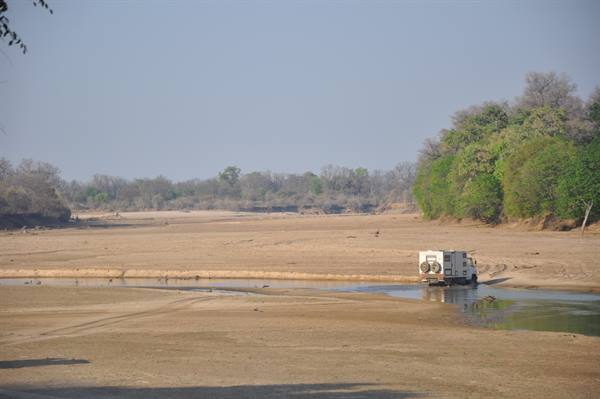
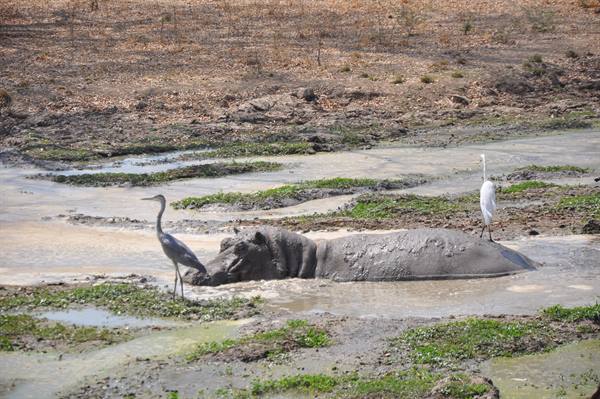
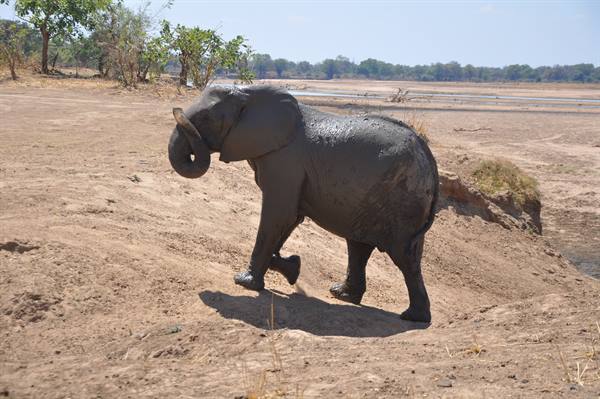
The year has been particularly dry and the green has practically disappeared, the pools completely dried up and the animals all retreated to the vicinity of the Lwangwa River in the eastern part of the park. During the whole day we don't meet a single vehicle. As we approach the Lwangwa River the animals become more numerous: the first elephants, various groups of antelopes, warthogs, hippos and crocodiles. We reach the Chiweza ford in a very remote area with no human presence. In the river, after a sandy stretch, a very muddy section remains. Since we are with a single vehicle, we don't risk fording and prefer to head to the Chifunda ford about 40 km further north, located near the campsite of the same name, where in case of problems we can count on someone's support.
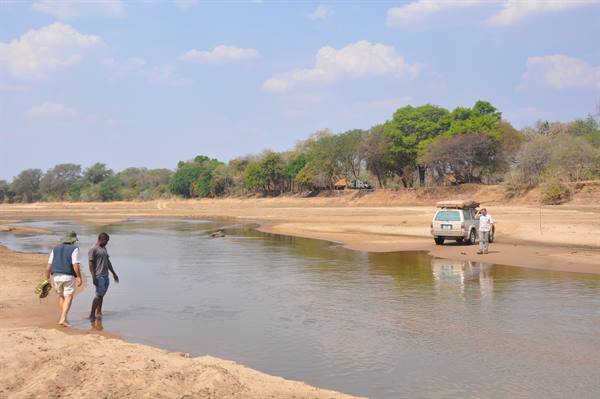
At Chifunda a pontoon for crossing vehicles should theoretically be working, but probably due to the very low river level the pontoon is out of service and the only solution is the ford. Going down into the riverbed, I get out to check the conditions of the ford; an enormous Kudu watches us from just a few meters away. After about a hundred meters of sand with several signs of other vehicles getting stuck, we reach the river which nonetheless has a reduced depth. We engage 4-wheel drive low range and pass without problems both in the sandy stretch and in the river. We camp near the ford at the Chifunda community camp, also very basic and with water drawn directly from the Lwangwa River. In these camps there is absolutely nothing available and you must therefore be completely self-sufficient as regards food and drinks.
Many baboons roam around the camp so we must be careful not to leave food within their reach.
5th day 27/10/16
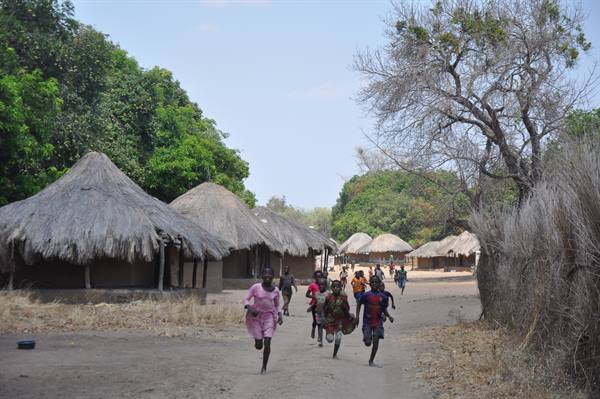
Chifunda to Mfwue South Lwangwa National Park, We leave the campsite at the ford early in the morning; the rhythm here is set by the sun, which at this time of year rises at 5 and sets around 18:00. We continue on the dirt track that moves away from the river and begins to cross a series of villages made up of a few huts of mud and thatch with their respective granaries. Here corrugated iron hasn't arrived yet, nor have the signs of commerce, no shops, only a few bicycles and a few encounters with farmers heading to the fields. These are very remote areas where time seems to have stopped. We cross the Luambe NP and near the village of Yakobe we encounter the first vehicle after two days of travel. We thus arrive at the entrance of the eastern sector of South Lwangwa Park (Nsefu sector).
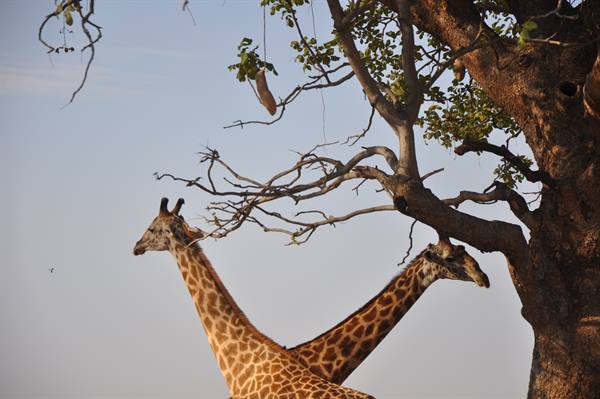
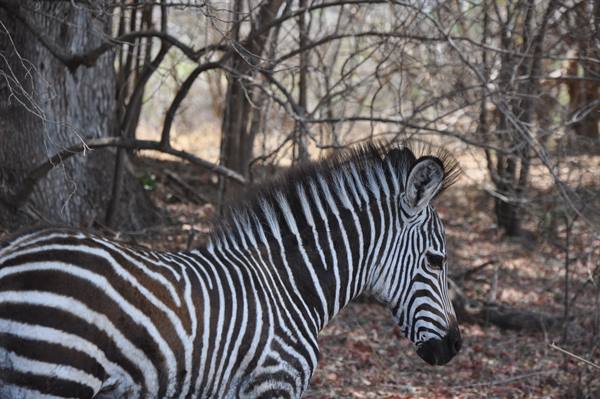
The first giraffes, many herbivores (various types of antelopes, zebras, wildebeest), in a waterhole rich in minerals we find a large group of crowned cranes. Warthogs are never missing and they run with their little tails in the air as soon as anyone approaches. The crossing of North Lwangwa and the route on the track from North to South Lwangwa costs us 4 roof rack brackets and we reach Kakumbi and the tarmac road after 3 days of tracks with only the two front brackets. We find a mechanic who, although he doesn't have the replacement parts, makes us 4 new brackets from a 3 mm metal sheet, much better than the originals. Another confirmation that in Africa, even with a lack of means, a solution is always found. We settle into 2 chalets at Track and Trail Lodge (55 USD per person).
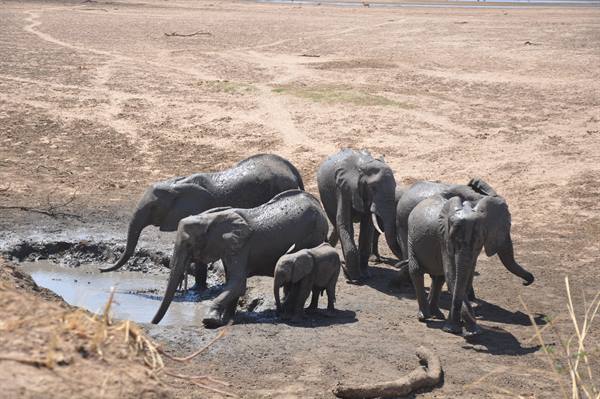
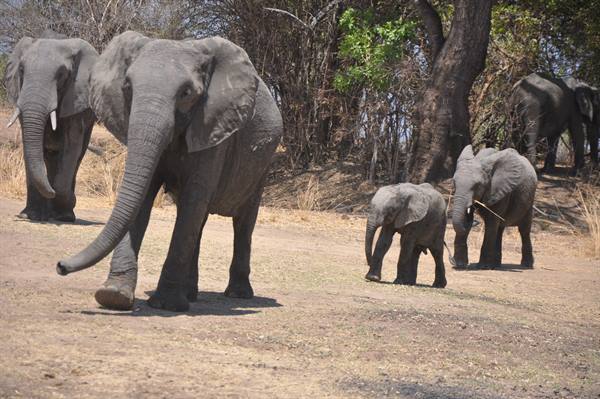
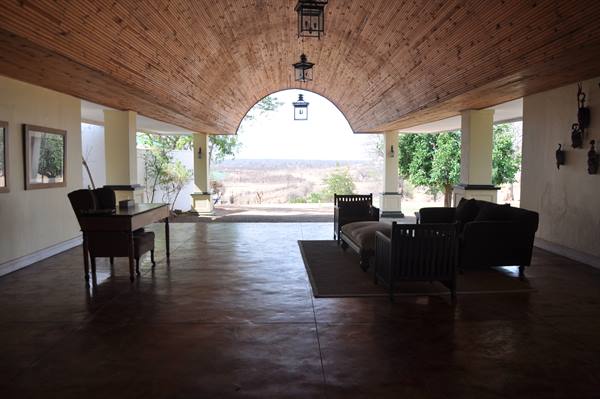
Upon our arrival at Track and Trail, it was impossible to reach the reception because a group of elephants was eating in the garden beside it. In these camps you must not leave any food in the car or in the bungalows, especially fruit, because the extremely sensitive sense of smell of elephants would identify it with unpleasant consequences for the vehicle or the room. In the evening you must carefully check with a torch for the presence of animals and you are escorted by the guards whenever you move around.
6th day 28/10/16
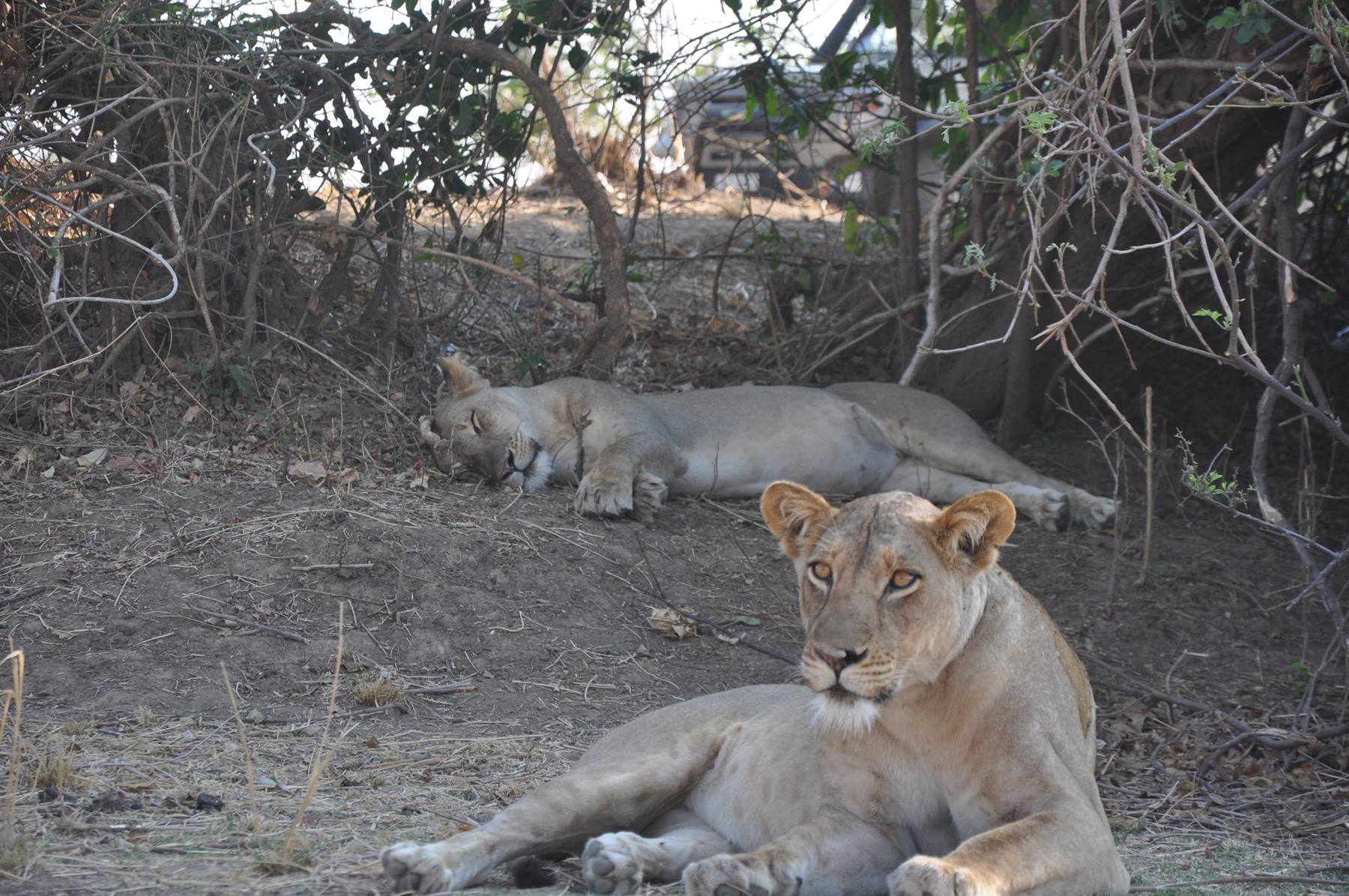
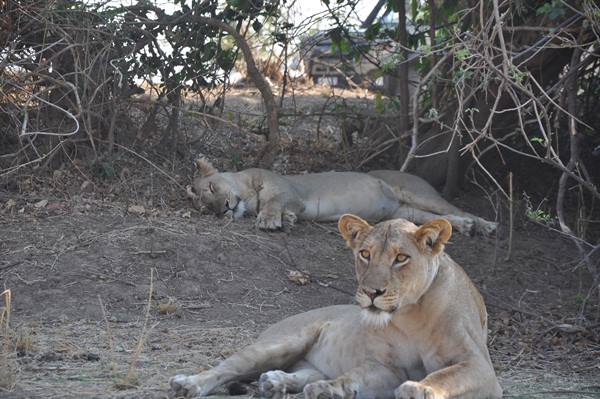
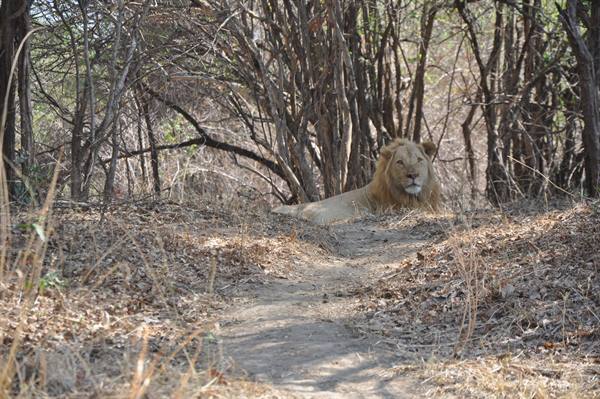
Visit to South Lwangwa National Park, A day dedicated to visiting the park, which extends for over 9,000 km². We begin the visit in the sector south of Mfwe along the Lwangwa River; the greatest number of animals is concentrated in this area. Many impala, kudu, waterbuck, warthogs, hippos and crocodiles; on the riverbed a group of lions. Going up from the riverbed onto the bank, we end up with the rear left wheel stuck in an unseen hole and the front right wheel lifted off the ground, just a few steps from the lions. What to do? We manage to get unstuck thanks to the help of a ranger who, cautiously getting out of his vehicle, manages to attach a rope and pull us out. Once at a safe distance from the lions we unhook the rope and continue the tour. The temperature is quite high and we are always traveling between 38º and 41º.
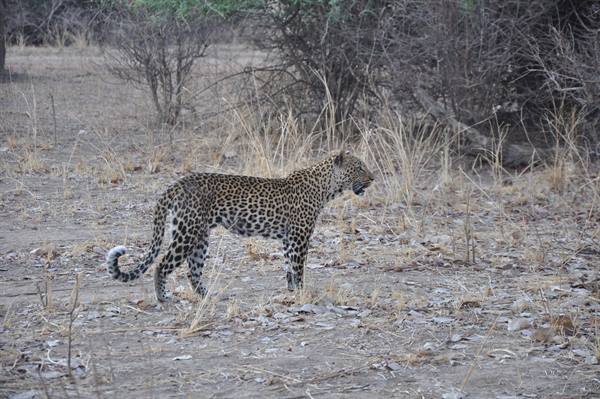
In the afternoon an encounter with a leopard right a few steps away; it gets up calmly and passing behind our car moves away. Night at Track and Trail Lodge
South Lwangwa
Day 229 Oct 2016
7th day 29/10/16
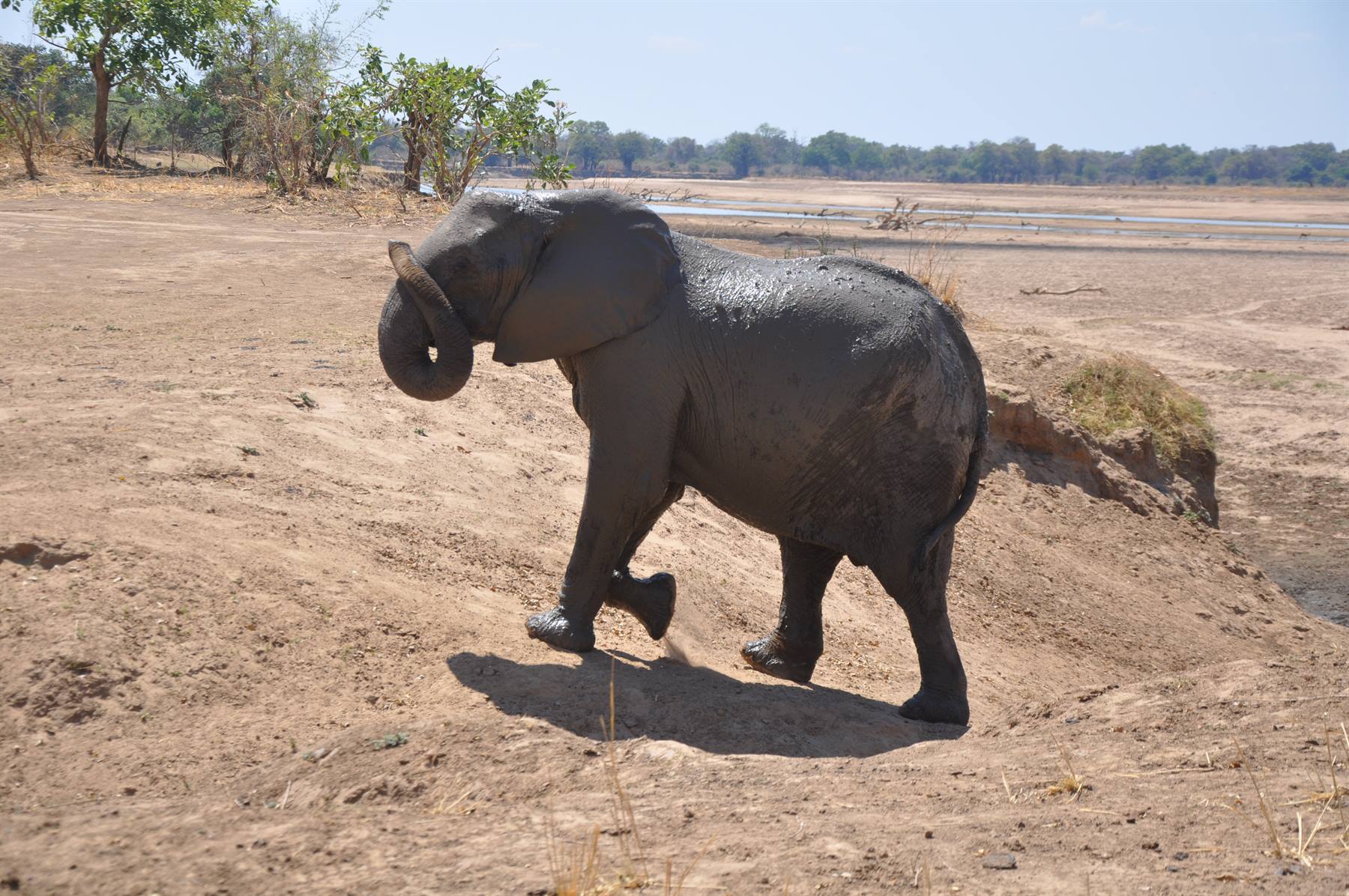
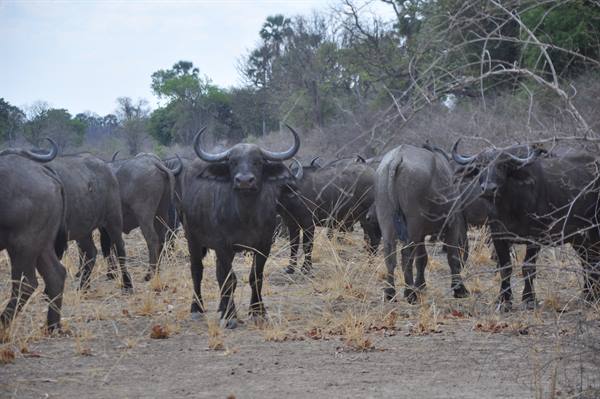
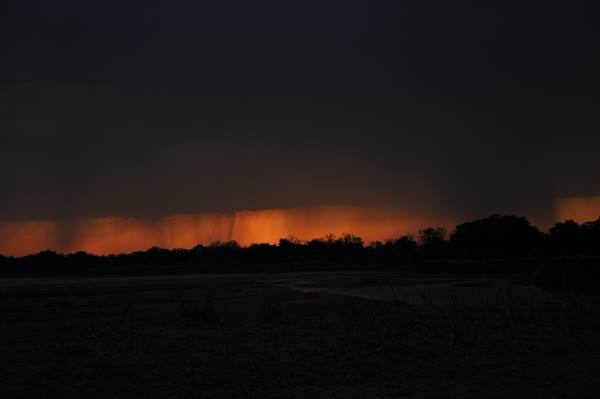
Visit to South Lwangwa National Park, Wildlife campsite, 15 USD per person Another day of visiting South Lwangwa. This time we go even deeper into the southern part of the park where, after various close encounters with elephants, we find ourselves in the middle of a herd of buffalo. Stop at the xxxxxxxxxxxxxxxxx lodge where we measure the maximum temperature of these days: 48º. Return passing through the northern sector for the sunset. Already in the dark we reach the Wildlife camp; a few meters before the entrance another encounter with a leopard on the edge of the road heading to drink at the waterhole beside the camp. Thunder in the distance and a few drops announce the imminent arrival of the rains.
After pitching the tents, a trumpeting a few meters away makes us jump and some quickly leap into the car: a group of elephants is passing just a few meters from us right in the middle of the camp. The Wildlife camp is probably one of the best options for camping in the Mfwe area. Located about 6 km from the main road in a bend of the river, it is often frequented by animals and it is easy to spot lions drinking at the surrounding waterholes. 8th day, 30/10/16 From Wildlife NP to Lilongwe We leave Mfwe and South Lwangwa NP heading for Malawi. After about an hour and a half we reach Chipata and shortly after the border. Customs procedures take us about 40 minutes and we enter Malawi. A storm looms on the horizon and before reaching Lilongwe we are in the middle of a first downpour of rain.
In Lilongwe we camp at Woodland campsite (10 USD per person) where there is also a restaurant with Indian cuisine specialties.
9th day 31/10/16
Lilongwe to Liwonde, Mvuu Lodge campsite We leave Lilongwe and head towards Liwonde NP, arriving in the early afternoon and after an initial visit we reach Mvuu Lodge campsite, located about 30 km from the entrance gate. Along the way two large herds of buffalo, elephants and antelopes. The camp is located on the riverbank and here too the elephants don't take long to show up; in the evening they pass a few meters from our tents and we remain a bit apprehensive having forgotten a bag of mangoes and bananas in the car. After knocking down the fence that separates the pool they calmly leave. 10th day 1/11/16 Liwonde At dawn we organized a boat safari on the Shire River, a tributary of Lake Malawi that flows into the Zambezi. Many hippos, crocodiles, elephants and antelopes. We see for the first time an Eland and the sand antelopes.
In the afternoon we complete the visit in the northern part of the park with a series of close encounters with groups of elephants. Night at Mvuu Lodge campsite, this time too in the company of elephants and warthogs. 11th day 2/11/16 Liwonde to Cap McLear, Chembe Lodge campsite, dinner at Cap Mc Lear lodge We leave Liwonde heading for Lake Malawi and a first stop at Cap McLear. A village with a relaxed atmosphere located on the tip of the promontory that juts into Lake Malawi. Lunch at Banapaya in a Rasta environment and camping at Chembe Lodge campsite. In the evening a strong east wind picks up forcing us to reinforce the tent anchors. 12th day 3/11/16 From Cap Mc Lear to Nkhotakhota In the morning an excursion by boat to Thumbi Island, with Mama Afrika, a small sailing catamaran.
The lake waters are crystal clear but the risk of Bilharzia, which exists throughout Lake Malawi and especially in the Cap McLear area, makes us give up any desire to dive in. Near Thumbi Island, which is in Lake Malawi National Park, we can nonetheless see several cichlids of various colors. These freshwater fish are often sought after for aquariums. On our return we continue towards the north of the lake and reach Nkhota Khota, where we stay at Pottery Lodge, a few km to the south. A magnificent beach of fine white sand and a very relaxing environment. At the lodge there is a ceramics factory and most of the utensils and furnishings are made from ceramics produced on site. Nkhotakhota Pottery Lodge, 15 USD per person for camp.
13th day 4/11/16 NkhotaKhota to Livingstonia, Mushroom farm After a hearty breakfast at Pottery Lodge with jams and homemade bread, we continue our journey along the shores of Lake Malawi, a brief stop at Nkhata Bay with a visit to the local market, and then through Mzusu we reach the village of xxxxxxxx and the turnoff for Livingstonia. A winding 15 km road climbs up the vertical walls of the Rift Valley escarpment with spectacular views of Lake Malawi below. We reach Mushroom Farm a few kilometers before Livingstonia, where a Californian couple has opened a farm dedicated to permaculture and a camp for backpackers. The farm supports a series of community projects and everything is based on sustainability: Vietnamese-style latrines for reusing excrement for compost, solar energy, wastewater reuse.
Three friendly big dogs keep away the baboons that, clambering up the escarpment, try to invade the camping area. The view from the tents and pitches is spectacular, although unfortunately a blanket of haze prevents seeing the full immensity of the lake. Vegetarian dinner at the Mushroom.
14th day 5/11/16
Livingstonia to Luwawa (Viphya plateau) Unfortunately time, which is starting to run short, doesn't allow us a visit to the nearby Nyika mountain park. A visit to the Manchewe Falls at the entrance to Livingstonia, made up of two branches that plunge into a 125-meter chasm in the Rift Valley below, which are the highest in Malawi. Visit to Livingstonia with its Victorian-style houses built here by Presbyterian missionaries around 1870, giving rise to the first mission on Lake Malawi, which they named Livingstonia in honor of the famous explorer who a few years earlier had been the first to travel through these areas. We continue on the dirt track in the direction of Rumphi; long stretches in convoy wrap us in a cloud of dust.
The road, however, under rehabilitation, despite being longer than the other, is certainly in better condition and winding along the ridges gradually descends into the valley in an area dedicated to tobacco cultivation. After Mzusu we climb back up onto the Viphya Plateau, an enormous artificial pine forest that unfortunately over vast areas is completely devastated by fires. Along the route there are still numerous fires burning. We then take the left turnoff for Luwawa Forest Lodge, located a few km after the village of Luwawa on a dusty track about 10 km from the main road. The nearby dam and its small lake make the area lush. The country-style lodge offers dishes based on very well prepared local products. 15th day 6/11/16 From Luwawa to Lusaka. A big transfer stage awaits us to get closer to Victoria Falls, the final destination of our trip.
We thus cover 880 km for an overnight stop in Lusaka at Pioneer Lodge, tented camp 80 USD per tent. Located about fifteen km from Lusaka at the end of 6 km of dusty track, Pioneer gives the impression of a camp in the middle of the bush, making you forget you are near a big city. It is also located just a few kilometers from the airport, making it an excellent solution for a first or last night.
South Lwangwa National Park
Day 37 Nov 2016
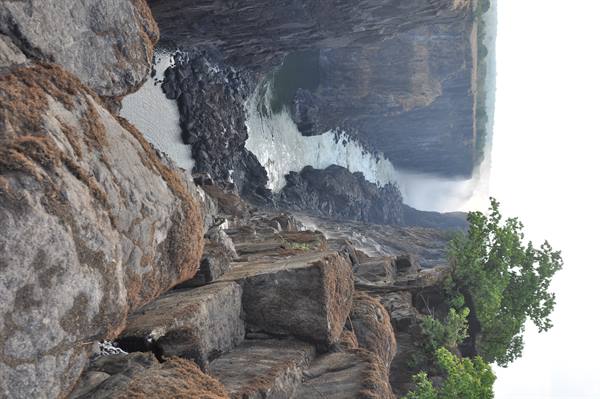
16th day 7/11/16 Lusaka to Livingstone, Victoria Falls 550 km, Another big transfer stage. We arrive in Livingstone around 15:30, still in time for a visit to Victoria Falls from the Zambian side. In this sector there is very little water and this allows us to walk right up to the edge of the falls and approach Livingstone Island, unthinkable when the flow is at its peak. Dinner and night at Victoria Falls Waterfront, with an indescribable quantity of mosquitoes. Entry to the park from the Zambian side costs 20 USD per person. 17th day 8/11/16 Early in the morning we take down the tents and approach the border. We park the car at the entrance to the park on the Zambia side and continue on foot towards the border.
Time to fill in the border forms and we cross the bridge over the Zambezi that marks the border between Zambia and Zimbabwe, with a magnificent view of the gorges below, at the bottom of which the Zambezi flows. After the bridge, Zimbabwe border formalities where we must pay for the entry visa (30 USD). Entry to the Victoria Falls site is only 200 meters after customs and we begin the visit to Victoria Falls from the Zimbabwe side, entry 30 USD. After breakfast at the falls café, we retrace our steps between the two borders, retrieve the car and transfer to Lusaka Pioneer Lodge. 18th day 9/11/16 After breakfast at Pioneer Lodge we visit the craft market in Lusaka, lunch at Rapsody Arcades centre, and after accompanying our travel companions to the airport we return to drop off the car and for the night at Cresta Golfview.
19th day 10/11/16 Flight to Addis Ababa, night at Hotel Nazra 20th day 11/11/16 Flight Addis Ababa to Accra, again the entry visa (50 USD), visit to the craft market where we buy 2 small tables with metal inlays. Night at Novotel. 21st day 12/11/16 Flight Accra to São Tomé
0 reader comments