The story
Rita and I go to Paris every two years; there are always new things to see, including what was being reworked or renovated years earlier and therefore not visitable. We left Turin on the TGV on 4/5/2015, arriving in Paris shortly after 1 pm, a quick snack at the station and then on foot to our usual Hotel Jules Cesar. Double room with private facilities, no bidet, double glazing, flat-screen TV (no Italian channels), good room size, WiFi. 90 euros without breakfast. We begin our stay with a walk along the Champs-Élysées, under light rain. Elegant shop windows, but mid-range shops, hard to find a nice bar, almost all have long since become restaurants; the open-air terraces that work as bars operate practically only in the morning. In the evening we go to Les Halles; the redevelopment work in the area is still under way, so there are wide hoardings that sacrifice the church of St.
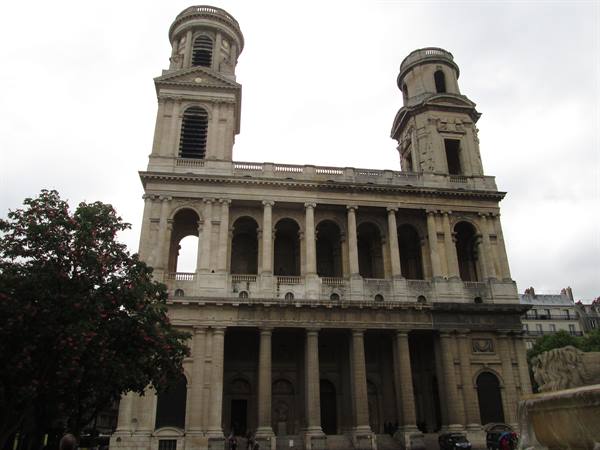
Eustache. Then dinner at Ristorante Bianco, on rue Montorgueil, a restaurant found by chance, modern decor, all white, mid-range prices, there are even Italian staff, cooking on a par with the city average. May 5 A wander around St. Germain des Prés, once a meeting place for intellectuals, artists and students, now a mainly touristy district. I go into the church of St. Sulpice, which faces the tree-lined square of the same name with a large fountain called the "cardinal points" in the centre; the church is Baroque, divided into two levels with Doric columns, practically Neoclassical, the upper part almost like a balcony; the interior is large, with chapels along the sides, one of which was the reason for my visit: the frescoes by Velázquez.
Unfortunately, the poor lighting and the grey day prevent me from seeing them well; I nevertheless admired the wooden pulpit (throne) and the famous organ, and in the other chapels paintings and sculptures by French artists including Pigalle. The church was used to shoot some scenes of the film "The Da Vinci Code". Then lunch at the self-service of the Bazar de l'Hôtel de Ville, a good self-service on the 5th floor, beside the Hôtel, with large glass walls that turn the room into a belvedere over the city and the Seine; there is a huge choice of food divided into areas: pasta, pizza, meat, fish, vegetables, salads and desserts, almost all prepared, then fruit, cheeses, etc. We came here for lunch every day. In the afternoon we visit the Picasso Museum, reopened shortly before after years of renovation of the Hôtel Salé, housed in a historic Baroque palace.
There are 37 rooms over three floors, a large terrace with a bar; paintings, sculptures and objects are presented in chronological order, allowing a complete view of the evolution of the great painter's artistic path. On the top floor, the collection of works gathered by the painter is displayed, works by great artists, almost all Impressionists, among them Cézanne, Renoir, Degas, Corot and others. Of great interest are Picasso's works with paintings of the same subject as the works on display. A museum not to be missed; note that we bought the tickets online from Turin with no surcharge, and in any case we would not have queued much. Then a walk around the Louvre area, and dinner at the Bistrot des Vosges in the Bastille area, a nice place, good onion soup, friendly service, low prices for Paris. May 6 It is the morning of the gardens: Rita at the Trocadéro, I at the Luxembourg.
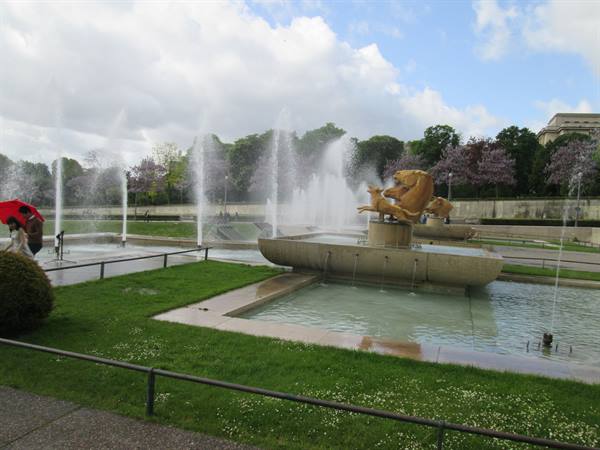
The Trocadéro gardens, set between the Eiffel Tower and the Seine, form a large green area decorated with many sculptures and with a breathtaking view of the tower. The great Warsaw Fountain is impressive, made up of a row of cascading fountains with very high jets which, because of the windy day, often forced tourists into unexpected showers; the gilded bronze and stone statues that decorate it are lovely; the Palais de Chaillot that faces the garden did not strike me particularly. The Luxembourg Palace is in the Baroque style and is the seat of the French Senate; the gardens of the same name were commissioned by Catherine de' Medici in the 17th century and are among the largest in the city, well kept, as you can see from the number of workers I saw tending the flowerbeds and the park.
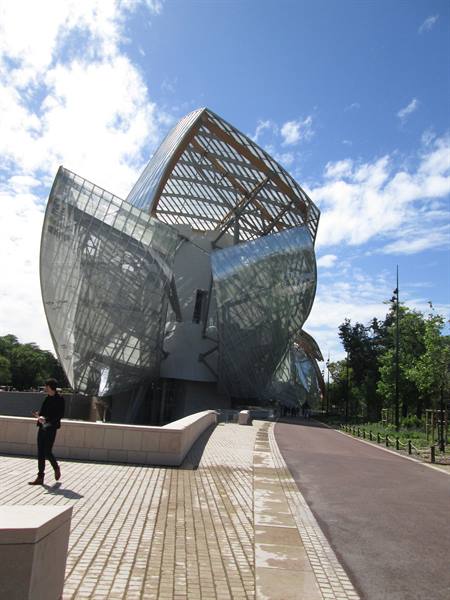
There is also a small pond-basin surrounded by chairs available to visitors, freely movable, indeed they are seen everywhere; there is no shortage of children's play areas, tennis, ponies, a few kiosks and a restaurant, all well hidden in the wooded areas of the park, so you barely see them. The day was grey, there were not many people; I also saw the Medici Fountain, a fountain with a long, narrow basin with colossal sculptures; I find it a little disappointing, and besides, over the years it was moved and some sculptures were added, so little of the original remains. After lunch, we take metro line 1 to the Bois de Boulogne to visit the Vuitton Museum, a breathtaking glass-and-steel construction shaped like a caravel, the work of one of the greatest living architects (Frank Gehry), which alone is worth the visit.
Open for only a few months, the temporary exhibition "Les clefs d'une passion" is exceptional, with works by great modern and contemporary painters, among them Munch, Bonnard, Kandinsky, Monet, Matisse, from museum and private collections all over the world. We then visited the permanent contemporary art collection, a little disappointing; we finish the visit by going out onto the terraces of the top floors, which offer a beautiful panorama over modern Paris. Here too there was little queue; we had booked just to be safe, and also here with no fees.
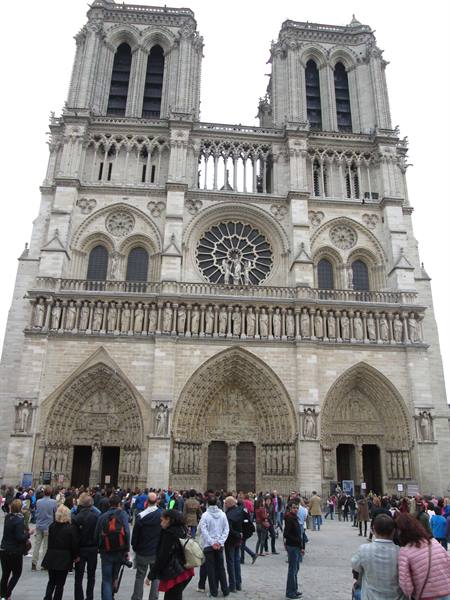
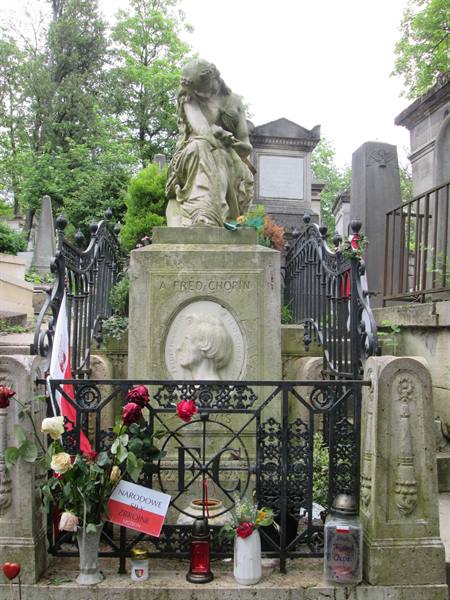
May 8, visit to the Sacré-Cœur, with a lovely panorama from the top of the hill of the site, then to Place du Tertre, where we buy a small painting from a painter, then by metro to the historic Père Lachaise Cemetery, where figures who made their mark in every field, not only French, are buried (Chopin, Molière, Modigliani, Pissarro, Wilde, Proust, Callas, Piaf and many others). Unfortunately the site maps were sold out; we look for some of the greats, such as Chopin, whom we find, while we fail to find Proust's grave; the cemetery is very large. In the afternoon we go to Notre-Dame Cathedral; many people in the square, where a big baguette festival is under way.
Naturally I visit the 13th-century church with its magnificent stained-glass windows, though not original, then the choir with its bas-reliefs; then we go out and enjoy the portals of the facade with their beautiful sculptures; the portal of the Last Judgement is not to be missed. Towards 8 pm we go to the Beaubourg area, less crowded than usual but still lively; the view of the original Centre Pompidou building is always a pleasure; we see the Stravinsky Fountain again, a fountain of modern design. May 9, departure day; we decide to go back to Place des Vosges, which I consider the most beautiful square in Paris. We reach it passing through the Hôtel de Sully, a 17th-century historic monument with an artistic facade, a courtyard of honour and a garden; the palace is used as offices, but there is also a bookshop of art books and guides, not only for Paris.
We then enter the Square built by the King of France in the 1600s. Fortunately the day is sunny and we can enjoy the charm of this magnificent square, square-shaped with identical buildings in red stone with arcades and slate roofs, a large garden and a fountain, with bars and shops under the arcades. After the ritual photo, a light snack and departure for Turin.
ferny forner rita risoli
The journey's photographs
5 photographs · click to open them full screen
0 reader comments