Before we begin For a few years now I (Federico Chierichetti, from Milan) and my girlfriend Daniela had been thinking of visiting Iceland, driven by the desire for a road trip in a remote and, all in all, inhospitable land, but full of natural riches. However, after the cold and polluted winters of Milan, the idea of mortgaging part of our summer and devoting it to a cold place held us back. In the end, though, we decided we couldn't reason that way and we booked. 8 days on a fly and drive to visit, even if a little quickly, all the most significant places of this fascinating country. Not wanting to give up the warmth, on our return from Iceland we immediately set off again for Cape Verde. In 16 days we thus went from the cold of the Arctic Circle to the heat of the Tropic of Cancer. A summer of contrasts, in the purest adventurous spirit.
Of course the costs were considerable: about 2800 euros each for Iceland and another 1400 each for Cape Verde, but it was an unforgettable experience. But let's get back to Iceland. We saw unique places, waterfalls, volcanoes, glaciers, icebergs, deserts, sea, dolphins, sheep (lots of sheep), horses, birds, in short, nature at full power. We liked it so much that we'll be back before long. This time, however, we'll go with a specific goal, choosing to do one of the many trekking routes the country is full of and which this time we couldn't do for reasons of time. Some are among the most beautiful in the world, such as the Porsmork - Landmannalaugar, which in 4-5 days of walking leads through wild places of incredible beauty. A few practical points: as is evident, it's a very expensive country. Petrol costs more than at home, not to mention food and hotels or farms.
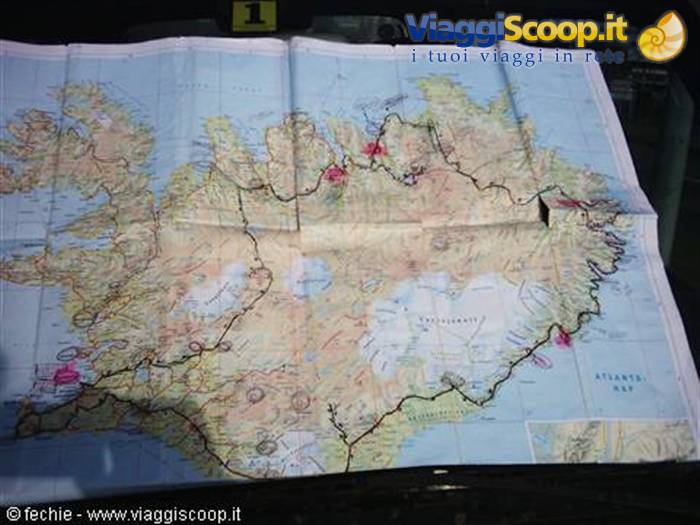
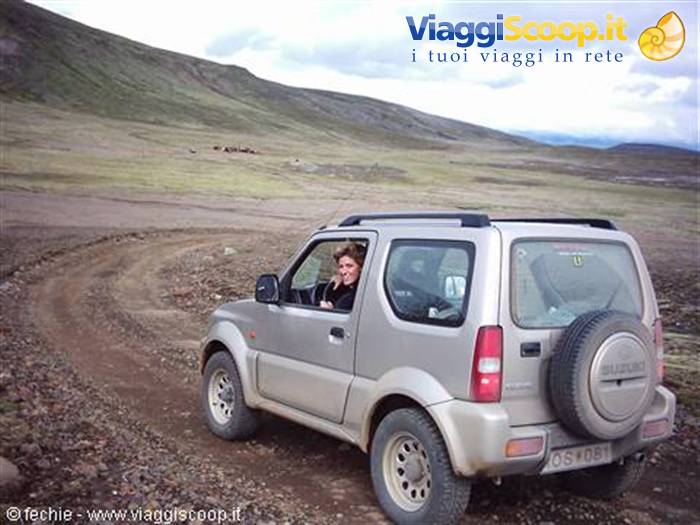
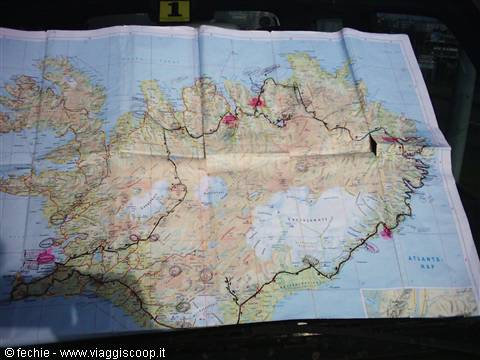
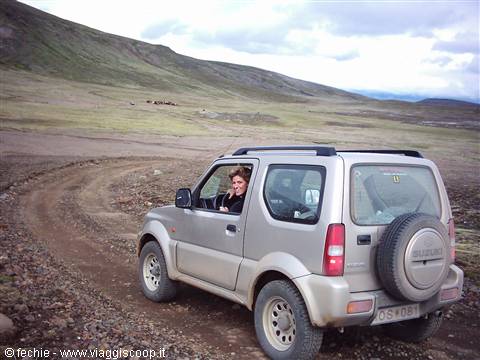
In 8 days we saw everything most significant to see rather quickly, leaving out however the north-west part. We travelled around on our own, with a Hertz 4x4 (indispensable for reaching certain places). By sleeping in a sleeping bag (an option we discarded) you can certainly save quite a bit, but it doesn't pay to save on the car, because you risk not being able to reach many beautiful places. Our Suzuki Jimny is the bare minimum and in some cases it wasn't enough. The main problem is fording rivers. If they're swollen you need a taller 4x4 so as not to risk getting stuck or having to turn back. The optimal route is the Ring Road, which runs all the way around the perimeter of Iceland and is almost entirely paved. From the Ring Road, then, all the detours to the interior areas to visit branch off.
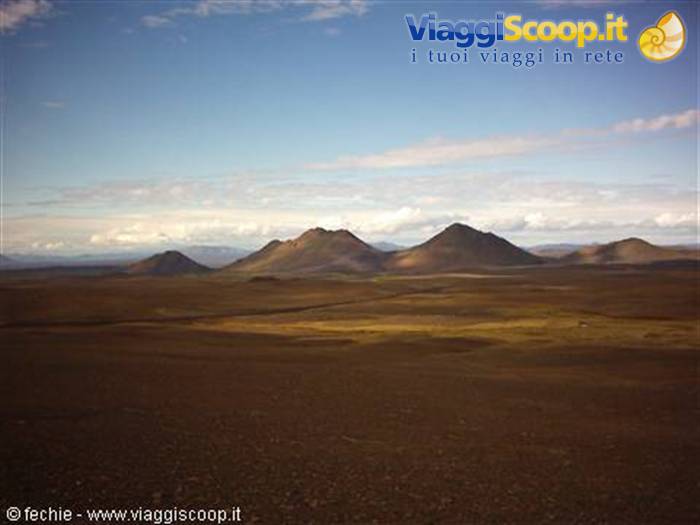
Among the many, we definitely recommend the experience of driving (better in a 4x4, though with a bit of caution and more time on your hands you can manage it in a small car too) the interior Kjolur track (no. 35). It's in good condition on the whole and lets you savour the atmosphere of the desolate, wild and uninhabited Icelandic interior. So here's what we managed to do in 8 days.
Day 15 Aug 2005
5 August 2005 Milan – Rejkiavik. Very punctual Icelandair flight. Iceland, the land of ice, is incredibly close to Italy. Just under 4 hours of flight. We take the Flybuss to the city Bus Terminal (about 45 minutes). from there a smaller minibus takes us to the Hotel Fron which is right in the centre, on the main street of Rejkiavik. As it is almost midnight, the classic Runtur is about to begin, the tour of the bars that the city's young people do every weekend to have fun and get drunk on beer. We gladly skip this practice and go to bed. A small note on city hotels: Iceland for the moment still doesn't have an official classification of its hotels. This is because tourism is decidedly recent. The level of the hotels, therefore, is not comparable to that of Italy or other countries.
For example the Hotel Fron, despite being very central and renowned, has enormous rooms (ours was a little apartment with kitchen and living room), but not at all cosy.
Itinerary
Day 26 Aug 2005
6 August 2005 Rejkiavik – Vik. 346 km. We immediately pick up the car (a Suzuky Jimny off-road vehicle) at Hertz and set off for the Rejkianes peninsula, west of Rejkiavik. The first stop is the south-western tip of the peninsula where, passing through a flat and lunar landscape, you arrive at a lighthouse near which a huge colony of Sule (gull-like birds) nests. The wind is freezing, the temperature is around 9 degrees. This entices us to stop at the nearby Blue Lagoon, the famous artificial lake fed by the water used by the nearby geothermal power plant. The water temperature (white as milk because it is rich in Silica) is about 38 degrees, and the surrounding landscape has something unreal about it thanks to the steam that envelops everything like a light mist. It is undoubtedly a pleasant stop especially for the contrast between the cold of the air and the warmth of the water.
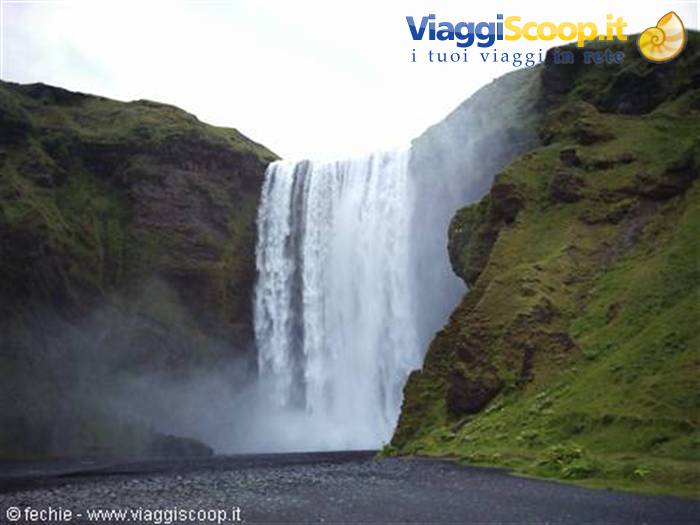
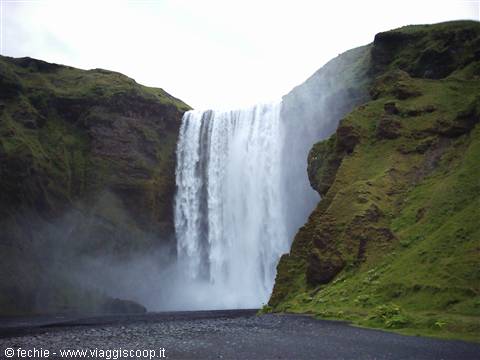
The skin, moreover, they tell us, will greatly benefit (we'll see). We set off again after a couple of hours towards Selfoss and Hella (famous for its Icelandic horses). We see in the distance the bulk of the Hekla volcano, the most famous in Iceland thanks to its spectacular eruptions that occur about every 10 years.. By the way, the last one was 9 years ago… The summit is shrouded in fog, so we give up getting too close and stop at the first two waterfalls of our trip: Seijalandfoss and Skogafoss. The latter, perfectly visible from the Ring Road, is set in a very green landscape. We stop and visit this splendid place at our leisure, climbing the long staircase that leads to the top of the waterfall. The intense noise of the water, the splashes created by the impact with the ground, the grey and drizzly sky make the atmosphere truly unreal. The air smells of nature.
We arrive in the evening (so to speak, given that there is light until 11 pm) at the Dyrholaey Reserve, a few kilometres from the small village of Vik. We stay overnight in a farm in the middle of absolute nowhere with a splendid view of the sea stacks and the nature reserve that contains them.
Skogafoss
Day 37 Aug 2005
7 August 2005. Vik – Hofn. 350 km. We wake up at dawn and after breakfast we visit, under pouring rain and an arctic wind, the Sea Stacks and the black beach of Reyinisfjara. The spectacle is splendid: the sea is rough with very high waves crashing on the volcanic beach. Dany has forgotten her windproof trousers, so I lend her mine, exposing myself to the elements as only the men of other times knew how to do… After a stop at a service station where I change my soaked trousers and Dany buys a pair of windproof trousers, we set off again towards the geothermal area of Landmannalanguar. We know that the road to reach this place (which is the most famous for geothermal activity and natural hot pools) is extremely impervious. It is about 40 km. of dirt road. In some points it is truly broken up and not passable by normal cars.
Fortunately our Suzuky does its duty marvellously and overcomes all the most difficult points with ease. The surrounding landscape is very green and dotted with streams rather swollen by the rain that has been raging for 2 days. There are only us, in the middle of nowhere, without mobile phone coverage and decidedly electrified by the experience we are living. In an hour of dirt road we meet only 1 car and a couple of mad cyclists who are doing the tour of Iceland by bicycle. During the route we have to ford a couple of little streams (great fun!). unfortunately though after an hour we arrive at a ford that leaves us perplexed, the river is swollen by the rain and frankly it seems risky to attempt the ford. We wait a bit, taking advantage of the stop to eat something packed. We hope someone arrives who dares to ford it to understand how deep it is.
After a while another Jimny arrives, which also stops. Shortly after a big jeep that without hesitating tackles the ford. We realise that the river is deep and the water would lap the bonnet of our jeep. Not being experts, reluctantly we decide to give up. We don't want to risk getting stuck in the middle of the ford with all the unpleasant consequences that would entail. We are disappointed, because up to there everything had gone smoothly. We have to give up visiting the Landmannalanguar area. Never mind, it's part of the unexpected events that trips like these involve. We return to the Ring Road and head towards the Vatnajokull National Park, the largest glacier in Europe (oh yes, we are in Europe, it seems such a surreal world that often one doesn't think about it).
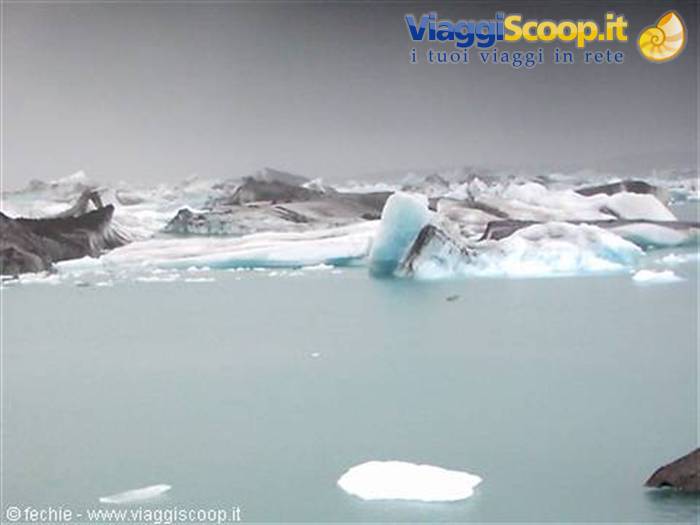
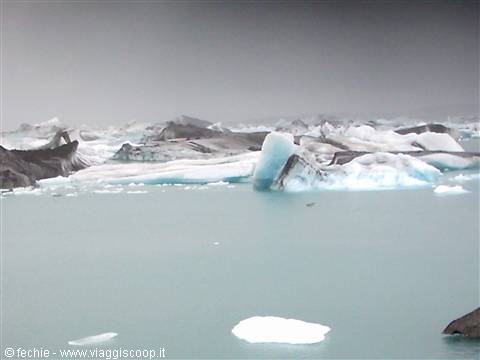
We first cross the Sandur, the enormous expanse of sand and debris that formed following the eruptions of the volcano located at the centre of the glacier. Every eruption in fact entails the sudden melting of enormous masses of ice that create biblical floods. Here we stop all afternoon and visit on foot both the Skatafell ice tongue and the famous Svartifoss, a waterfall surrounded by hexagonal basalt columns. Finally a glimmer of sun!! We set off again towards the Jokulsarlon lagoon. The landscape that awaits us is a lake connected with the sea dotted with Icebergs. For the first time I realise I am really just a few hundred km from the polar circle. It is one of the most beautiful stops of the trip. There are seals, birds and an unreal silence. Every now and then the noise of the ice breaking off or colliding. Beautiful.
In the evening we arrive at the Skatafell farm a few km from Hofn. It is truly an enchanted farm. Behind it a mountain from which a waterfall descends, in front a swollen river that carries the glacier water towards the sea. We have dinner as if in a family with the food prepared by the landlady.
Jokulsarlon
Day 48 Aug 2005
8 August 2005. Hofn – Neskaupstadur. 480 km. The day is dedicated to seeing the eastern fjords. The weather is what it is. It rains and often there is fog too. Fortunately, when we arrive at the most beautiful fjord, the Sejdysfjordur, the fog gives way to sun. We take a nice tour and visit the town of the same name located at the end of the fjord. Certainly many of the beautiful places we visited during the day would have made a better impression on us if there had been sun. Unfortunately the fog often literally prevented us from enjoying the beautiful landscapes that surrounded us. We stay overnight in Neskaupstadur at the Capitano hotel. The hotel from the outside looks like a favela of blue tin and certainly doesn't entice, but the rooms are cosy and clean, always bearing in mind the average. We are the only guests and the owner prepares us a dinner of fried fish.
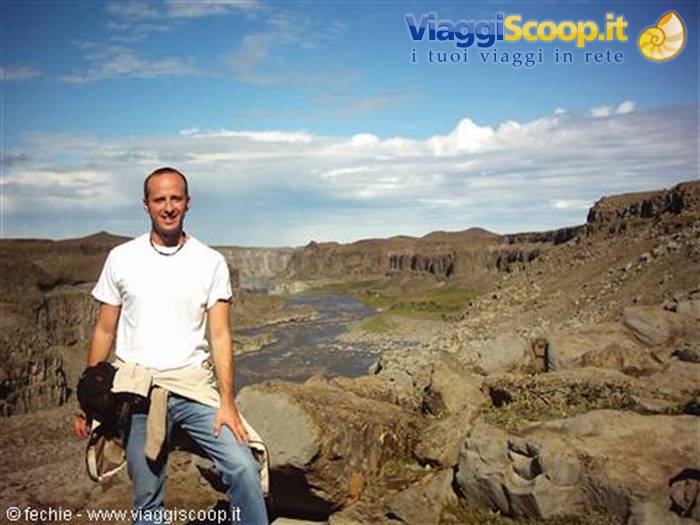
Towards Dettifoss
Day 59 Aug 2005
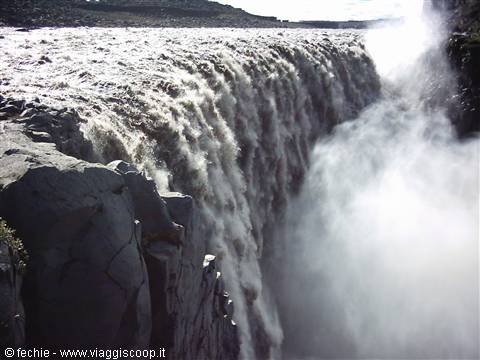
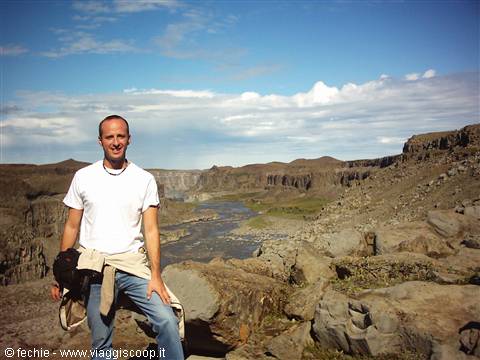
9 August 2005. Neskaupstadur – Lake Myvatn. 365 km. We wake up again at dawn and after a stop for petrol and buying packed lunch, we set off in great spirits. There is sun and not even a cloud. In short, the day looks promising. The morning's destination is the Jokulsarljufur National Park, to the north. We get there quickly passing through Egilsstadir. We stop at Dettifoss, the waterfall with the greatest water flow in Europe. The landscape that awaits us has nothing to envy of the American Grand Canyon (even if here everything is smaller). A canyon carved by a swollen river suddenly becomes even deeper, forcing the river into a 50-metre drop. The roar is impressive and the sensations incredible. And then the sun makes the colours of the landscape truly fascinating. After a long walk along the edges of the waterfall we proceed towards the horseshoe-shaped Asbyrgi canyon.
We climb up onto the “islet” of Eyan, in the centre of the canyon. We are alone (a recurring thing on this trip) and there is a magnificent sun. Once at the top I experience the thrill of staying bare-chested and in shorts no more than 100 km from the Polar Circle. We eat our packed lunch under the sun. We set off again towards Husavik. We want to board one of the many boats that tour the bay in search of whales and dolphins. Within less than an hour we go from the warm sun to the freezing cold and fog of the open sea (the weather changes rapidly in these parts). We are in the arctic glacial sea and we spend three hours hoping to spot something. Of whales no trace, but on the other hand we see lots of large dolphins swimming in pods a short distance from the boat. A beautiful experience.
We have dinner in a really nice restaurant frequented by locals in the small port of the village and set off towards the farm that will host us for the night, not far from the Lake Myvatn area
The Kjolur track
Day 610 Aug 2005
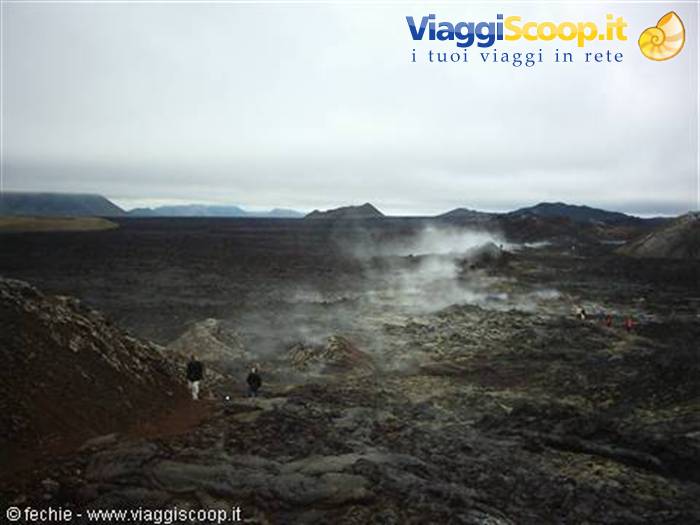
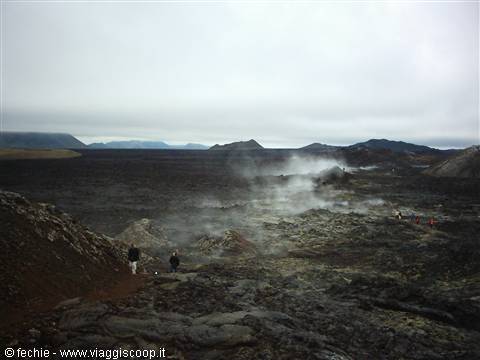
10 August 2005. Myvatn – Akureyri. 214 km. After a short stop at Godafoss, the waterfall of the gods, the day is dedicated to visiting the craters of the Krafla volcano and the geothermal springs with the sulphur fumaroles of Lake Myvatn. We stop at the info centre to buy a net that will protect our faces from the annoying midges that infest the area. We visit the areas of Namafjall where we climb the small crater from which one enjoys a fantastic view of the fumaroles. Breathtaking is the visit to the fissures of the earth's crust at the highest point of the Krafla, a few kilometres north-west of Namafjall. The Krafla actually doesn't resemble at all the usual image one has of volcanoes. In fact it consists of a series of smoking fissures that run in a north-south direction and beneath which lies an immense magma chamber.
At intervals of a few years the reservoir fills up and the lava flows out from the cracks filling the surrounding areas. The smells and the smoke that come out of the fissures give the place a certain primordial something. Exhausted from the day we stop to bathe in the local blue lagoon and head towards Akureyri where we stay overnight after a dinner at the Bautinn, a restaurant frequented by locals where they also eat whale meat, which I taste. It is similar to beef. A quick walk around the town and off to bed.
Towards Krafla
Day 711 Aug 2005
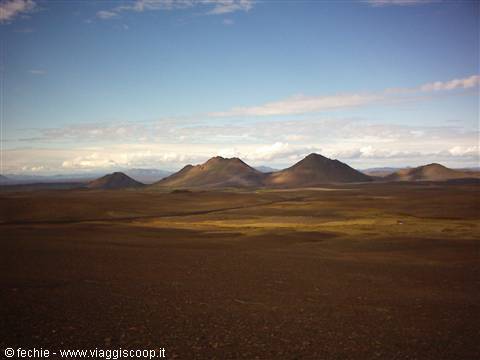
11 August 2005. Akureyri – Rejkiavik. 435 km. We decide to tackle the return to Rejkiavik by travelling through the wild interior of western Iceland. We therefore leave the Ring Road at the height of Blonduos and get onto the Kjolur track (road no. 35) which crosses Iceland in the middle of the Langjokull and Hofsjokul glaciers. The track is dirt and in average condition, but inadvisable for normal cars. We with our Jimny have no problems. The landscape that unfolds little by little is fantastic: from very green areas full of sheep to desert areas without a blade of grass. In these desolate lands the astronauts who landed on the moon came to do preparation tests. All around glaciers and stupendous valleys. Obviously we meet almost no one and there is no GSM coverage.
We stop at the geothermal area of Hveravellir and from here we divert onto a 12 km track to Pjofadolir, at the mouth of the Langjokull ice cap. We have lunch in complete solitude in the company of an incredible view over the valley below where a herd of Icelandic horses also passes. We return to track no.35 and continue for various hours until the end, at the most famous waterfall in Iceland: Gullfoss. A double drop into a narrow and deep canyon that creates an incredible effect of vertical splashes. When there is sun the splashes create dozens of rainbows. Shortly after we stop at Geysir to witness the spout of boiling water from which all the geysers on Earth have taken their name. At this point about 100 km remain to Rejkiavik which we cover calmly.
On arrival in the city traffic we realise we are no longer used to seeing so many people all together… We have dinner in a steak house in the centre (very expensive even if in line with Icelandic restaurants) and go to the hotel to pack our suitcases.
Krafla
Day 812 Aug 2005
12 August 2005. Rejkiavik – Milan. We have the whole morning to visit the northernmost capital of Europe. We walk to the cathedral that dominates the historic centre, visit the neighbourhoods all around and the gardens. The city is still asleep after the excesses of the usual weekend Runtur. We return the car to Hertz and unfortunately we miss the bus to the airport. We have to take a taxi (famous for being among the most expensive in the world). We experience the thrill of paying 7500 kronur (about 100 euros) to cover 30 km. Never mind. The flight leaves on time and arrives at Malpensa a few minutes early.
0 reader comments