From Dubai to Oman the flight is short, but it feels like flying through the centuries: from the futuristic architecture that borders on science fiction of the Emirate, with its frenetic pace driven by business and entertainment, to the harsh mountains of the Sultanate, its roads that cross surreal and wild landscapes, from the scorching desert broken up by splendid oases carved by the wadis, to the beaches washed by a turquoise sea, where the turtles come every night to lay their eggs. Two worlds geographically close, yet so far apart in mentality, and yet both deeply fascinating, united by one unique feature: the practice of Islam in its most intriguing, authentic form, with respect and tolerance towards all other peoples. Dubai and Oman, a journey through the scents and colours of Arabia, moving from the most extreme futurism to a deep and radical respect for ancient traditions.
And that feeling of authenticity that perhaps in other places has been inexorably lost.
My guide and travel diary on Oman:
Some insights into Oman:
Oman has been opening up strongly to tourism over the last two years: a world that remained closed for millennia is beginning to see the first groups of tourists on its territory, the cruise passengers who stop in Muscat, in addition of course to the classic do-it-yourself travellers who have never been lacking. The impression is that Oman should be visited as soon as possible, before it loses (something has already been lost) its deep authentic soul. Many people ask me: yes, but what is there to see in Oman? Briefly: the fortified town of Nizwa, perhaps the one most tied to ancient traditions, with its characteristic souk and livestock trading; the nearby forts of Bahla, Jabrin, Nakhal and Rustaq, which look like sand mirages in the desert with their smooth, polished walls and elaborate towers, surrounded by dense palm groves.
The wild mountains of the interior, with breathtaking dirt tracks that climb its canyons and slopes. The splendid wadis, deep and lush canyons rich in water and palms, where you can go trekking combined with wonderful swims in crystal-clear waters. The endless deserted beaches, from the white ones washed by turquoise water, to those of yellow sand and emerald-green waters, from the infinite expanses south of Sur inhabited by giant turtles, to the pristine and little-known Daymanyat islands, similar to Maldivian atolls, rich in coral reefs but devoid of vegetation. Finally, the distinctive capital Muscat, divided into several neighbourhoods, some of which look like villages, with its strong contradictions, from the typical fish market and the souq, to the extravagant Sultan's palace, ending with the astonishing Grand Mosque.
All of this seasoned with the smile and kindness of a curious people, who ask for nothing more than a greeting from you to give you a warm welcome.
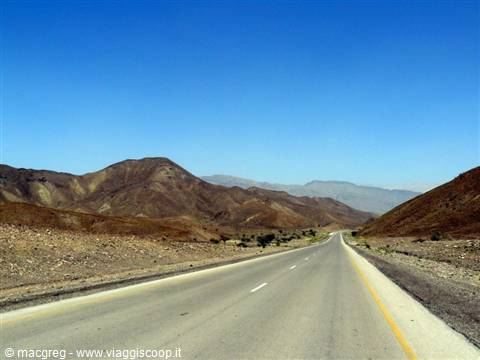
Except for Muscat, tourist services are not very developed: there are few hotels, concentrated in the larger towns, such as Nizwa and Sur, there are no international restaurants and in some places the hotel restaurant is the only one available. Service in the hotels is courteous but spartan, except for the big hotel chains. The main roads are beautiful and well maintained, but to reach some of the most fascinating places a 4x4 is necessary, such as Jebel Shams (the Grand Canyon of Oman), crossing the Hajar mountains, driving the easy tracks of the Wahiba Sands and reaching some enchanting beaches between Sur and Oman, such as White Beach.
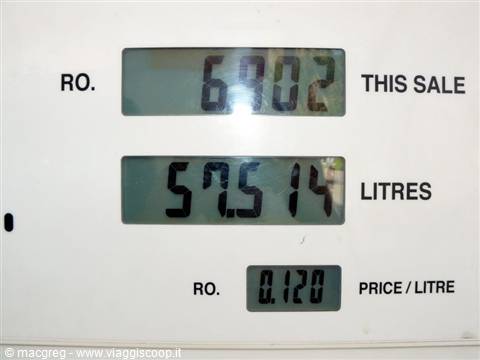
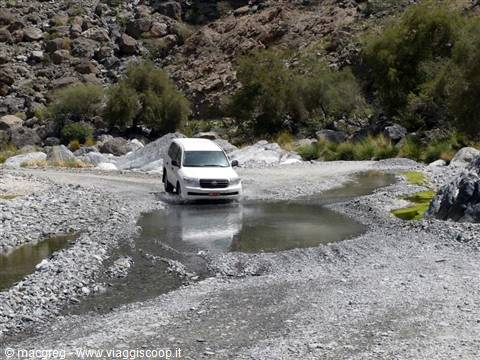
The dirt roads are fun and in good condition; be careful, in the mountains they are often exposed and unprotected, while the one crossing the Wadi Bani AWF sometimes fords small, shallow streams, which can turn into something dangerous if it has rained recently. Avoid it in that case. Signage is scarce, including for tourist sites: we had a laptop with a GPS antenna to get our position in real time on Google Earth, very handy, but not indispensable. A good map is enough. Be careful, many people speak only Arabic. Clothing: certainly respectful but not compulsory. Women too can wander around comfortably in a vest and shorts, and wear a bikini on any beach. Naturally this applies to tourists; local women wear exclusively a traditional black dress with the face covered, even on the beach. Petrol costs very little (around € 0,24 per litre) and the price is fixed throughout the country.
Cars are usually big-engine. Currency exchange is legalised robbery (the difference between buying and selling reaches 30%). As soon as you arrive at the airport, you must first go to the exchange office to buy the visa; the advice is to change only the bare minimum: the most convenient solution in Oman is to use a credit card and withdraw cash from ATMs (4% commission, nothing compared to the rates applied locally). Book in advance the excursion to see the turtles at Ras al Jinz, a unique experience not to be missed at all costs. (you will find the email on the official website). Same if you want to dive or snorkel at the Daymanyat.
My guide and travel diary on Oman:
Day 11 Apr 2010
Nizwa - Oman, Thursday, 1/04/2010
We leave Dubai and the Emirates at dawn heading for Sharjah airport, which we reach in about 40 minutes by taxi (20 euro), while the opposite carriageway is completely paralysed: a warning: avoid travelling the roads from north to south in the morning, and from south to north towards evening, because of commuter traffic. The Sharjah-Muscat flight with Air Arabia (€ 60) is punctual but the immigration procedures are rather long: first you have to change currency to buy the visa, then you go through passport control. The advice is to change the bare minimum at the airport, since the exchanges are real rip-offs (even 20% unfavourable), better to withdraw from the ATMs with a 4% commission. We go to the Europcar desk where we pick up the off-road vehicle that will accompany us on the roads of Oman (9 days of 4x4 € 385, with on-site upgrade).
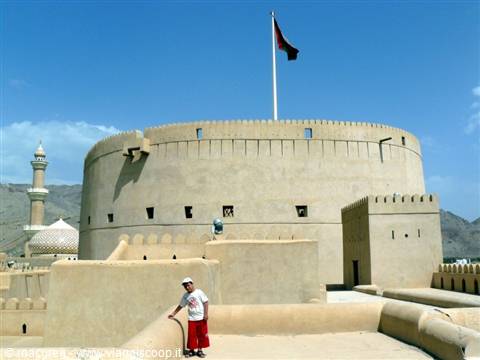
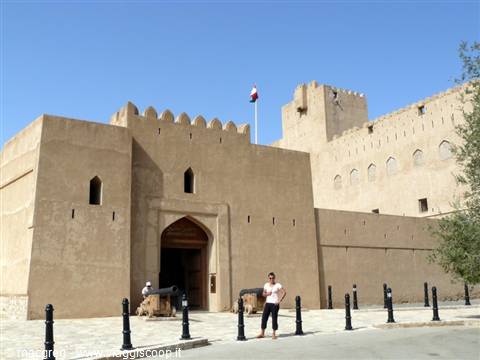
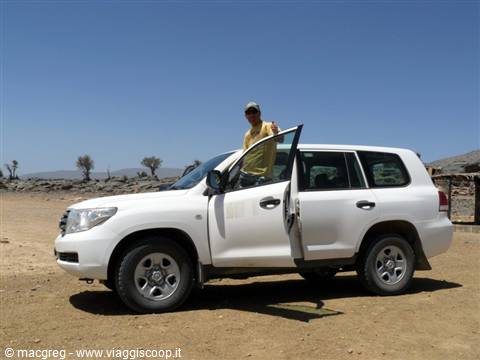
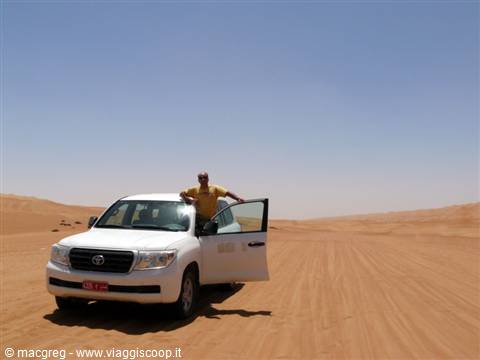
They give us an enormous Land Cruiser, exceptional, pleasantly dirty and dented, so we won't have problems on return. I have all the damaged parts noted on the rental sheet, practically a single X on the drawing…. We connect the gps to the notebook, the signal picks up in 5 minutes and here we are appearing on google earth: the adventure begins. We reach the ancient capital Nizwa, leave our luggage at the Al-Diyar hotel (€ 88 triple with breakfast, directly with the hotel) and go to visit the centre in the early afternoon. It's incredibly hot, 38 degrees, above the average for the period: Nizwa seems like a ghost town and given the heat, we understand why: but unfortunately the fort closes at 4 and we have to hurry for the visit. Entry costs 1 euro: the forts of Oman, we'll visit several, appear like mirages of sand among the desert oases.
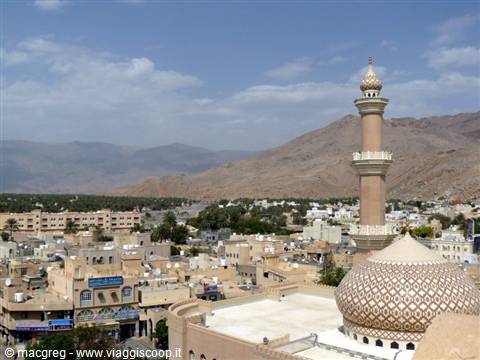
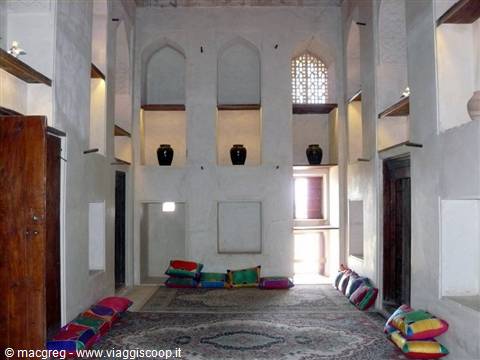
Perfectly restored, perhaps too much, since they look rather recent despite the centuries behind them. The visit is a succession of rooms, some bare others simply furnished, staircases, towers and terraces with breathtaking views: at the top of the Nizwa fort you admire a splendid view of the city, surrounded by walls and of the characteristic mosque, as well as of the palm groves that close on the horizon with the imposing Hajar mountains. The souq is closed, they tell us it will open in the evening. We return in the evening but it's still closed, they tell us it will open the following morning, with a livestock souq too, since it's Friday and a holiday.
jabal shams
Day 22 Apr 2010
Jabrin, Bahla, Jebel Shams, Friday, 2/04/2010
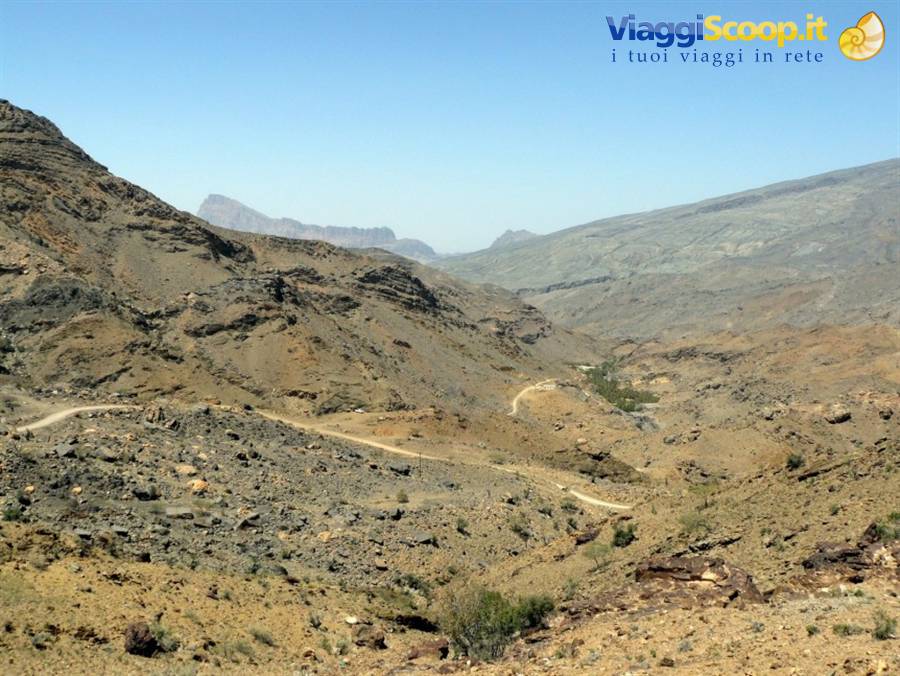
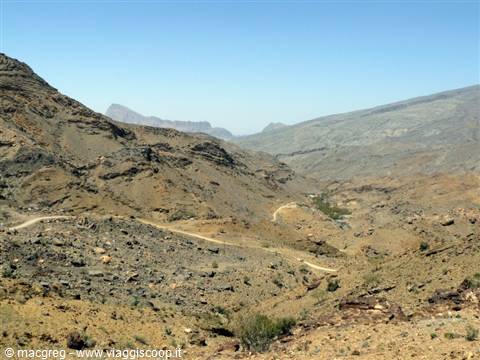
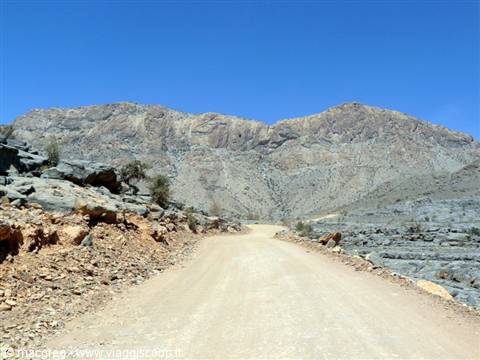
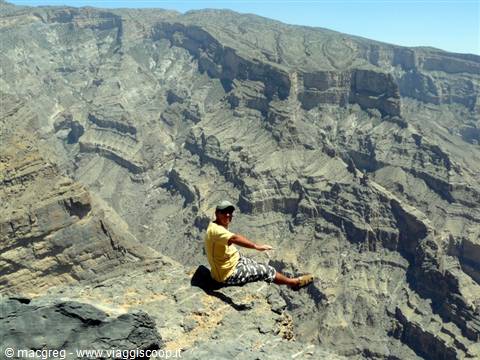
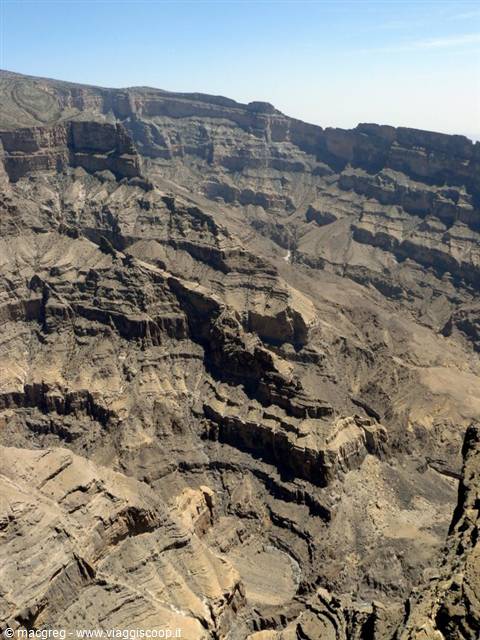
Today an intense programme: first stop the Jabrin fort which, since it's Friday, will close at 11. The fort is one of the best preserved in Oman, dates back to the 17th century and was built by Imam Bil'arub bin Sultan. Inside you visit the kitchens with utensils of the time, the Imam's rooms, with richly decorated ceilings and walls with Arabic inscriptions, the channels for transporting water and date juice, as well as the Quranic school and the inevitable terrace with a view of the palm grove and the mountains. We continue towards Bahla, with one of the most imposing forts in the country, unfortunately closed for years for restoration (Unesco Heritage) and the ceramic workshops of which we find no trace. Towards 11 we climb the road that goes up to Jebel Shams, crossing the imposing and wild Hajar mountains, up to the 2000 metres of what is rightly called the Grand Canyon of Oman.
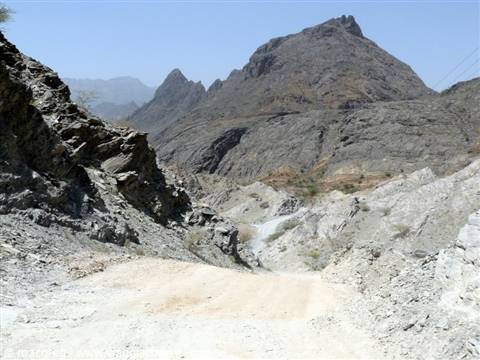
Along the way we make a detour to the mountain village of Misfat Al Abrein, perched on the mountainside and surrounded by a lush oasis. The photos I'd seen were worth more than what we actually admired, in any case, you can observe a slice of life of this population still strongly tied to ancient traditions and where daily life passes in a slow and simple way. The first stretch of road to the Canyon is asphalted but rather steep, then it turns into a rocky track that literally cuts through the mountain, with some steep and exposed passages. With a bit of care, and absolutely with an off-road vehicle, no problem covering the road, even though in some points you need to proceed in first gear.
Once at the top the spectacle is extraordinary and the similarities with the more famous American Grand Canyon are evident, albeit on a smaller scale: you can walk along the edge of the canyon without protection, with vertiginous drops of over 1,000 metres. The temperature at the summit has dropped sharply: from 38 to 23 degrees, very windy.
wadi bani khalid
Day 33 Apr 2010
From Nizwa to Sur, Saturday, 3/04/2010
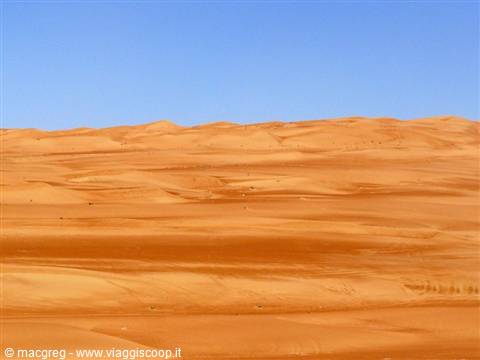
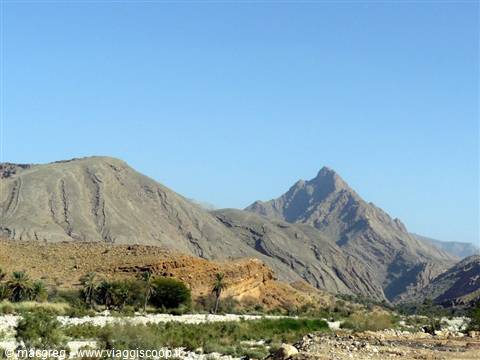
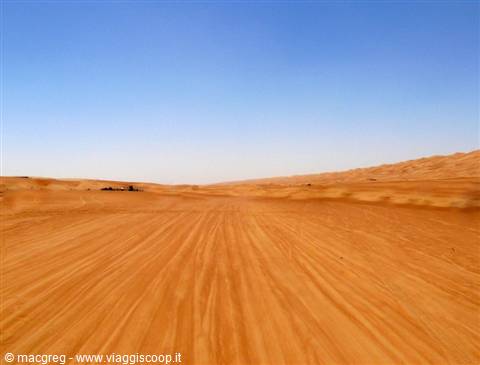
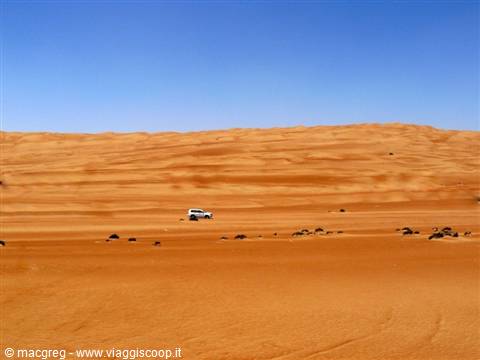
What awaits us will truly be a memorable day, crossing breathtaking landscapes completely different from one another, from the scorching deserts of the Wahiba Sands, to the lush oasis of Wadi Bani Khalid, to the astonishing turtles of Ras al Jinz. Proceeding in order: a short stop at the locality of Birkat al-Mauz, where behind the modern settlement are the remains of a village of mud houses, in a spectacular position. We continue until we see in the distance the first dunes of the desert, which surround the main road: on one side they lose themselves in tall golden dunes, while on the other they touch the mountains seeming like immense sandy valleys. We leave the main road and continue along a sandy track in the desert, with the dunes becoming ever taller and redder: it's an extraordinary place, desolate but fascinating, our car seems like a tiny dot in the universe.
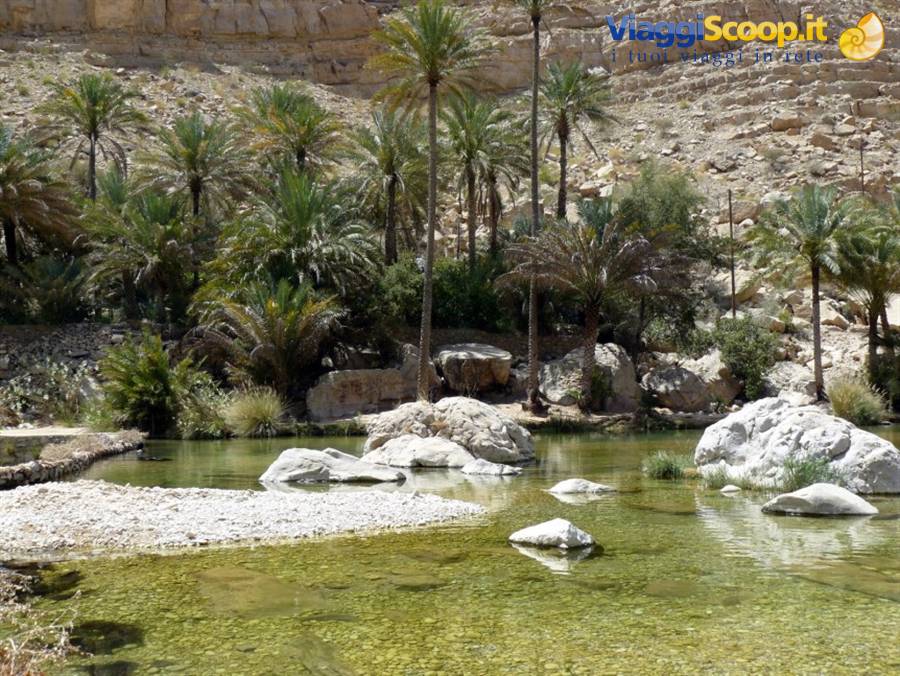
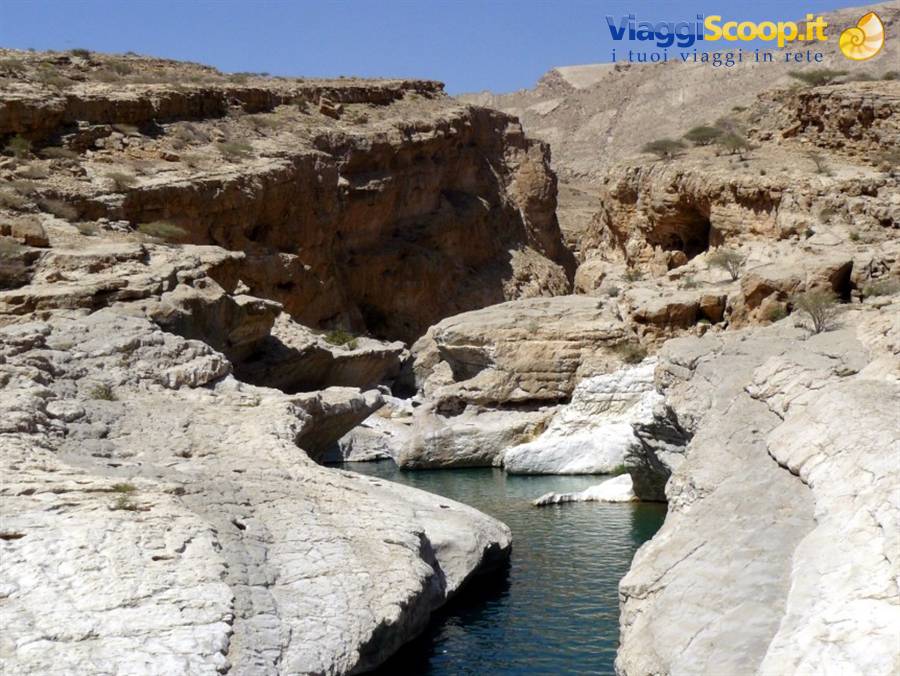
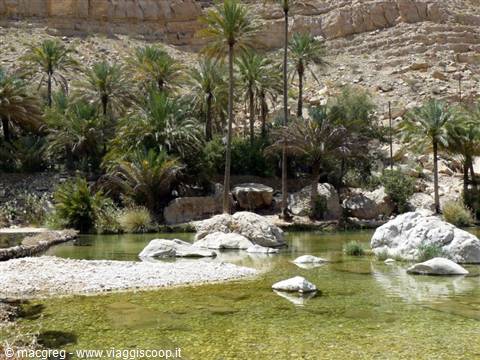
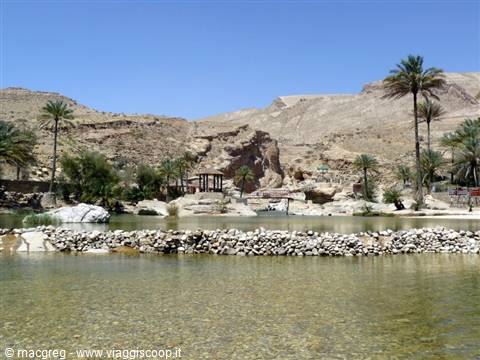
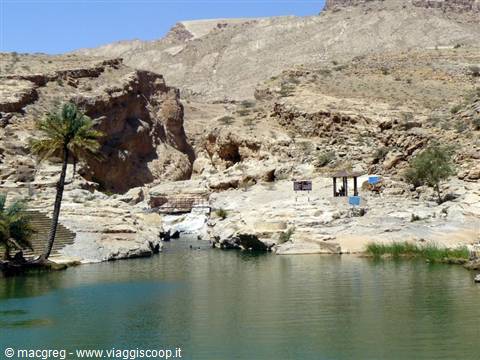
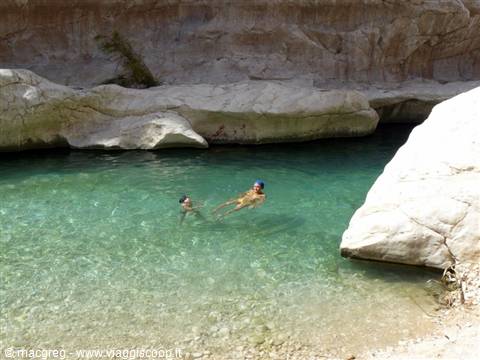
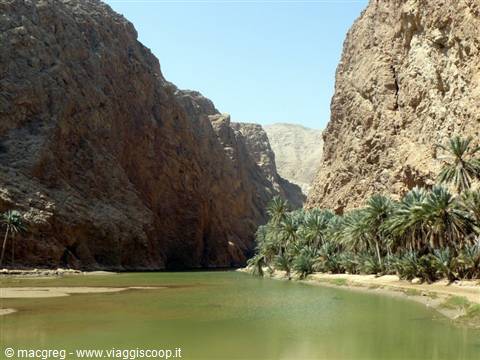
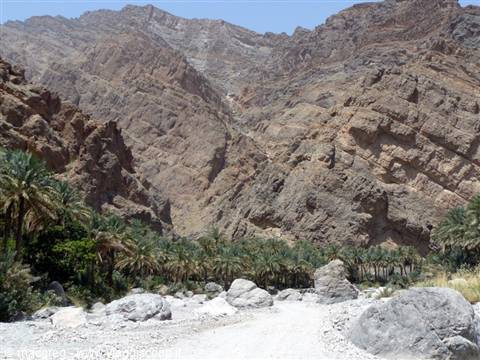
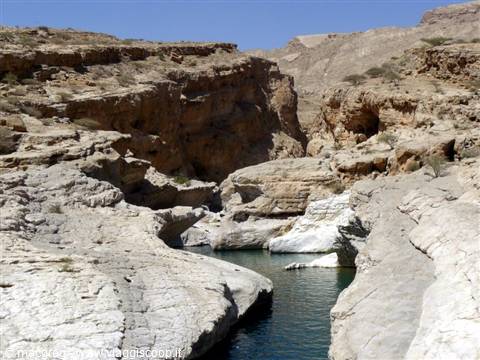
Around midday we take the detour for the Wadi Bani Khalid, one of the most fascinating wadis in the country: the last stretch of road is about to be asphalted and you proceed without problems to the car park. The wadi is very easy: leaving the car you reach in 5 minutes the first enormous pool of water, transparent and surrounded by palms. Here little bridges start that cross the river: on one side there's a snack bar, while on the other the path continues along the wadi, reaching fantastic natural pools among the rocks, with emerald green water where you can enjoy wonderful swims and dives. Continuing towards Sur and we reach the Ras Al Hadd hotel (€ 88 triple room, directly with the hotel), not far from the turtle beach.
After an excellent dinner in the hotel restaurant, we reach the Visitor Center of Ras al Jinz, a nature reserve where about 35,000 turtles a year come to lay their eggs. We booked, a month in advance directly from Italy, the 9 pm guided visit, since access is limited to 100-120 people divided into small groups (I met some people who, not having booked in advance, couldn't visit the beach). We live this extraordinary experience, admiring enormous turtles that come out of the sea, lay their eggs, dig gigantic holes then return towards the sea. We even manage to see the tiny newly hatched turtles, who with considerable effort manage to reach the sea. This evening we're lucky, even though it's not the ideal period, in about an hour we manage to see all these phases.
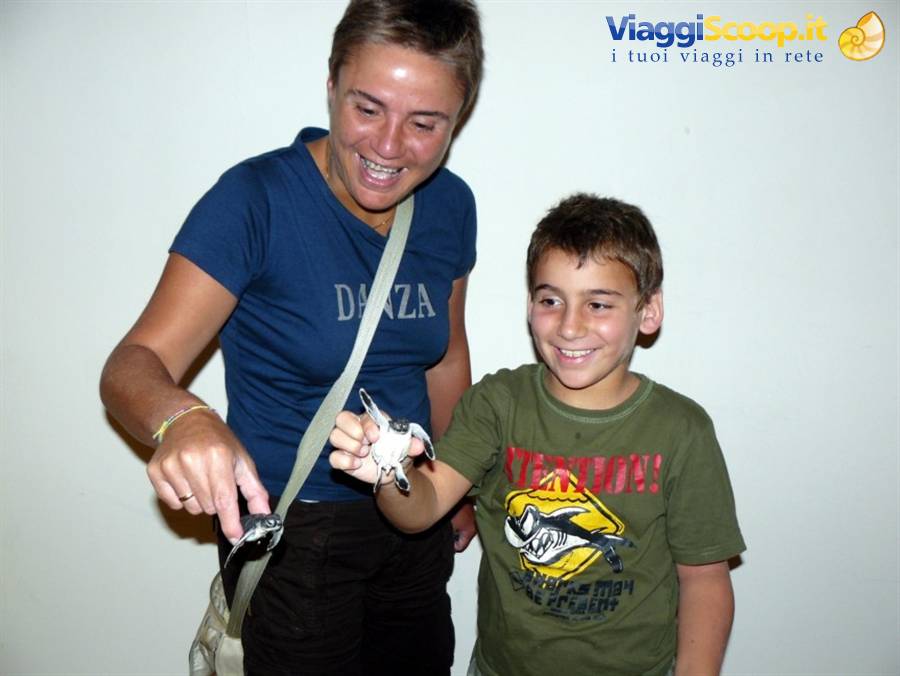
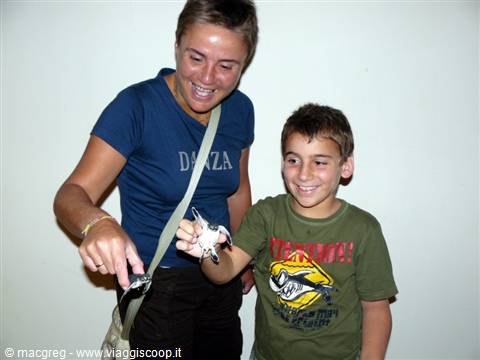
The only downside, recently it's no longer possible to take photos, evidently many tourists overdid it with the severely forbidden flash. We thought we'd lose half the night, instead by 11.30 pm we're already back at the hotel. An extraordinary surprise: at reception they explain that a group of newly hatched turtles went the wrong way, and instead of following the road to the sea headed straight for the hotel: now they're there, in front of us, in a bucket waiting to be taken to the sea the next day: we can hold them in our hands, admire them and cuddle them!
Ras Al Jinz
Day 44 Apr 2010
From Sur to Muscat, Sunday, 4/04/2010
We drive along the new highway that crosses wild mountains and suggestive coastal landscapes. We're on the coast of Oman, on the stretch between Muscat and Sur that faces directly onto the Arabian Sea. The landscape is characterised by arid, rocky, desert mountains, but at a certain point, as if by mirage, an enchanted canyon appears: between the high rocky walls flows an emerald green river, surrounded by lush palms, in a highly spectacular environment. Until a couple of years ago this place was hard to reach: only a dirt and bumpy track of several kilometres that wound among beaches and mountains. Now, thanks to the construction of the new motorway, which partly disfigures the landscape by the way, the departure for the excursion along the wadi is decidedly more accessible.
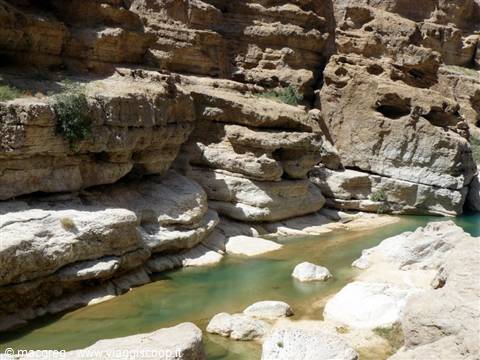
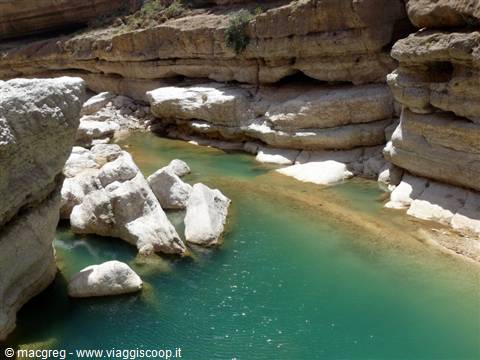
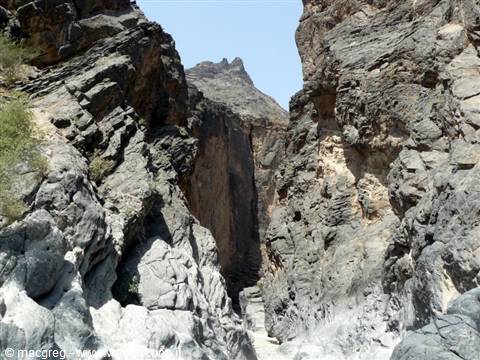
Among the numerous wadis found in Oman, this is without doubt the most spectacular: these are spectacular canyons that break the mountain ranges, where over the centuries, the flowing water has created breathtaking gorges making the surrounding landscape fertile: this is crystal-clear and uncontaminated water, with incredibly surreal colours and surrounded by vertical walls. Often, to reach the most extreme point of the wadi, a trek is necessary that soon turns into a real adventure: it's the case of the Wadi Shab, where the uncontaminated paradise must be sweated for quite a bit and conquered slowly.. Leaving the car under the motorway flyover, you find yourself in front of the mouth of the river: to reach the start of the path you have to cross the watercourse with a boat pulled by a rope by a local boy, who asks for the equivalent of about 50 cents of a euro.
Once on the opposite bank, the path first follows the course of the river among the palms but suddenly the water disappears and you proceed along the dry bed in the canyon. After about twenty minutes of walking you reach a fork: the path continues on the right along an elevated concrete stretch, while proceeding in the canyon you reach the first natural pools where you can freshen up. The path begins to offer splendid views of the first pools of water with enchanting colours. You proceed for about 15 minutes along the concrete route, after which you descend again to the bottom of the dry canyon, sometimes interspersed with small natural pools. This is the most tiring part of the route: the path at times disappears and you have to proceed on big boulders or among slippery rocks.
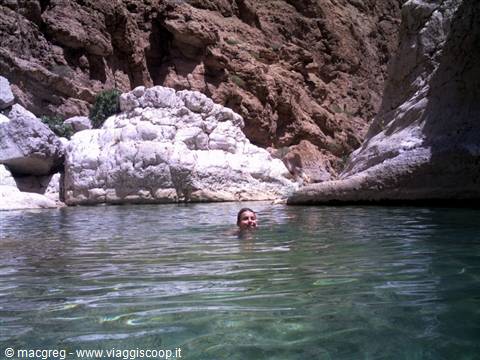
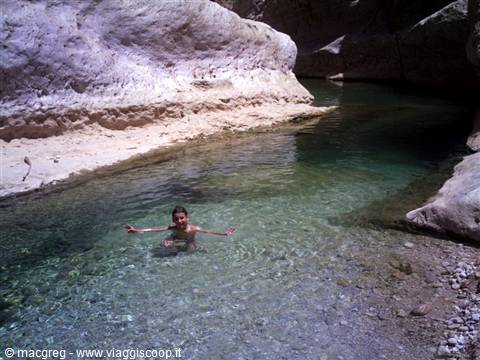
The fatigue starts to be felt, all the more so since the temperatures are often prohibitive and the shade is absent: early April, thermometer around 36 degrees. Having regained the path, you reach the river again which you walk alongside at a height of about 10 metres and which in this stretch flows in a narrow canyon. The path ends here: to proceed you have to find a point to descend from the rocky walls and continue swimming in the wadi, where from time to time small pebble beaches form. The water has a marvellous colour, going from deep blue, to emerald green to turquoise blue. You swim along the canyon, between very narrow walls and iron chains that allow you to climb up the rocks and make breathtaking dives.
But the spectacle is still to come: at a certain point the wadi seems to end and you arrive in front of a large closed cave: but looking carefully, you notice a small opening at water level through which your head barely passes. It seems impossible to continue, yet you advance cautiously, not without hesitation and apprehension, through the narrow opening and you find yourself in a dream place: an enormous cavity, open to the sky, where among the rocks a foaming waterfall plunges. In total, to reach the cave, about 50 minutes of trekking are needed and ten minutes of swimming interspersed with short walks. The adventure ends here and it's one of the most exciting things you can do on this planet!
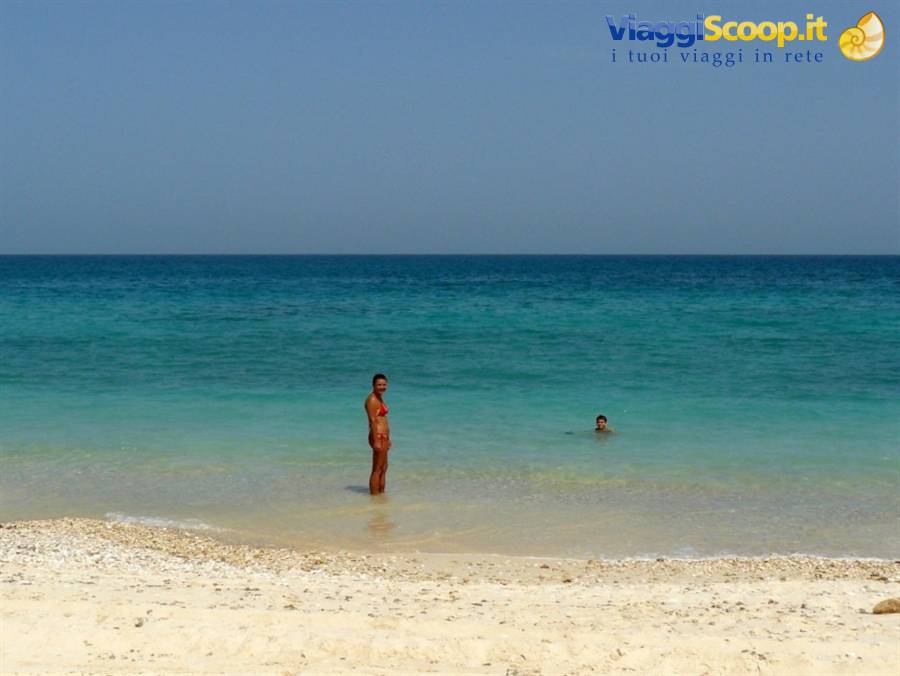
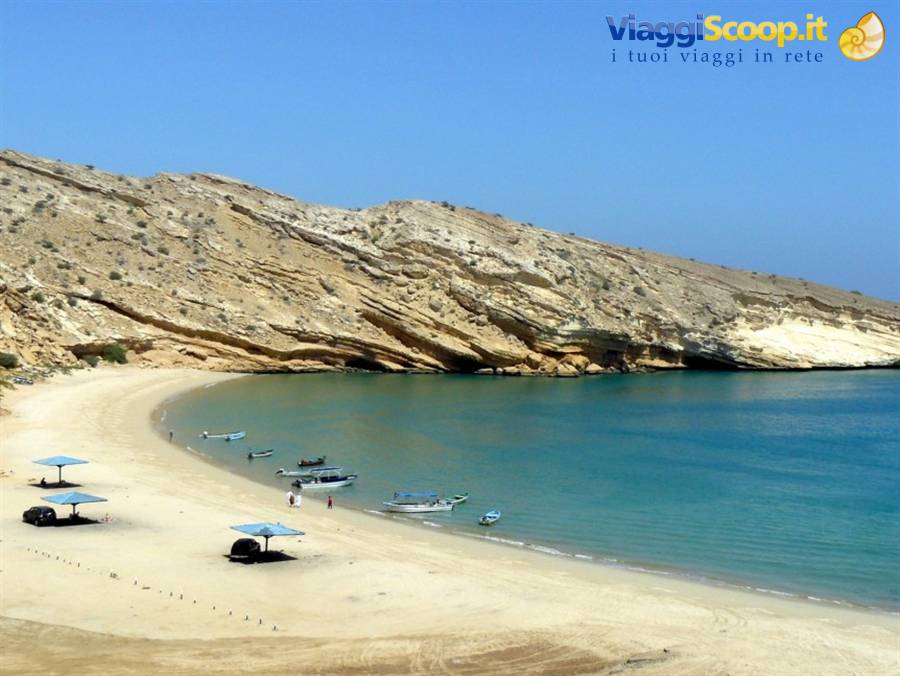
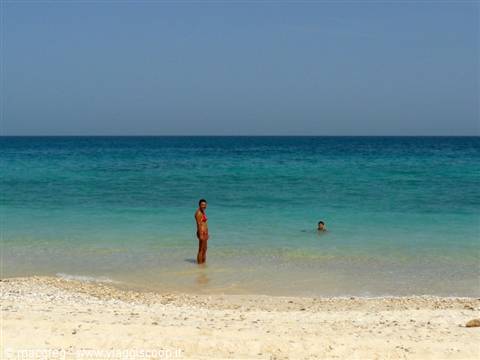
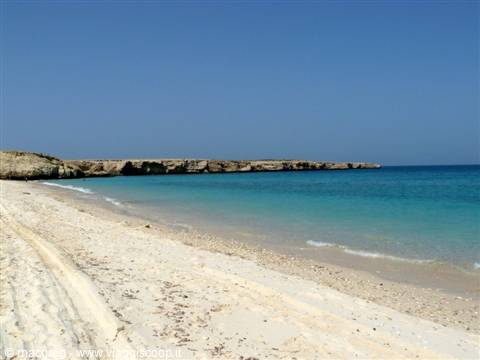
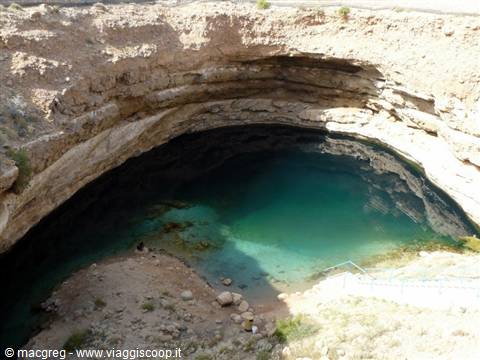
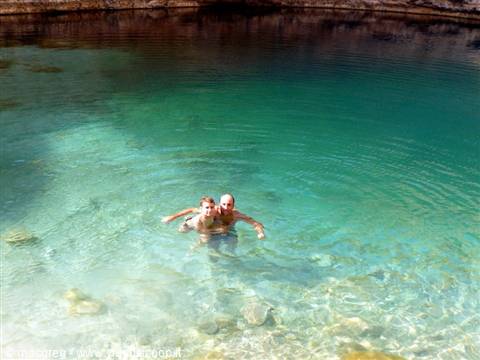
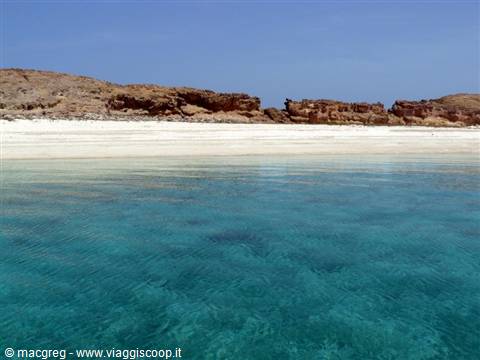
At the end of the excursion in the wadi, we try to reach the White Beach following the dirt tracks from google earth: proceeding from the exit of the Wadi Sham, the road stops immediately and we're forced to turn back, take the new motorway towards Muscat, exit at Fins and come back along the coast. The beach is truly beautiful, even though we arrive at a time when we find several jeeps of a group, but there's enough space to find a corner all for ourselves: the sand is bright white, the sea blue and transparent with a few stones at the water's edge. We have lunch on the beach and after swims and a bit of relaxation we set off again for the Bimah Sinkhole, strangely, one of the few attractions in Oman well signposted: it's a spectacular limestone crater at the bottom of which is an extraordinary green-blue pool of water, with rocky walls where you can make daredevil dives.
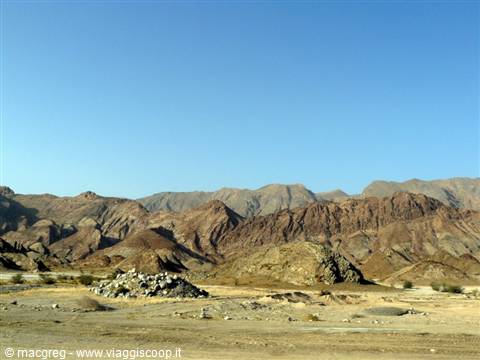
We just have to continue towards Muscat, crossing suggestive landscapes of rocky mountains with bizarre shapes. The roads, so far rather deserted, start to get busy even though the traffic, even in the city, remains always rather flowing. We arrive at the Beach Hotel (spacious junior suite € 88 with breakfast on asiarooms), in an excellent position 5 minutes on foot from the beach and from the commercial area of Al-Qurum, with many international restaurants.
white beach
Day 55 Apr 2010
Muscat, Monday, 5/04/2010
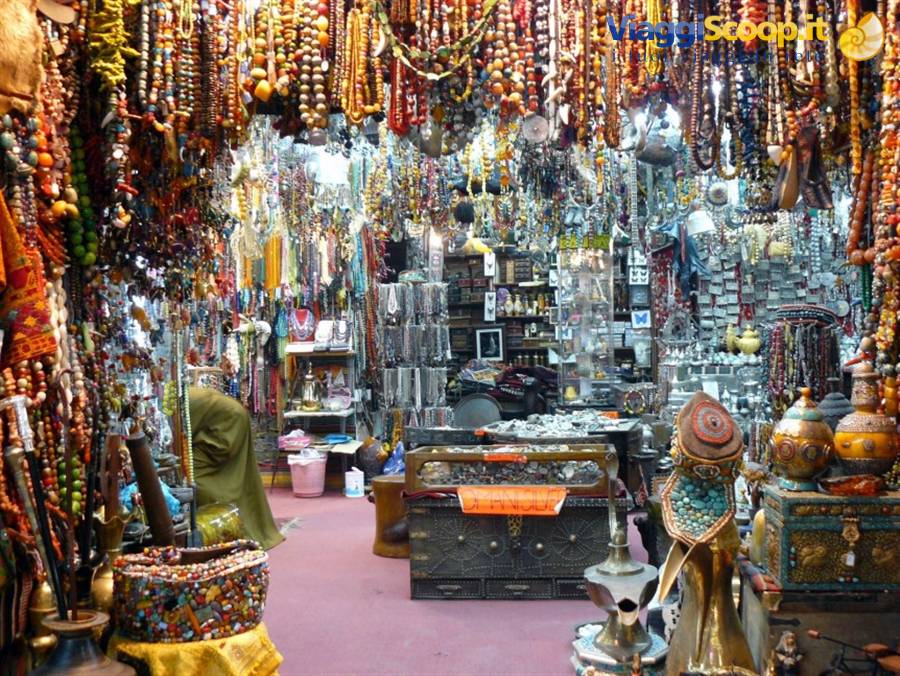
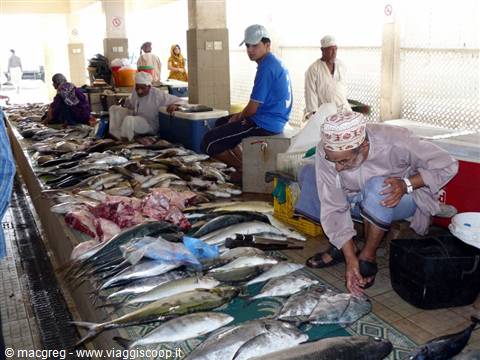
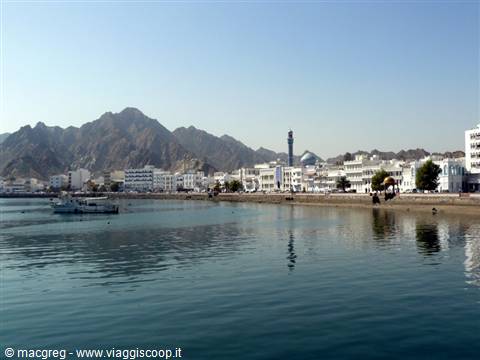
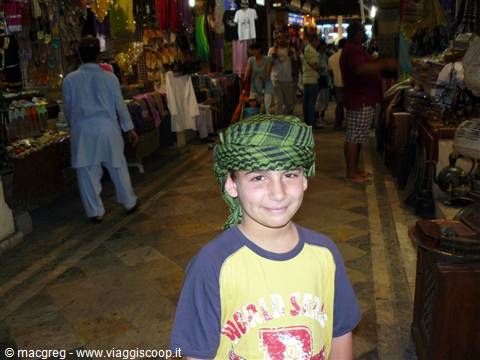
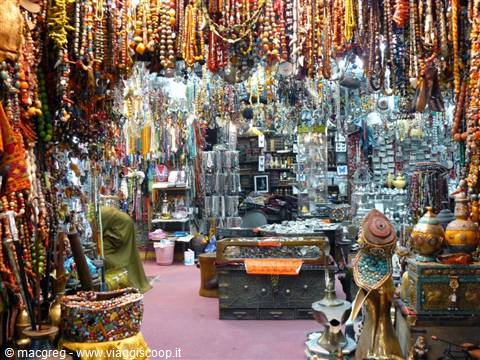
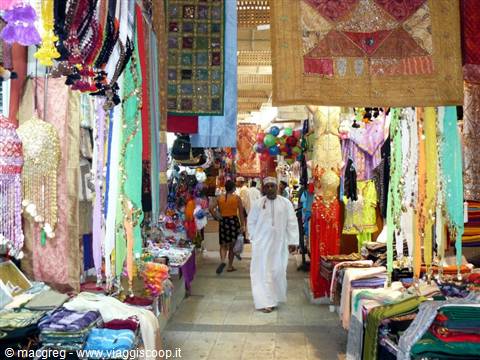
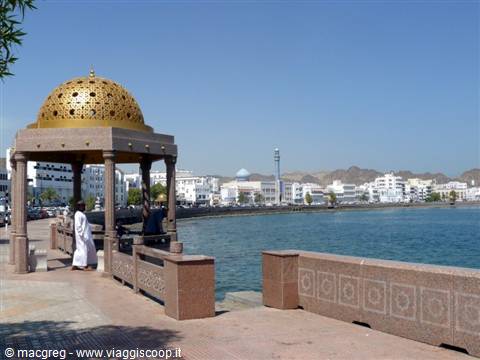
Muscat is a slightly strange city, it doesn't have a real centre but is divided into many neighbourhoods, some, like Mutrah, absolutely far from the typical appearance of a metropolis. In Mutrah we visit the characteristic fish market, where the sellers are practically sitting in the middle of the day's catch: the buyers haggle over the price, some load directly onto vans while others go to special counters that clean the guts. At the exit of the market you can stroll along the seafront, with benches covered by golden domes, which offers a splendid view of the city, with the buildings and mosques standing out on the gulf. Beautiful and engaging is the Mutrah souk, one of the most authentic in the world: you can wander freely without ever being bothered, but only sometimes invited by the sellers, with extreme kindness, to browse among their displays.
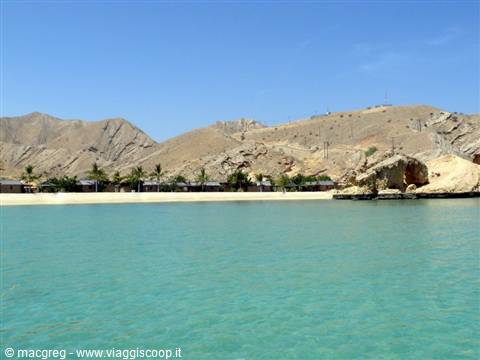
You go from the very fragrant spices to the traditional silver daggers, from silk and traditional Omani clothes to the gold souk. There are few tourists, most of the people are Arab men and women, in their traditional clothes. Anyone you meet, men naturally, looks at you curiously and at the slightest smile, exchange a friendly greeting or a joke. In any case it's more a souk to admire, since the prices aren't very advantageous. We take the car again to reach the beaches of the south until we reach the bay of the Oman Dive Center: you pay an entry (3 euro), the bay is truly splendid but, bitter surprise….we find a group of Italians: they come from Costa Crociere, here today passing through! What rotten luck….
In any case we move to the stretch of beach reserved for the hotel: the water at the shore is slightly murky as it's very shallow, but a long walkway leads out to sea, where the water takes on a good transparency, surrounded by beautiful rocky mountains that plunge into the sea, forming delightful coves reachable by swimming.
mutrah
Day 66 Apr 2010
Muscat – Al Sawadi, Tuesday, 6/04/2010
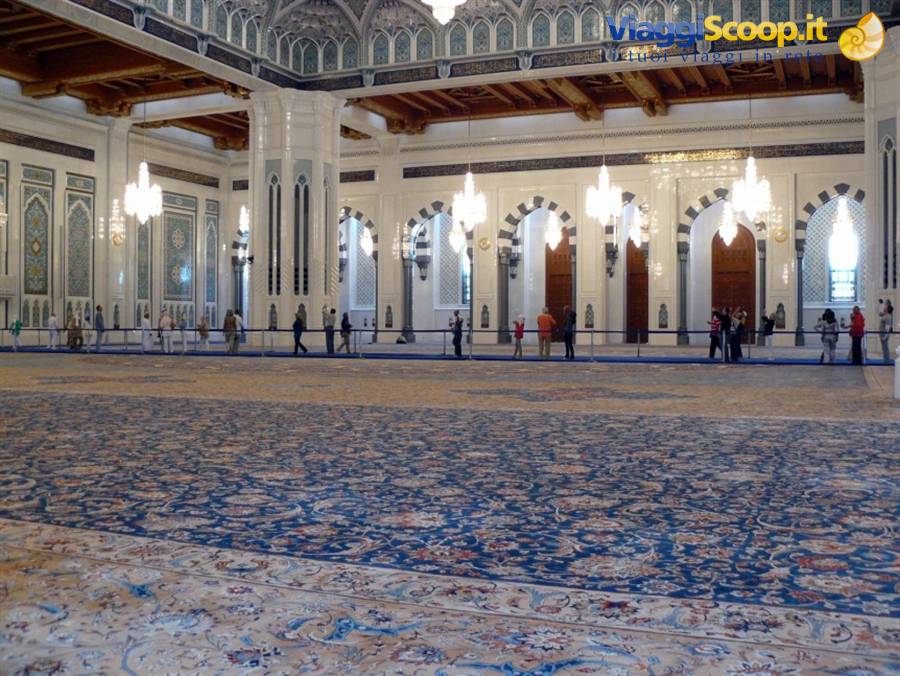
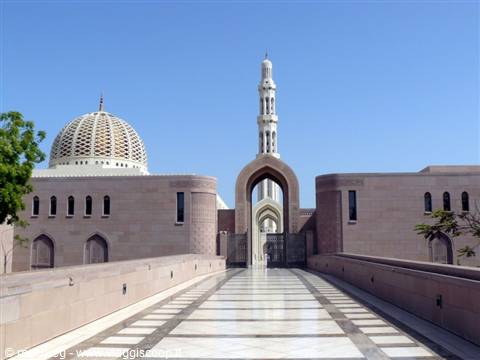
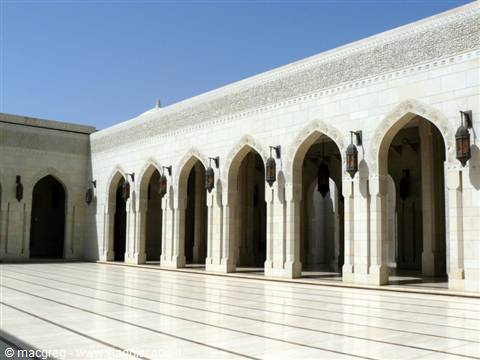
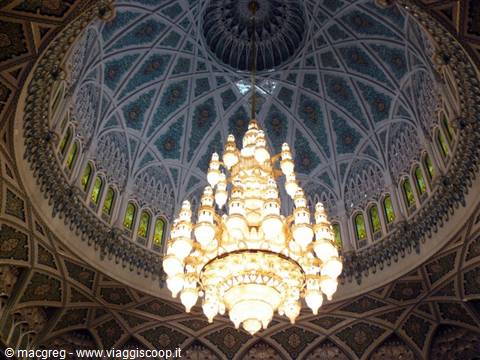
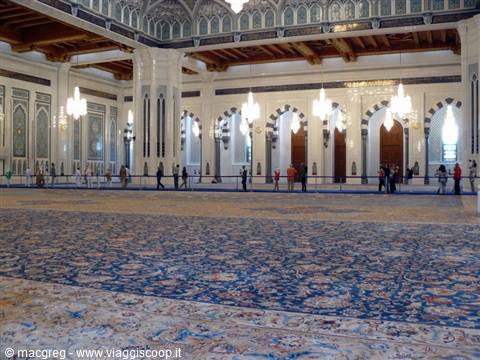
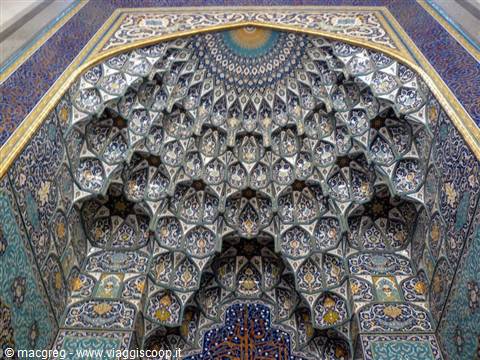
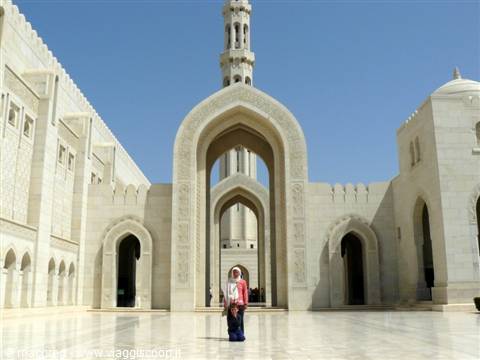
We leave Muscat for a few days, we'll return on the last day, and continue north towards Al Sawadi, where we've booked a resort for 2 nights, with the intention of reaching the Daymanyat islands. Along the way we make a stop at the extraordinary Sultan Qaboos Grand Mosque, a marvel of the Middle East and one of the few visitable by tourists. The mosque seems suspended on the white marble outside, with the 5 minarets symbolising daily prayer. The interiors leave you breathless, and house among other things the largest carpet in the world, weighing 21 tonnes, and a Swarovski crystal chandelier with over 1000 bulbs. In the afternoon we reach the Al Sawadi Beach Resort, rather expensive (€ 178 for the triple, half board), where we spend a nice afternoon of relaxation between beach and pool.
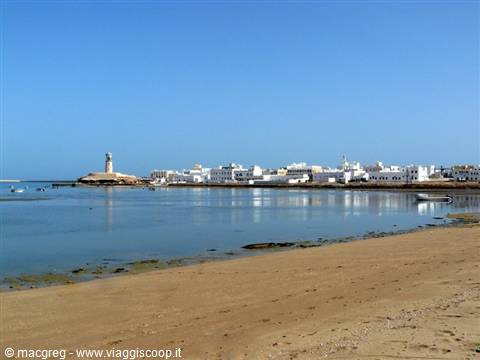
bandar jissan
Day 77 Apr 2010
Daymanyat Islands, Wednesday, 7/04/2010
And yes. Uncontaminated, unknown and unexplored paradises have to be earned with sweat, not so much through physical effort, but more than anything to find a way to reach them. The Daymaniyats are jewels set in the Arabian Sea, made up of a group of 9 islands, turned into a protected marine reserve, access to which is limited by special permits. And if not much information about these islands can be found on the web, there must be a reason. Getting there is not simple, but above all, before getting there you don't really know what you'll find, since there is no account from anyone who has been there, except for diving off its coasts. Not even Lonely Planet mentions them in the Oman guide... Actually a website dedicated to the islands exists, but more than anything it examines the richness of their seabeds and the best dive spots.
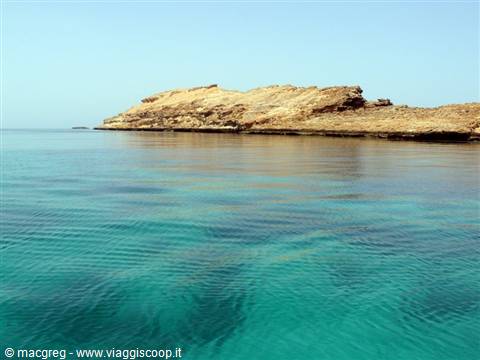
But the Daymaniyat islands offer breathtaking white beaches, lapped by a sea of astonishing colors, but unfortunately, or fortunately, the coasts are not exploited for tourism. Unfortunately because to get there you have to devise some stratagem, fortunately because, once you arrive, you will be the undisputed masters of the island and its beach, which at most you will have to share with some passing turtle (but during the day it is rather rare) and with the myriad of tropical fish that will accompany you during unforgettable swims. The only way I found to get there was to contact the dive center of Al Sawadi Beach Resort, the only one in the area that has permission to reach the islands. The dive center, German-run, has two boats that depart daily to reach the best dive spots, also offering the possibility of snorkeling offshore.
But to have them drop you directly on a beach, you will have to request it expressly, well in advance, and hope for a positive answer. Forget about negotiating an excursion directly on site because the dive center has limited spots and is permanently full. From what I understood, in Oman there are only two dive centers and the other one is in Muscat. After a series of emails, I managed to get a positive agreement from the dive center manager for a rough program that included a stop at an island, and then to negotiate, on the morning of the excursion itself directly with the instructor, first a snorkeling session offshore over a shallow seabed while the rest of the group went diving, then the possibility of reaching one of its beaches and having them come pick me up after a couple of hours (with the only doubt, will they remember to come back and pick me up?).
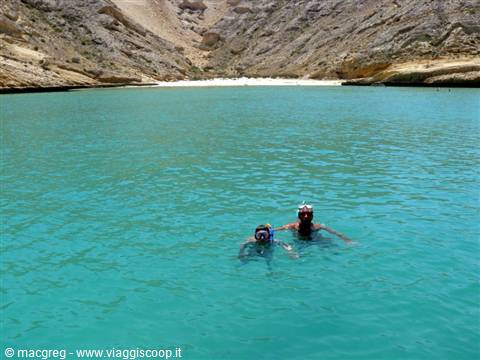
The only problem: the boat cannot dock on the island, so the hard-earned and untouched beach has to be reached by swimming directly from the boat: therefore, no backpack, towel or camera, only mask and fins. The beach is indescribable: the long shoreline is made up of a myriad of tiny, very white shells and corals, the water seems motionless and shows turquoise colors and extraordinary clarity, while a few meters from the shore it turns into a stunning aquarium, with living corals and a variety of tropical fish, moray eels, lobsters, angelfish, clownfish, parrotfish but above all lots and lots of surgeonfish that swim beside you. Honestly I thought I would manage to admire some larger species, evidently I was unlucky, since the chances of encountering the enormous green turtles are very high and it is not difficult either to spot some reef sharks at a depth of 15 meters.
The few hours available pass between memorable swims and relaxation on the beach, which beyond the shoreline turns into very white sand. No plants and no shade anywhere; on the beach there is only a sign indicating that we are in a protected national park, not to leave anything on the island, that camping is severely prohibited and not to disturb the green turtles. In fact, walking around the island, I came across some little mounds of sand, evidently placed by the coast guard to highlight the spots where the turtles have laid their eggs. I thought that an alternative to reach the islands would be to negotiate with some fisherman found on the beach of the resort, but talking with one of them he explained that they don't have the permit to stop at the Daymaniyat islands, but the only service they can provide is transport to the Sawadi islands in front of the resort, nothing special.
I wouldn't rule out that this could change in the immediate future or that you might find someone who will take you there anyway.
To organize the excursion contact the dive center: alsawadi(et)extradivers.info and explain in detail what you want to do, since the program (if there is room) includes exclusively diving at two different snorkeling spots offshore of some island. To reach the first island takes about 45 minutes, the cost is 18 RO, (around 35 euros), roughly you depart around 9 and return at 14:30. You can rent the equipment directly at the dive center. From what I understood, not even the dive center has the possibility of landing on the main island.
sultan qaboos
Day 88 Apr 2010
Nakhal, Wani Bani AWF, Thursday, 8/04/2010
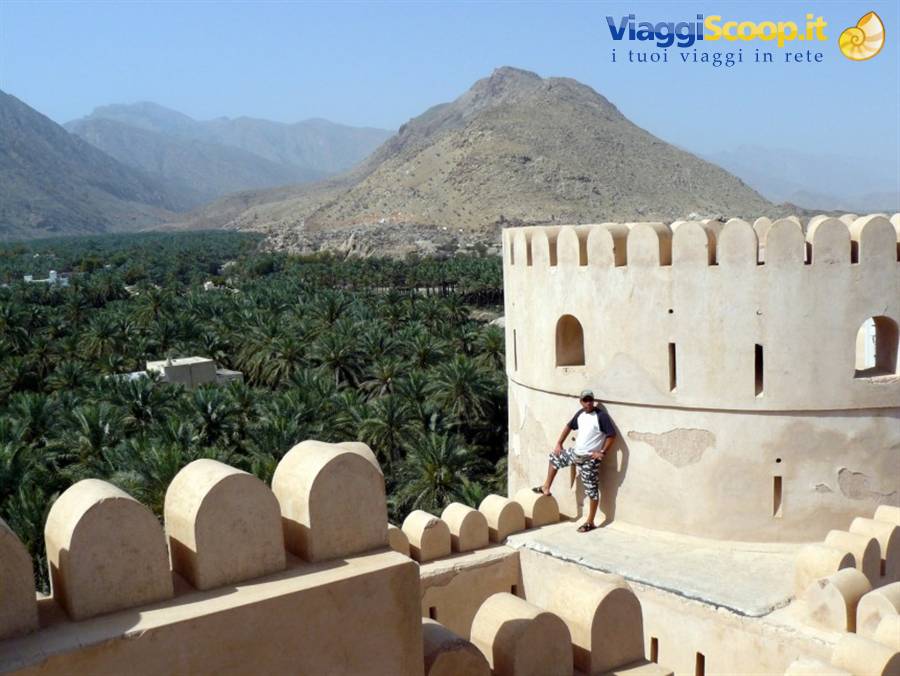
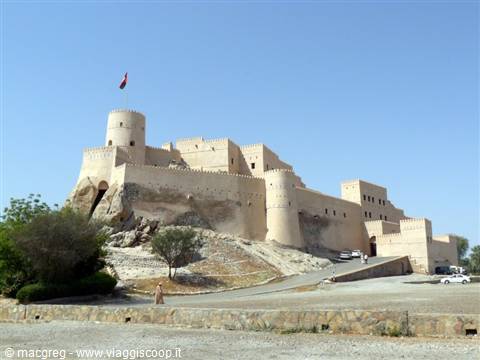
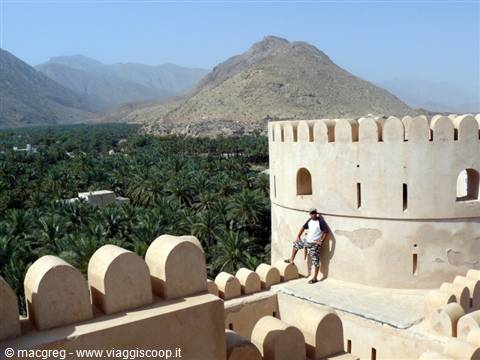
We leave Al Sawadi heading for Nakhal where we visit the fort that stands in the most spectacular position in the country: once you go up to the terrace you can admire an enchanting landscape: the palm groves seem to never end and reach right up to the imposing Hajar mountains, simply fabulous. We continue and turn off at the junction for Wadi Bani AWF, a stretch of rugged dirt road, with hair-raising gradients, that climbs into one of the wildest areas of Oman, among small fords, breathtaking canyons, terraced villages that have defied nature, dreamlike landscapes and views. One proceeds with caution but the route is extremely fun, though with the constant worry of not getting a flat tire and of paying attention to the notably exposed stretches.
We return to Muscat where we settle again at the Beach Hotel, where we negotiate a late evening check-out for the following day, since we will have our flight during the night.
nakhal fort
Day 99 Apr 2010
Muscat, Friday, 9/04/2010
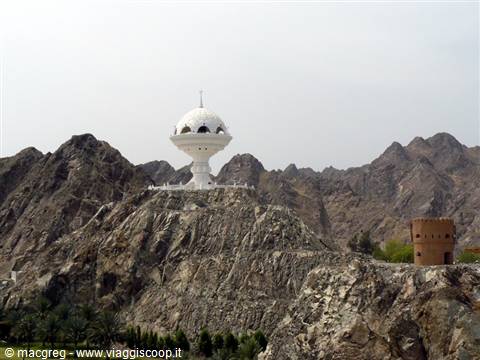
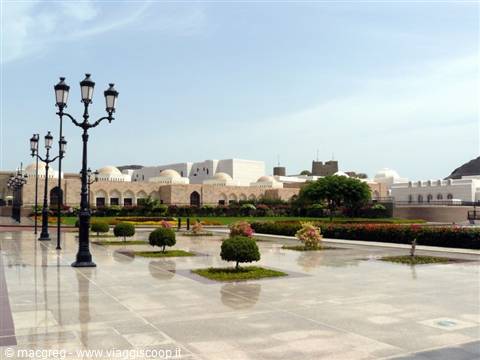
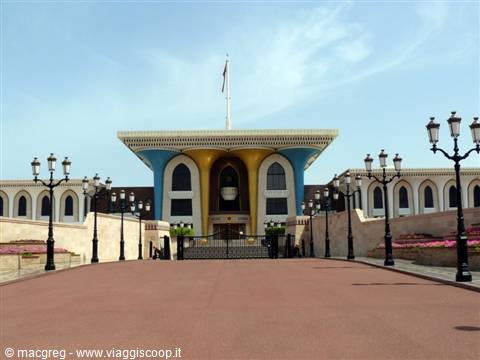
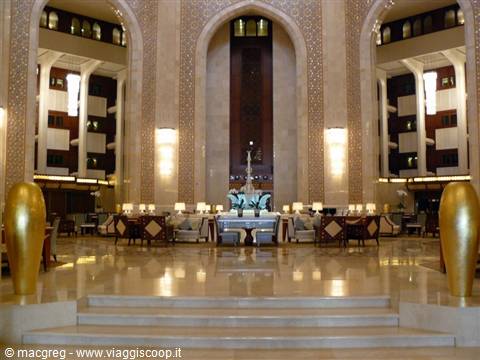
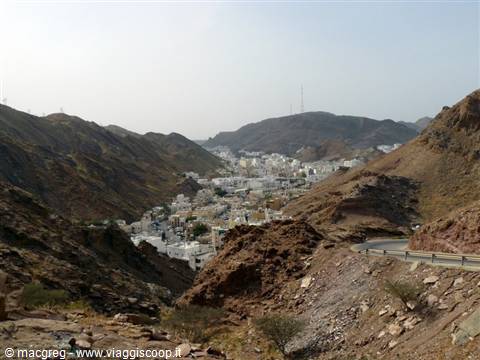
Last day in Oman but we want to make the most of it: we return to Mutrah where we take another stroll through the souk but, since it is Friday, most of the shops are closed. We drive along the stretch of coast that connects Mutrah with Muscat, with the fort and the enormous incense burner on top of a hill. Muscat is literally surrounded by harsh mountains: we admire from the outside the extremely well-kept Sultan's Palace, with a facade that resembles a colorful mushroom, but also castles and palaces surrounded by beautiful flowerbeds. The guard on duty greets us in a friendly way, which is strange. We continue along the coast until we reach the Al Bustan Palace, one of the most luxurious hotels in the Middle East. You can freely enter the imposing lobby, it seems like a cross between a royal palace and a mosque, astonishing.
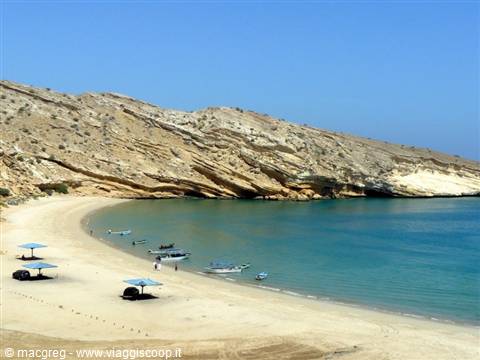
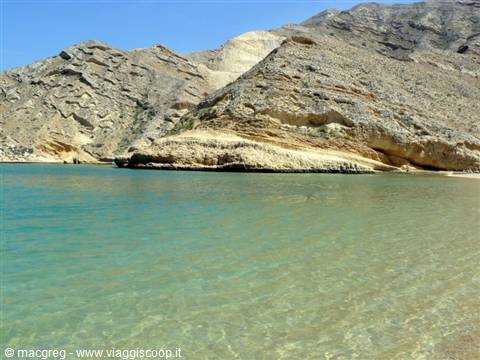
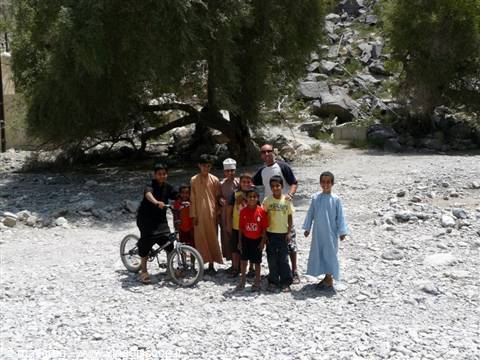
Finally we reach Qantab bay, a splendid crescent-shaped beach set among the mountains. Since it is Friday, on the beach there are some families and kids enjoying the holiday, and once again, we have evidence of the friendliness of the Omani people: one ball in the water was enough to attract every person passing by our area: they come over here, they go over there, in a short time we found ourselves surrounded by about twenty people who wanted to play with us, curious and amused. We return to the hotel and after dinner we head to the airport, where our return flight awaits us during the night. Here ends our gripping and positive experience in this fascinating country, which is slowly discovering its enormous tourism potential, and which perhaps we were lucky enough to get to know before it can open up definitively to mass tourism.
0 reader comments