I reached the Vanuatu Islands with a friend as the second stop of a long tour of Oceania that also included Australia, Fiji and Tonga. I arrived at Port Vila Airport on a Virgin Australia flight from Brisbane. We will leave again on a Fiji Airways flight for Nadi. Vanuatu, which during colonisation was called the New Hebrides, was a strange Anglo-French condominium. The capital is Port Vila.
Day 19 Oct 2016
Arrival in Port Vila
We arrive at Port Vila airport in the afternoon, and after completing the easy customs procedures we take a taxi to our accommodation. During the landing we were able to observe the island of Efate from above, noting how rich in tropical vegetation it is. We got off the plane in the rain, reaching the terminal on foot. Our lodge is located in the immediate surroundings of the capital; it's a small but functional structure whose lodgings face onto a courtyard. The reception is in a little hut where a local woman greets us. The native ethnicity is Melanesian. Accompanied to the accommodation, we surprisingly discover that it's an apartment with a double bedroom, a living room with a single bed, a sofa, a TV and a kitchenette provided with everything needed for cooking. The bathroom has a shower and we also have a little garden available.
Having established that it's too late to go to the Mele Falls, we decide to go into town. The lady at the lodge explained that we don't need to use taxis, which are expensive; it's enough to go onto the very nearby road and hitch a paid ride. Next to the lodge there's a grocery store where, however, I don't find much to buy. As suggested, we ask for a ride, which we immediately get from what they call a bus but which is actually an old, dilapidated, dusty minibus. The cost of the ride, though, is decidedly lower than that of a taxi. In the centre almost everything is closed because it's Sunday. We take a walk along the seafront, observing the nearby islands. At dusk we find an open fast food place where only my friend has dinner. I just buy a freeze-dried risotto and some biscuits in a fairly well-stocked supermarket.
Back at the lodge, again by hitchhiking, and having bought two bottles of water, I prepare the risotto and a hot tea (the tea bags are provided in the apartment). We then retire for the night.
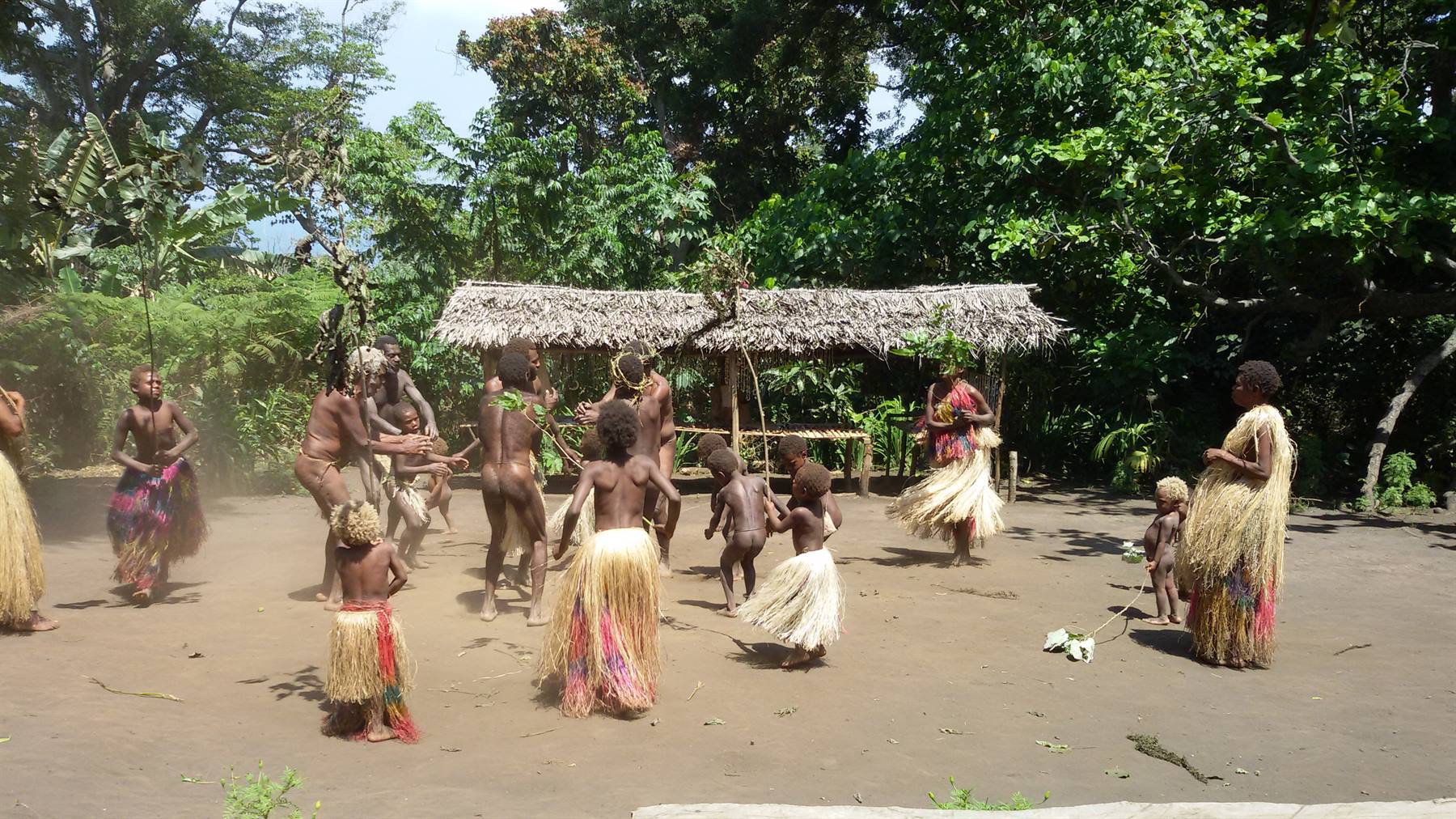
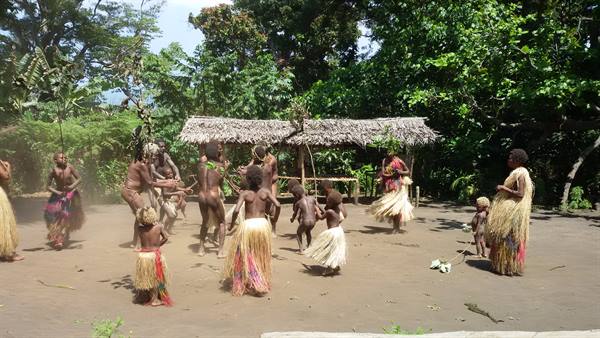
Children and women in grass skirts dance on sand before thatched huts
Day 210 Oct 2016
Yasur Volcano on Tanna
A long day that begins in the morning at the Efate lodge, from where we reach the airport by public transport. We got the lady at reception to keep our large luggage in storage so that we could face the trip to Tanna with only the small luggage, in which we've put the things we think we might need. At the small Port Vila airport, the waiting room for domestic flights is a large, no-frills hall. The check-in counter is spartan. While waiting for the flight, we try to have a quick chat with an inhabitant of Tanna to get information on how to do the excursion to the island's volcano. It's a grey day and we board the plane while a violent storm rages outside. During take-off the young hostess seems to be more afraid than we are. In forty minutes the Air Vanuatu plane lands at Tanna, which welcomes us with light drizzle. The airport is small and basic, and the luggage is handed out by hand.
As soon as we get out, we ask a few taxi drivers how it's possible to do today's excursion. One of them has us climb into the back of a pickup truck, with which we travel along a dirt road heading south. At a certain point, in the middle of nowhere, the vehicle inexplicably stops; another off-road vehicle has caught up with us, and we're invited to get in. On board are two Melanesians, one of whom is the driver. We manage to get them to take us to the lodge we booked from Italy. All of a sudden the vehicle turns onto an even rougher road that cuts through a jungle. Strangely, it's precisely the road that leads to the lodge. A wooden hut serves as reception and restaurant; unfortunately there's only a waitress and we have to wait about an hour before the young owner arrives for check-in. The lodge consists of a few bungalows lined up about a hundred metres from the sea.
When the owner arrives in a powerful SUV, we're shown our accommodation: a hut with two single beds, a bathroom with a shower and mosquito nets that we won't use. The space is large and clean, but one window is broken. With the same people who brought us here, we begin the tour of the island. First stop in the main town of Lenakel, a village of scattered huts with a dusty square overlooked by a bank, a post office and other services. Not far away is the agricultural market, where local farmers bring their goods to be sold. There are tropical fruits and vegetables that in some cases here have grown larger than what we're normally used to seeing. The inevitable taro is there, the tuber famous for producing kava, the typical and intoxicating drink of the South Pacific islands.
Tanna is rich in vegetation, with many coconut palms and above all the big banyan trees, plants with an enormous circumference that offer shelter from the heat. You often see people resting in the shade of these big trees, sitting on the grass with their machetes in hand. There's also a little restaurant for the locals that is absolutely uninviting. Our driver loads several people onto the truck bed; they'll be jostled behind us along the rough road. To load them, we make a winding tour of the main town, tracing an absurd route along unlikely roads that even pass through the middle of a basketball court. I notice that among the vehicles we meet, all four-wheel drive, many belong to international organisations helping the local population.
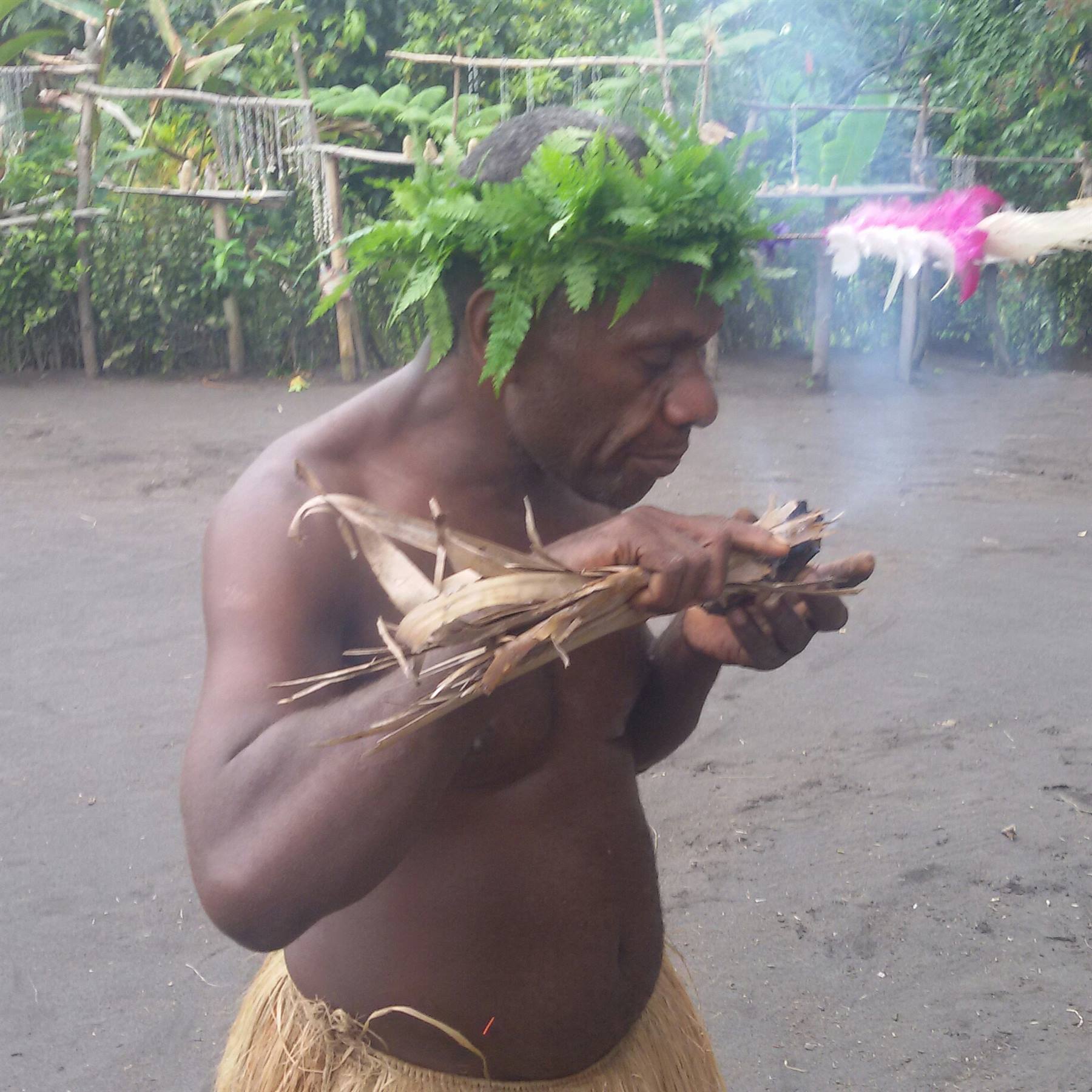
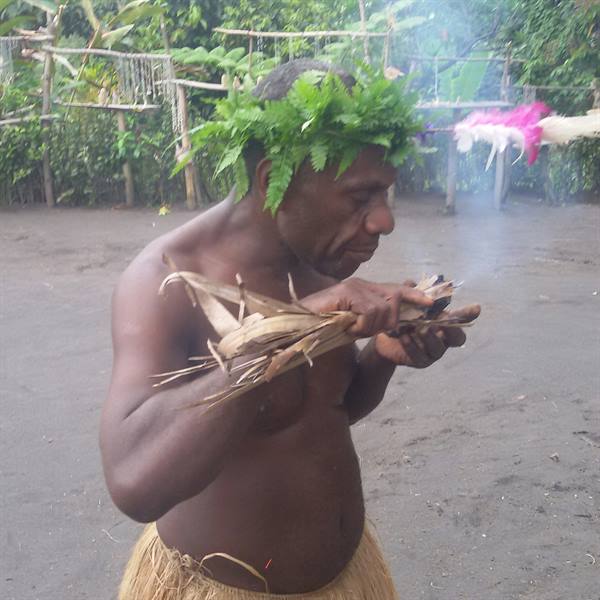
Finally, with all those people in the back, we take the long road that, climbing among the hills, crosses the island to reach the slopes of the volcano. We travel through a desert area of dark sand, over which the silhouette of the smoking mountain rises. A steep, narrow path takes us to a traditional village, where the locals show us dances in costume and how to light a fire by rubbing two logs together. Women and children dance against the backdrop of the volcano, which continuously emits its smoky booms. We join the dance along with the other men. They put a vegetable necklace around our necks as a memento of our encounter. From here we move on to the entrance of the Yasur Volcano Park. We're entrusted to a girl who accompanies us in an off-road vehicle, and a foreign couple gets in with us.
We're on the outer truck bed and endure the continuous jolts of the vehicle as it travels a rough road up to the start of the volcano climb. There are many vehicles that have brought tourists to watch the sunset over Yasur, the most accessible volcano in the world among those constantly active. It isn't always possible to go all the way to the top; it depends on the volcano's mood. A guide accompanies us to the edge of the crater, where we stop at three different points. From our first encounter with Yasur we understand that this will be the highlight of our entire trip through Oceania, a visit we won't easily forget. The ground trembles beneath us every time Yasur begins to grumble forcefully, releasing smoke and lapilli from the earth. Fragments of lava fall back onto the crater's edges not far from us, making their contact with the ground clearly felt.
It's an exceptional spectacle of nature, a demonstration of what the Earth must have been like at the moment of creation. Yasur gives its best after sunset, when the smoke is no longer visible and a grandiose fireworks display presents itself to our eyes, one that man will never be able to equal. Very satisfied, we reluctantly leave the crater and descend in the dark with the aid of torches and the light of our mobile phones. Having picked up the off-road vehicle again, we're taken to the park entrance, from where we had set off. Here a restorative buffet of tropical fruit and coconut milk to be sucked directly from the nut awaits us. I must admit it doesn't taste the same as the one I drank in Brazil; this one is too strong.
While we eat, a guy approaches us; he has replaced today's drivers and will take us to the lodge in the same vehicle, which we recognise because it has a cracked front window. We immediately realise that he drives like a madman; very fast, he crosses the desert of dark sands, overtaking numerous vehicles, and joins the hilly road that leads to the other side of the island. We'd like to stay alert, but tiredness won't allow it and we fall asleep. We wake up only on arrival at the lodge, where we pay what was agreed and go straight to the bungalow to lie down. A fantastic and surreal day.
Man wearing fern headdress and grass skirt lights a smoking bundle
Day 311 Oct 2016
The people of Tanna
During the night we feel frequent slight earthquakes; apparently this happens very often because of the volcano. In the morning we have breakfast included in the price in the hut that serves as a restaurant, just steps from our bungalow. They bring us tea, coffee, bread with jam and a plate of fresh fruit. A little earlier, while my travel companion lingered in bed, I went to the nearby beach; numerous children from the surrounding villages were on their way to school. Following them, I too entered the school complex, going into a classroom and speaking with a primary school teacher. After breakfast, together with my friend, I went back to the beach for a walk; because of the low tide there was a vast expanse of exposed intertidal zone.
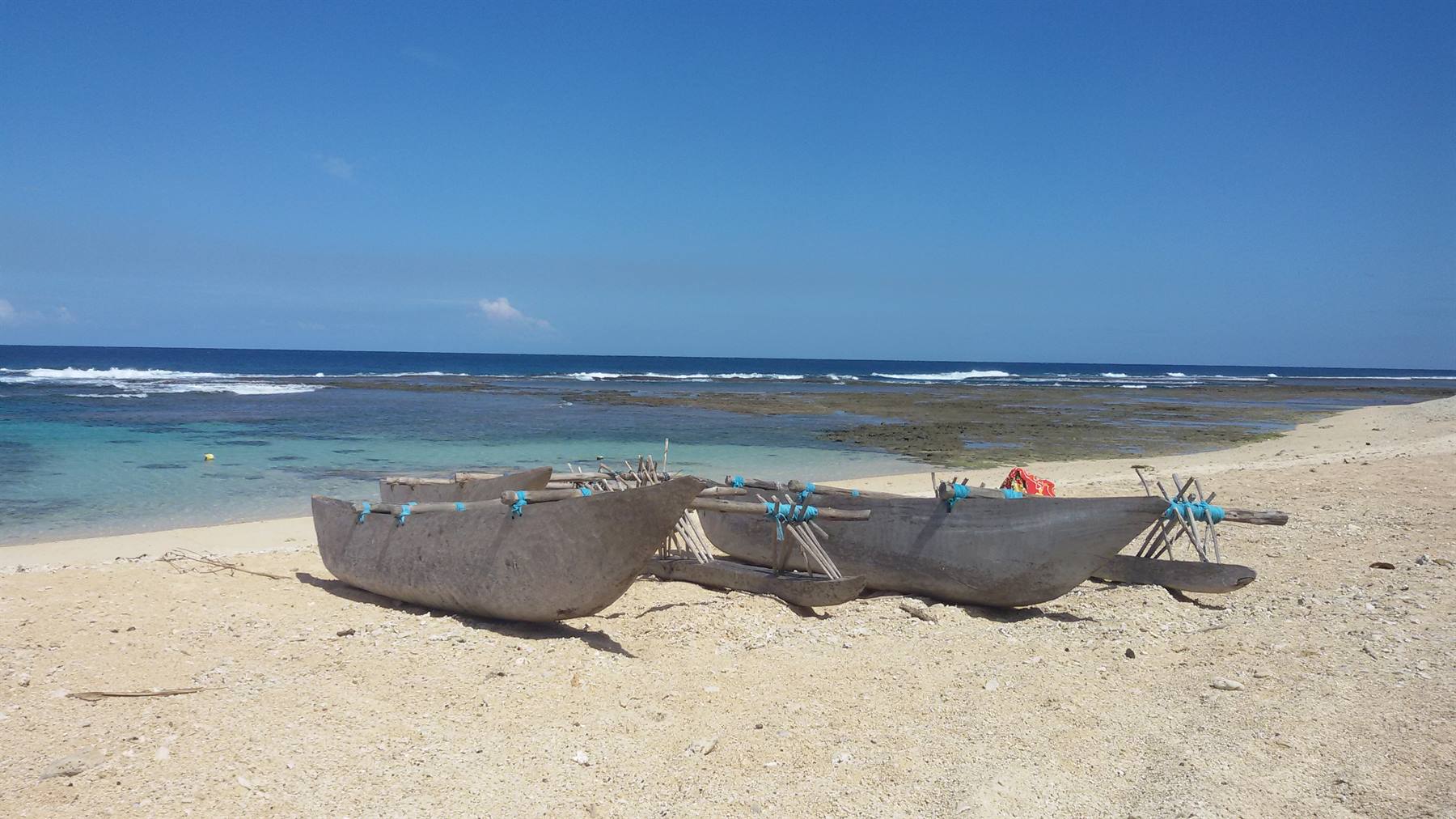
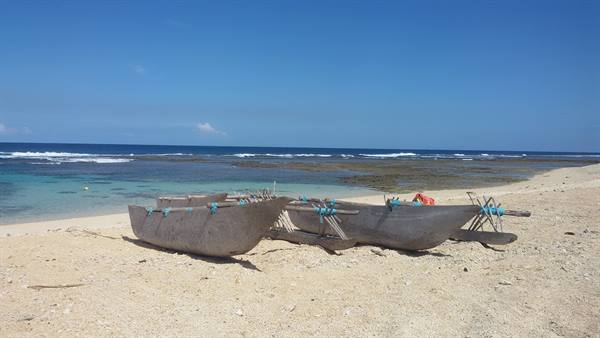
In a puddle where water had remained trapped, a woman was washing clothes; a little further on, two children with a knife were extracting shells from the rocks. On the shore there were rudimentary outrigger canoes carved from a tree trunk, but I noticed that although no nails were used, the outrigger bar was attached to the hull with plastic ropes rather than lashings made from coconut bark, as one would expect. We go to the nearby village, where a woman with her child in her arms shows us the huts. A child is being washed in a plastic tub by his mother, a woman shelters from the heat under a large banyan tree, a woman cooks over a wood fire in the hut. The village chief comes towards us with a machete in his hand to greet us. We cross this small settlement and enter a little shop selling basic necessities.
Once we reach the main road, my friend returns to the lodge because he is tired and has intestinal problems; I instead take the minibus to the main town of Lenakel. Here I change euros into local currency, take a look around the market, stroll on a volcanic beach and reach another little beach where a woman and her two children are bathing. In the small harbour a ship is moored that will set sail during the day for Port Vila. I keep walking towards another little beach where someone has built a small house in a banyan tree. A woman is fishing with a rod. All the people I meet are kind and happy to be photographed. I return to the market area, wander through the dusty streets of this village, find a small shop where it is possible to connect to the internet, then wait for the first bus that takes me back near the lodge.
I am dropped off on the main road, from where I walk the short path to this morning's school, where I meet the teacher again. From here, with a short walk, I return to the lodge. My friend goes for a swim and I join him shortly after, though I avoid following him into the water. Then we head back into the village, where in a clearing some boys are playing football, and we start playing with them. A few steps into the woods and we enter the Catholic Church, where we listen to the sermon in French. At dusk we return to the lodge, where we have booked dinner. The meal is just about passable. We then retire to sleep.
Wooden outrigger canoes resting on sandy beach in front of the reef
Day 412 Oct 2016
Traditional village
In the morning, breakfast in the hut that serves as both restaurant and reception, where we meet two French guests staying at the lodge. They are from Troyes but work in New Caledonia. We convince them to join us for the tour to a traditional village that we booked earlier. Indeed, with four people it costs less. Before leaving I return to the nearby school to say goodbye to the teacher and pupils. Shortly afterwards they come to pick us up in a 4x4, and the young owner of the lodge joins us too. In a short time, climbing into the hills, we reach a village where we see women at work: some are making handicrafts and some are cleaning taro. In a clearing we watch a dance performed in our honour. The inhabitants of this village wear traditional dress; the women have skirts and garments of dried bark fibre, the men are naked apart from a penis sheath of dried leaves wrapping the member.
When the dance is over they show us the usual fire-lighting by rubbing two tree branches together. We go back to the women we saw earlier to watch the preparation of lap lap, the local speciality. It is prepared by grating taro on a branch; the paste obtained is sprinkled with water and coconut flesh, mixed with herbs, wrapped in large leaves, placed on a bed of embers, covered with hot stones and then with a bundle of leaves. The result is a somewhat insipid bake for our palate. We also taste a piece of roasted taro, which tastes like sweet potato. After leaving the village we head back towards the lodge. I stop in the main town of Lenakel to contact home via the internet, then wait for a bus to arrive. I will wait more than an hour in the shade of a large banyan tree.
Since I absolutely must get back, I flag down a 4x4 which, for a fee, takes me to the lodge just in time to pick up the suitcases we had left in the French ladies' bungalow and have a vehicle booked at reception take us to the nearby airport. From here we take the flight that in forty minutes brings us to Port Vila Airport. Once we land, instead of taking an expensive taxi from the airport forecourt, we walk out onto the road and get on the first bus heading for the lodge. We collect our luggage from the small reception where we left it and take possession of the apartment which, although not the same one as a few days ago, is practically identical. For dinner I make a tea provided by the lodge, then we go to bed.
Wooden outrigger canoes resting on sandy beach in front of the reef
0 reader comments