It's the third time I've been to the capital. The first I was too little to remember it, and the second, barely more than a child, left me with some very clear memories and others rather vague. So this third time was again a lovely discovery of this fascinating city. For Marco, however, it was the first time, and although city trips aren't really his kind of travel, he enjoyed these few days in the capital too, so much so that he was sorry they were already over. Oh well.. Rome isn't at the other end of the world, so it's possible and indeed desirable to think of going back.
We buy the tickets directly on the Trenitalia website, taking advantage of a discounted fare to travel with the Frecciarossa at 98 euros each return from Turin to Rome. The journey takes 4 and a half hours! We book a hotel not far from Termini at 80 euros a night (double room with en-suite bathroom and breakfast included). A choice that proved optimal both for the convenient location near the station and the metro and for the quietness and cleanliness of the place. And around and opposite the hotel there are also many restaurants where we could have dinner.
Very useful was the Roma Pass, a card that for 25 euros per person, valid for three days, allows you to travel on all the city's public transport, to enter the first two museums/attractions of your choice free of charge and the others at a reduced price. You can get it at the information offices and at some museum ticket offices.
Day 13 Jan 2011
Today is dedicated to travel. We leave home in the late morning and arrive in Rome, right on time at 6:00 p.m. Just enough time to find the hotel, settle in and go to dinner.
By antonomasia Rome is also called the Eternal City, never was a definition more apt. For centuries its soil has seen the succession of peoples, cultures, great men and events that have changed and shaped the course of history. It is one of the major European capitals and only a few cities in the world can boast a history as rich and intense as its. It was the heart and the fulcrum of one of the most important ancient civilizations in history: the Romans. It was the capital of this grand empire (the Roman Empire), it was the capital of the Papal State, and today it is the capital of the Italian State.
The men of every era have governed from the palaces of this city, have conditioned the future, made Rome's fortune or misfortune, changed the destiny of their own people and of the entire country, and never as today, if the great men of the past could see the desecration and the puppet-show spectacle that politicians put on today, I don't know whether they would be happy at the thought of having left these men (and also a few women) their Eternal City, such an important legacy!
Rome
Day 24 Jan 2011
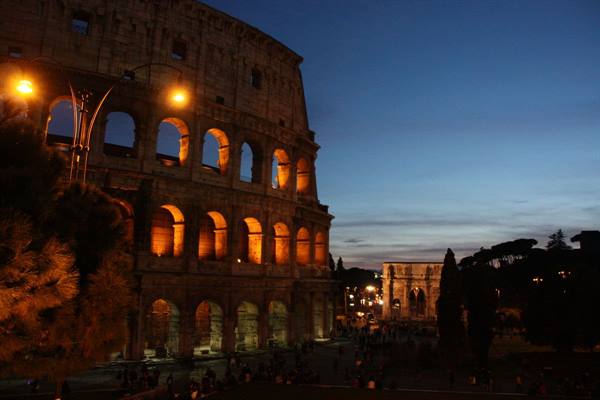
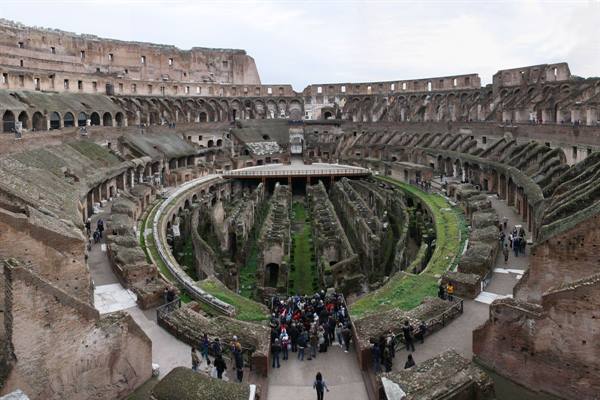
Our first destination is one of the city's icons: the Colosseum, how can you not think of this enormous Roman amphitheatre when you think of Rome. At the Colosseum and the nearby Roman Forum we use the first free entry included in our Roma Card. We don't even have to queue at the ticket office, which... despite being quite early, is already rather long. The ticket is a single one for both museums.
The Colosseum needs no introduction. It is known all over the world and since 2007 it has also been recognised as one of the seven wonders of the modern world. How could it not be, the largest amphitheatre of the Roman world that has survived to the present day... and we hope it will last in the days to come too, given that monuments in Italy have a tendency to collapse!
Walking in this important corner of history has quite an effect. Thinking about the people seated on the tiers, the gladiators in the arena, the cheering, the shouts of the crowd, the ovations of the masses, above all the blood spilled in this arena, the taste of victory and the cruel and bitter taste of death that this place has seen follow one another, and finally we think of the time that has inexorably passed since then, leaving its marks and bringing down to us this example of a truly distant past. Over the course of history it has been plundered, trampled on, its stones were used to build other palaces to embellish a Rome that did not yet know or appreciate the charm of the past.
Outside the Colosseum there are various souvenir stalls and gladiator-costumed performers waiting for tourists to have their picture taken. One in particular invites tourists in a rather crude manner, limiting himself to a wave of the hand and saying 'oh.. come over here'.. who knows whether the gladiators of the time were that unrefined! Their daggers certainly weren't made of plastic.. eh eh eh
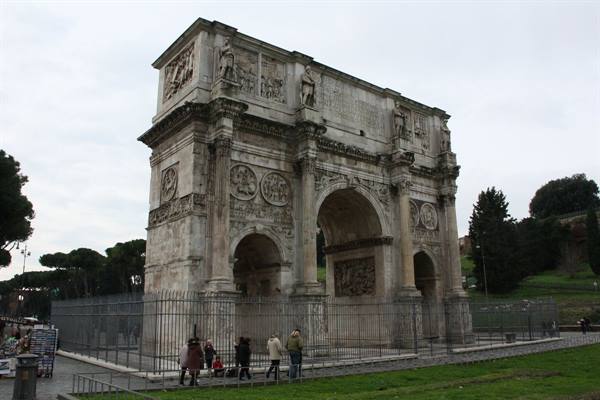
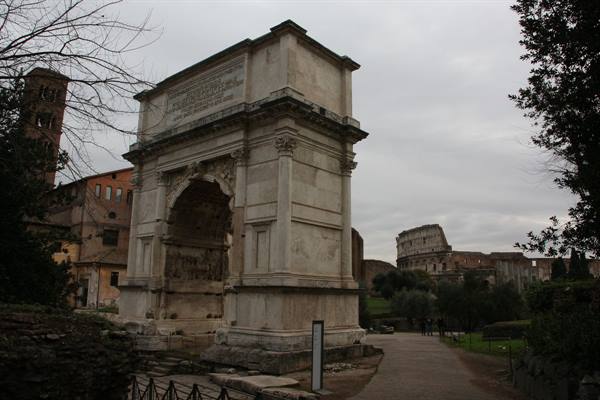
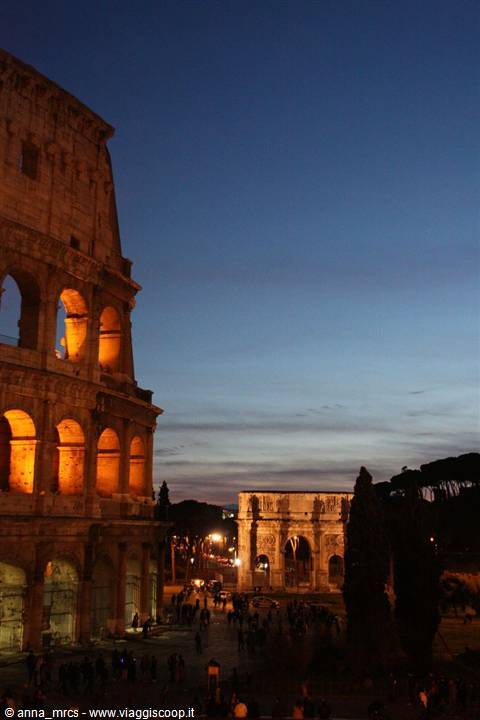
A little further on, in all its impressiveness and magnificence, is the Arch of Constantine, dedicated to the emperor Constantine I to celebrate the victory over Maxentius.
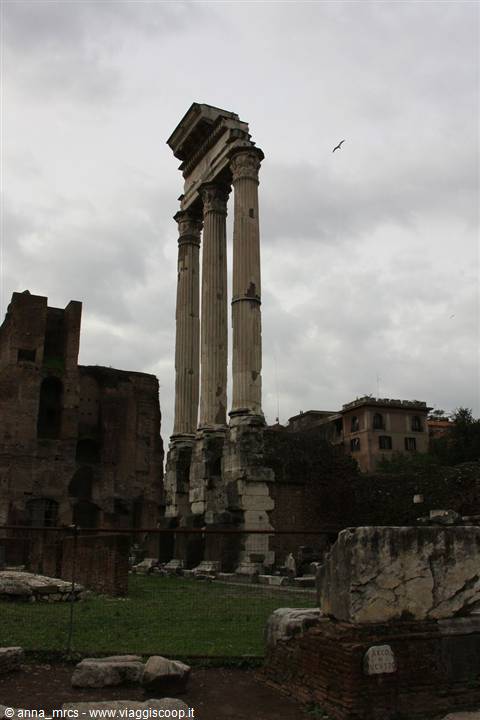
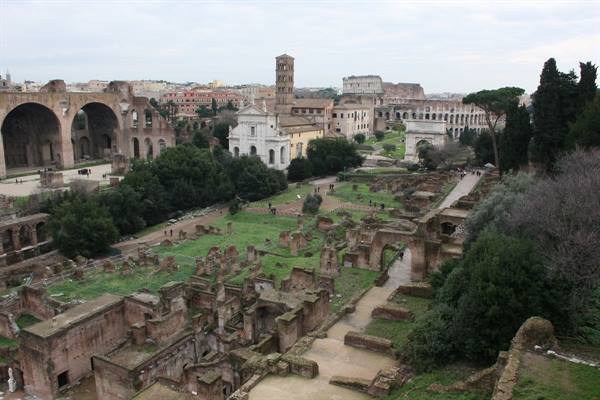
And finally here we are, discovering the Roman Forum and the Palatine (whose entrance ticket is included in the Colosseum ticket). We stroll for the rest of the morning among these ruins, consulting the map from time to time to learn something more about what lies before us. The Roman Forum is located between the Palatine valley and the Capitoline Hill and was the religious, political and commercial centre of the city, as the remains of the buildings, temples and columns that have come down to us testify. Besides a great number of tourists we also meet quite a few cats dozing here and there among the ruins, who knows if they are the descendants of the Romans' cats!! In any case they are all rather fat, when they aren't decidedly wider than they are long! Growing up on kibble and history really does make you fat!
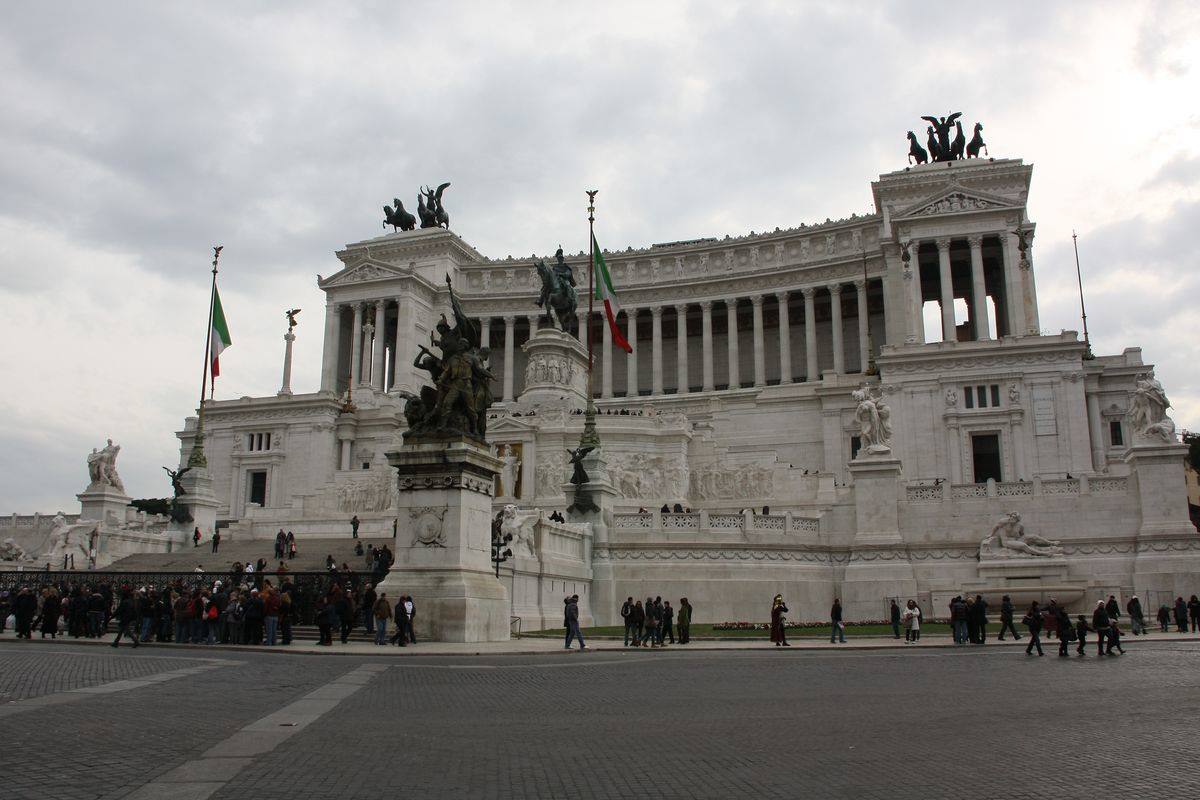
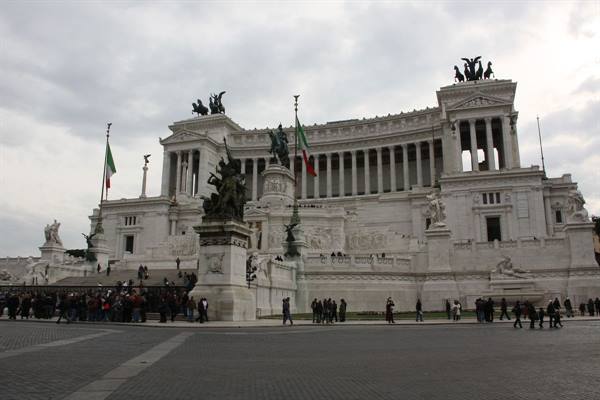
Having left the Roman Forum, a stop at the National Monument to Victor Emmanuel II, also known as the Vittoriano, which is right nearby, is a must. Upon the death of Victor Emmanuel II they decided to build a monument dedicated to the Father of the Fatherland and they designed and built this immense white building. Since it has housed the Unknown Soldier, this monument is also called the Altar of the Fatherland. In short, many names for a single place. We also visit the Shrine of the Flags, with an entrance to the side of the staircase of the imposing monument, and then we too climb this grand staircase to see everything more closely. The quantity of people there is impressive.
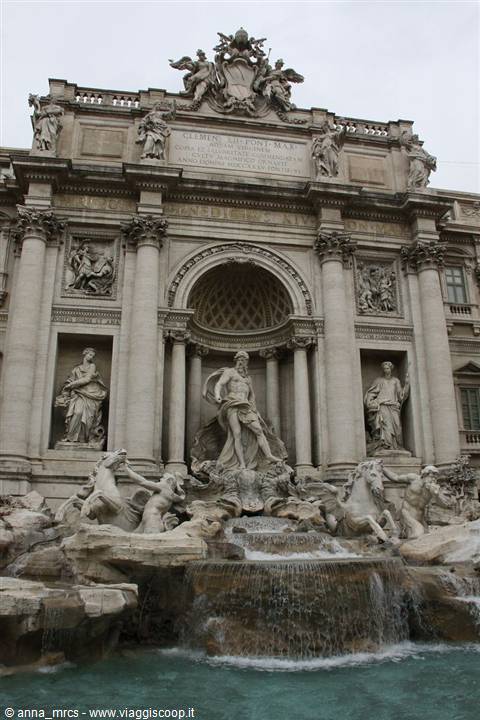
Having left the monument to Victor Emmanuel II behind us, we cross Piazza Venezia. The eighteenth-century Trevi Fountain retains its charm despite there not being a single free square metre for people. What a crowd! Nestled on the side of the Palazzo Poli, it is not only the most famous fountain in Rome but also the largest. Its magnificence bears witness to this highly successful marriage between classicism and baroque. The image of an Anita Ekberg diving into the basin in Federico Fellini's film 'La dolce vita' is an image we all know and have seen.
To escape all this confusion we head towards the Quirinal Hill, where the palace of the same name stands, the residence of the President of the Republic; just two bedrooms and a kitchen. It was first the summer residence of the Pontiff and later became the royal palace of the Savoys. With the proclamation of the Republic it became the seat of the Head of State.
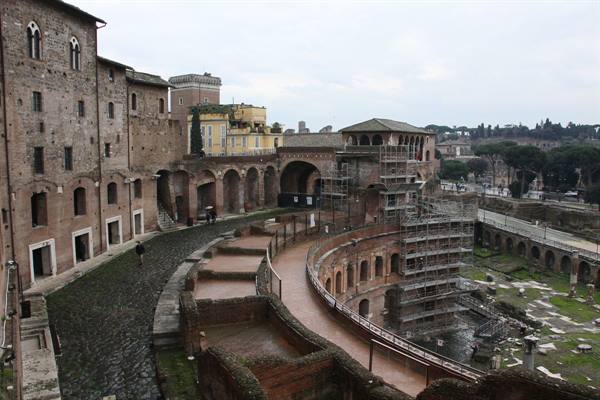
It is starting to rain when we are almost at the Markets of Trajan. They are a complex of buildings that in Roman times were intended for administrative and commercial activities (hence the name markets). We begin our visit of this area with the interior part of the museum, while we wait for the rain to stop. When the rain finally stops we can continue our visit of the exterior of the markets and stroll a bit among these ruins where a handsome big black cat wanders calmly among the seagulls, by no means scared or worried by his presence. Compared to the area of the Roman Forum there are few tourists here, we meet fewer than 10 people.
We climb the long staircase that leads to the Capitoline Hill, seat of the Municipality of Rome, located on the Capitoline Mount, which was the hill on which Rome was founded.
Seeing a part of the Theatre of Marcellus integrated into the structure of buildings from a later period than the theatre has quite an effect. There are curtains at the windows, it is strange to think of living on a piece of such ancient history. It was erected at the behest of Augustus.
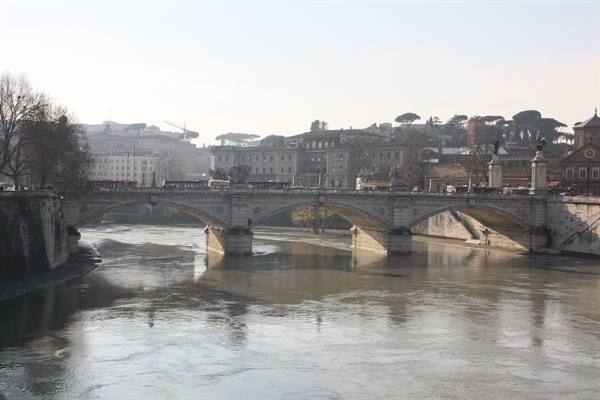
We cross the Tiber on the Fabricius bridge which takes us to the small Tiber Island, also known as the island of the two bridges or the island of San Bartolomeo (because of the basilica of San Bartolomeo of the same name present on the island). We stop at a café to have a nice hot chocolate. It has stopped raining but it is cold and something hot is just what is needed. Tiber Island has an alluvial origin and is the only urban island of the Tiber and is located right in the heart of this beautiful capital.
We cross the Cestius bridge in the direction of the Trastevere district but we don't have time to venture into its streets. Oh well.. we'll come back another time.
We cross the Tiber again on the Palatine bridge, so we find ourselves a stone's throw from the Arch of Janus and the church of Santa Maria in Cosmedin where, under the portico, there is the famous mouth of truth. If you tell a lie and put your hand in.. snap.. it eats your hand. Too bad it's only a legend, otherwise today we could use it to check the sincerity of politicians and not only... but then we'd find ourselves with an entire political class without hands! Eh eh eh... The legend has very ancient origins anyway, in the Middle Ages, where it was used by husbands or wives to check the fidelity of their spouse.
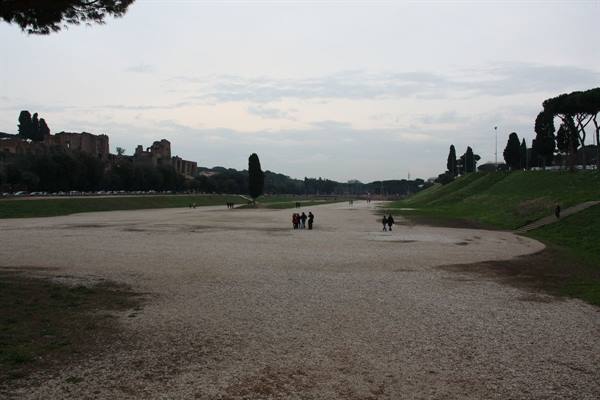
The day is about to draw to a close, the first evening lights are starting to come on and darkness is slowly gaining ground over daylight. So we conclude our day by crossing all that remains of the Circus Maximus, an ancient Roman circus, now an immense flat area, and we go to catch the metro that takes us back to the hotel. Mythology tells that in this valley, where the Circus Maximus stands, the abduction of the Sabine women took place on the occasion of the games organised by Romulus.
Rome
Day 35 Jan 2011
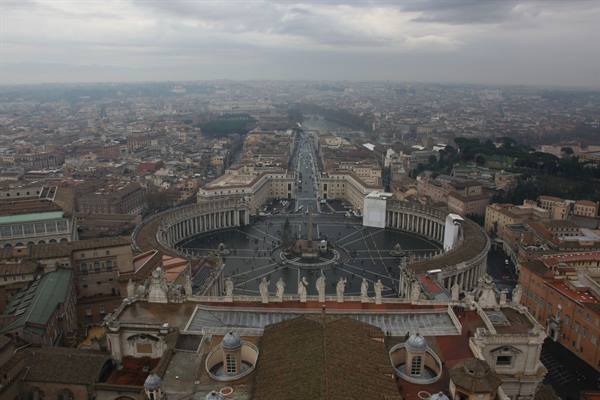
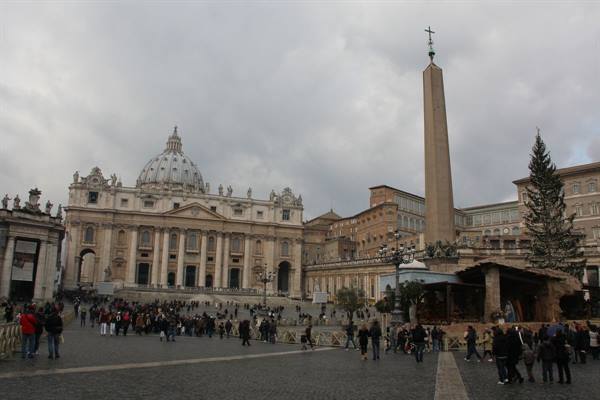
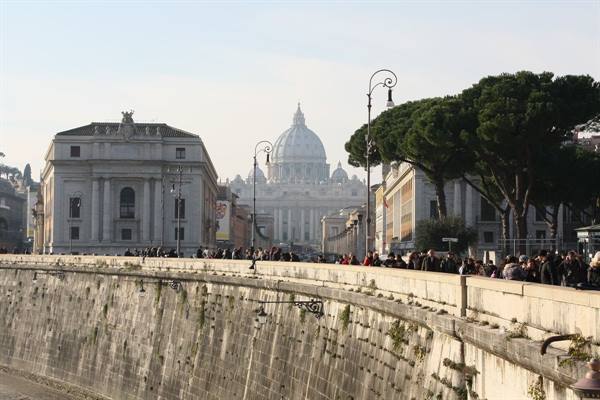
We immediately take the metro in the direction of the Vatican, or rather Vatican City, one of the smallest independent states that are part of Europe and of the world both in size and population. The basilica is one of the largest buildings of this kind in the world and overlooks the striking St Peter's Square, at whose centre is placed a beautiful nativity scene. On the sides you can see the Vatican palaces and the famous window from which the pontiff appears to bless his faithful who, in their thousands, crowd the immense St Peter's Square on Sundays and during the holidays. The visit of the spectacular and majestic interior of the basilica is free. As soon as you enter, in the first chapel, is placed the famous statue of Michelangelo's Pietà. The sculpture made in 1499 is now kept in a crystal case after a madman attacked it with a hammer, damaging it in several places.
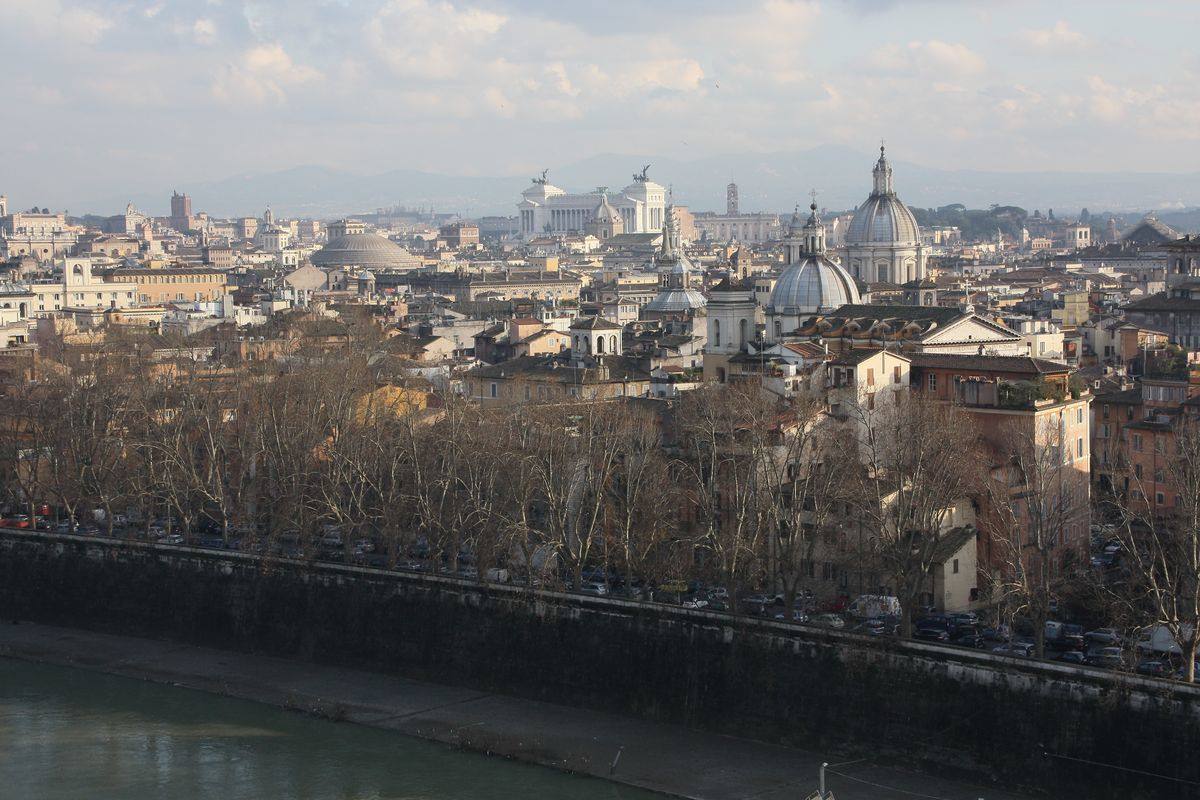
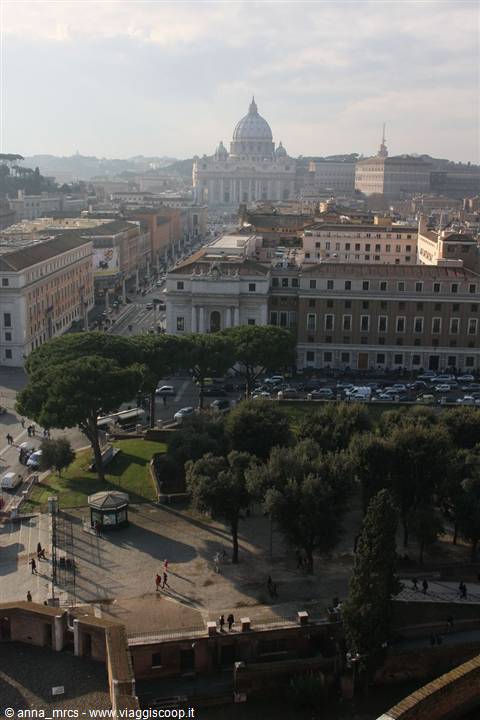
Perhaps he didn't like it? The whole church is something unique, the beauty, the magnificence of its frescoes, its paintings, its statues testify to the greatness and magnificence that the beauty of art can reach and the form that certain men are capable of giving to their ideas, to their creations. We continue our visit with the climb up the Dome, what a majestic view there must be from up there. The last part of the climb, in the dome, is also quite striking, the walls are, rightly, curved, and the staircase is very narrow. It has a strange effect, it feels like walking all crooked towards the inside. If you suffer from claustrophobia it's better to skip it, certain passages are very narrow. The view of the city from the dome is alone worth doing all those steps. In total there are 537 steps, but I didn't count them.
The basilica is 136 metres high and has a diameter of 42 metres, which is slightly less than that of the Pantheon that we will see later. It was built in just 2 years by Giacomo Della Porta on the basis of Michelangelo's drawings. Finally we close our visit to St Peter's Basilica at the so-called Vatican Grottoes which are used as a burial place for the pontiffs. The Vatican Museums, as the name says, are located inside the small State of Vatican City and represent one of the largest art collections in the world. The entrance to the Vatican Museums is not exactly near the basilica, one has to walk along the whole enormous wall to its entrance where a queue has formed, not even too long, we thought it would be worse. The Vatican Museums are, as I said, enormous, but we have made a small selection of what we want to see.
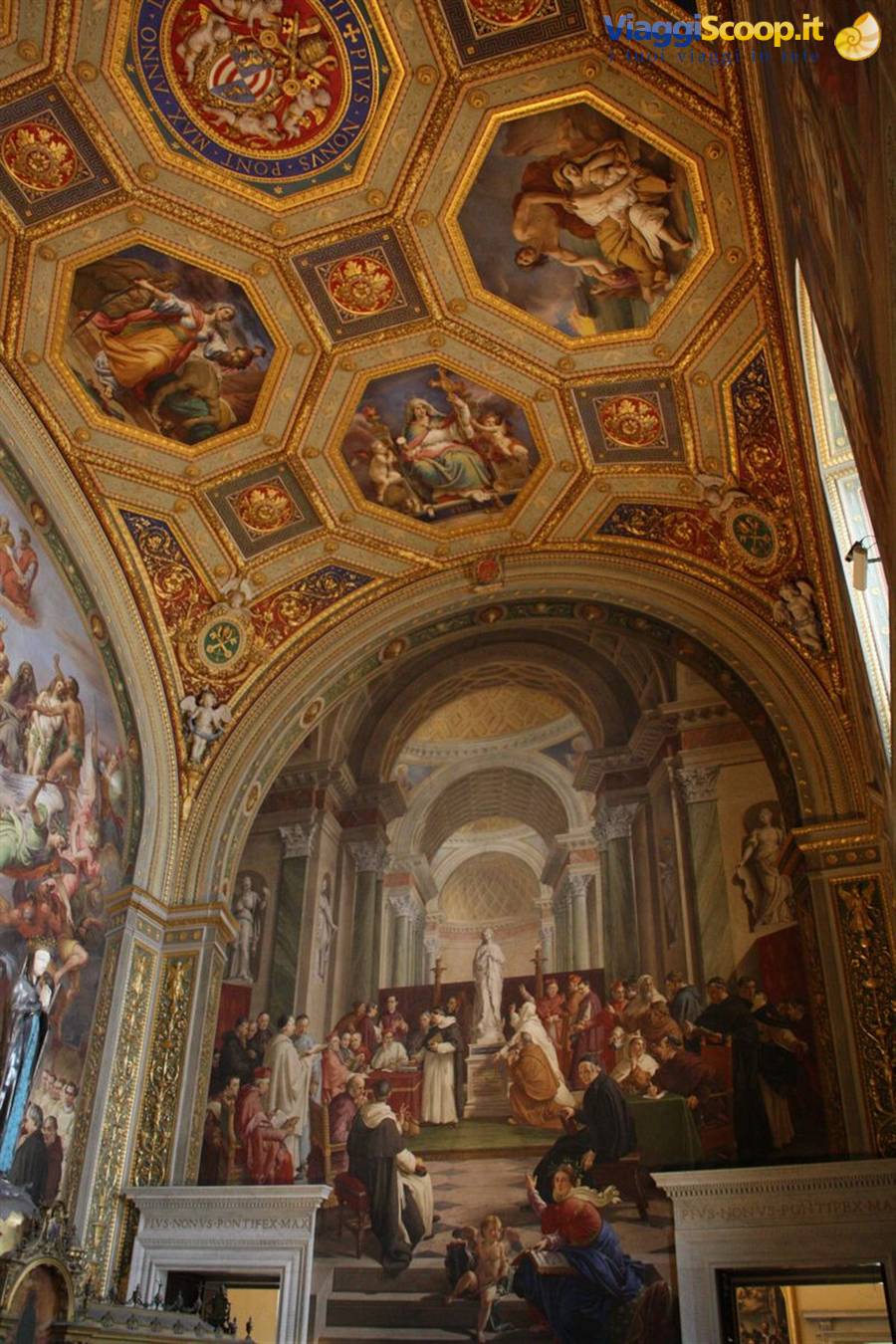
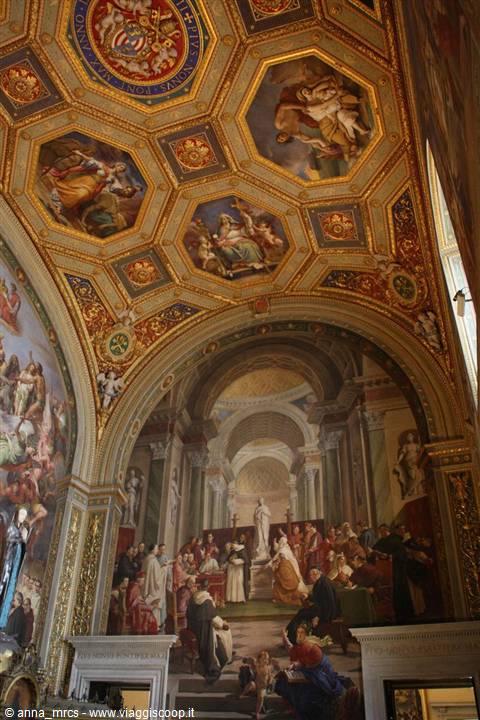
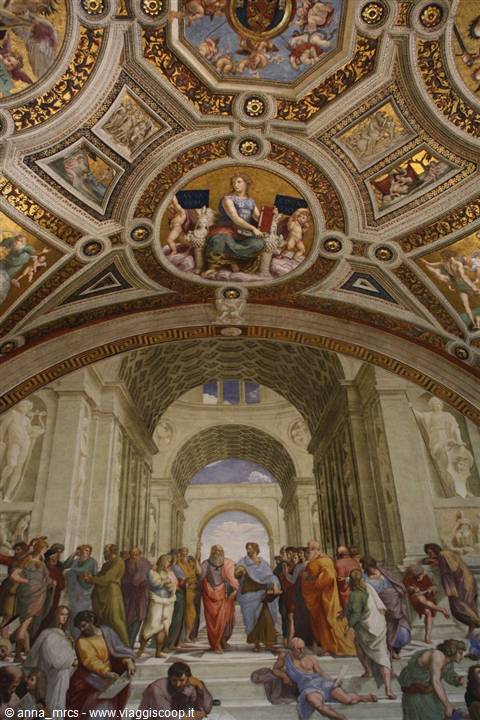
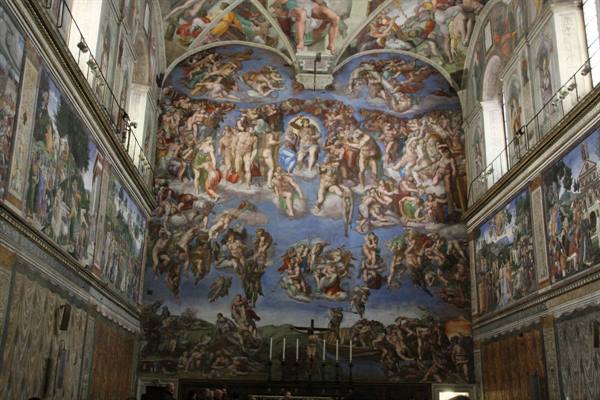
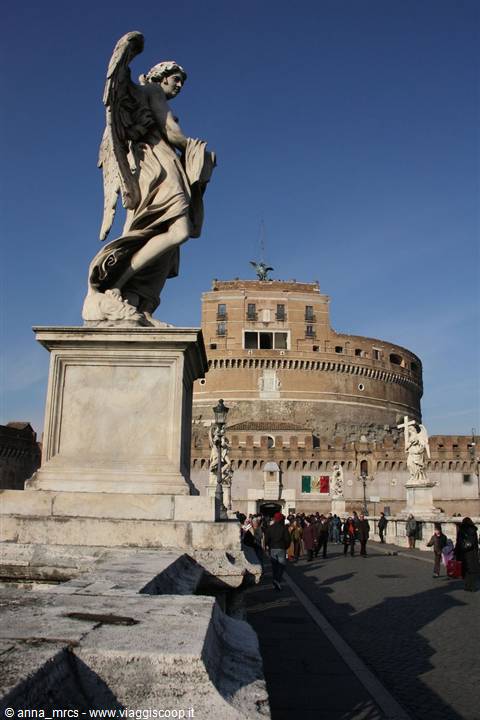
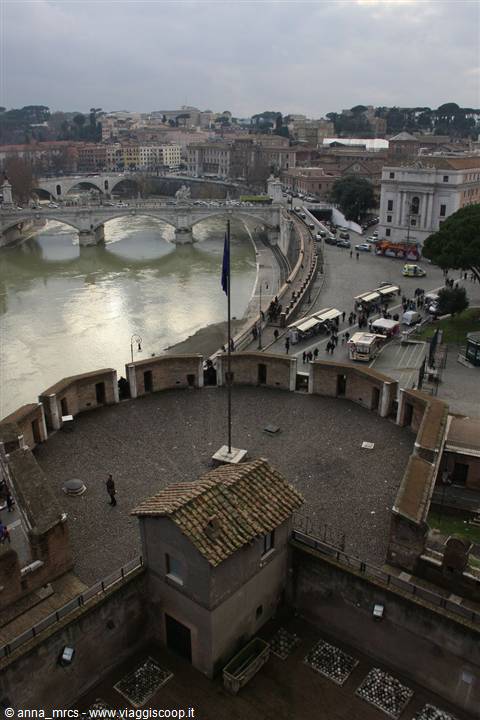
We therefore visit the room of the maps, beautiful, the room of the statues, other finely decorated rooms, the Raphael Rooms and the Sistine Chapel, packed with people but of great charm. It is the first time I see it and it is truly impressive! It was built between 1475 and 1481 by pope Sixtus IV (from whom it took its name) and is the seat of the conclave. The impressive frescoes on the vault and the Last Judgement are owed to Michelangelo Buonarroti. On the other walls, frescoes of equal beauty by other great names of the past, such as Botticelli, Perugino, Signorelli, etc... Castel Sant'Angelo also called the Mausoleum of Hadrian because he built his funeral mausoleum here; over the years it has undergone radical modifications until reaching what we can now visit. With the Roma Card we pay the reduced entrance.
The current name of the castle is due to the statue of the Angel placed on top of the building. Originally it was a wooden statue, it was then replaced by a marble one which was destroyed and replaced by another also in marble but with bronze wings. A lightning bolt that, in 1497, exploded a powder magazine destroyed the statue of the angel again, which was therefore replaced with a bronze one destined for a bad end.. it was melted down to make cannons. In short... someone has it in for this statue, given that they can't manage to have it towering from this castle without something happening to it? Just to conclude the saga of the Statue at this point a new marble statue with bronze wings was put back in its place. This statue, however, is currently in the Courtyard of the Angel...
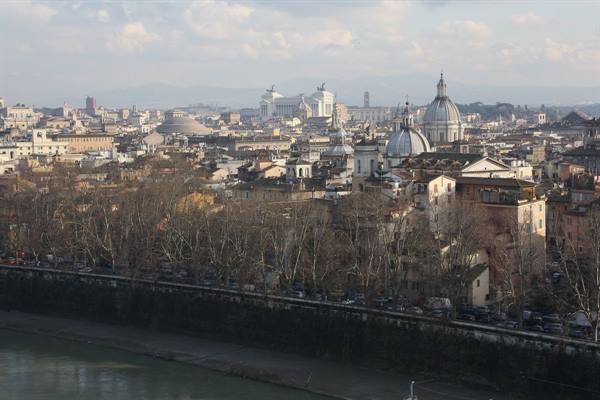
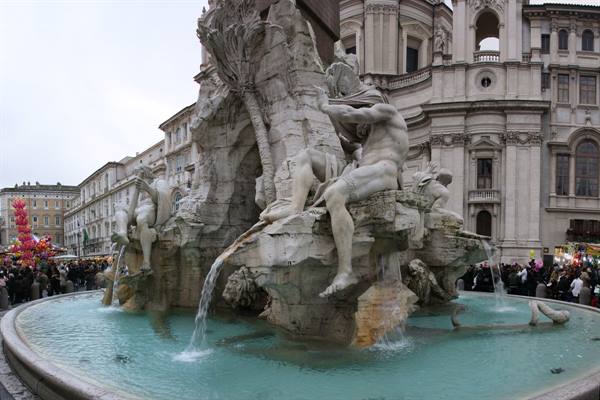
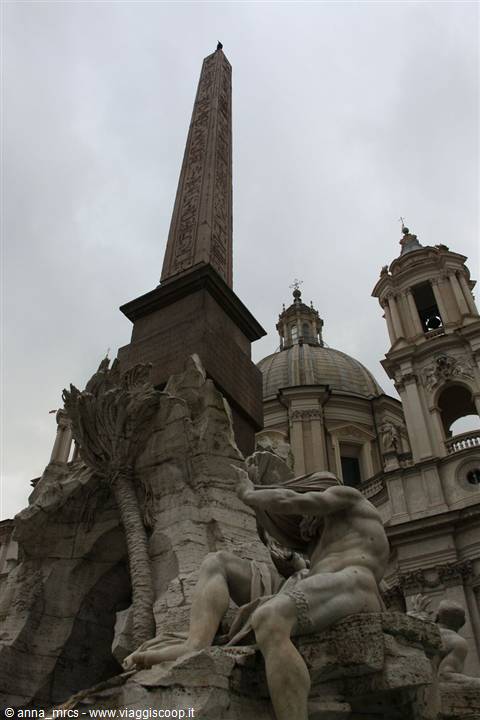
and so? The current statue is a bronze angel by Pierre Van Verschaffelt, which has already undergone restorations. I had heard on the news that they were complaining about the excessive presence of stalls and outdoor seating in Piazza Navona. There are the inevitable stalls of sweets and for the Epiphany.. in short it is very characteristic but it is also very crowded. Originally, in the time of ancient Rome, Piazza Navona was the stadium of Domitian where athletics races were held, and indeed its shape bears witness to this. A little further on Palazzo Madama, seat, since the fifteenth century, of the Senate. Now obviously it is the seat of the Senate of the Italian Republic. I am curious to see Campo dei Fiori but it is a great disappointment.
The last street vendors are finishing taking down their stalls, what remains of a colourful and lively market is nothing more than a square strewn with rubbish... not very poetic. Until the fifteenth century this square did not exist, in its place there was a lovely flowering meadow (now that was poetic) hence its name, although legend has it that its name is due to a woman, a certain Flora who was loved by Pompey. We resume our way, and we find ourselves in Largo Torre Argentina where there is a Sacred Area. There are in fact the remains of four temples of ancient Rome. The Pantheon also called the temple of all the gods is also a building belonging to the glorious past of Ancient Rome. It was built as a temple dedicated to all the divinities of Olympus.
It was built in Roman times and later its conversion into a Christian church, with the name of Santa Maria ad Martyres, was also its fortune, because this allowed it to reach us intact and not suffer, as instead happened to so many other monuments, the plundering that in classical times was carried out by the popes to build their palaces. In short, I take from here and put there.. since the world began the bad habit of appropriating what is needed by swiping it from somewhere else has always been in vogue! Today the facade of the Pantheon is under renovation. The interior is very particular and the dome, with its 43-odd metres of diameter and its coffered ceiling, is truly impressive.
Palazzo Montecitorio is the seat of the Chamber of Deputies, the place where every day (so to speak) the representatives of the citizens decide the fate of the country, this in theory, in practice they look after their own interests to the detriment of everyone else. With the Unification of Italy a seat was needed for the chamber of deputies, what to do? You expropriate one and goodbye, problem solved! A small renovation and on 27 November 1871 the assembly hall was inaugurated where even today politicians manage to give the best (and worst) of themselves! Palazzo Chigi is instead the seat of the government since 1961 and also the residence of the President of the Council of Ministers. Our intense day is drawing to a close, the sun is slowly retreating and darkness is starting to envelop everything.
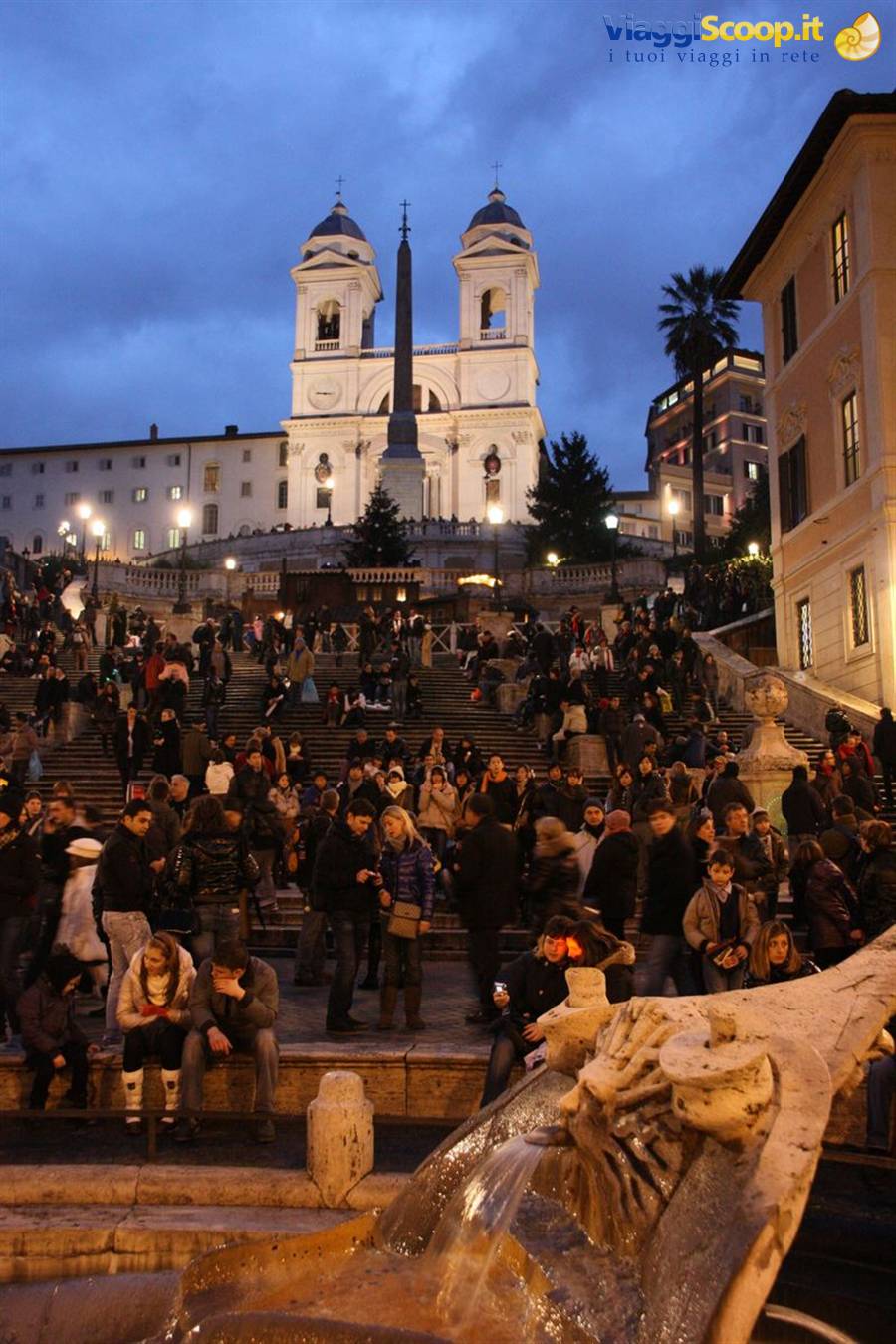
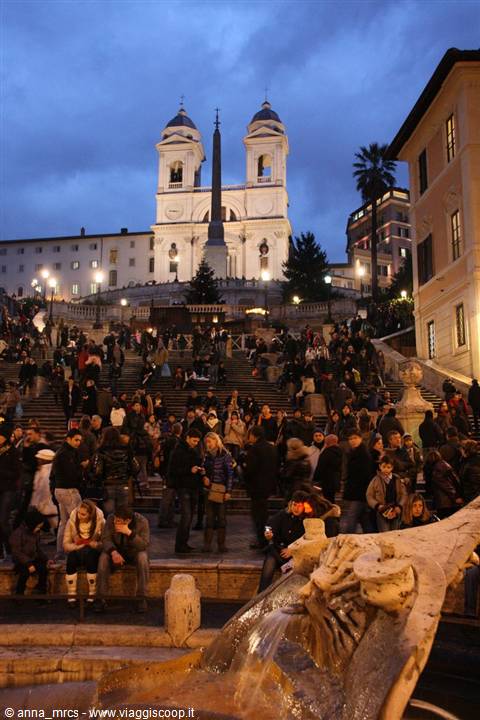
We go as far as Piazza di Spagna where we sit for a moment near the fountain to enjoy what is left of this day. I thought I would enjoy the illuminated Spanish Steps of Trinità dei Monti and instead it is nothing special. Piazza di Spagna with the Spanish Steps of Trinità dei Monti is, not wrongly, one of the most famous squares in Rome. Just out of curiosity, it owes its name to the Palazzo di Spagna, seat of the Spanish embassy
Rome
Day 46 Jan 2011
There are still many things to see and do and we only have today left, and not even the whole of it since we have a commitment for lunch. Well.. we'll make a choice, something has to be left aside for next time, right?
We immediately take the metro and get off at Piazza del Popolo, it is still early and everything is deserted. Piazza del Popolo, I read in my guide, is one of the most celebrated squares in Rome, in short.. all these squares are celebrated, why do we keep repeating it every time!
The square opens at the foot of the Pincio (another hill of Rome) and today is a pedestrian island where events of a different nature are often hosted, including demonstrations, due to its capacity to hold up to 65,000 people.
Overlooking the square are also what are defined as the two twin churches, namely Santa Maria in Montesanto and Santa Maria dei Miracoli.
We then continue in the direction of Piazza di Spagna, to see it in the sunlight, and we have the chance to note that today is really the first day of the sales. We notice it because in front of many shops, still closed, a long queue of people waiting to shop has already formed. As they say... the slow machine of the sales is starting up. But queuing just to enter a shop seems a bit much to me.. maybe then to come out empty-handed; hours of queue just to look and discover that there is nothing you need, but perhaps in these moments people caught up in the sales craze buy even if they don't need to only because 'it's on sale'. This makes the shopkeepers' fortune!
In the centre of the square is the fountain of the Barcaccia sculpted by the Berninis (father and son).
This morning we also climb the Most Holy Steps of Trinità dei Monti made up of 135 steps to enjoy the view of the city's rooftops and see the interior of the church of Trinità dei Monti. The staircase was built on the occasion of the Jubilee of 1725 to connect the Spanish Bourbon embassy to the church, so they didn't have to go around!
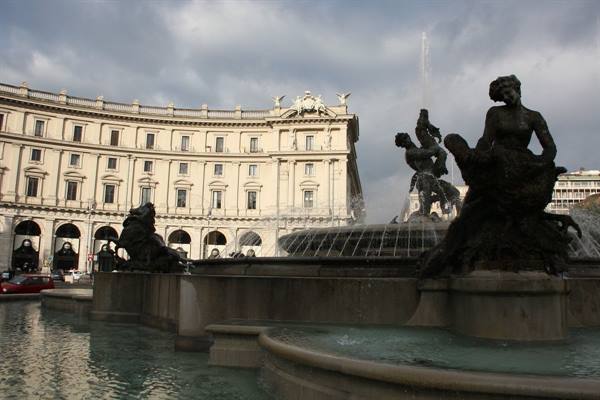
We move to Piazza Barberini where there is the fountain of the Triton, a work by Gian Lorenzo Bernini. A little further on we find the crossing with the Four Fountains. I expected a much bigger crossing. And walk and walk and we arrive in the very busy Piazza della Repubblica known until the end of the fifties as Piazza Esedra. We are a stone's throw from Termini station and in front of the Baths of Diocletian.
Overlooking Piazza della Repubblica is also a Roman church that from the facade seems to promise little... It is the Basilica of Santa Maria degli Angeli e dei Martiri. The interior is a spectacle. Astonishing! The service is in progress and the sound of the immense organ (extraordinary!) fills the whole church. It is unique, impressive... it deserves a visit!
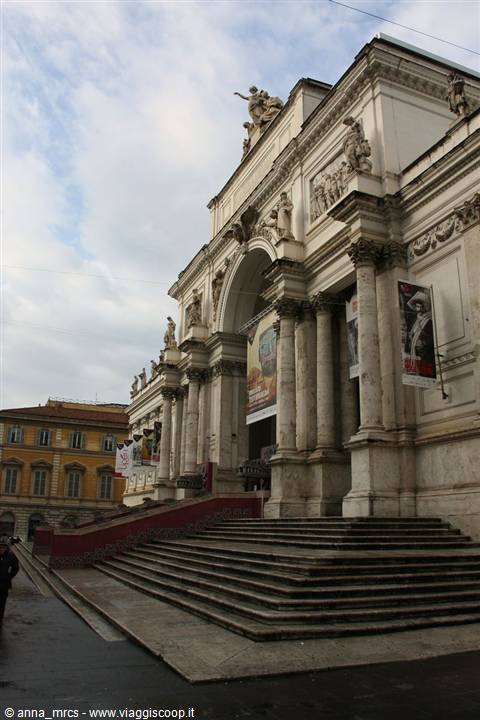
We pass by the Opera Theatre, nothing to report, and the Palazzo delle Esposizioni after which we decide to go looking for the Domus Aurea. On the way we stop in the Basilica of San Pietro in Vincoli also called the Eudoxian basilica, a name that derives from the name of its founder, namely the Roman empress Licinia Eudoxia. Compared to other churches we have seen this one has nothing remarkable except the presence of the beautiful statue of Moses by Michelangelo, which makes it unique.
And now straight towards the Domus Aurea... one word... Search and search.. in the end we manage to find the entrance only to discover that it is closed for renovations. Too bad, it had been described to us as something truly unique and beautiful. It will be for next time, hoping that the renovations don't last for centuries as often happens in Italy.
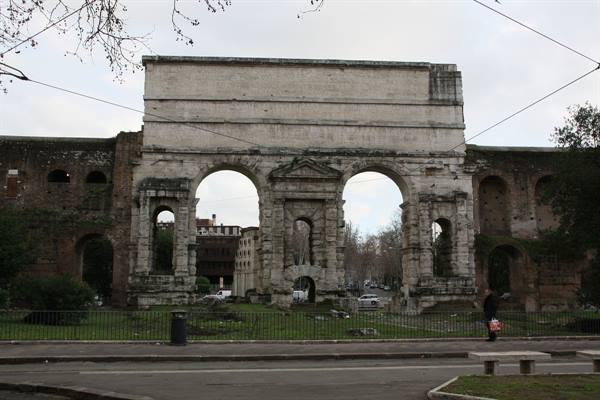
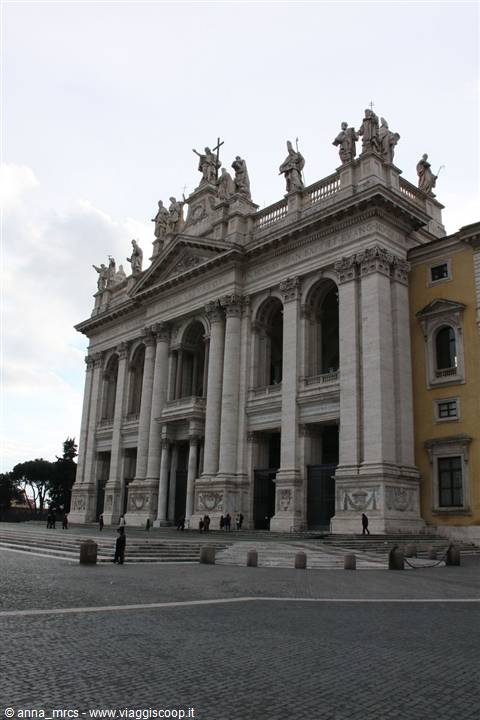
We interrupt the tourist day to go to lunch at my aunt's. After lunch, instead of returning to the centre by tram after two stops, we opt to continue on foot.. we ate too much, we need to burn some off! We then go down to Piazza di Porta Maggiore and continue on foot towards the cathedral of San Giovanni in Laterano. Truly spectacular! The interior is impressive, this one shouldn't be overlooked either. Its full name takes up three lines... It is also called the Archbasilica Lateran or Lateranense, and it is the cathedral of the diocese of Rome. The apse and the frescoes on the vaults are spectacular.
From here we move, still on foot, towards the Baths of Caracalla which alas are already closed. Oh but what reduced hours!!! So we have to settle for the view from outside. Too bad! The Baths of Caracalla or Antonine Baths are one of the most beautiful and best preserved examples of baths from the imperial era. They were commissioned by the emperor Caracalla, hence the name.
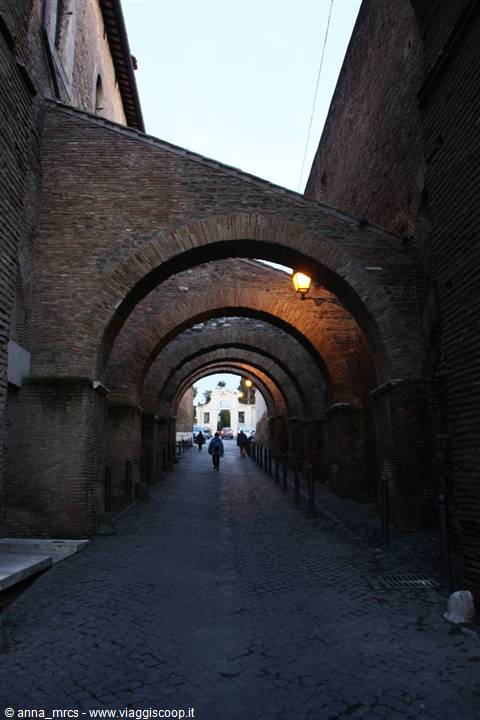
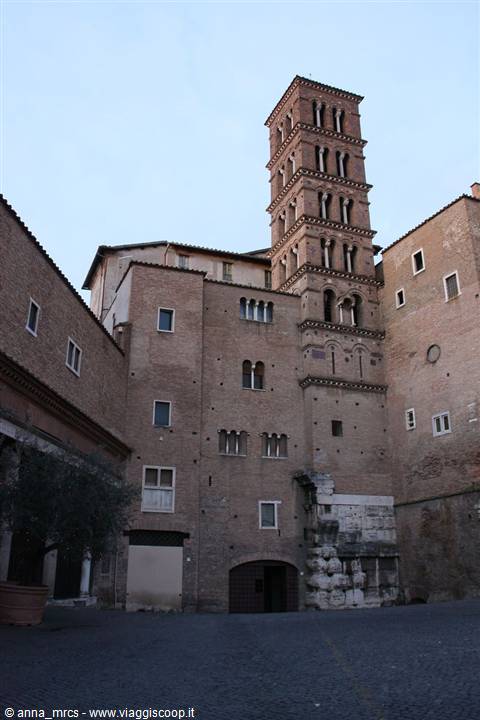
Since we are in the area we stop by Villa Celimontana and its park, the church of San Gregorio Magno and that of Santi Giovanni e Paolo, where a handsome big cat wanders under the portico and the sacristan or whoever he is tries to shoo him away with a broom. A photo also at the Arch of Arabella and... we decide to bid farewell to Rome in the same place from where we began to get to know it.. from the Colosseum. Its gates are by now closed but the people strolling outside and lingering seated on the low walls are still many. The image of the evening with darkness enveloping the illuminated Colosseum is a beautiful memory with which to bid farewell to this city. So we too stop to enjoy the last fragments of this splendid eternal city.
Rome
Day 57 Jan 2011
Having had breakfast, we sort out all our stuff and head to the station. Just the time for some last purchases and at 9.33 we leave the capital heading home. Marco liked Rome very much too, for me it is one of the most beautiful cities there are in the world. A few more days would certainly have been needed to run around a bit less and see more things, but as I said at the beginning Rome is not far and coming back, perhaps when they have reopened the Domus Aurea, is certainly possible, indeed... desirable! We still have things to see, the Baths of Caracalla, the Appian Way and also Trastevere, just to name a few... in short.. we have to come back!
Bibliography Roma, City book – Arnoldo Mondatori Editori - 2005
0 reader comments