The trip begins in schizophrenic Dubai, a city divided between the historic Deira and its Creek, and the exaggerated, ultramodern towers of the new business districts. We then head north, crossing another 3 emirates to reach the wild, inhospitable landscapes of the Musandam, a small Omani enclave jutting into the Strait of Hormuz with its Khor (fjords) that cut between almost inaccessible mountains. We cross back through the emirates to re-enter the Sultanate of Oman, with the calm Muscat and the splendid fishing villages of the southern coast facing the Indian Ocean. The desert again in the Al Sharqiya region, with the dunes of the Wahiba Sands, the fortified towns of Nizwa, Bahla, Jibrin, Nakhal and Rustaq, and the spectacular white roads that cross the Jebel Shams, over which the Grand Canyon of Arabia opens up.
The crossing of the Hajar mountains on impossible roads with gradients around 20%, surprising mountain oases and very deep gorges. Following the bed of the Wadi Bani Awf we return to the asphalt. Back to Dubai passing through Ibri and Al Ain. A stopover in Doha for a quick visit to the city, in particular the diplomatic area with its bizarre skyscrapers and the old suq, which turned out to be a welcome surprise. In 11 days we covered 3000 km. Cost: about 1250 euros per person, including the plane ticket and car hire. A trip marked by an extreme feeling of safety and calm in any situation and place, with the exception of the reckless drive over the dunes of the Wahiba Sands, where the adrenaline made itself felt.
The images of this trip: the men dressed in white and the women veiled in black, the futuristic skyscrapers of Dubai and Doha, the crenellated castles and watchtowers, the henna decorations, the dates, the dhows, the breathtaking landscapes of the Hajar mountains, the gorges in the wadi beds, the exaggerated temperatures, the fjords (khor) in the Musandam peninsula, the turtles and the dolphins. Top five: the mountain road of the Hajar mountains and Wadi Bani Awf, the Musandam peninsula, the sea turtles in the Ras al Jinz nature reserve, Sur and the fishing villages of the southern coast of Oman, the old suq of Doha.
Practical information: The flight with Qatar Airways from Milan Malpensa to Dubai with a stopover in Doha. Car hired with Budget: Booked a RAV 4 but with the up grade they gave us a Toyota Fortuner with automatic gearbox, super comfortable although the automatic gearbox isn't the best for driving on sand. Car rental cost about 90 eur/day. Speed limit in the emirates 120 km/h. The roads in excellent condition and perfectly signposted. At Budget we took out the supplementary insurance to travel in Oman. Temperatures still a bit too high, between 40º and 45º. No problem finding accommodation even without booking anything, most of the hotels were empty. Food: mostly you find small restaurants with Indian and Lebanese cuisine, although in the main centres you can also find international cuisine. Excellent fresh fruit juices, everywhere.
Better to pay by credit card to get a more favourable exchange rate. In the smaller restaurants and little shops, though, you have to pay in cash. Currency: UAE: Emirati Dirham (AED) 1 EUR = 5.23 AED Oman: Omani Rial (OR) 1 EUR = 0.55 OR Qatar: Qatari Rial (QR) 1 EUR = 5.30 QR
The trip: 28 September 2009; Monday Milan -Dubai Flight with Qatar Airways from Malpensa to Dubai with a stopover in Doha. We leave Milan at 22:50 right on time, the on-board service is excellent, the plane half empty, you can lie down and take a nap. 5h 50 of flight to reach Doha (1 hour ahead of Italy; at 6 in the morning we are already around 37º in temperature. At 7:55 the connection to Dubai, 1 hour of flight and 1 hour ahead of Qatar (2 more than Italy). The flight cost us 330 eur per person (insurance included).
29 September 2009; Tuesday Dubai and surroundings At the airport the customs formalities are quick and efficient; we pick up the car at Budget, and to our pleasant surprise, not having the booked RAV 4 available, they hand us a Toyota Fortuner 4x4 with 7 seats. We'll travel like true nabobs. The impact with Dubai's 42º in the morning reminds us that we've moved noticeably south; our salvation is the car's air conditioning. Dubai airport is right in the centre of the city, indeed you'd say the city developed around the airport. Planes pass a few dozen metres above the motorways and above the towers of skyscrapers, most of which are still under construction. Our programme for today includes a panoramic tour of Dubai; we'd like to see the suqs of Deira, the famous creek with its Dhows and the new business area.
A few kilometres in the crowded streets leading to Deira, to Bur Dubai and to the new business area are enough to understand that the city is a huge building site, work in progress on every corner, to build a road, a new skyscraper, a metro line, or just to demolish what already existed, even though we're told that on most of the sites the work has been suspended — here too the crisis is making itself felt and foreign investment now arrives in fits and starts. The road signs are excellent and the city turns out to be fairly easy to drive through were it not for the heavy traffic blocked by endless traffic lights. From Airport Road we head for Deira, then pass alongside the creek and the main suqs, cross the bridge over the creek and find ourselves in Bur Dubai; the endless towers of the business area are our landmarks to find our way in the city traffic.
We reach the Trade Center and decide to settle at the Ibis Hotel, which offers truly advantageous prices and excellent value for money (320 AED for a double, about 60 eur). Having left our bags at the hotel, we refresh ourselves at the Noodle House located in the Emirates Towers, before continuing our visit of Dubai. We pass among the biggest shopping centres in the world: the Mall of Emirates with the incredible ski slope in the middle of the desert; the Burj Dubai, which with its incredible 800 metres is the tallest skyscraper in the world.
We then reach Jumeirah, where the famous Burj Al Arab stands, the 7-star hotel shaped like a sail that has become the symbol of Dubai; we make do with seeing its outline from the outside, since a room in this hotel costs from 3500 to 35 000 euros a night, and who can afford that?? The eccentricities of the emirs don't end here: with the sun setting behind the outline of the Burj Al Arab we glimpse as if in a mirage the outline of towers and lacework rising from the sea; we head south and reach the Jumeirah Palm, this residential complex out of the Arabian Nights built on a completely artificial island shaped like a palm; the top of the palm is dominated by a majestic entrance gate complete with towers and turrets — where have we ended up? The atmosphere is out of a fairy tale.
We go back to Dubai and attempt the not-so-simple feat of finding parking near the creek; after a good half hour we give up and slip into a multi-storey car park. Deira is the traditional trading centre of the Persian Gulf, where crowds of porters bustle about loading and unloading every kind of goods from the traditional dhows; in its suqs prosperous African women stock up on every kind of goods, which they will then load onto the ships bound for various African countries. We reach the spice suq almost at closing time; we still have time to stock up on dates stuffed with walnuts, dried figs flavoured with liquorice
Day 130 Sep 2009
We stroll along the creek, which in the evening becomes very evocative with the illuminated boats that travel along it and the silhouettes of the minarets and skyscrapers in the distance. Still full from the hearty lunch at the Noodle House, we settle for a shawarma at a kiosk on a busy street in Deira. It's almost 11 pm and after the night spent on the plane, perhaps it's time to go back to the hotel and grant ourselves some well-earned rest.
September 30, 2009; Wednesday
Dubai – Sharjah – Ajman – Ras al Kaimah - Khasab (Oman) The night at the Ibis was truly golden-dream worthy, so in the morning we are in shape to face the temperature, the traffic and the transfer to the Musandam peninsula. Just 12 km from the center of Dubai, Sharjah is already another emirate; we stop for a visit to the Heritage Village, practically the old historic center that has been completely restored and survives with its wind towers almost engulfed by the surrounding skyscrapers. A visit to the calligraphy museum and a stop at the Al Arsa suq where we enjoy a tea on the sofas of the central little square. A walk on the corniche defying the over 40°C temperature, where the movement of the dhows seems never to stop, and we resume the road northward, passing through two more emirates: Ajman and Ras al Kaimah, better known as RAK.
Lunch stop at Ras al Kaimah at the Al Sahari restaurant, which serves an excellent Mezze. In RAK we also make our first fuel stop at the surprising price of 0.25 euro per liter. We will later discover that in Oman fuel is even cheaper, 0.20 euro per liter, incredible! RAK is about 30 km from the border with the Omani enclave of Musandam. At the border post the formalities are quite simple and quick; you have to pay an exit tax from the UAE (25 AED/person) and an entry tax into the Sultanate of Oman (6 OR/person). Note that the tax for Oman can be paid exclusively by credit card; in fact the customs officers are not authorized to receive cash. From the border to Khasab there are about 40 km of an extremely scenic road; unfortunately night has already fallen, but we will make up for it on the way back.
In Khasab there are currently 4 hotels: the Golden Tulip in a very scenic position (900 AED double), the Khasab Hotel (750 AED apartment with 2 doubles), the Lake Hotel (a bit sad) and the Esra Hotel (600 AED apartment with 2 doubles). We install ourselves in the latter, located at the foot of the Musandam mountains, good service, courtyard with pool and restaurant. We have dinner at Al Allah with an excellent grilled fish. At the hotel we book the dhow excursion in the local Khors, half a day 15 OR/person, full day 20 OR/person; we opt for the half day.
October 1, 2009; Thursday
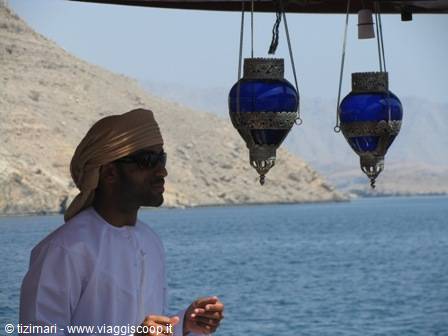
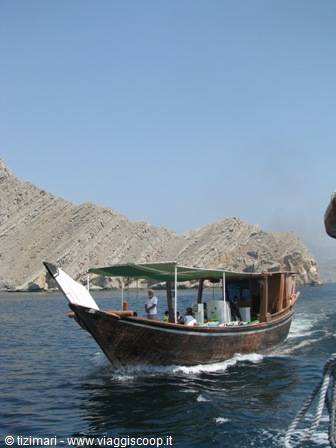
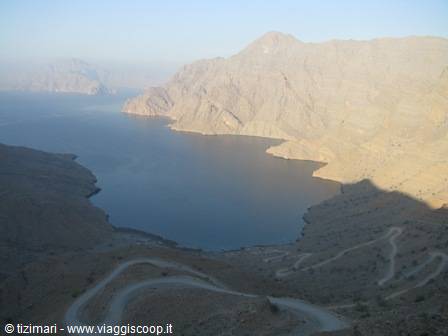
Khasab - Khasab The dhow excursion toward Telegraph Island starts at 9:00. There are 10 of us on the dhow, equipped with every comfort. As soon as we leave the harbor bay we are joined by a group of dolphins who escort us right into the Khor. After passing the village of Qanah we reach Telegraph Island, so called because the English installed a telegraph station here that allowed the connection between Goa in India and Basra in Iraq. Diving around the island; the seabed is nothing special, but many fish, parrotfish, angelfish. The water is like broth. On the way back, again escorted by dolphins, lunch at Al Allah and in the afternoon an excursion to Khor Najd. We take the road under construction and abandon it after about ten kilometers to climb up into the mountains, reaching a pass at 500 meters with a stunning view over the Khor below.
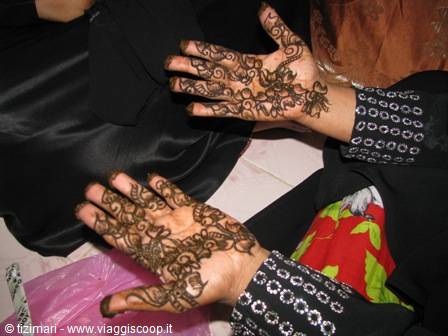
Vertiginous descent, 2.8 km at 20%, interesting for mountain biking! For the evening we were invited by Mohamed (the dhow guy) to his sister's wedding party; the wedding will be tomorrow and the preparations that began several days ago culminate this evening with the henna ritual. Songs and dances, tea, coffee bombom. The bride has now been busy for a few hours with the decoration of arms, hands and feet with henna; obviously access to the hall is allowed only to women; meanwhile we are stuffed by Fatima and her little sister with peanuts and bombom, which never melt. According to the Lonely Planet, the little Bukha Castle restaurant is frequented by Iranian smugglers.
Curious to experience this anthropological adventure and convinced that the little restaurant is located in Bukha, we shoot off the 26 km of coastal road; we will later discover that the little restaurant is in the old suq of Khasab, a few dozen meters from Mohamed's house. Things that happen when you forget the guidebook at the hotel. In Bukha, anyway, we find a take away, some falafel and the inevitable fried chicken. We return to the hotel after midnight. October 2, 2009; Friday Khasab – Sohar Our initial plan was to travel through the Musandam mountains and cross the border with the Emirates at Dibba. In Khasab, however, they inform us that this border is open only to Omanis and Emiratis, but is closed to foreigners.
Not wanting to give up the enchanting landscapes of Musandam, we decide to travel the road that leads to Jebel Harim (the mountain of women); we will continue as far as the police post and then retrace our steps to reach Khasab again, the Tibat border post, RAK and finally Dibba, thus lengthening our route by about 180 km. The mountain road that climbs between the canyons of Musandam to reach the 1600 meters of the pass is enchanting; the descent on the opposite side equally so. We return to the Emirates, this time no tax; we reach the eastern coast of the UAE, passing through Dibba, Fujairah and once again the border post to re-enter Oman, again an exit tax from the UAE and an entry tax into Oman (always payable exclusively by credit card).
The area between Dibba and Fujairah is very distinctive; the traffic roundabouts are characterized by strange monuments, coffee pots complete with little cups, incense burners, jugs, daggers, chests full of treasures and whatever else. Overnight stay and dinner at the Wadi Hotel in Sohar, located in a convenient position beside the highway to Muscat (49 OR the double).
October 3, 2009; Saturday
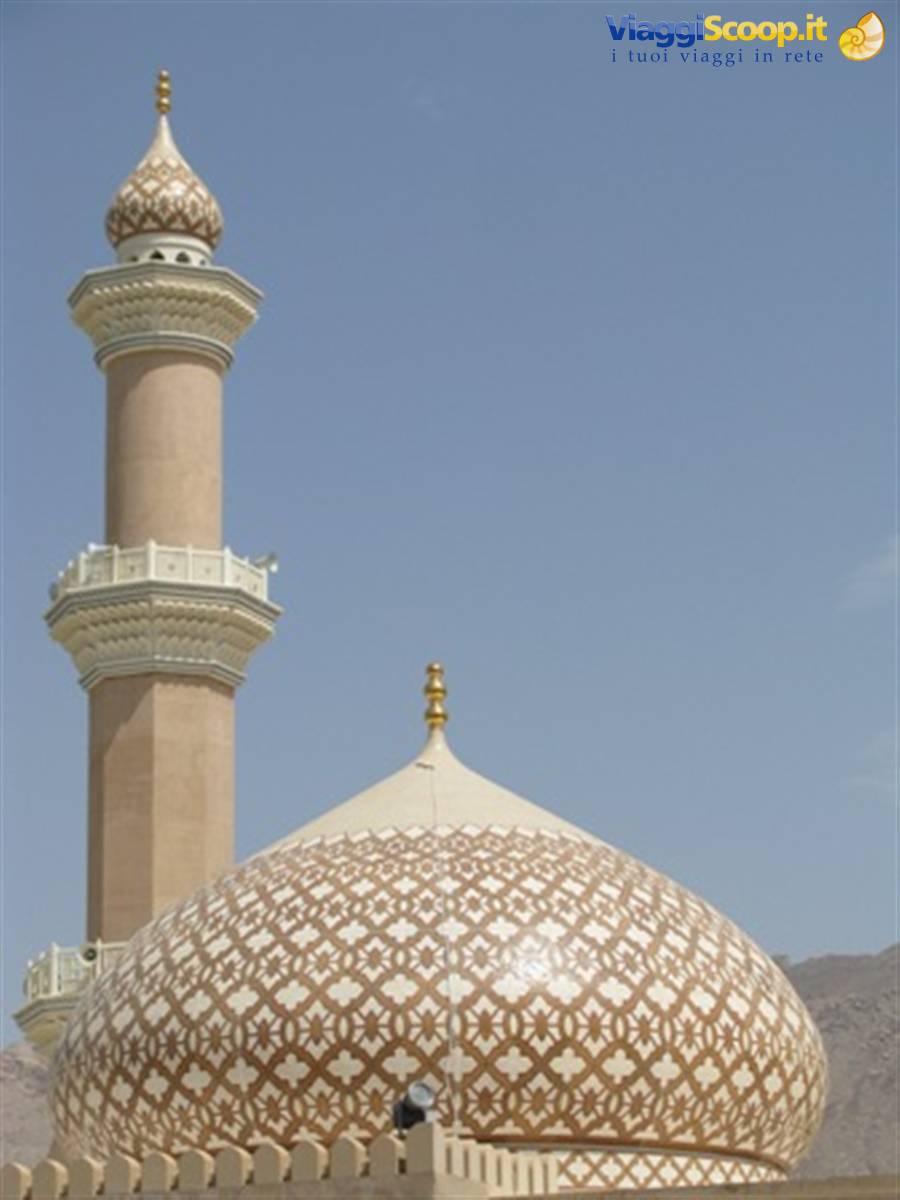
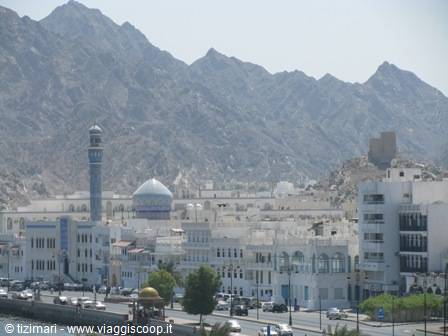
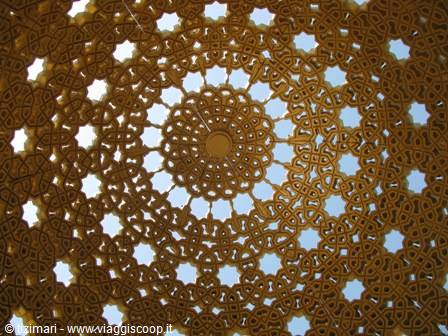
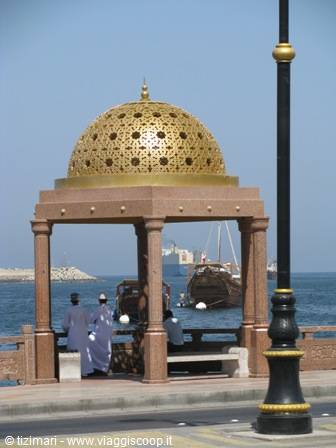
Sohar – Muscat-Muttrah We set off again in the direction of Muscat, which we reach in about 2 and a half hours on a comfortable highway. The Marina Hotel (35 OR the double) located in Muttrah in a strategic position facing the fish market and a stone's throw from the Muttrah suq, however, turns out to be below expectations: dirty rooms, unmade beds, very slow and unprofessional service. Strongly not recommended, at least until they change management and direction. Having left our luggage at the Marina anyway, Muttrah surprises us with its Corniche with marble floors and granite low walls, on which stand out sculptures of dolphins and gazebos with golden domes under which the Omanis enjoy the comings and goings of dhows and boats in the port of Muttrah. The Muttrah suq is a maze of covered alleyways that converge in some central little squares.
Toward 1 pm all the shops in the suq close and we can only abandon ourselves to a brilliant mango juice before heading toward Muscat.
Muttrah, harbour and fish market
Day 24 Oct 2009
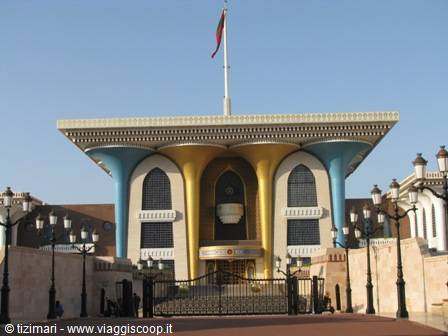
Located about 3 km from Muttrah, Muscat welcomes us with its majestic entrance gates. Drowsy in the hot afternoon, it appears to us like a ghost town; the mirror-polished marbles of the avenue leading to the Sultan's palace and the immaculate streets of the city seem almost unreal. Another enormous gate located under a tunnel gives access to the port area, from which you can enjoy a view of the Sultan's palace and the two forts of Al Jalali and Al Mirani that guard the entrances to the port. Harassed by the over 40°C heat, we take refuge in the air-conditioned (perhaps too much) halls of the Bayt al Zubair museum, which allows us to get an idea of Oman's historical and cultural heritage, with jewelry, traditional clothing, handicrafts and furniture. We cross back through the gate of the old city to return to Muttrah to complete the visit of the suq.
The juices at the Al Ahli Coffe shop, located in the central area of the suq, are truly up to the occasion and allow us a pleasant stop to observe the lively alleyways of the suq, which toward evening fill with the black silhouettes of women, who linger in the fabric shops and the showy jewelry stores.
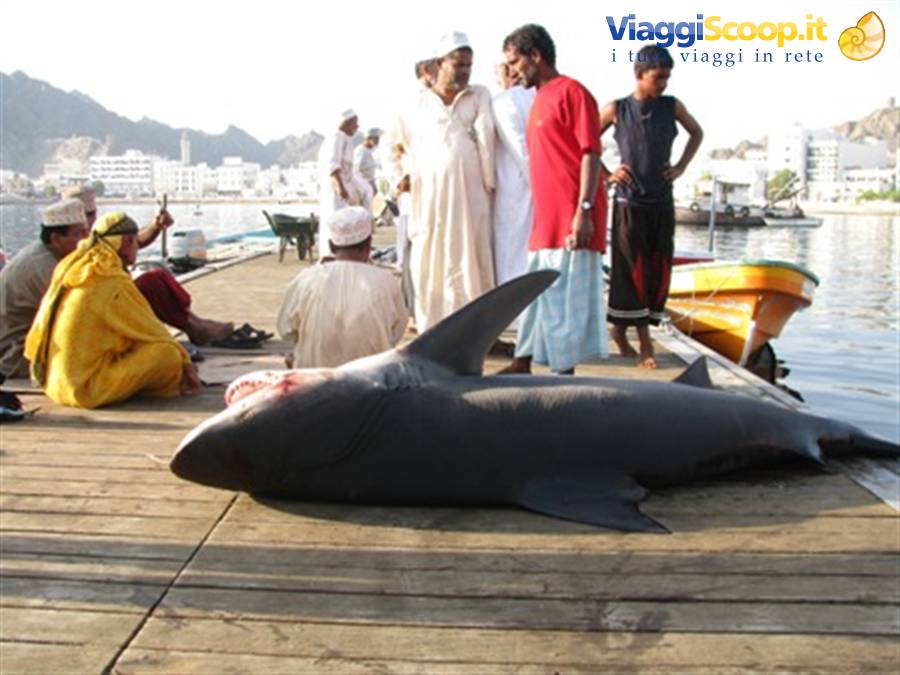
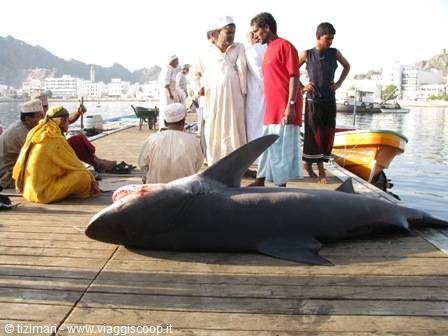
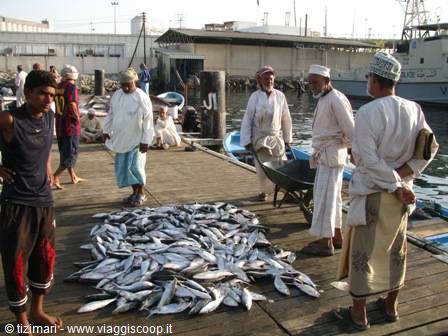
October 4, 2009; Sunday Muscat-Muttrah – Ras al Hadd Minarets and mosques are not lacking in the surroundings of the Marina Hotel; it is still dark when the call of the muezzin for the first prayer echoes in the air. I get up early and head to the fish market; the refrigerated little trucks wait outside. Inside, busy sellers seem overwhelmed by every type of fish, a coming and going of overloaded wheelbarrows; I follow their path in reverse and find myself on the pier. The dhows have by now been replaced by fast fiberglass boats, but the ritual of unloading and auction selling is maintained.
On the pier about ten people are standing; when a boat docks the little group moves to observe the result of the catch; the fish are poured onto the floor, expert eyes proceed to a quick count and a mental calculation of the good price to pay; the auctioneer begins to squirm and shout out the various bids. The game is done; the buyer pays the fisherman, the percentage to the auctioneer, the loaders fill the wheelbarrows and set off toward the market, the little group sits back down waiting for the next boat. Barracuda, big sharks, little tunas, and other kinds of fish are unloaded onto the pier and very quickly disappear toward the market. A painful breakfast at the Marina Hotel and we set off again toward Sur.
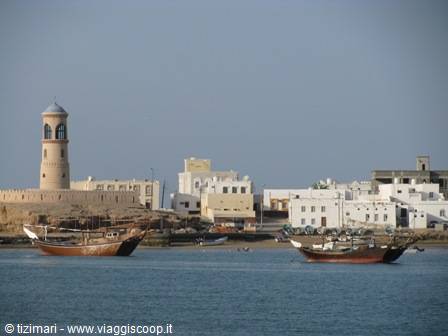
With the new highway the route is now extremely easy, but at Fins we leave the asphalt to get back onto the old coastal track that winds between wadis and coves with extremely scenic views. Unfortunately, with the work on the new highway, the old coastal road is interrupted in various points and therefore no longer passable. Wadi Shab and Wadi Tiwi have been somewhat disfigured by the pylons of the highway, but the overall impression remains remarkable nonetheless. We reach Sur by lunchtime; it is a pleasant fishing town characterized by the presence of dhow shipyards, where it is possible to discover the secrets of the carpenters and inlayers. The late afternoon light makes the atmosphere on the lagoon particularly magical and fascinating.
We reach Ras al Hadd with the sun setting behind the towers of the castle; we install ourselves at the Ras al Hadd Beach Hotel (42 OR the double), located at the end of a lagoon on a kilometer-long beach almost unfrequented in the hot afternoon hours. Tonight there is a full moon and we organize ourselves for a visit to the beach of Ras al Jinz, a nature reserve where about 35,000 turtles come each year to lay their eggs. The visit is guided (3 OR per person) and we leave at 21:00 from a monstrous building built at the mouth of the beach. Why ever such an atrocity in a nature reserve? The beach is a spectacle, every meter occupied by a turtle nest and, although it is not the peak of the season, it doesn't take long to find a turtle laying eggs; nearby other turtles are preparing to leave the beach and a myriad of little ones emerge from the sands and head, waddling, toward the sea.
The full moon makes the spectacle, already sublime, even more enchanting. A strong emotion takes hold of me when I see the little turtles disappear among the waves of the ocean, an incredible spectacle of nature. How many of them will manage to reclaim this beach in 35 or 40 years, after having wandered the oceans of the world, to begin their first laying? Mohamed, the guide, has the answer ready: 2-3%. After the dolphins of Musandam, this evening we witnessed another great spectacle.
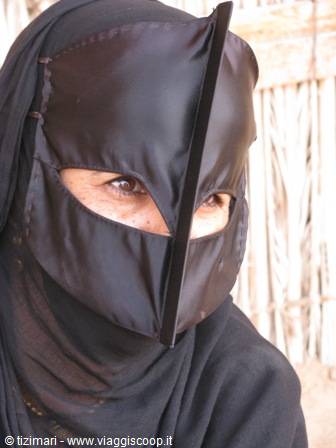
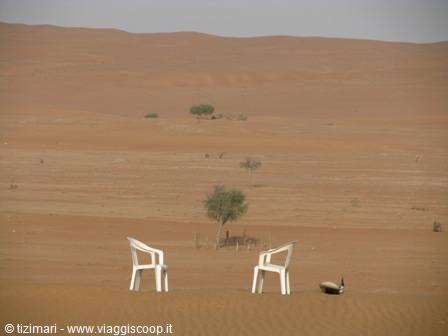
October 5, 2009; Monday Ras al Hadd – Wahiba Sands (Al Sharqyia desert) We set off again along the southern coast facing the Indian Ocean, passing through a series of small fishing and Bedouin villages, very distinctive. The women in this area wear colorful veils over tunics decorated with silver embroidery. We abandon ourselves to wandering through the alleyways where at every corner you are given an image, women quickly covering their faces, little girls hiding behind a low wall, little boys who on the contrary come toward us smiling, goats and sheep dozing in the shade of an acacia. At Al Ashkahrah we leave the coastal road reluctantly; the small villages are truly fascinating and one would gladly linger. We then head toward the Al Sharqyia desert; the first sand dunes begin to stand out on our left.
Yesterday we called the Areesh camp to book the tents for the night in the desert, not so much for fear of not finding a place, but to avoid the risk of not finding anyone. In fact, arriving we discover we are the
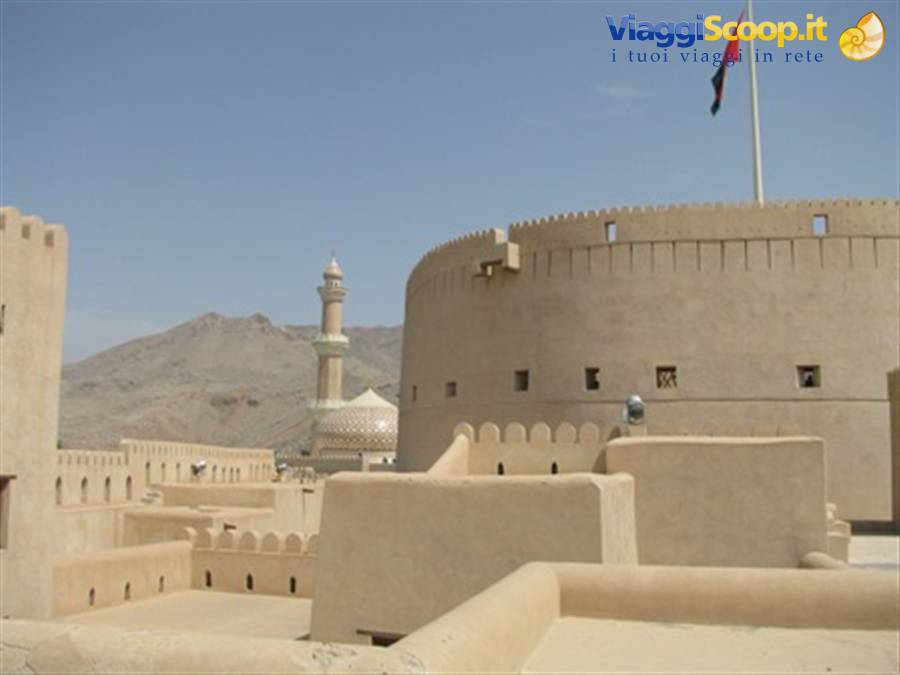
Nizwa the fort
Day 37 Oct 2009
October 7, 2009; Wednesday
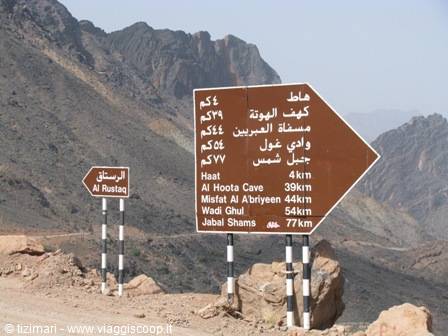
Nizwa – Jebel Shams – Hajar Mountains – Biled Sayt – Al Rustaq - Nakhl – Nizwa Today's route involves crossing the Hajar mountains, one of the most impervious and isolated areas of Oman. We leave the road connecting Nizwa to Bahla and head towards Jebel Shams; the first stretch of asphalt winds through the valley floor, repeatedly crossing the Wadi Ghul, locally known as the Grand Canyon of Arabia. After the first 20% gradients the asphalt ends and we continue on a white gravel track, but in good condition, only the slopes are a bit extreme. Before reaching the summit, a right-hand turn takes us to a small village and a series of camps perched right on the edge of the Canyon. A shame that the haze doesn't allow a full view of the valley below. We retrace our steps and head towards Hatt and the mountain road that crosses the entire Hajar mountain range to reach Wadi Bani Awf.
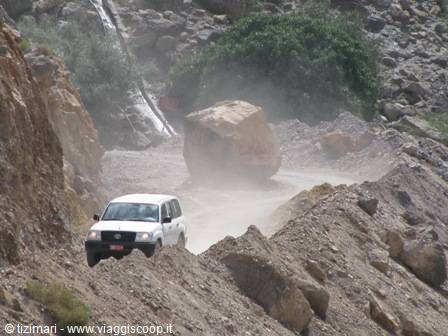
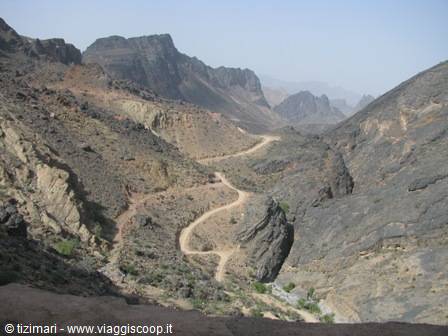
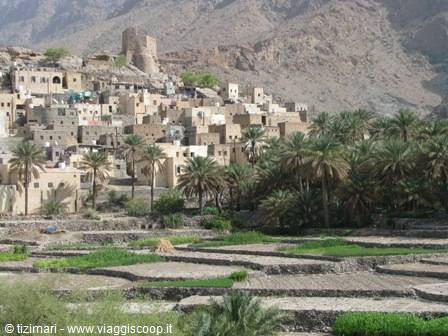
The initially asphalted road climbs up to the pass, then gives way to a track cut into the mountainside that drops sheer above the village of Hatt. We pass through enchanting landscapes and mountains of unstable boulders; fortunately it rarely rains around here. We dare not think what this track could turn into during the rains. Arriving at Hatt we cross one of the many Falaj, the ancient channels that allow water to be transported several kilometres away in the middle of the desert; in Oman there are about 4000 km of these man-made aqueducts. Beyond Hatt the road seems to lose itself in the various crevices that open up between the mountains; we pass a few pools of water in the Wadi bed and reach the left-hand turn for Biled Sayt. The village appears to us in its tranquil beauty, with its mud-brick houses, perched on the side of the valley with the cool oasis below.
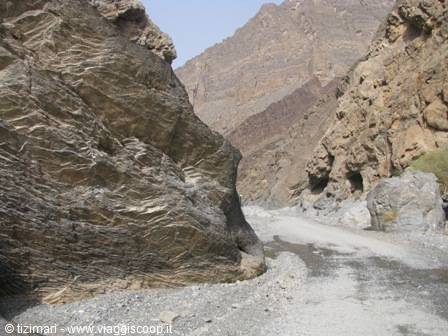
How far away we feel from the incredible skyscrapers of Dubai! Leaving Biled Sayt behind us we cross the mouth of the Snake Gorge and reach Wadi Bani Awf; the track is very striking and runs practically along the Wadi bed, in some stretches between very high walls. This area is incredibly populated; everywhere Bedouin dwellings pop up, their inhabitants devoted to herding and cultivation in the oases. Some off-road vehicles operate a taxi service for these remote areas. Following the Wadi Bani Awf we regain the asphalted road about 11 km from Al Rustaq; it's almost 4 in the afternoon and a certain hunger is making itself felt. In Rustaq we find the usual little Indian restaurant with the usual biryani rice, this time with a few more spices for a change.
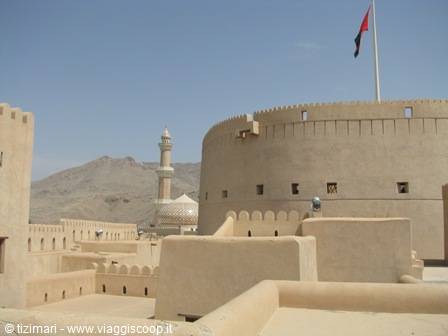
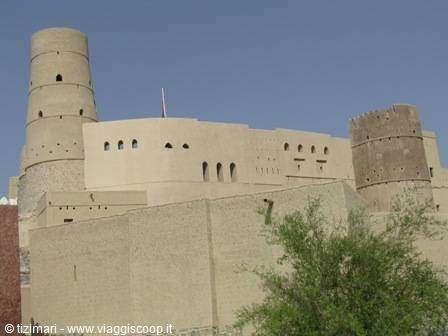
Anyway it's fine; these little places are mainly frequented by Indian, Pakistani and Nepalese workers and are extremely cheap (1-1.2 OR for a plate of chicken biryani). The fort of Rustaq closes at 16:00 and so no interior visit; same goes for the fort of Nakhal, which is nonetheless very striking. Night falls and we complete our circular tour by returning to Nizwa, passing practically a few kilometres from Muscat. Dinner at Firq, an open-air little restaurant a couple of kilometres from the Majan Guest House.
October 8, 2009; Thursday
Nizwa – Ibri – Dubai Today is a transfer leg to get back to Dubai. We still pass through Ibri with its old fort not yet restored and perhaps for this reason with a certain extra charm compared to the others that are a bit too neat and perfect. We reach the border between Oman and the Emirates about ten km before Al Ain. Border formalities without problems and off towards Dubai, which we reach around midday. We settle in again at the Ibis, which in the meantime has lowered its prices (289 AED for a double); indeed the Ibis Hotel prices change from day to day and are related to the activities held in the adjacent Trade Center. We have lunch at the usual Noodle House and then think of making another quick trip to the Al Sharjah suq, which is about 15 km from the centre of Dubai, but we find out at our own expense that 15 km at rush hour means about two hours in a traffic jam.
On the other hand, for the return towards the Deira suq we only take 15 minutes. One last evening visit to the spice suq and surroundings and back to the Hotel, because tomorrow morning it's an early rise, airport check-in at 4!
October 9, 2009; Friday
Dubai – Doha – Milan From the Ibis to the airport at 4 in the morning it's only a 5-minute drive; it could be over an hour at peak times. An hour's flight and we land in Doha; we have a stop of about 6 hours and so we take the opportunity for a visit to the city. At customs formalities you pay the entry visa 100 QR per person (18 eur); we pick up a map of the city and find a likeable taxi driver who for about 60 QR (12 eur) drives us on a panoramic tour of the city. He belongs to the company of blue taxis that operate at the airport and which we later discover are owned by the president of Qatar. We start from the Corniche, with the Islamic museum (unfortunately closed as it's Friday), the diplomatic quarter with its futuristic skyscrapers. The crisis is being felt here too and all the construction sites have been suspended; most of the Asian workers are unemployed or repatriated.
We then reach the famous zigzag skyscraper that seems built to defy the laws of gravity. We pass alongside the president's residence, the tennis court where the Doha tournament will be held in a few weeks. A pleasant surprise is the old suq, completely renovated, but which retains its traditional charm, with its themed quarters. The central street lined with bars, small restaurants and craft shops and then the alleys of spices, fabrics and pots, ending in the area reserved for small animals, mainly pigeons, parakeets, but also cats and rabbits. Here you can find the most incredible pigeons, with curly feathers, with majestic necks, true rarities. Back to the airport and boarding for the flight to Milan.
Some veiled girls, as soon as they are on the plane, get rid of their veil and black tunic and reappear in jeans and t-shirt, completely westernised; this too is the contrast of these countries.
questa tua esperienza, ottimamente descritta, capita a d.o.c. visto che ho in programma un itinerario che tocca molti di questi punti. Non trovo un tuo contatto, avevo qualcosa da chiederti....se puoi contattarmi mi faresti un grande favore: albertogregori72@yahoo.it
1 reader comments
questa tua esperienza, ottimamente descritta, capita a d.o.c. visto che ho in programma un itinerario che tocca molti di questi punti. Non trovo un tuo contatto, avevo qualcosa da chiederti....se puoi contattarmi mi faresti un grande favore: albertogregori72@yahoo.it