Ten days to cross Morocco from north to south: the imperial cities of Rabat, Meknes and Fes, the desert of Merzouga with a night among the dunes, the Todra and Dades canyons, the ksar of Ait Ben Haddou, Marrakech and the Atlantic coast of Essaouira. The route and its pacing are those of the classic guidebooks; the account of what there is to see, stop by stop, comes from the 1,320 photographs that travellers have left in their diaries.
This guide is built from 117 travel diaries and 1320 photographs left by travellers between 1987 and 2019. The route follows the classic guides; the account of what you actually see comes from their pictures.
Route and distances calculated from OpenStreetMap.
Need to know
When travellers actually go
Departure months across our 117 diaries: not a season chart, but what people actually do.
The route, day by day
- Day 1
- Day 2
- Day 3
- Day 4
- Day 5
- Day 6
- Day 7
- Day 8
- Day 9
Casablanca
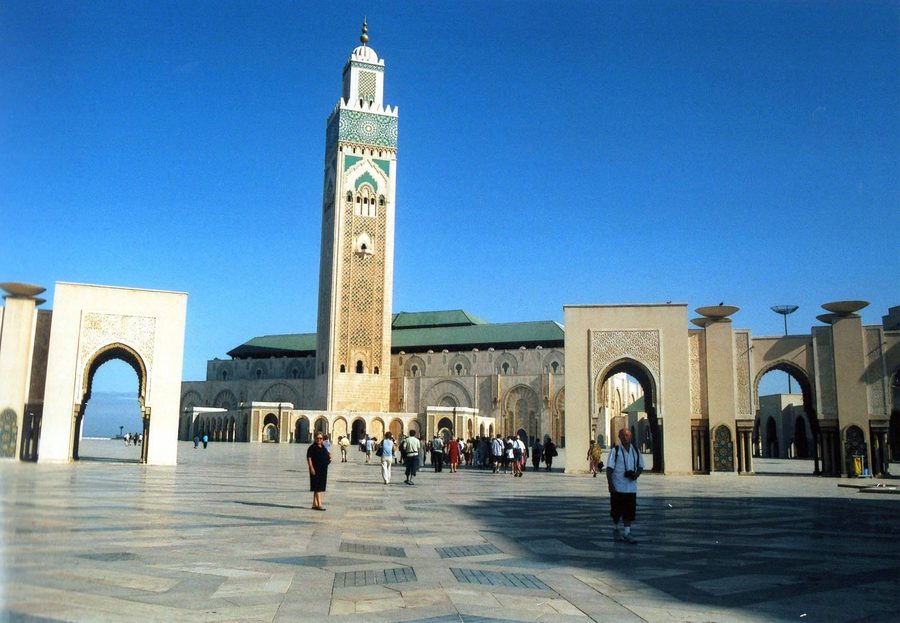
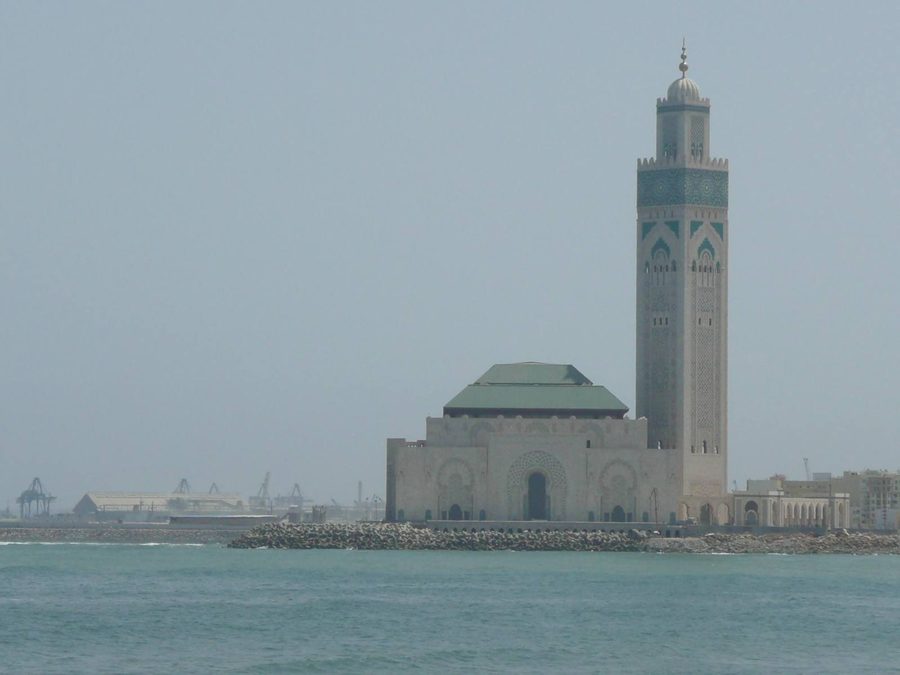
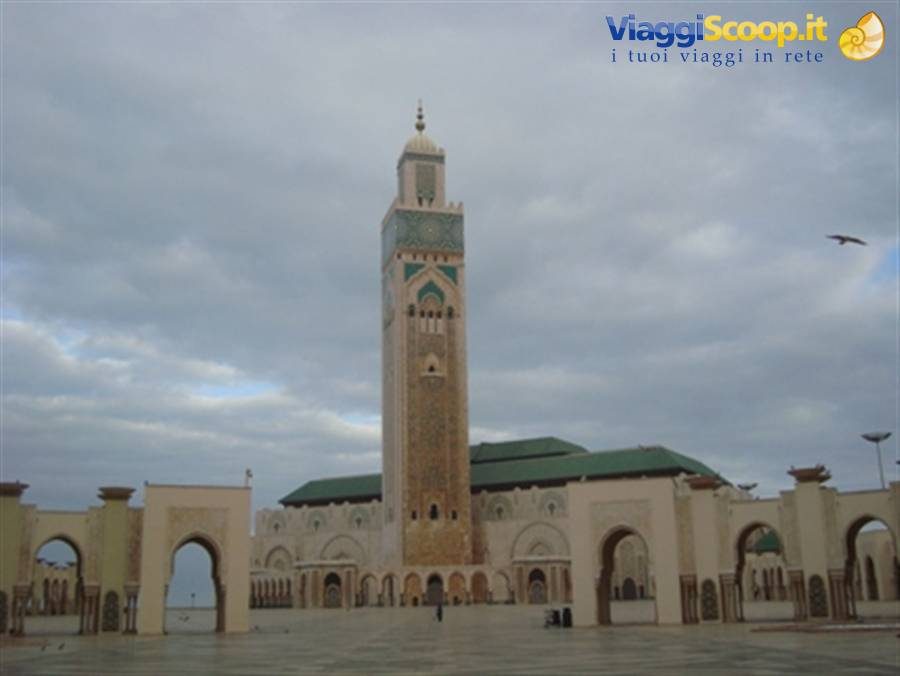
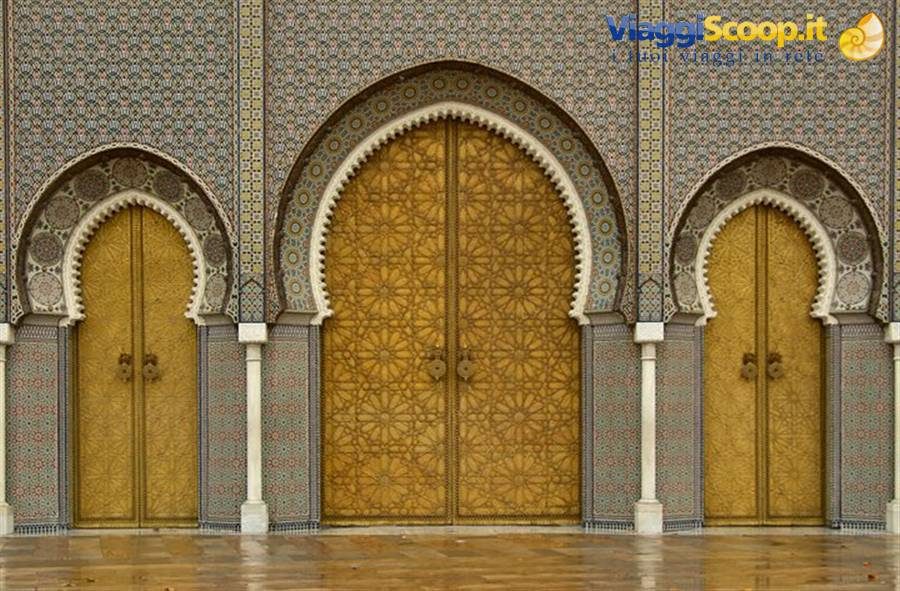
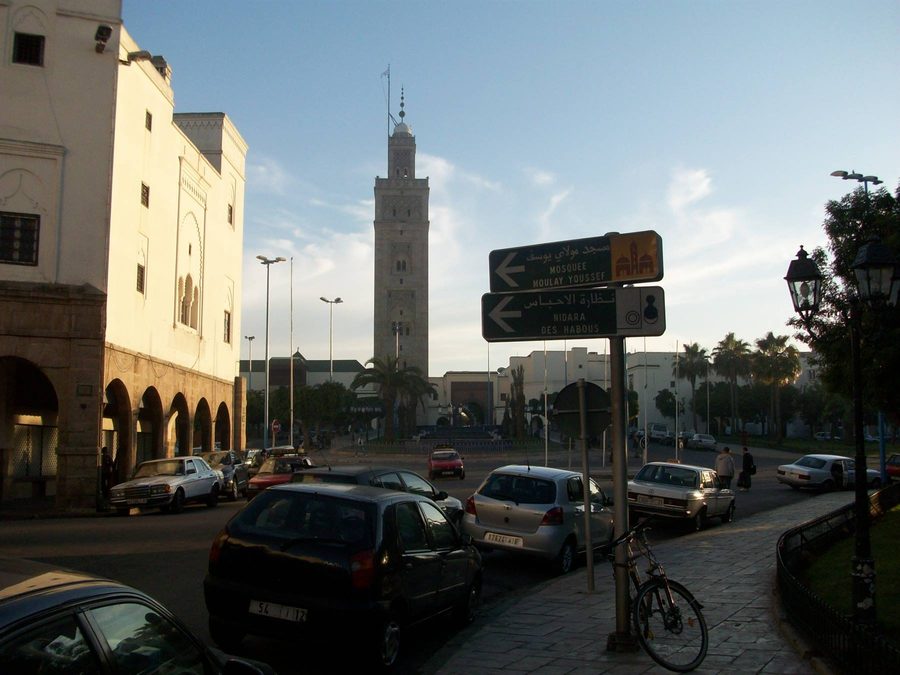
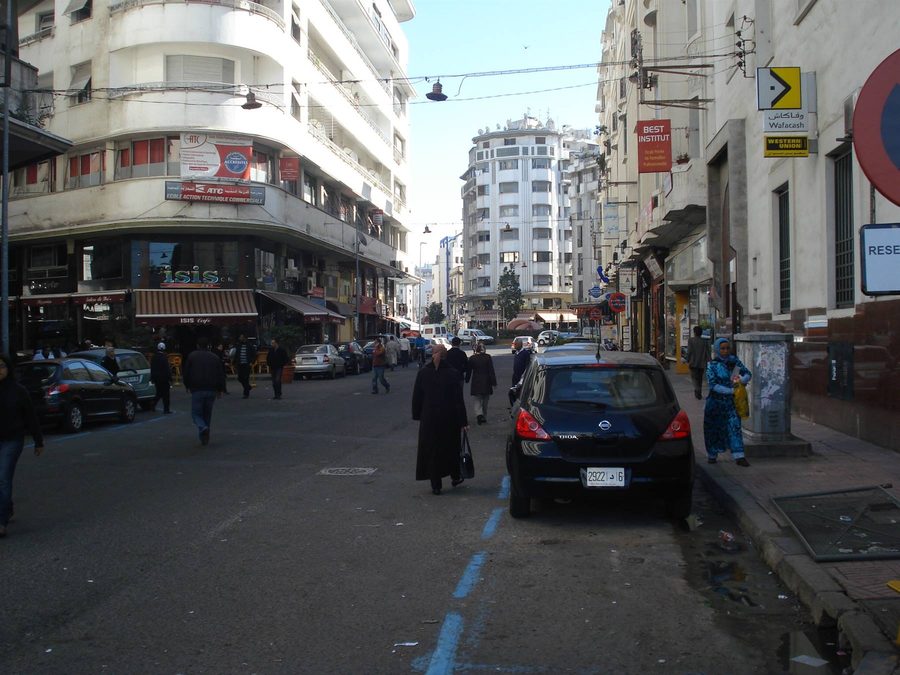
The morning fog stays low over the Atlantic, and above the seafront rises the minaret of the Hassan II Mosque: a fixed point in a city that runs. And it's true that Morocco runs here: this is the economic capital, where the country's money is made, and you feel it in the traffic that never lets up and in the boulevards laid out when the architect Henri Prost, commissioned by Resident General Lyautey, redrew the city as the jewel of the Protectorate. By the end of the Second World War there were already 700,000 inhabitants, with shantytown quarters growing up all around; today the art déco facades of downtown counterpoint a new tram and a growth that seems guided by the ghosts of Lyautey and Prost, this time with Moroccan pride. Then the city gives way to the sea. The mosque opens up with its marble esplanade, its brass doors under horseshoe arches, zellij running everywhere. It isn't the country's most exotic city, and that's fine: you cross it more than you visit it.
Don't miss: Hassan II Mosque from the marble esplanade over the ocean — best in the morning, while the fog still sits on the sea. Then a walk through the centre, past the Art Deco facades and the buildings of the French period.
In their photos Casablanca is almost always a single image: the minaret of the great mosque standing out against the water, framed by the spray of the waves breaking on the esplanade. what travellers photograph
Rabat
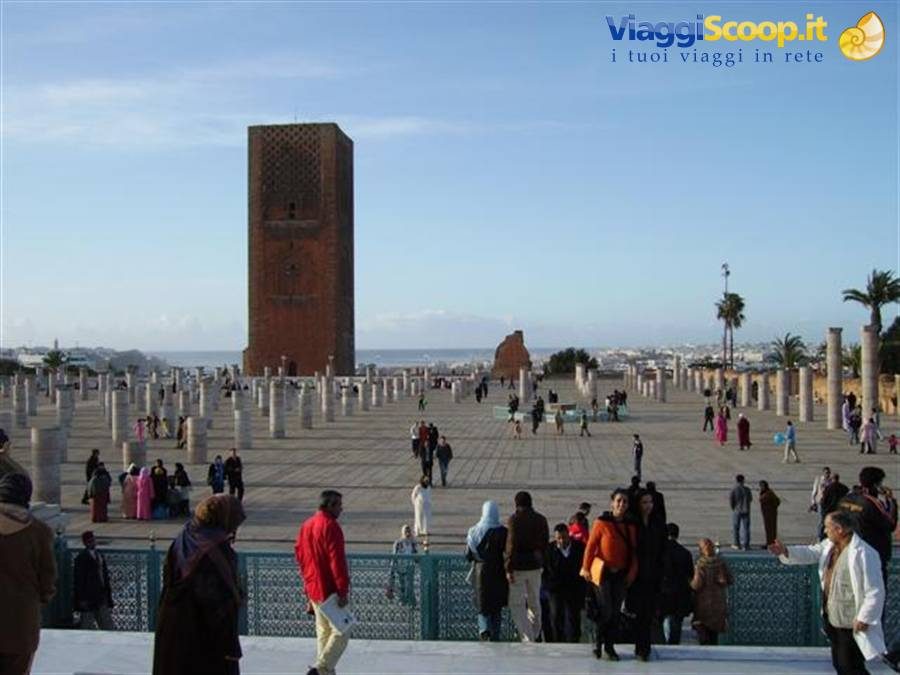
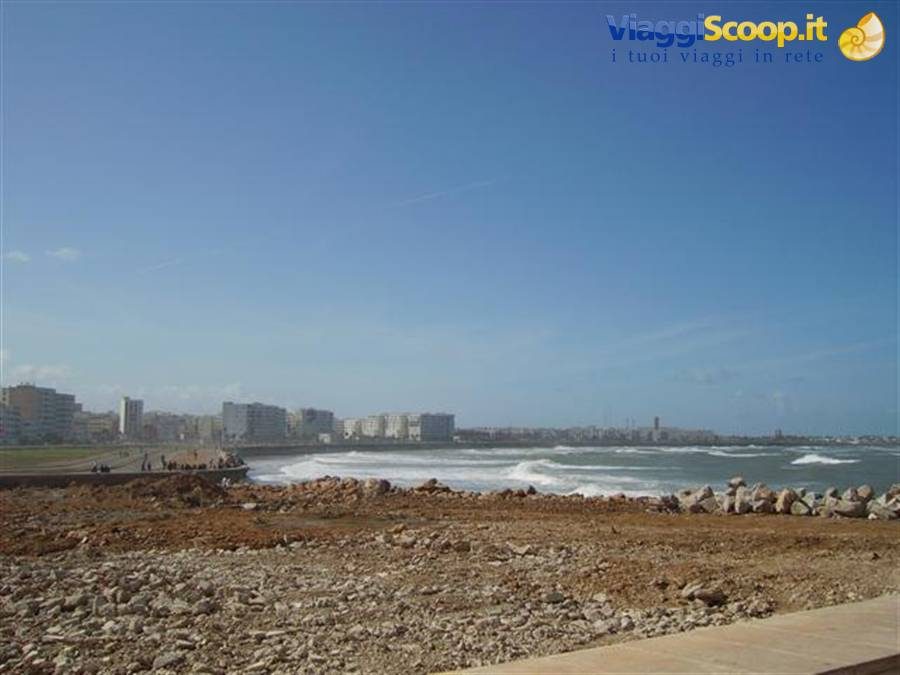
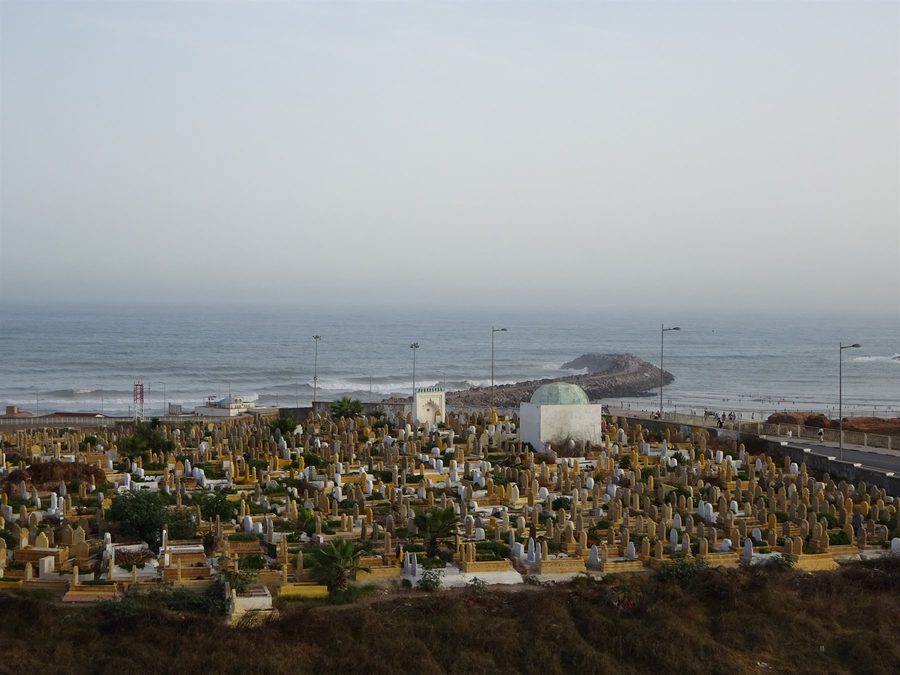
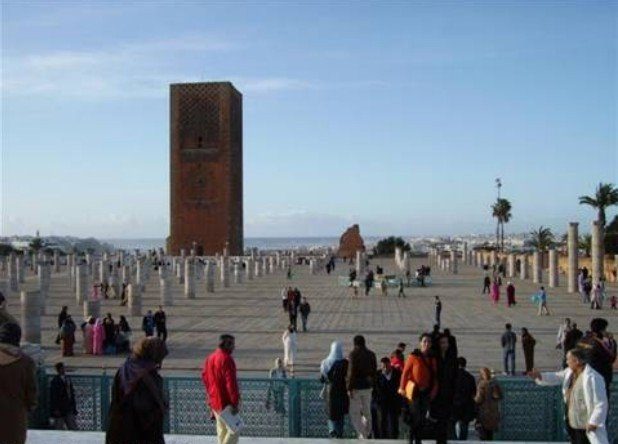
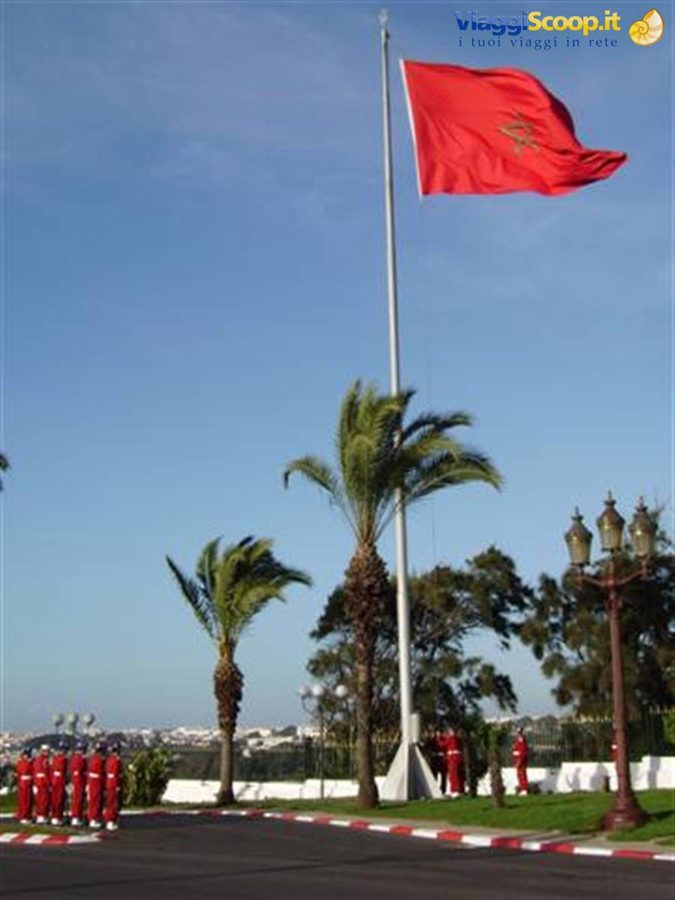
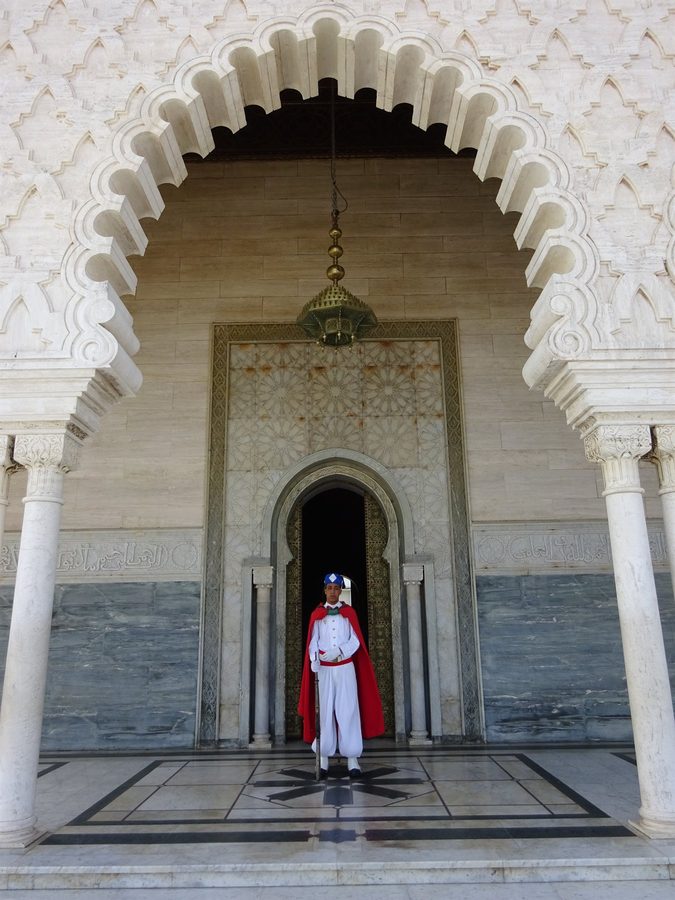
Anyone arriving expecting the chaos of Morocco's big cities is left with a doubt in their pocket: Rabat is orderly, tree-lined, and looks to the estuary more than to the desert. In the kasbah overlooking the ocean the lanes are white and blue, and the noise of the city stays outside. On the vast stone esplanade of the Hassan Tower the columns stop at half their height: they were the beginning of what was meant to be the largest mosque in the world, and there the project stayed. Not far off, the Mausoleum of Mohammed V: white marble, guards in red cloaks motionless under the arch, and inside rests the sovereign who led the country to independence. The afternoon goes to the markets and the artisans' quarters, where weaving is still a trade of weight and merchants bargain with a calm that, after Fez, will seem from another age. You go slow, and it fits: it's the daily rhythm that prepares you for the fierce encounter with the medina of Fez.
Don't miss: The stone platform of Hassan Tower and its unfinished columns: you only grasp the scale of the project standing in the middle of it. In the artisans' quarters, spend an hour in front of the weavers' looms.
The detail that returns everywhere is blue: doors and planters in the kasbah alleys, with the ocean appearing all of a sudden at the end of the lane. what travellers photograph
Meknes
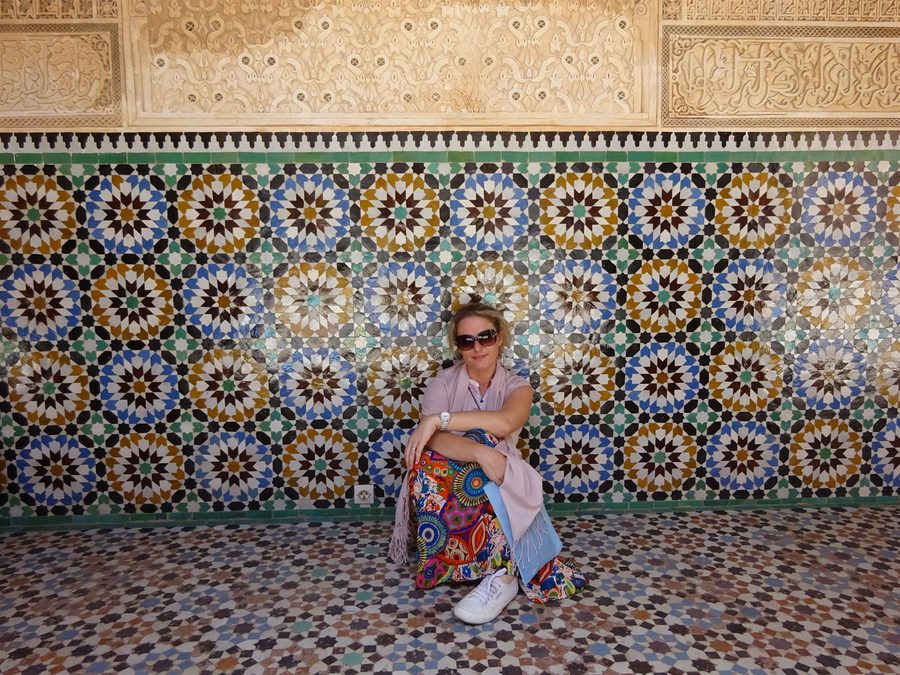
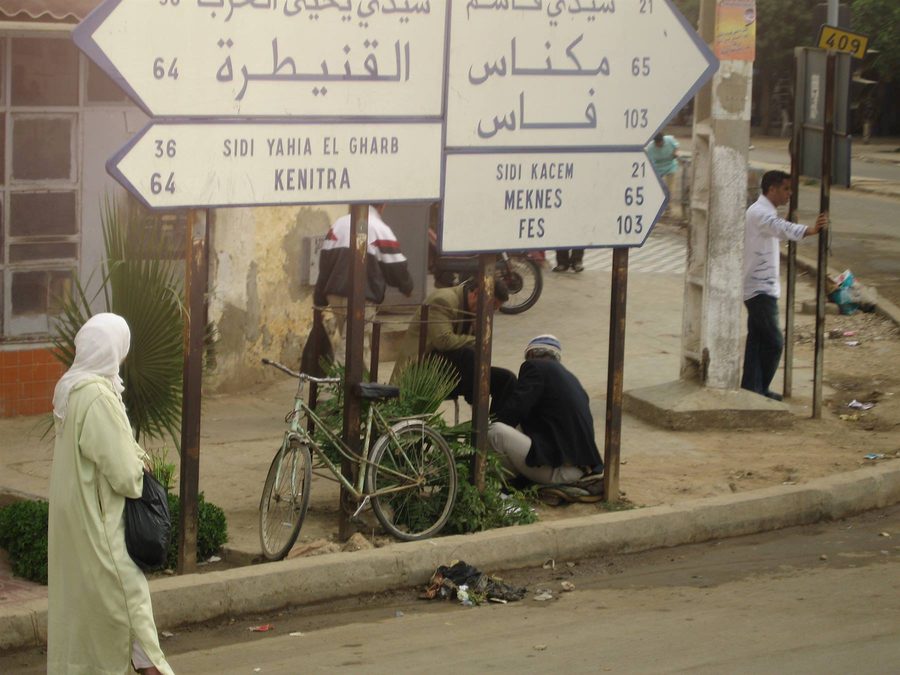
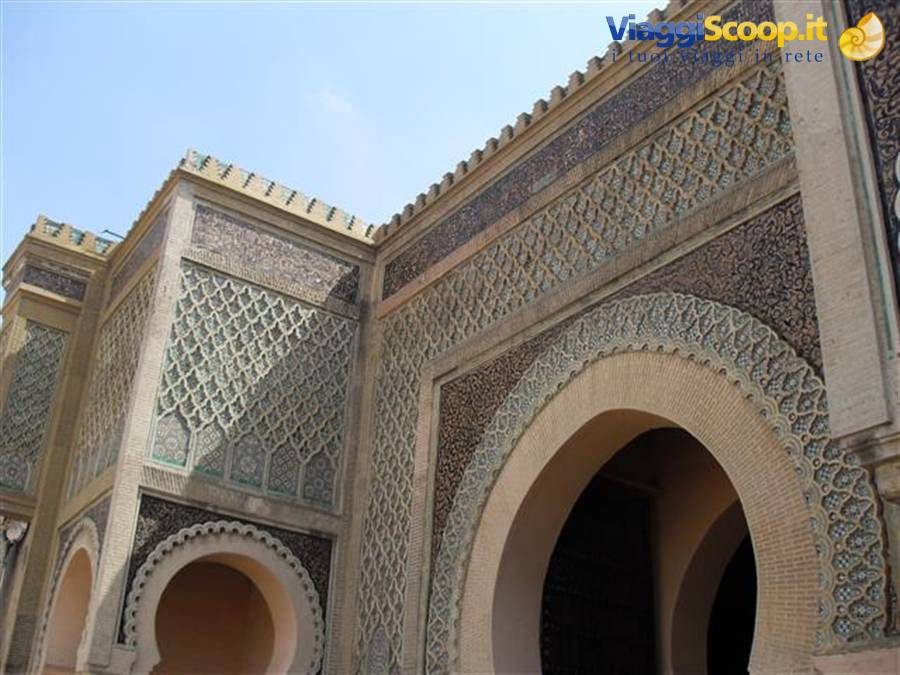
The walls run straight for kilometers, and inside is the imperial city that travelers have the least time to look at. Meknes lives in the shadow of Fez, but its spaces tell of a sovereign without brakes: Moulay Ismail made it his capital and reigned there for fifty-five years, and the royal granaries and stables alone measure the man's ambition. You enter through the great gate of the medina, linger over the zellij of Bab el Mansour, then walk among shops and artisans, the medina here stretching out instead of closing in. The name comes from a long way back. An Amazigh tribe, the Meknassis, settled here in the 10th century; under the Almohads and the Merinids the medina grew, and the oldest monuments date from that time. All around, the rich plains under the Middle Atlas: wheat, olives, grapes and citrus that still hold up the city's economy. When Ismail died, in 1727, Meknes shed the weight of capital as well; the sultan, one suspects, would turn up his nose at today's quiet. After Casablanca's traffic, that quiet settles on you like a physical relief.
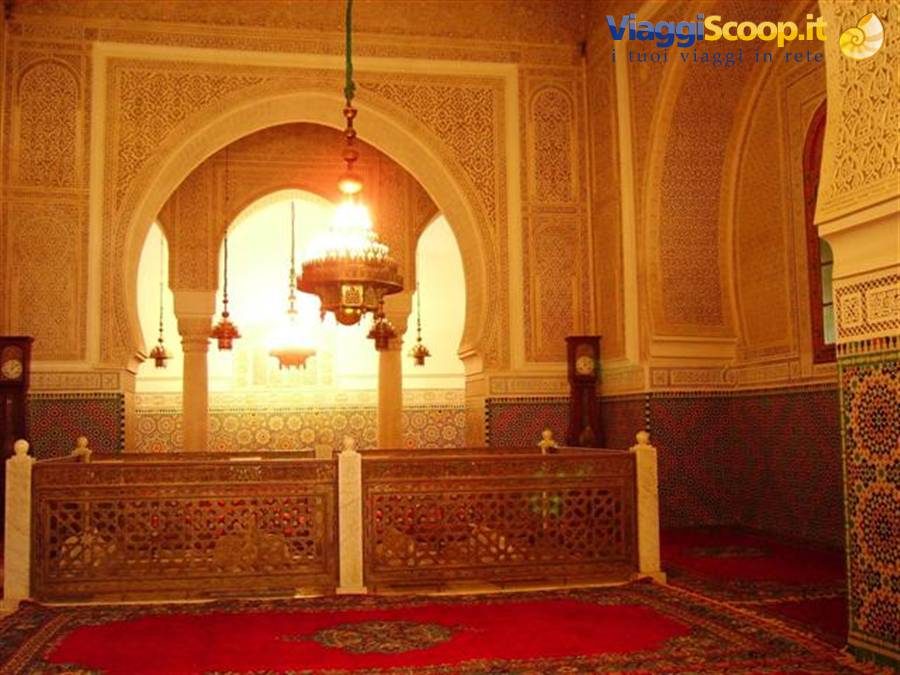
Don't miss: The royal granaries and stables: here the monument is sheer scale. Inside the Moulay Ismail mausoleum, zellij, carved stucco and lit chandeliers.
The most photographed subject is the great gate of the medina, shot from every angle in its marble and tile inlay, followed by the shadowed arches of the royal granaries. what travellers photograph
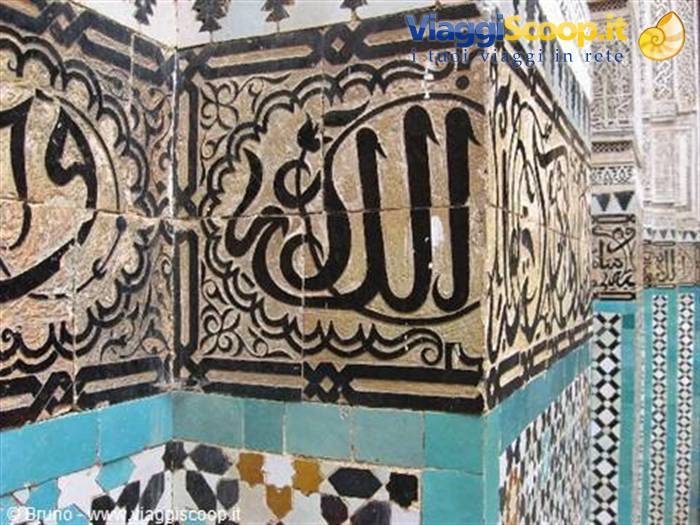
Volubilis
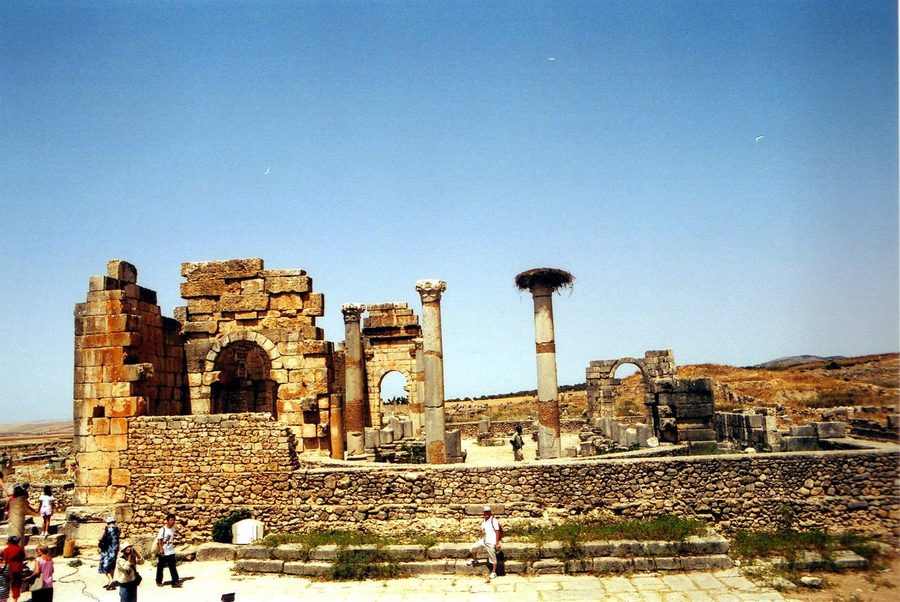
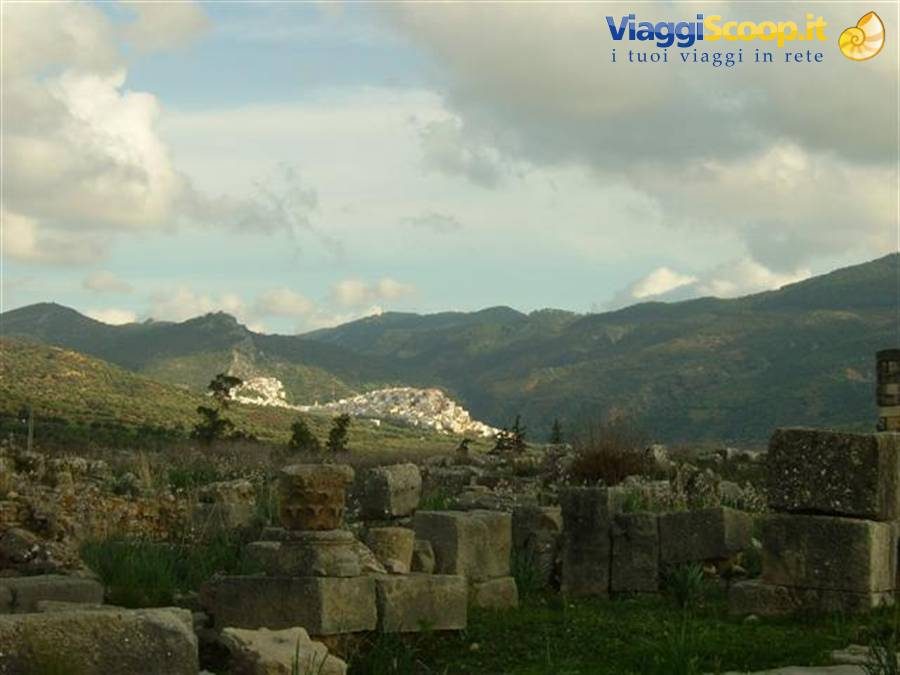
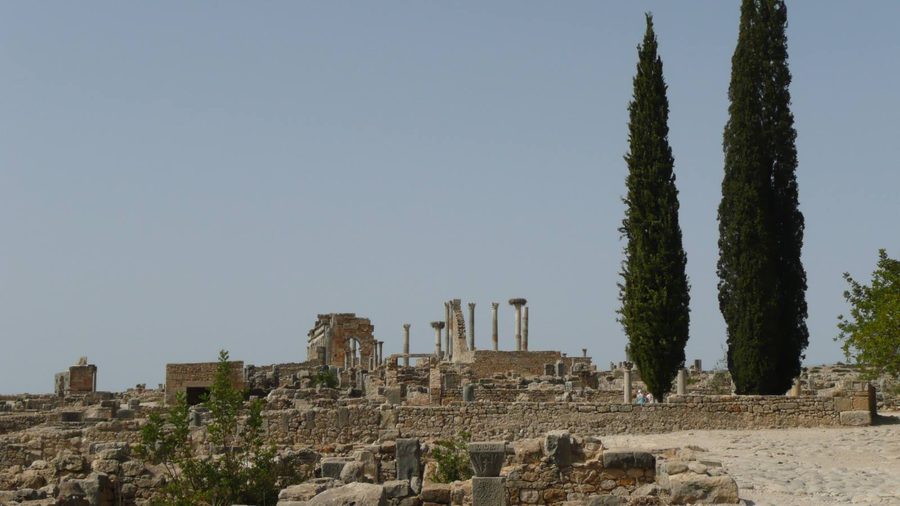
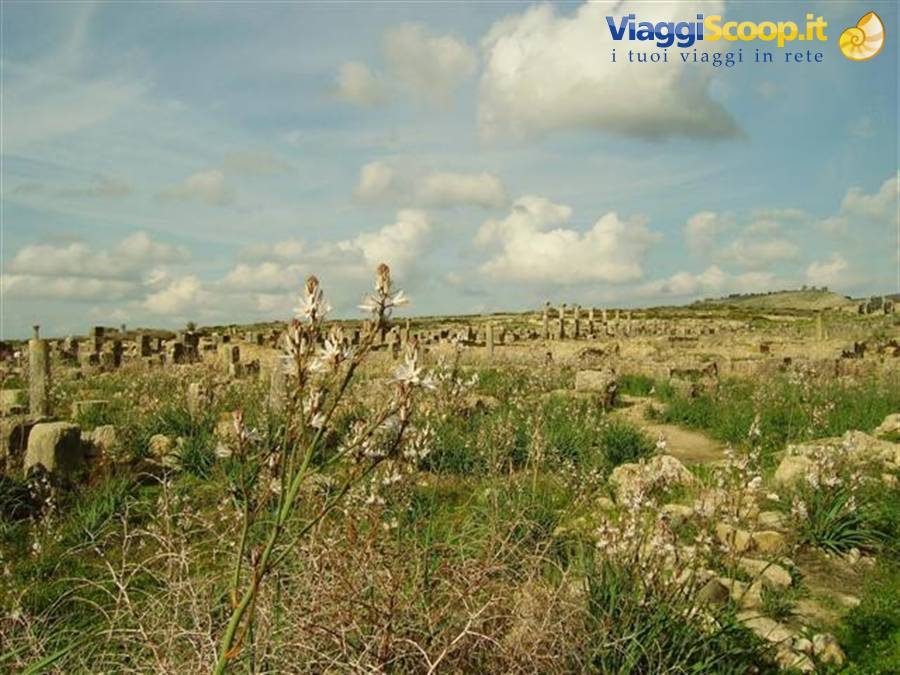
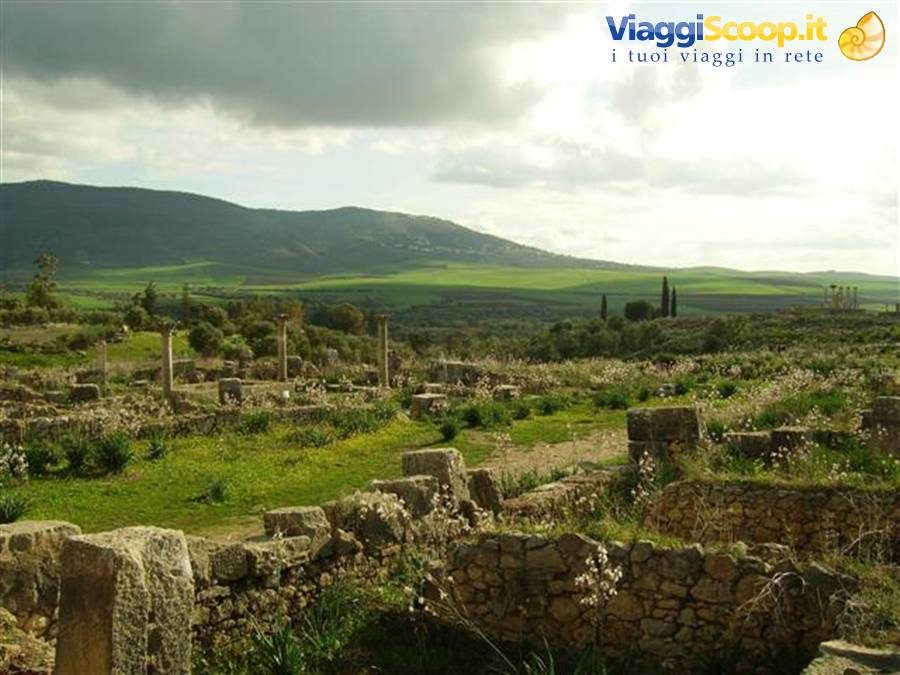
You see the columns before you arrive: pale stone on a plain that keeps producing what it produced two thousand years ago. Volubilis was one of the farthest outposts of the Roman empire, annexed around 40 AD, and the Romans cut the woods to plant wheat on a large scale: the cultivated countryside you look at from the ruins is, in the end, their work going on. The site is covered on foot, and in half a day you take in the mosaics of the domus, the triumphal arch and the capitol. Wildflowers grow between the stones, two tall cypresses stand out where no house is left, and on the hill behind, Moulay Idriss stays sharply defined. Around 280, with the Amazigh tribes making themselves felt again, the Romans left the city; the olive trees of the plain, though, never went anywhere. In summer the sun here shortens visits, by instinct. The low morning light brings out the stones and the furrows of the fields, and at sunset the last rays light up the columns: for an hour, the ruins turn back into a city.
Don't miss: The mosaics in the houses first thing in the morning, when the raking light works in your favour. In summer, hat and water: the sun here shows no mercy.
In their photos the columns never stand apart from the farmland: almost every framing includes the olive trees and cultivated fields around the excavation. what travellers photograph
Fes
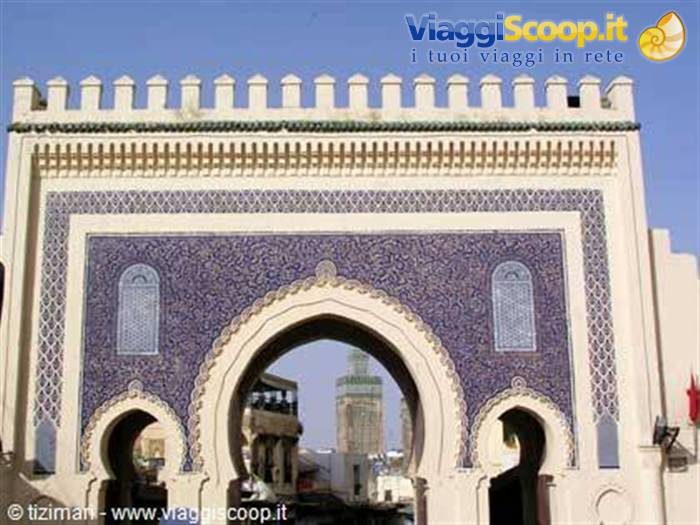
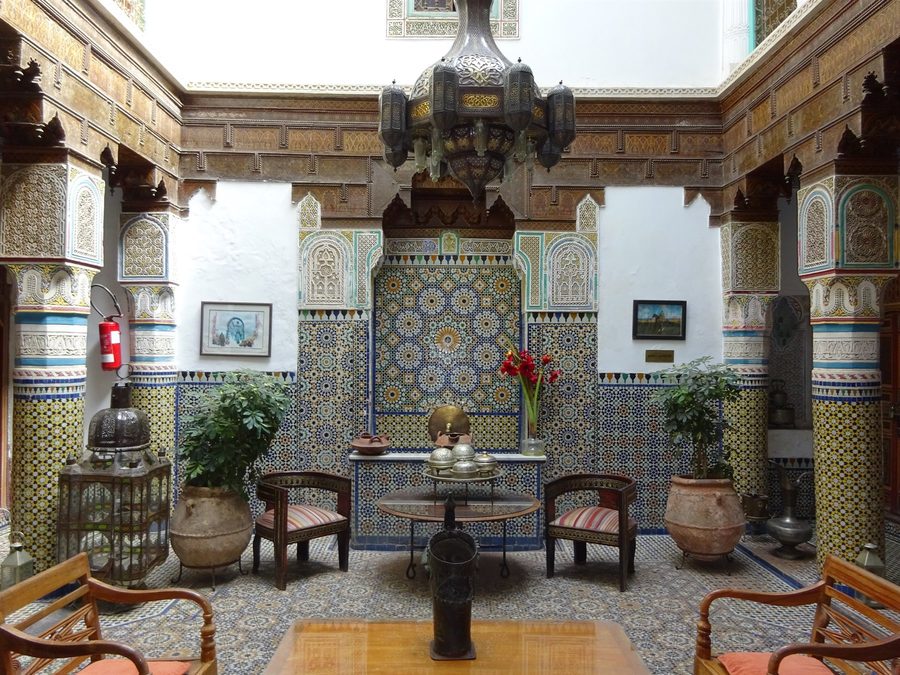
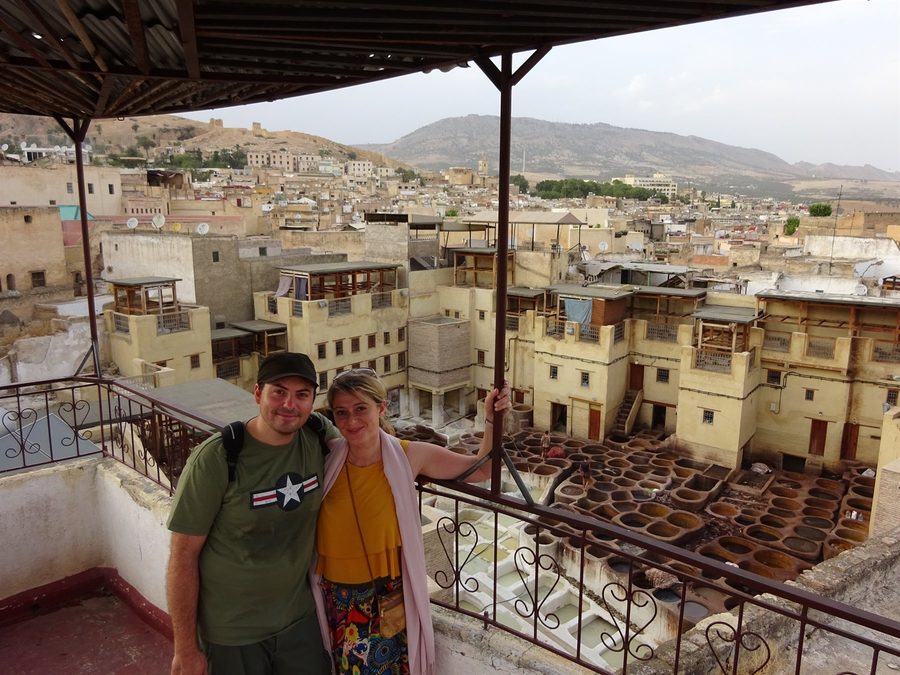
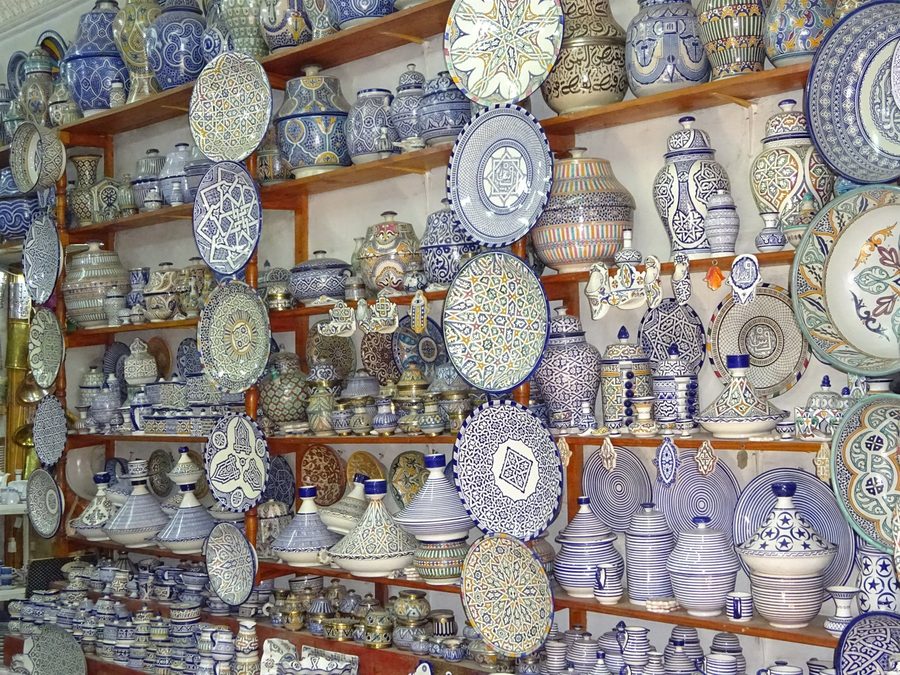
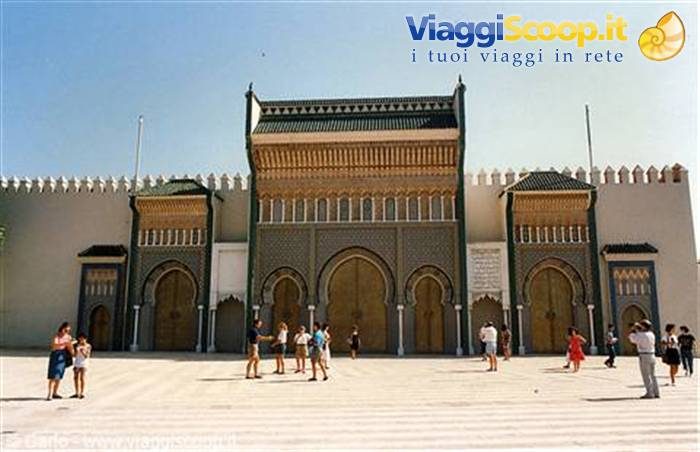
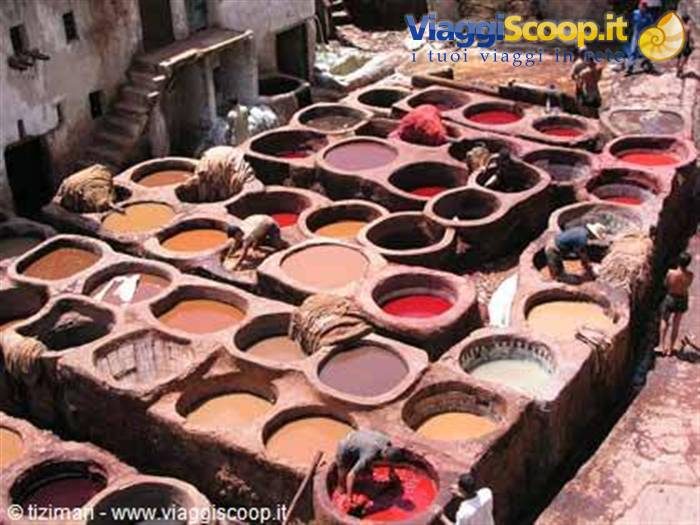
You hear the medina before you see it: a murmur rising from a thousand alleys, hammers on metal, voices crossing. Fez el-Bali is one of the vastest mazes in the world, and two days are the minimum for finding your bearings: twelve centuries of city don't sink in over an afternoon. The first day is for taking measure: monumental gates like Bab Bou Jeloud with its blue tiles, madrasas clad in zellij and stucco, the first descents into the souks. The second is the day of the trades: markets divided by craft, the gold beaters, the casters bending copper, and the tanneries seen from the high terraces, where the stone vats with their hides form a mosaic all their own. The movement for Morocco's independence was born here, and the city keeps a character that fashions — the latest proclaimed it 'the new Marrakech' — don't scratch. Dynasties and booms have passed through in twelve centuries; the medina is still here. In the evening you rest well: from Fez starts the longest road of the trip, the one that drops toward the desert.
Don't miss: From the terraces above the tanneries you can see the stone vats and the hides in full: it's the scene that made the city famous. At Bab Bou Jeloud, the minaret framed by the arch of the gate.
In their photos the recurring theme is colour seen from above: the vats of the tanneries and the hides laid out to dry, shot from the terraces that surround the buildings. what travellers photograph
The Ziz road and Erfoud
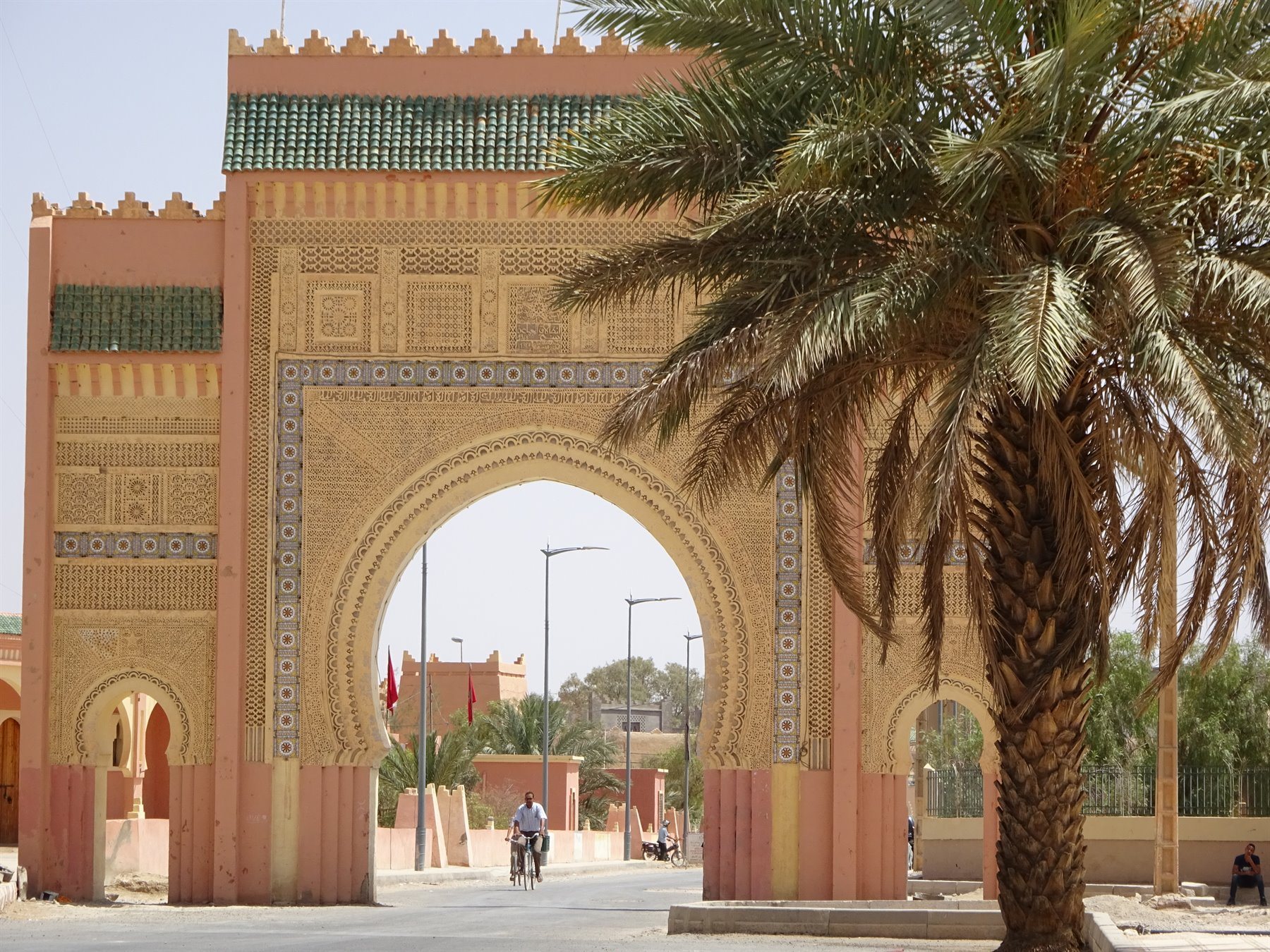
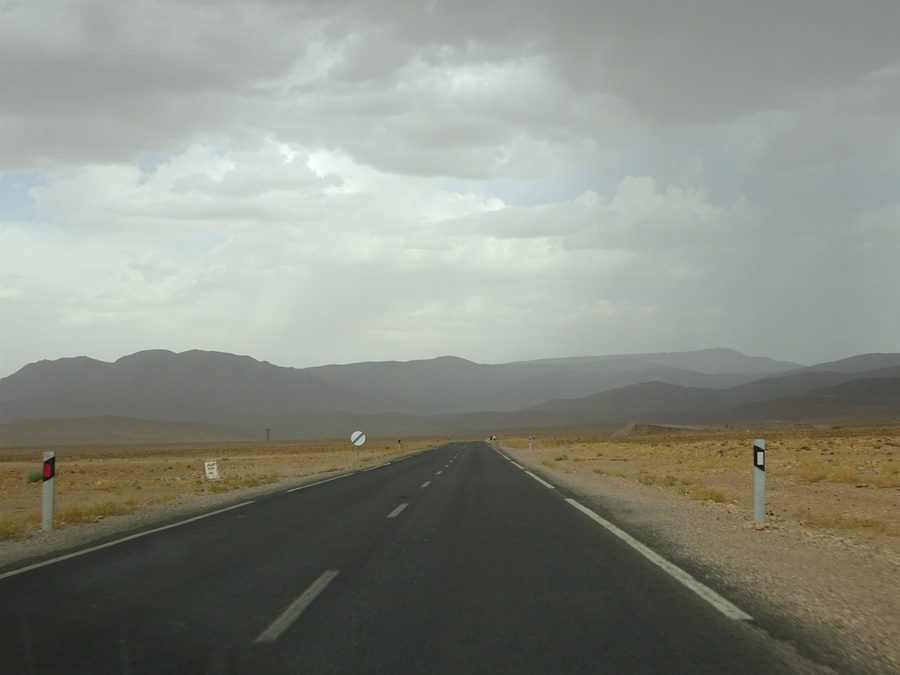
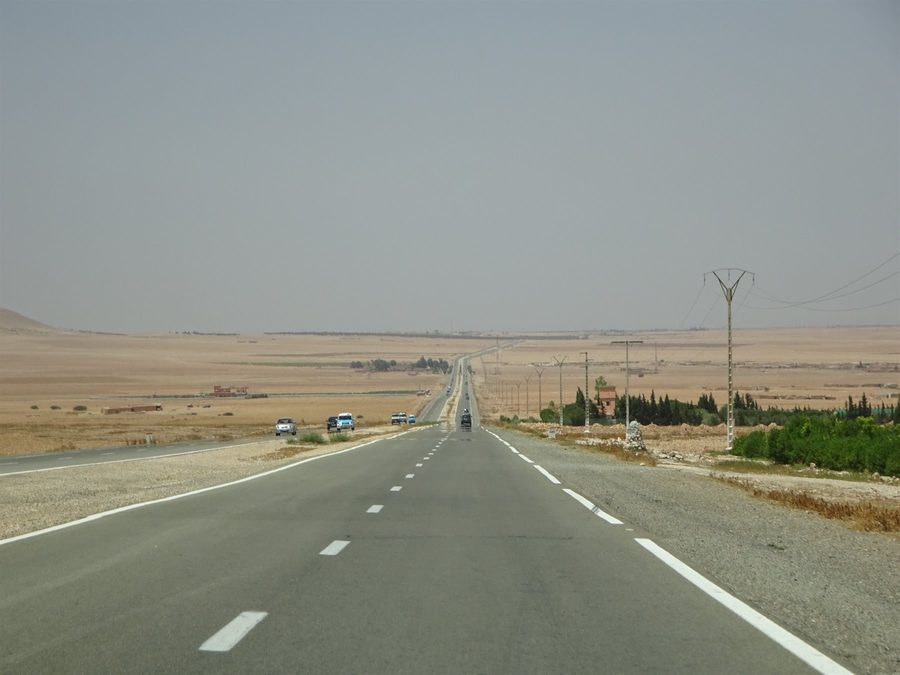
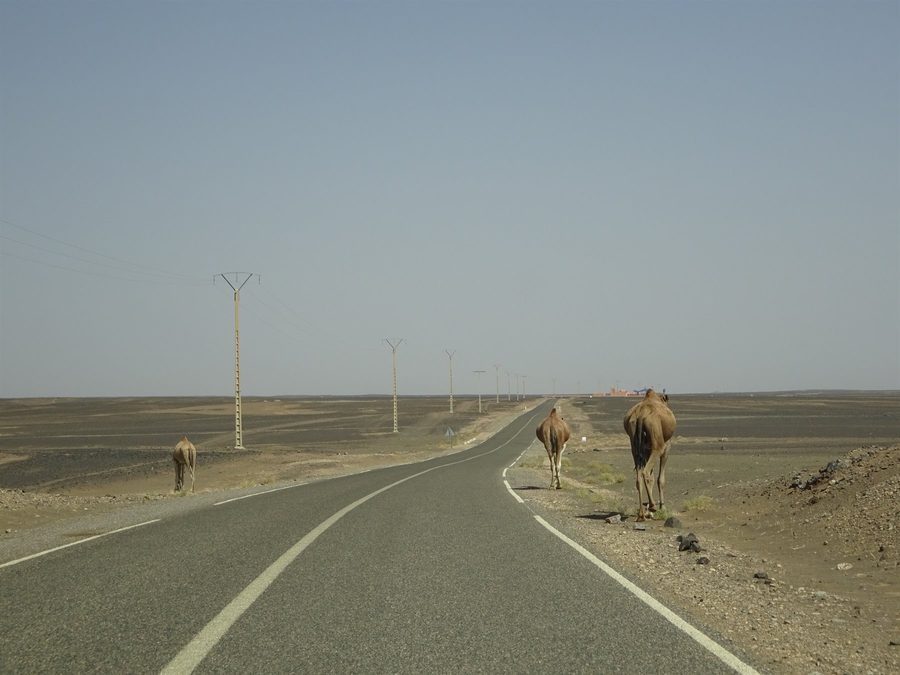
The Middle Atlas gives way to cedar woods and pasture, with the Barbary macaques sometimes coming down to the very edge of the road; then the landscape strips bare: asphalt straight toward Errachidia, arid steppe, camels on the line of the carriageway. In the afternoon you enter the gorges of the Oued Ziz, the river that comes down from Rich and carries life to the south's last great oasis valley before dying out in the pink-gold dunes of Merzouga. At the bottom of the valley the water is only a thread: the green belongs to the palm groves and the mud villages clinging to the walls. From a viewpoint on the desert plateau you take in the whole Ziz palm grove, and then the descent resumes. The stops are for the views and the earthen villages, not for monuments: here the monument is the gorge. Erfoud is the last town before the dunes, and its workshops cut and display a local stone full of fossils. From here on, the last kilometers are already sand.
Don't miss: Stop at the viewpoint over the Ziz palm grove, where the green of the oasis breaks the aridity. At Meski, by the river springs, warm water bubbles up beneath the ruins of Ksar Meski.
On this leg the travellers' photos tell of roads rather than monuments: the most repeated is the viewpoint over the gorges of the Ziz, with the palms drawing a green ribbon at the bottom of the valley. what travellers photograph
Merzouga and Erg Chebbi
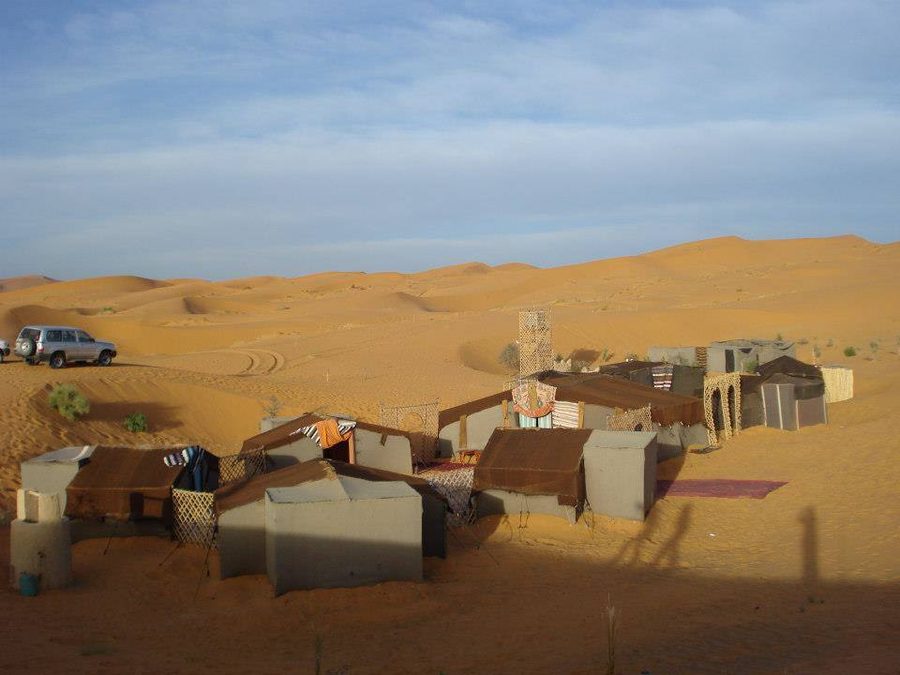
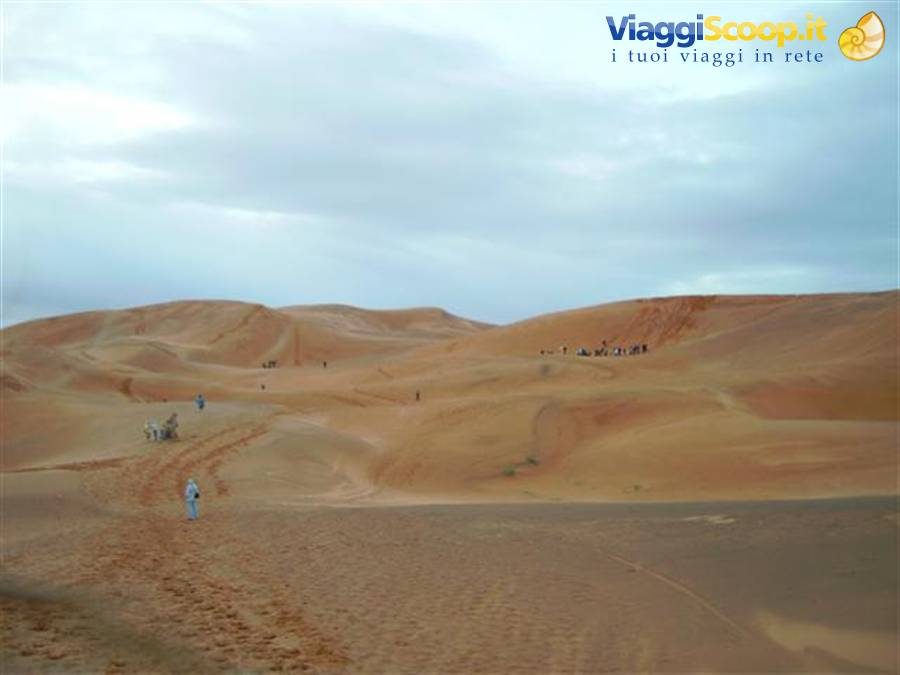
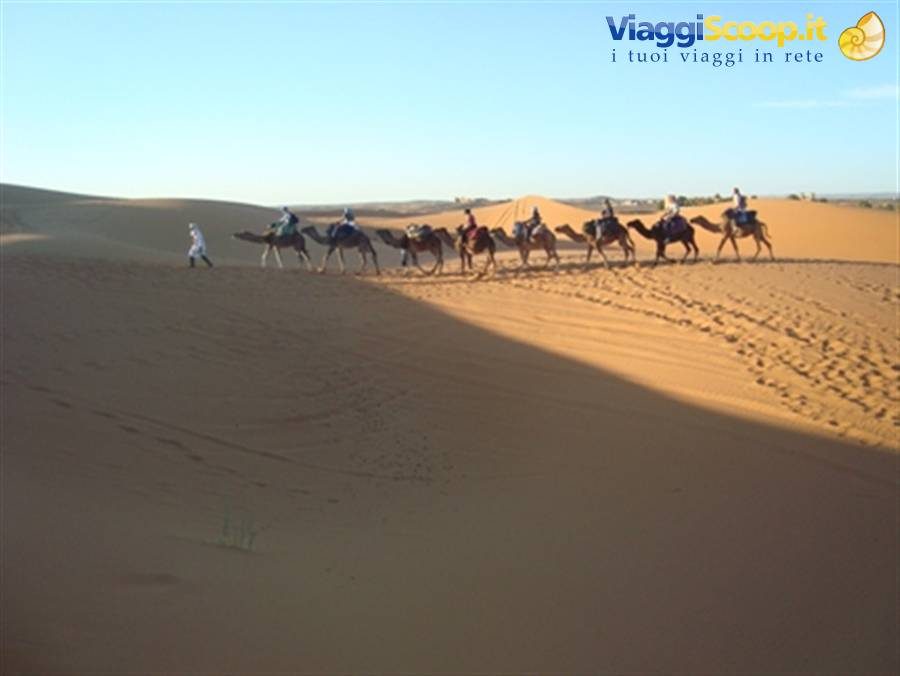
The dunes rise abruptly in front of the two twin villages, Merzouga and Hassi Labied, and legend says that beneath the sand is a rich family that refused hospitality to a poor woman and her son: God took offense and buried them there, under the Erg Chebbi. The local ritual doesn't change: at sunset you mount the dromedaries, the caravan climbs and dips along the orange crests, and the camp with its dark tents appears beyond the end of the asphalt. At night no light arrives, only the wind. At dawn you climb back up a crest on foot: the sand shifts from ochre to pink in a few minutes, then the sun fills everything and the dunes go back to being empty. The rest of the day is wind, shade and waiting for the cool; between November and May, at the southern end of the erg, even the seasonal lake of Tamezguida can appear, a sheet of water the desert grants and takes back. Beauty, here, has a price: you feel it when another caravan traces itself along the next crest. For many travelers it's exactly here that the trip finds its center.
Don't miss: In the evening, ride camels out to the camp among the dunes; wait for dawn on top of a crest, as the sand shifts from ochre to pink. Between November and May, if there's water, the seasonal lake of Tamezguida at the far end of the erg.
In their photos the same framing always returns: the line of dromedaries in silhouette on the crest of a dune, with the shadows lengthening across the sand. what travellers photograph
The Todra gorge
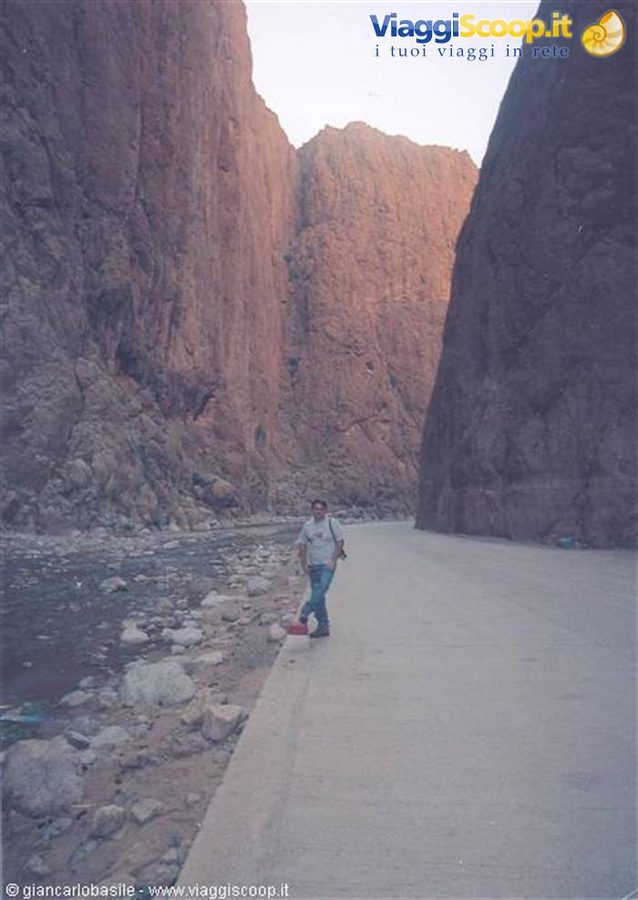
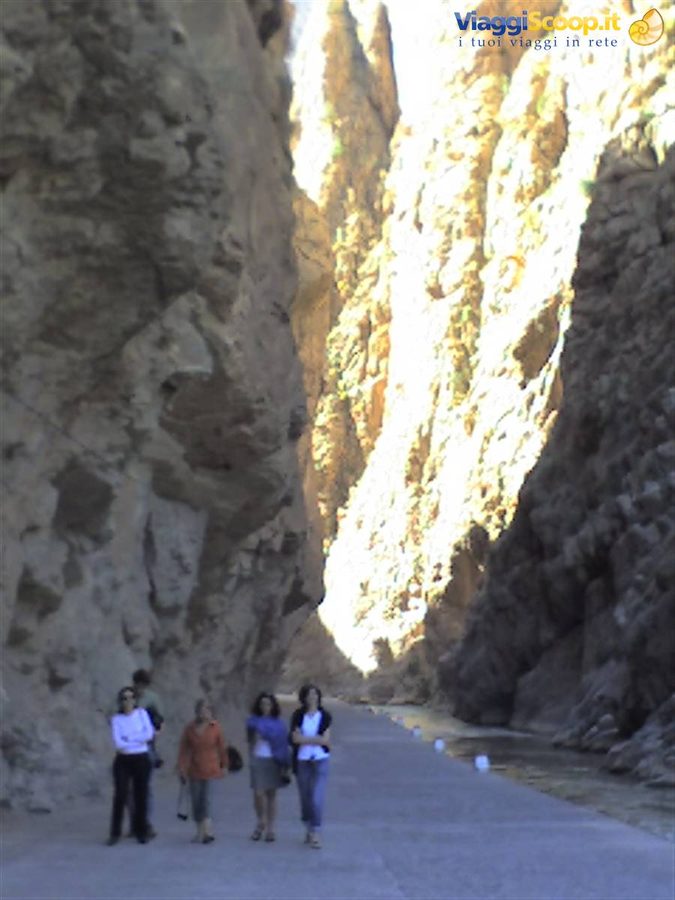
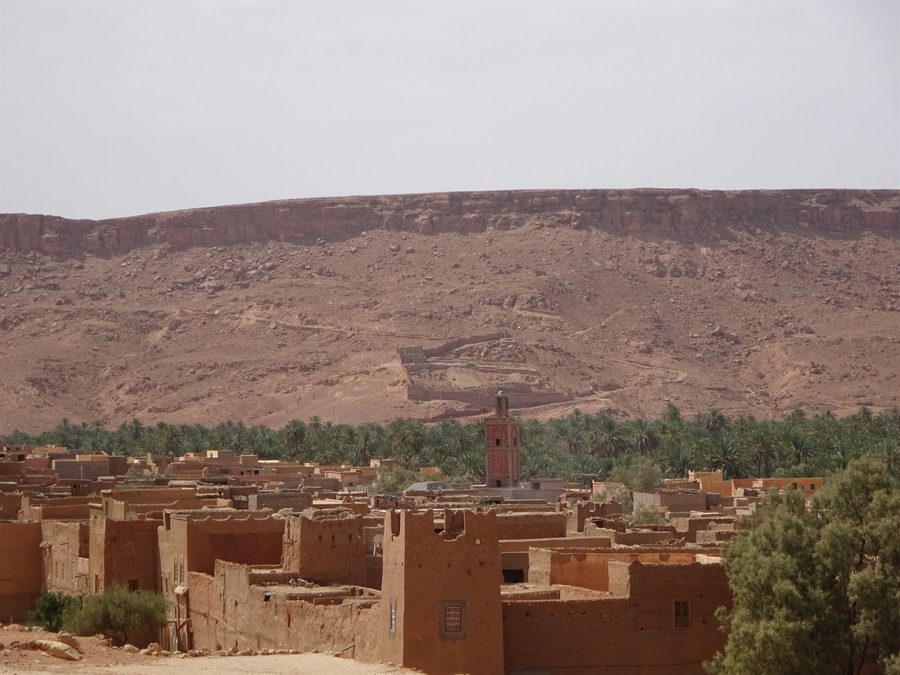
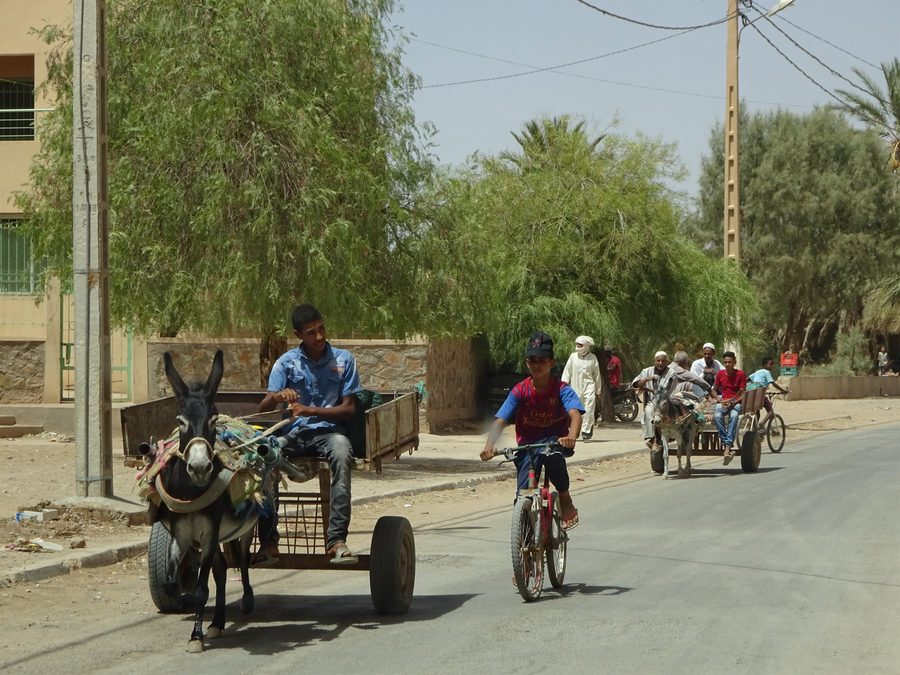
The mountains seem determined to close every gap, then the river finds its passage and the gorge begins. Leaving the vehicle at the entrance, you continue on foot along the valley floor: near the water the air stays cooler and your pace slows on its own. Loaded donkeys and men on foot share the only paved road that runs through the gorge, between red walls rising almost vertically. Then the gorge pinches down to a bare passage, and the sky stays a thread overhead. Half a day is the right amount of time, better still in low light, when the red of the walls deepens. Between here and the Dades Gorge there's also a walking route: two or three days on foot through the hills. Heading back toward the valley, Tinghir appears with its mud-brick villages on the foothills of the Atlas: the minaret in front of the rock face, donkeys grazing, boys on bicycles along the tree-lined roads. In the afternoon you set off again for the Dades Valley.
Don't miss: Walk the valley floor to the narrowest point, where the walls almost touch: that's where the gorge shows its true scale.
The travellers' 42 photos resemble one another in a single detail: almost all are shot from below, in search of a framing that holds the two walls together. what travellers photograph
The Dades valley
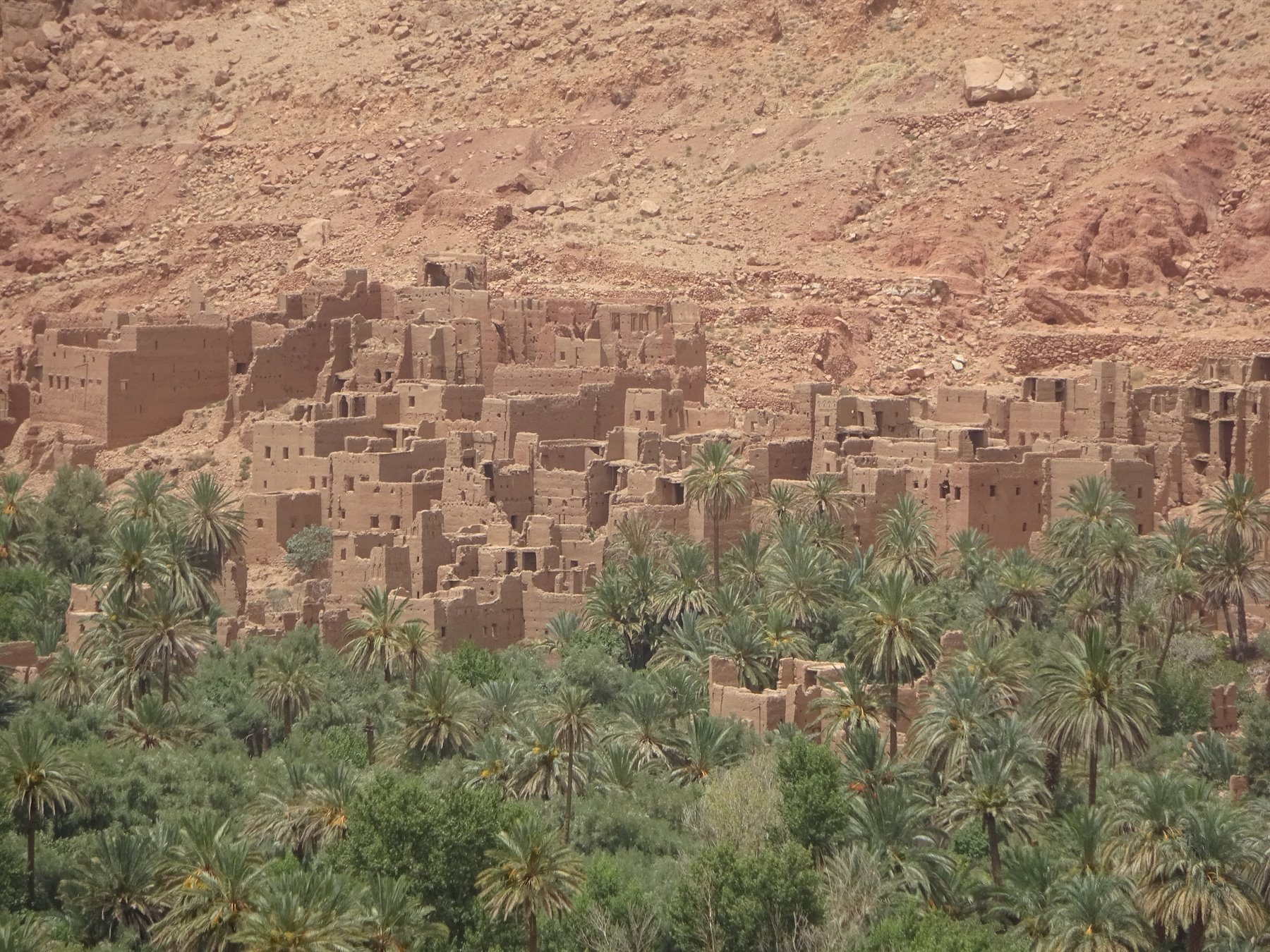
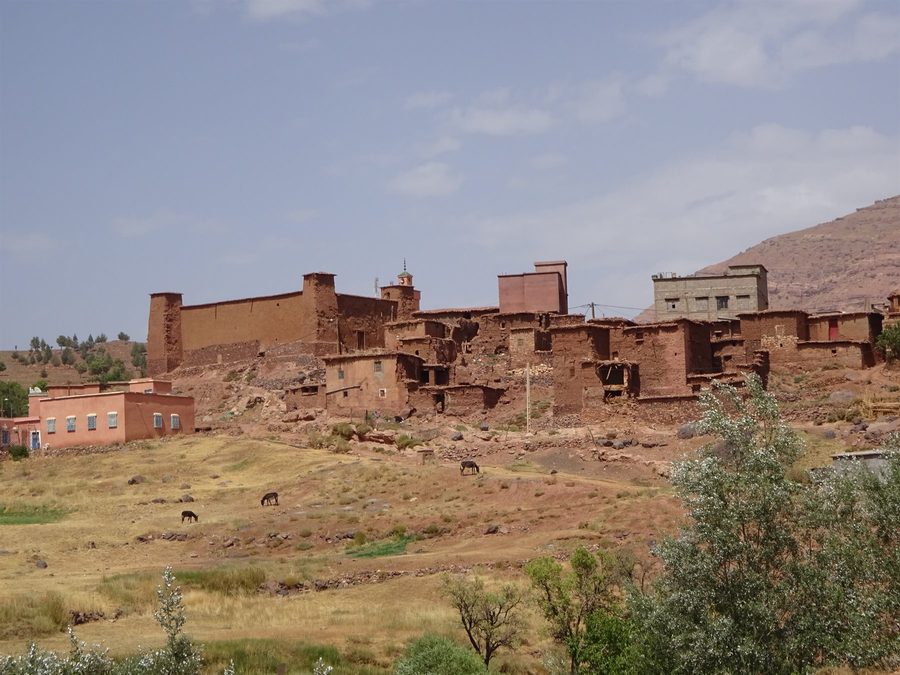
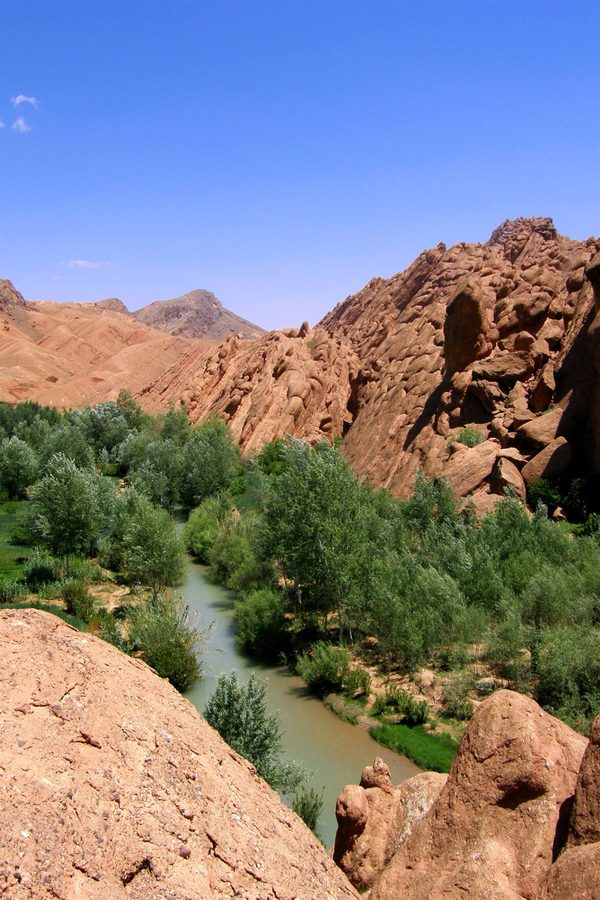
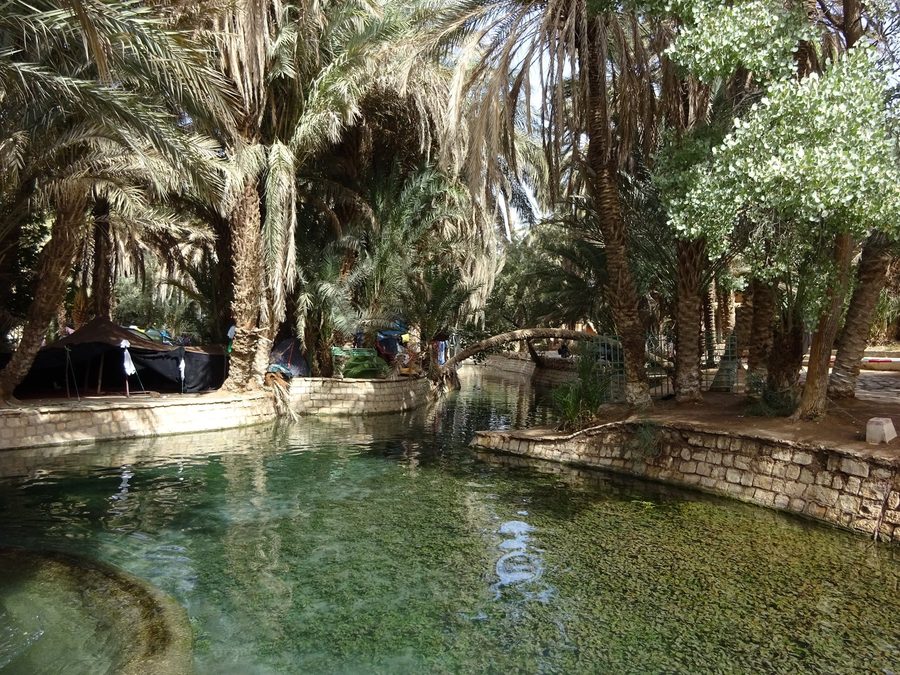
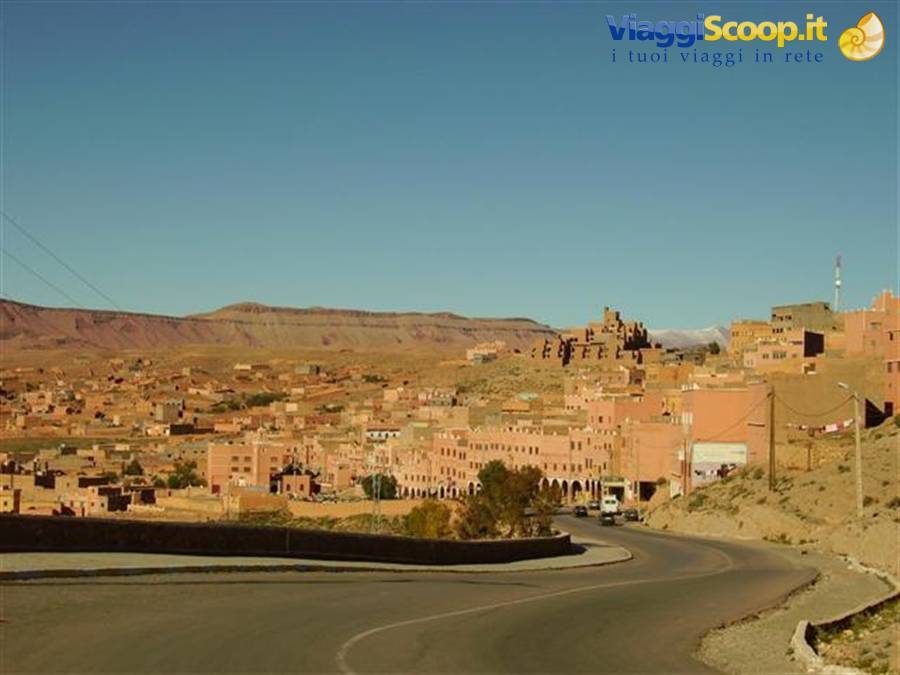
Everything starts from color: a clay red that passes from the walls of the villages to the walls of the river, without interruption. The raw-earth villages line up along the water, the palm groves holding shade over the houses at noon. The valley-floor road climbs without pause, then snags on the series of tight hairpins that have become the valley's signature image, one behind the other, set into the rock face. Higher up the rock changes shape and rises into sharp pinnacles, lined up like open fingers: this is the valley known as the Monkey Fingers. The villages appear clinging to the rock, and you stop where the landscape opens up. With half a day you get almost to the high gorges before dropping back down toward the plain. Changing the scene is the job of the Skoura oasis: low stone walls, date palms, kasbahs of beaten earth and, behind a few gates, blue pools among the trees. From here you're already looking ahead to the next day's stage, toward Ait Ben Haddou.
Don't miss: Drive slowly up the switchback road to just below the upper gorges: it's the image that stands for the whole valley. On the way down, stop at the Skoura oasis, among date palms and mud-brick kasbahs.
In the 17 shared photos the unexpected protagonist is the road: the hairpin bends, photographed in series from above, appear in almost every shot. what travellers photograph
Aït Ben Haddou
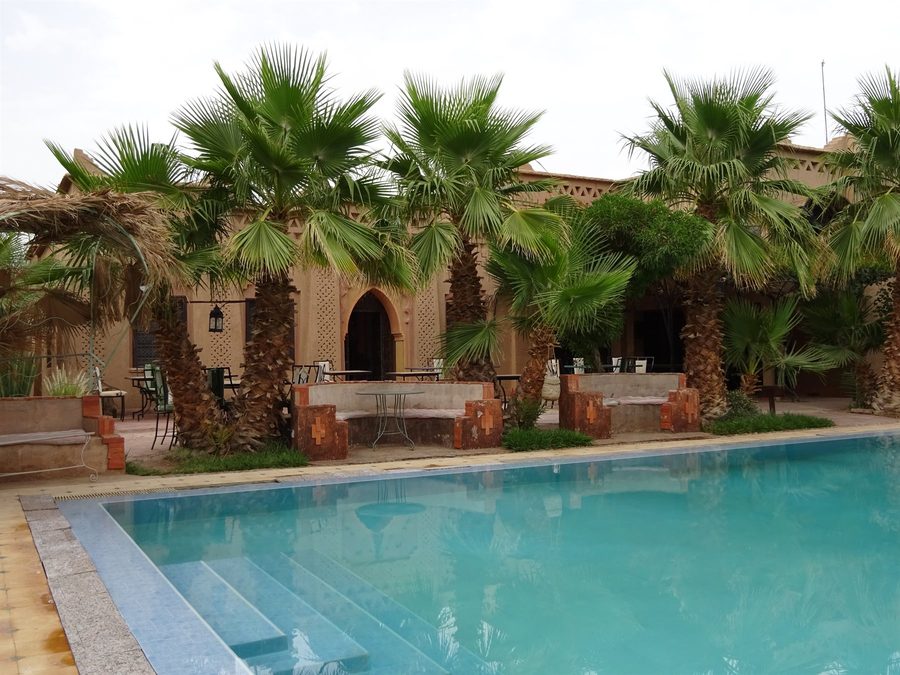
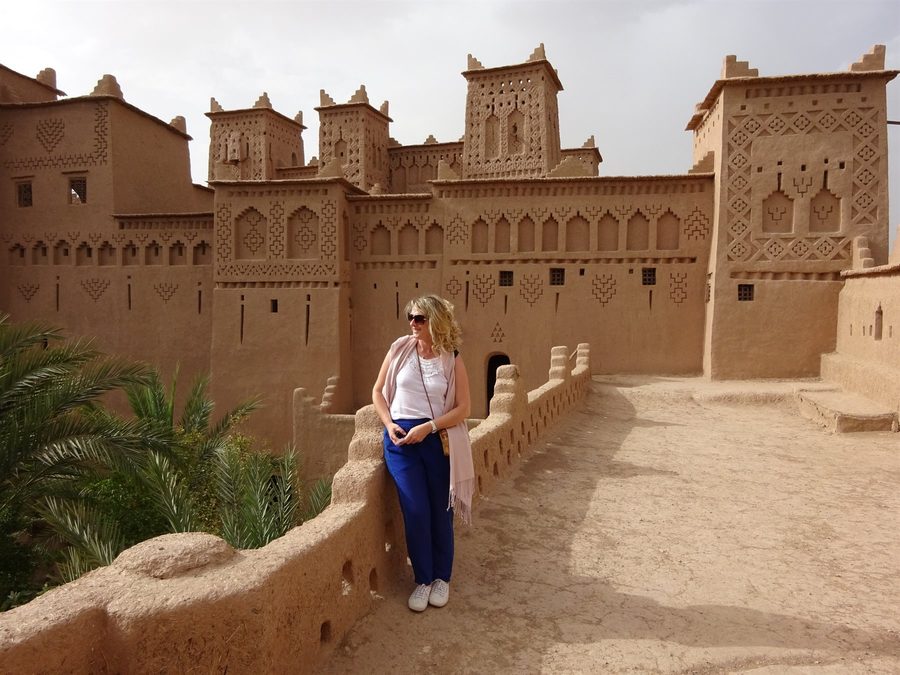
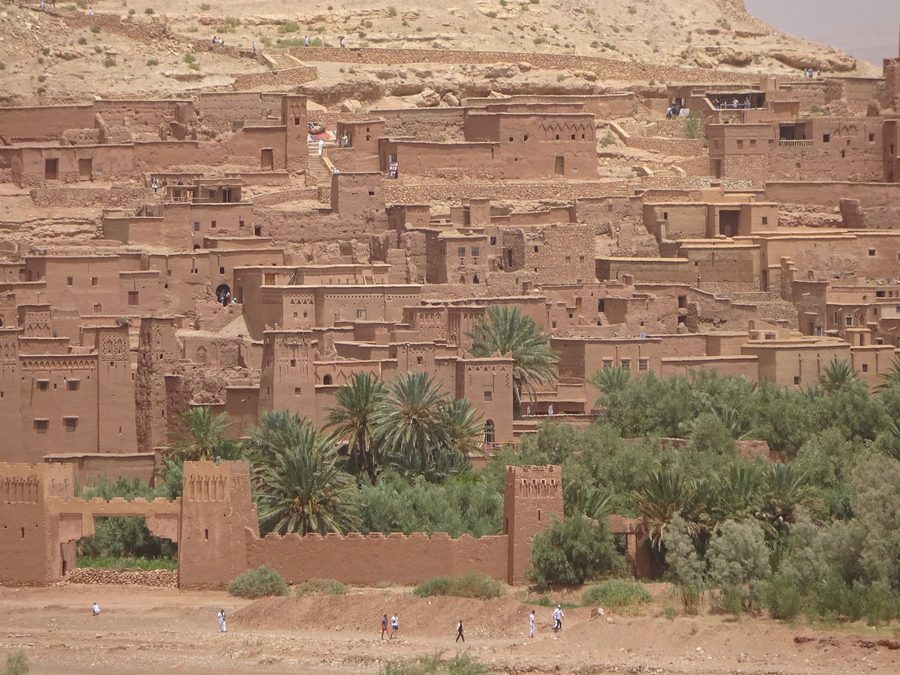
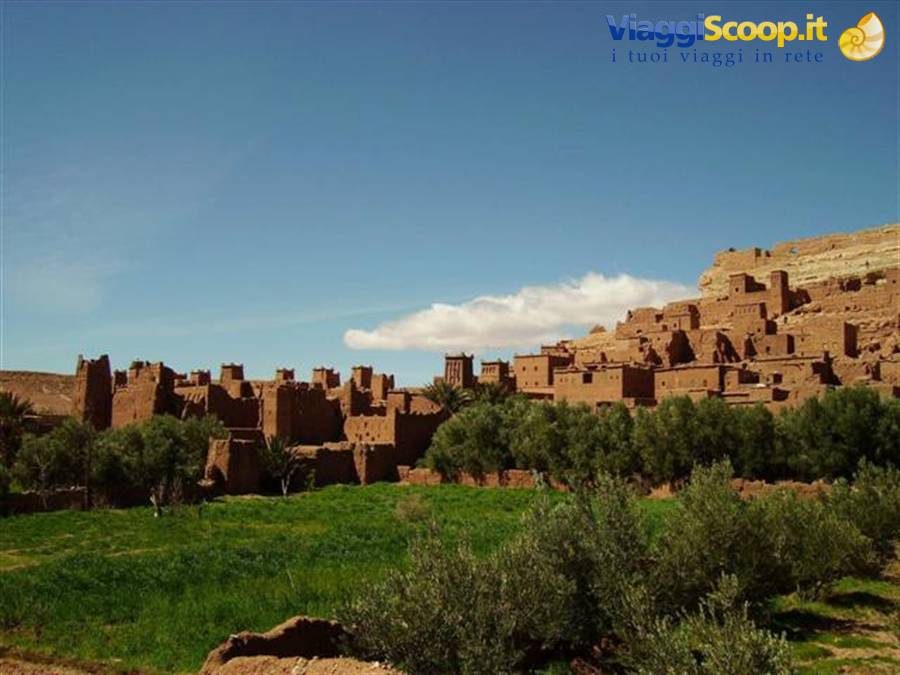
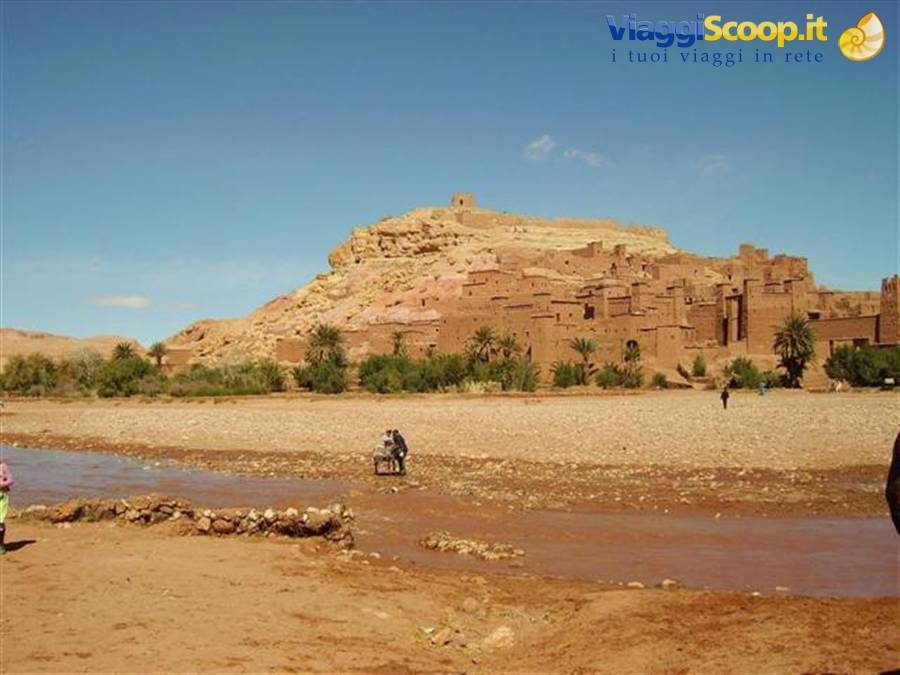
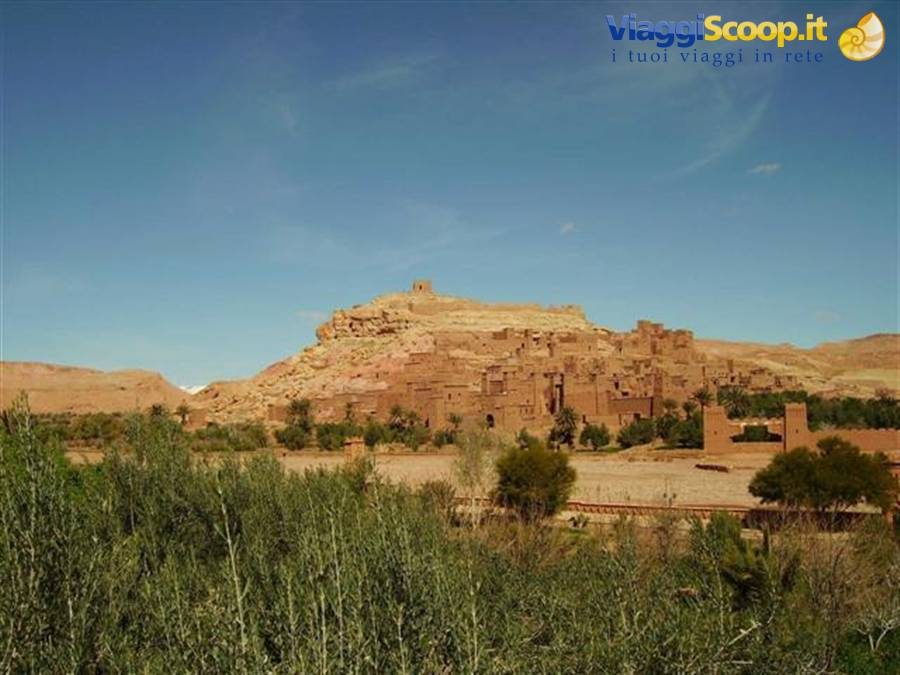
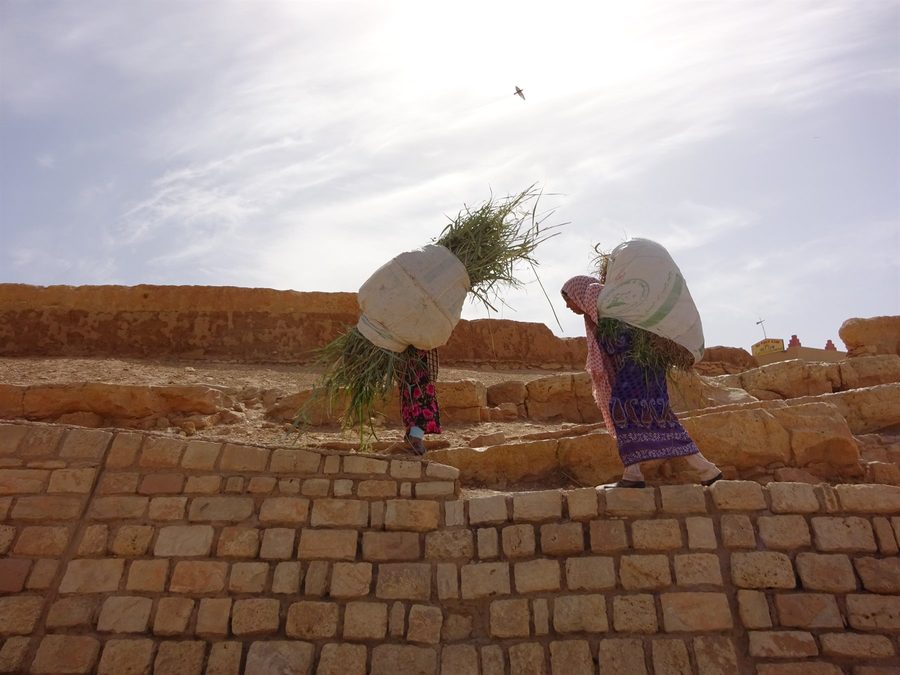
The entrance hasn't changed: you cross the ford, water low over the pebbles, and ahead the earthen village climbs against the hill. The ksar was born in the 11th century as an Almoravid caravanserai, and since then time seems to have stood still — with a few Hollywood touch-ups. Lawrence of Arabia and Gladiator shot scenes here; for Jesus of Nazareth a good part of the village was rebuilt. You climb the lanes between mud-brick walls, stepping aside for the women coming up with bundles of hay on their heads. At the top, the old granary opens the view over the entire village: rammed-earth terraces over the palm grove, ochre houses, the river at the bottom. A World Heritage Site, it remains one of the best-preserved examples of earthen architecture in the country. In the morning the light fires the ochre of the walls; by early afternoon you're already on the move toward Ouarzazate. Nearby, the kasbah of Tamdaght crumbles in silence with stork nests on its summit: the same earth, without touch-ups.
Don't miss: Climb to the granary at the top of the ksar: from up there you can read the whole village, with its rammed-earth terraces, the palm grove and the ford at the bottom.
In the travellers' 27 photos the subject recurs unfailingly: the full profile of the ksar, almost always framed from the other bank, against the sky. what travellers photograph
Ouarzazate
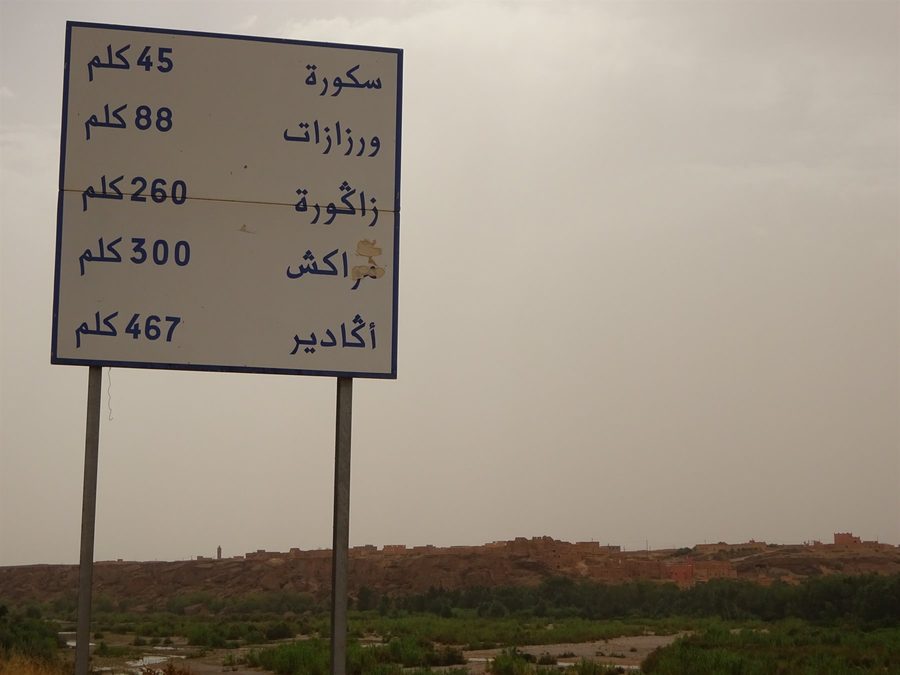
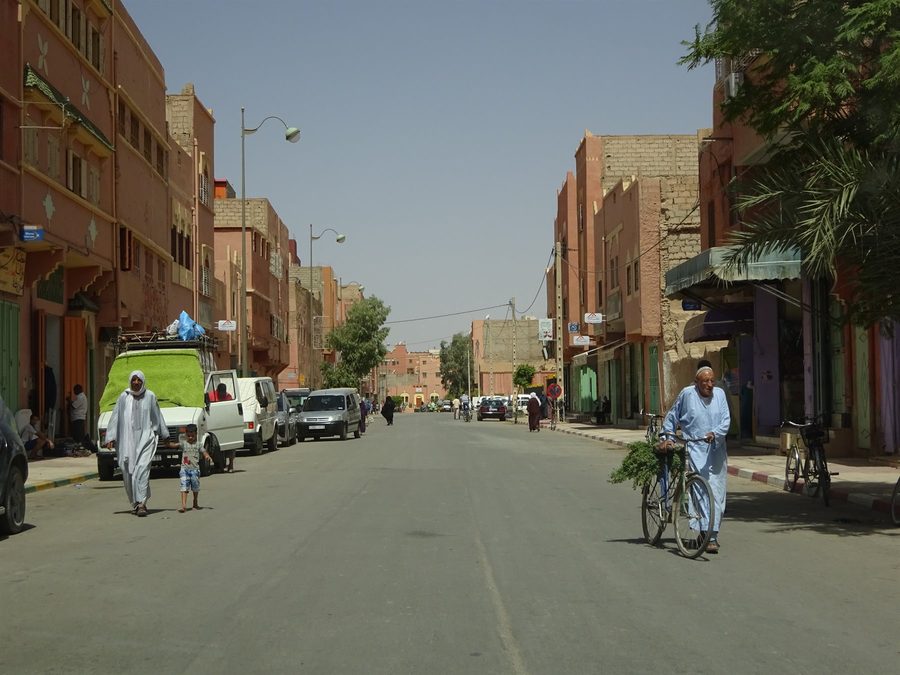
The first detail is the shade: a man in a blue djellaba pushes his bicycle along a street sheltered from the sun, and behind him the city of red-earth houses sits among the mountains. Ouarzazate is crossed more than visited: the road signs already count the kilometers to Tinghir and Errachidia, and at the town gates women on donkeys loaded with green reeds go on undisturbed. The afternoon splits between the old kasbah at the edge of town and the film studios, which for decades have drawn international productions. It isn't a city of monuments: you come through for the frontier feel, that of a place you set out from for the desert or the Atlas. There's the flying, too: the city's airport was an inspiration for Antoine de Saint-Exupéry, pilot and author of The Little Prince. In August comes the moussem of Sidi Daoud.
Don't miss: The old kasbah on the edge of town and the film studios: two stops for the city's two souls, one of earth and one of celluloid.
The travellers' 26 photos reveal an interest split down the middle: raw-earth kasbahs on one side, scenery and film sets on the other. what travellers photograph
Marrakech
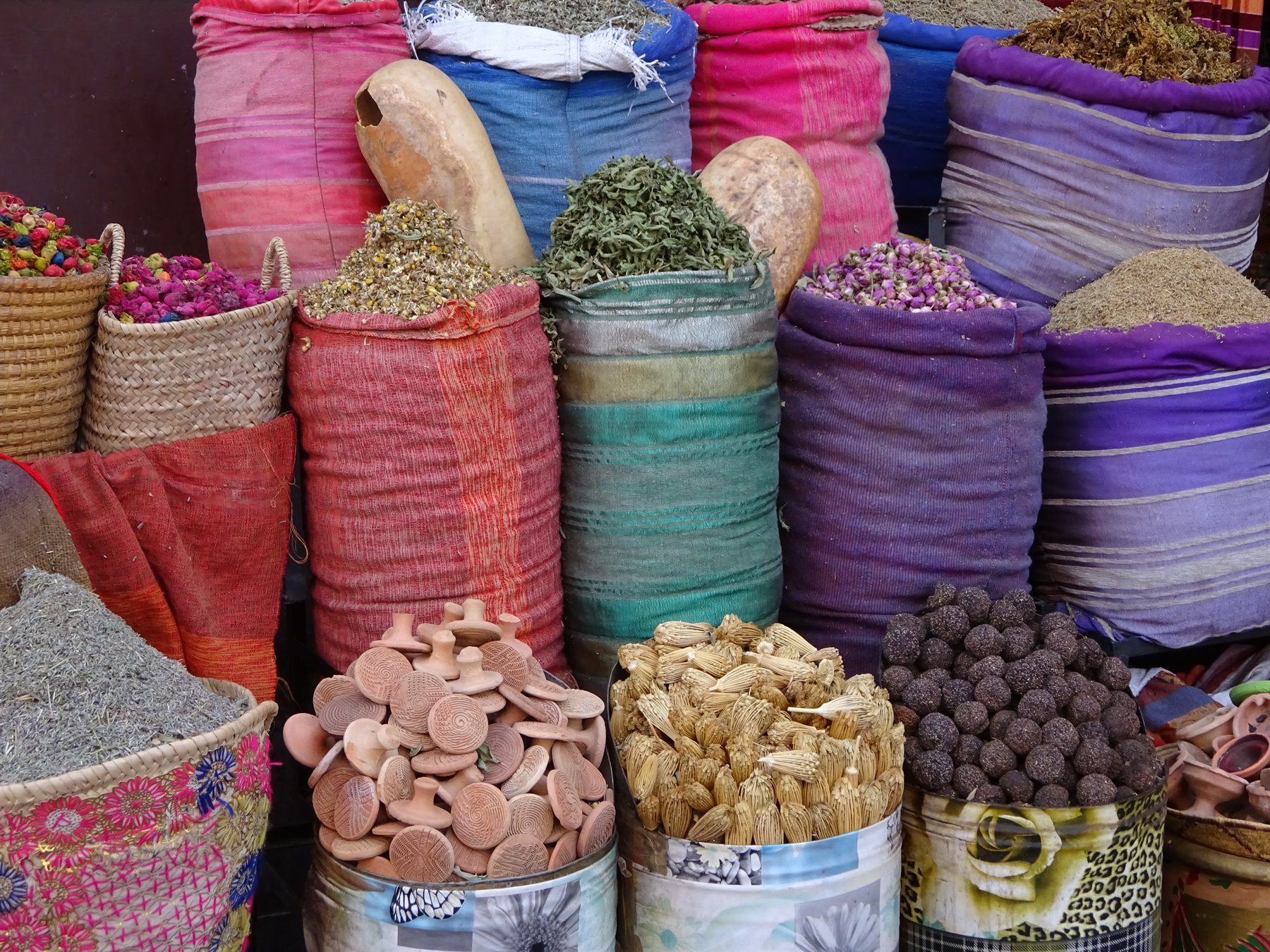
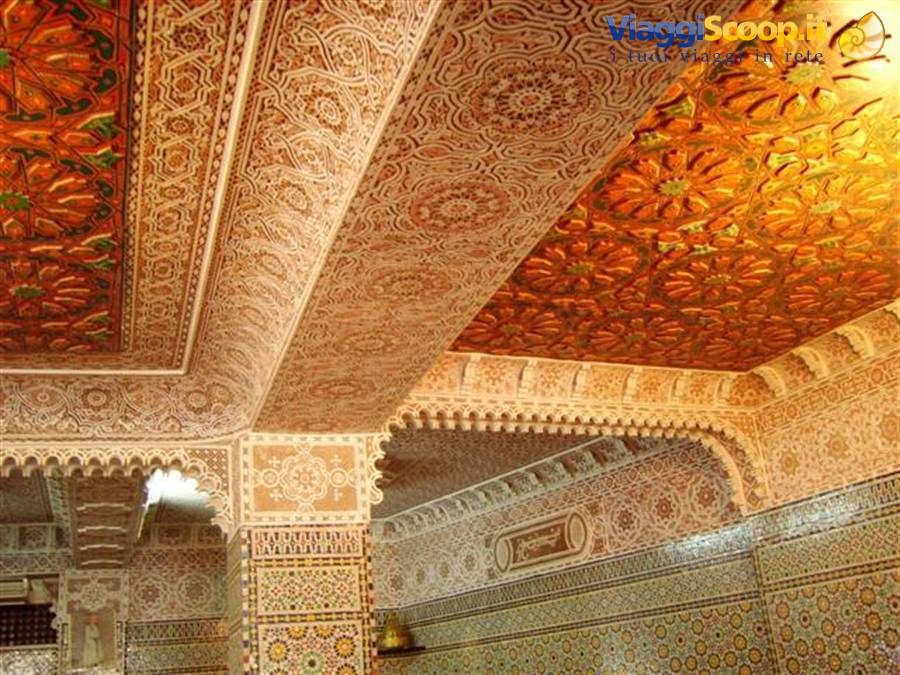
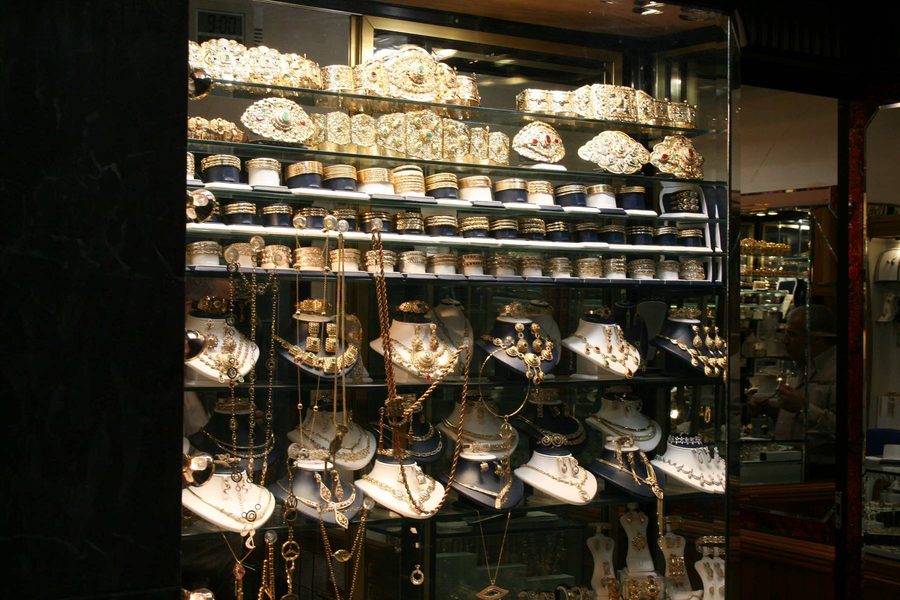
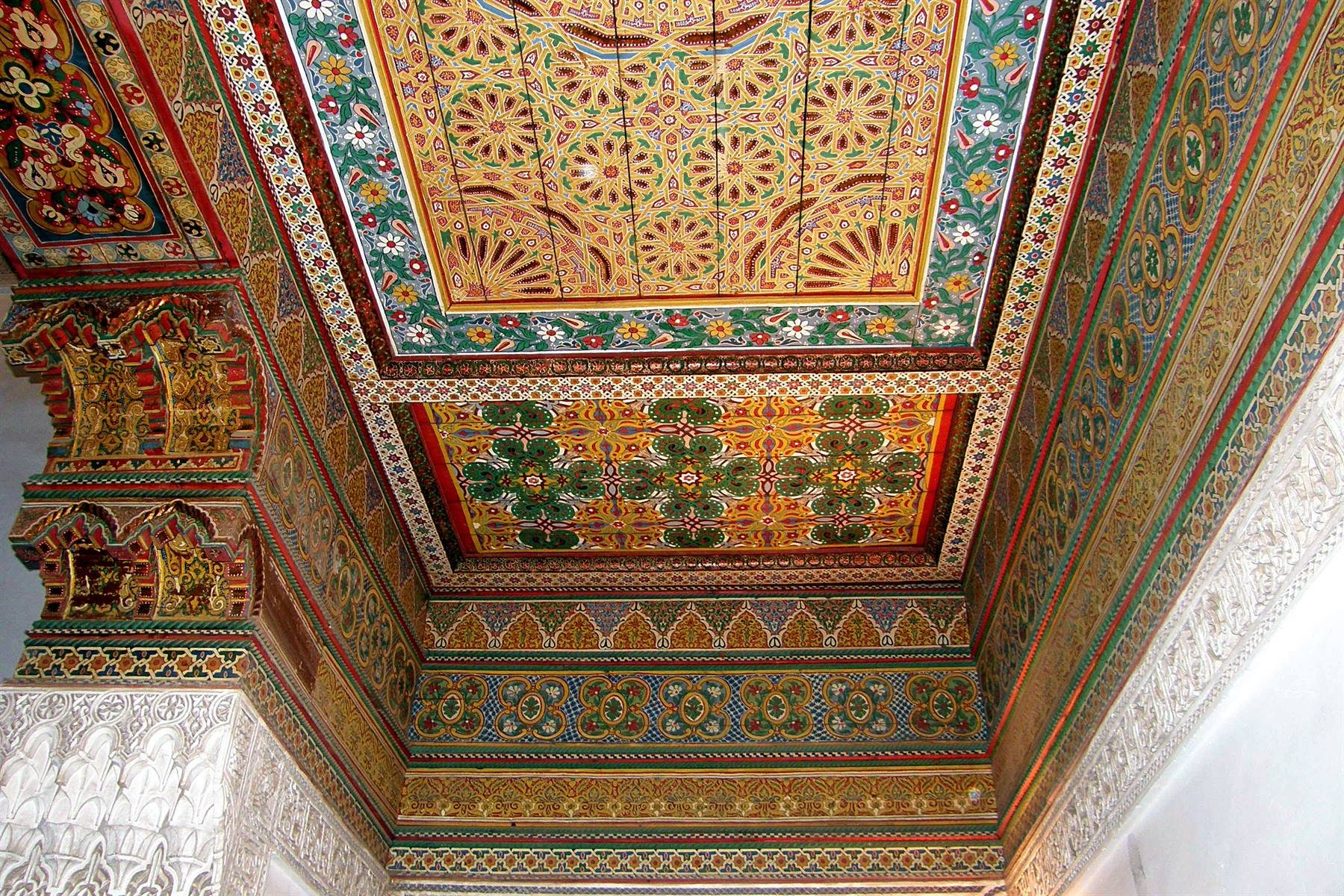
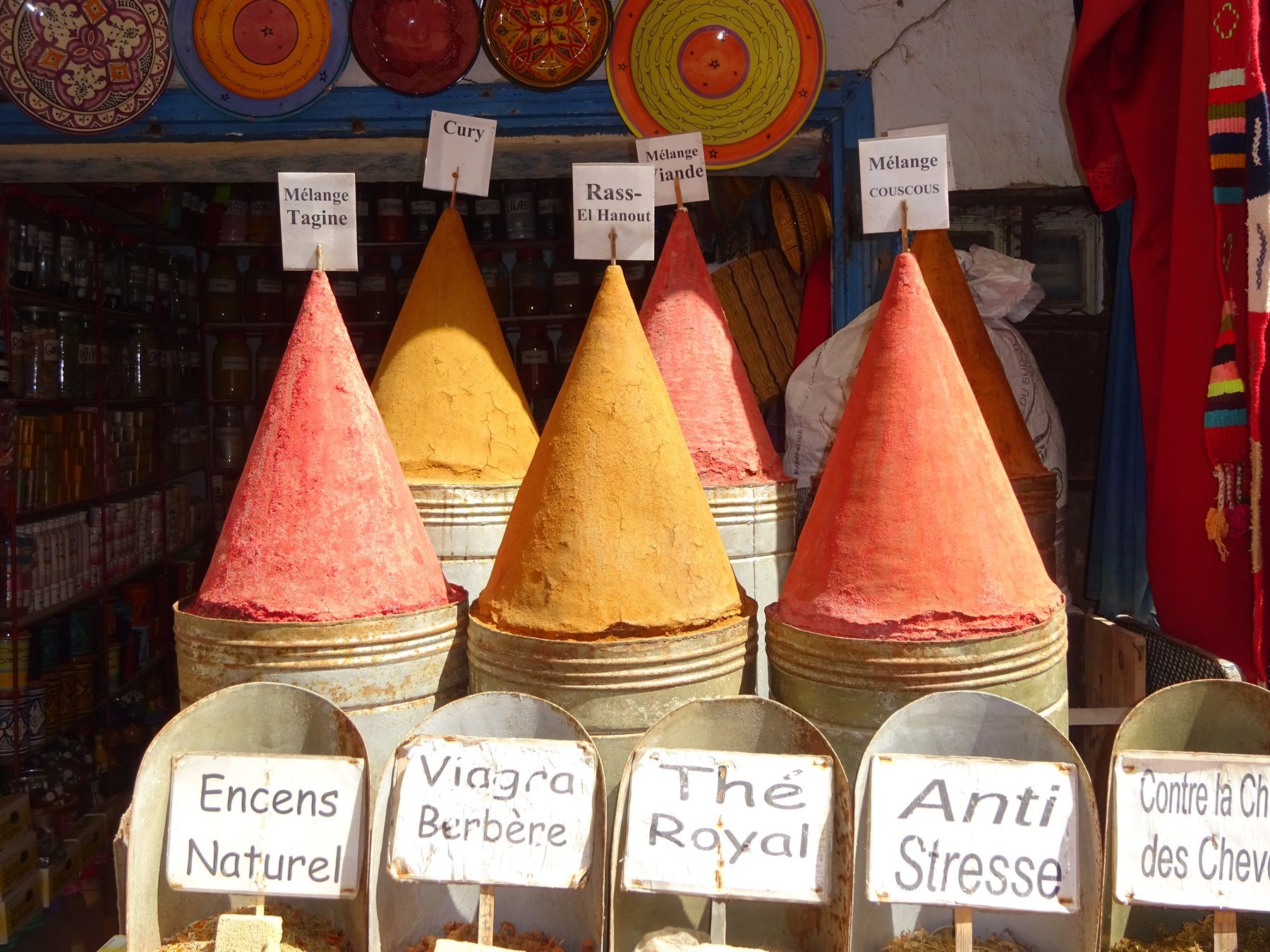
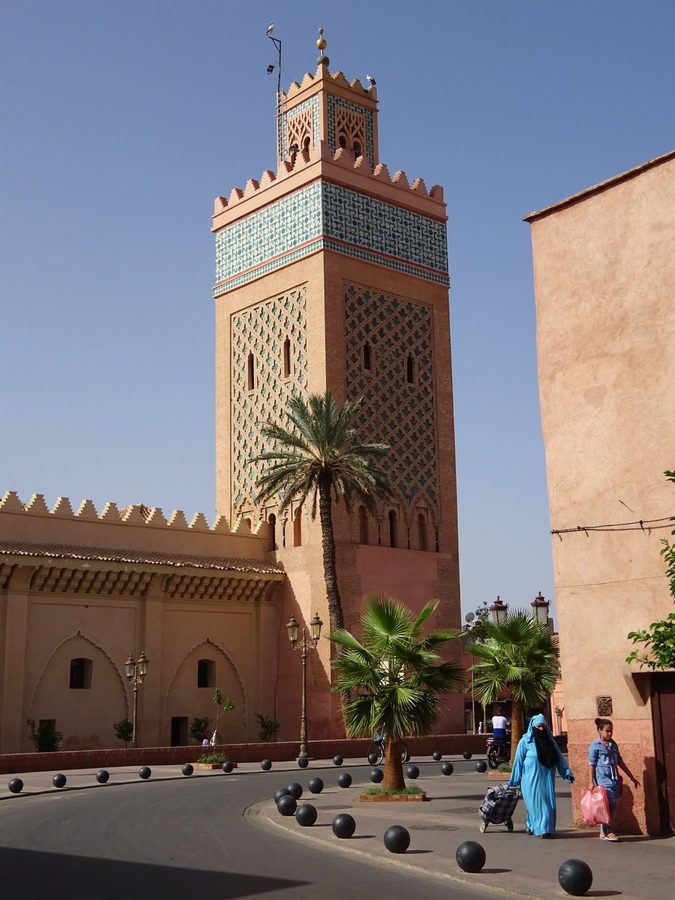
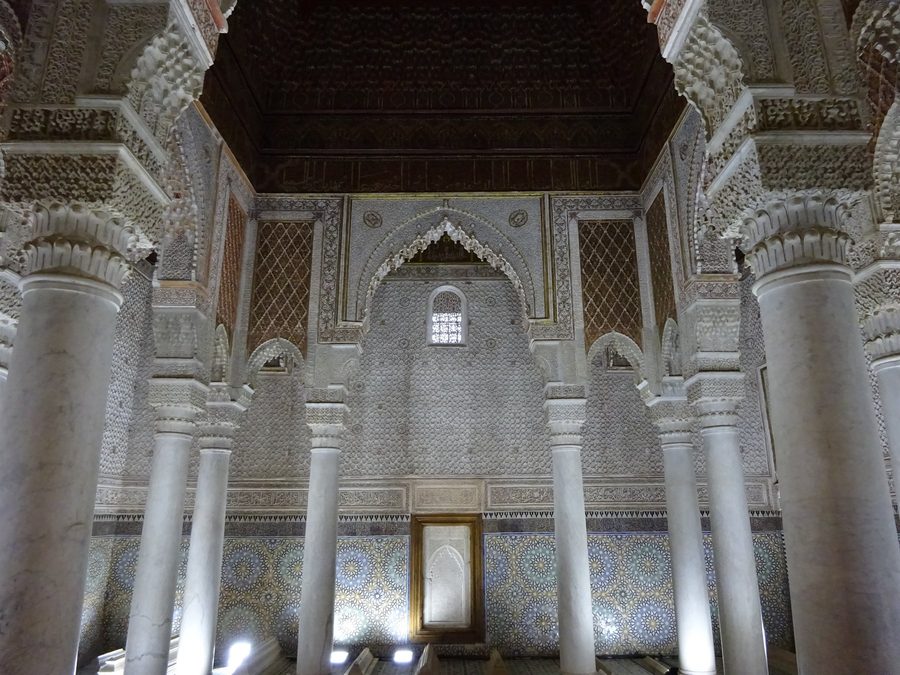
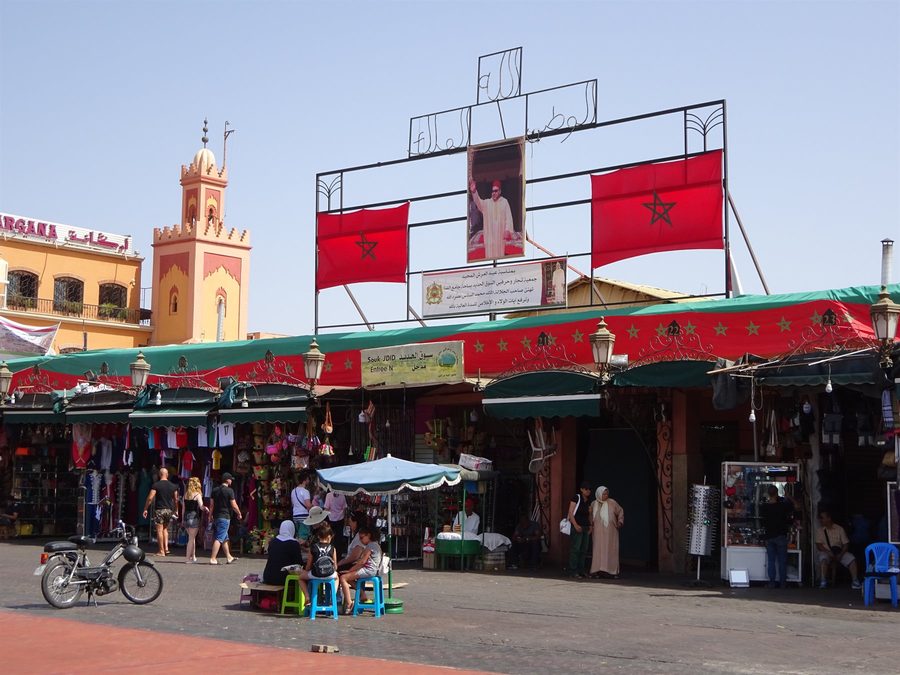
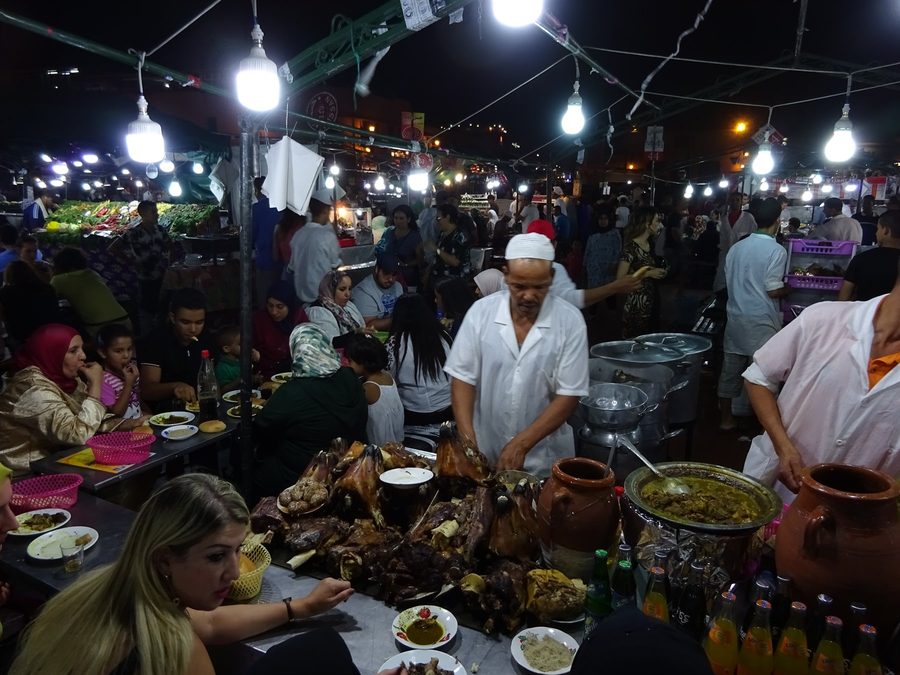
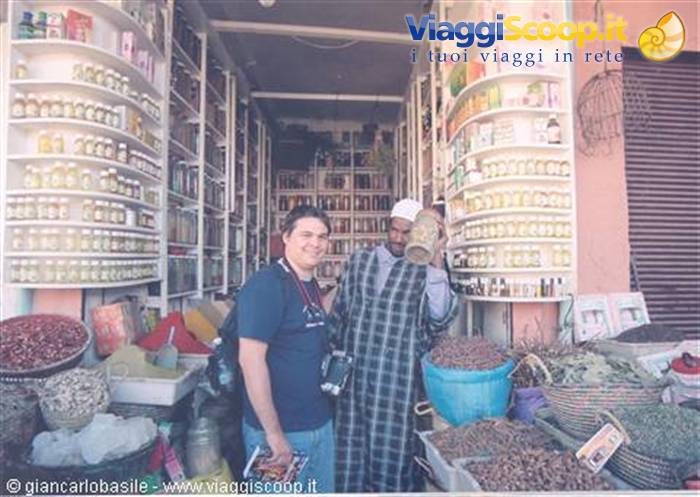
You come down off the Tizi n'Tichka and the pink city begins with the ochre walls, endlessly long, that lead you in without giving anything away. In the evening the great square lights up on its own: smoke from the grills, cooks in white caps serving the crowd, musicians, storytellers, fruit carts under the green tents. Above it all the minaret of the Koutoubia holds the reference point: Yacoub el-Mansour rebuilt it, the Almohad sultan who redrew Marrakech with the fortified kasbah, the gardens, the covered markets and the triumphal gate of Bab Agnaou. In the souks your sense of direction is the first thing to go: you haggle over carpets and babouche, the leather slippers, in the same streets where Amazigh tribes once traded gold, ivory and hides. In the pauses, palaces and gardens inside the walls offer shade and silence, from the Hall of the Twelve Columns of the Saadian Tombs — marble and carved stucco from the era when the Saadians made the city the crossroads of the sugar routes. It was that power, in 1558, that established the mellah, the protected Jewish quarter. The Badi Palace tells the other side of the story: Moulay Ismail preferred Meknes, and before moving the court there he stripped the palace of all that was finest in it. After independence, left without a precise role, Marrakech went back to its oldest trade, playing caravanserai — and it has never done it better. The last morning, before the road to the coast, the gardens or simply yesterday's passages, retraced with more calm.
Don't miss: Stay on Djemaa el-Fna as the light fades: the grills fire up, the storytellers open their circles, and the square changes trade.
With 202 photos it is the most photographed stage of the entire trip, and the shots confirm the priorities: colours of the souks, the square at night shot from the terraces, details of the ochre walls. what travellers photograph
Essaouira
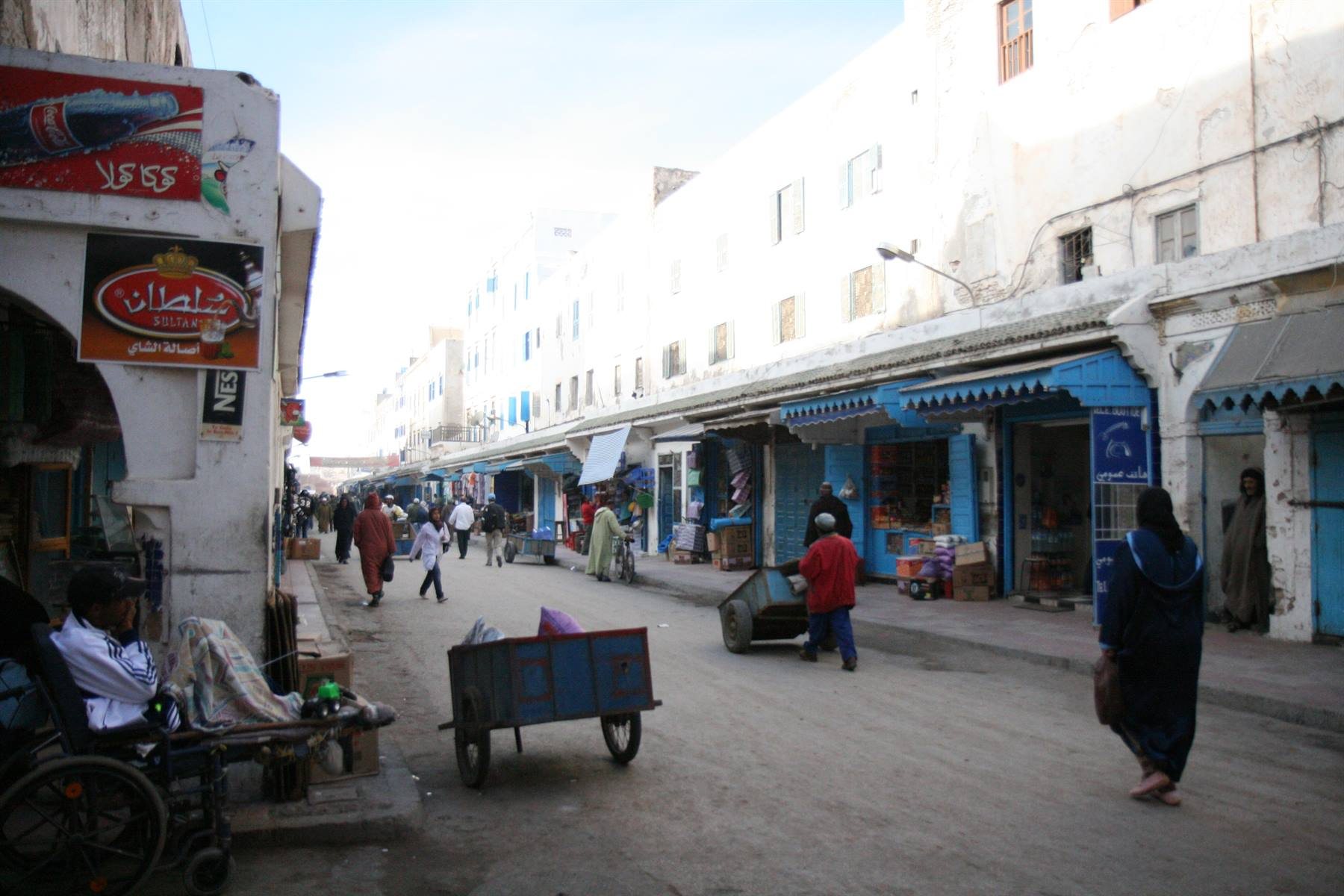
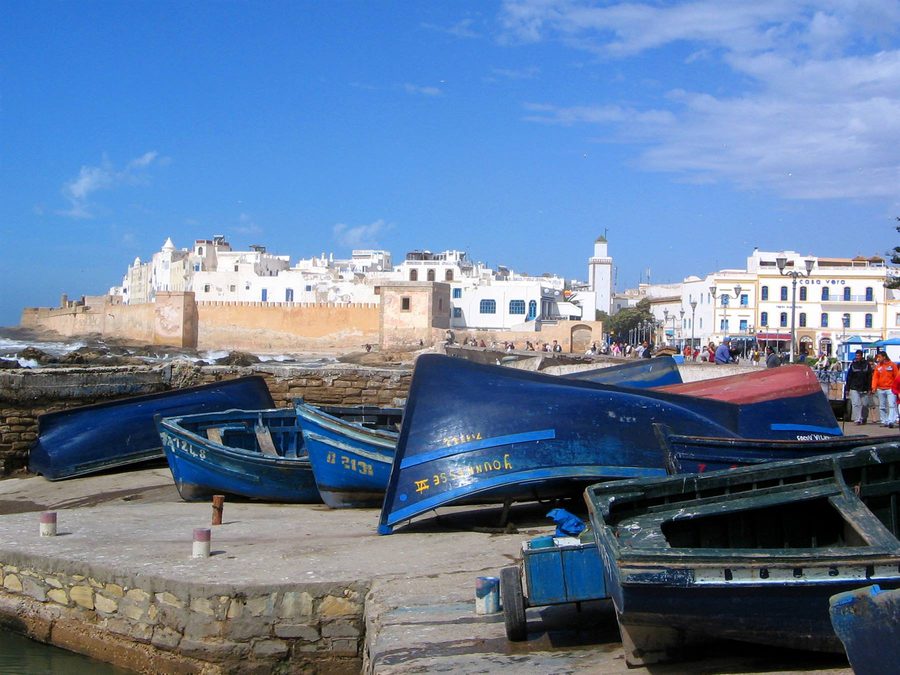
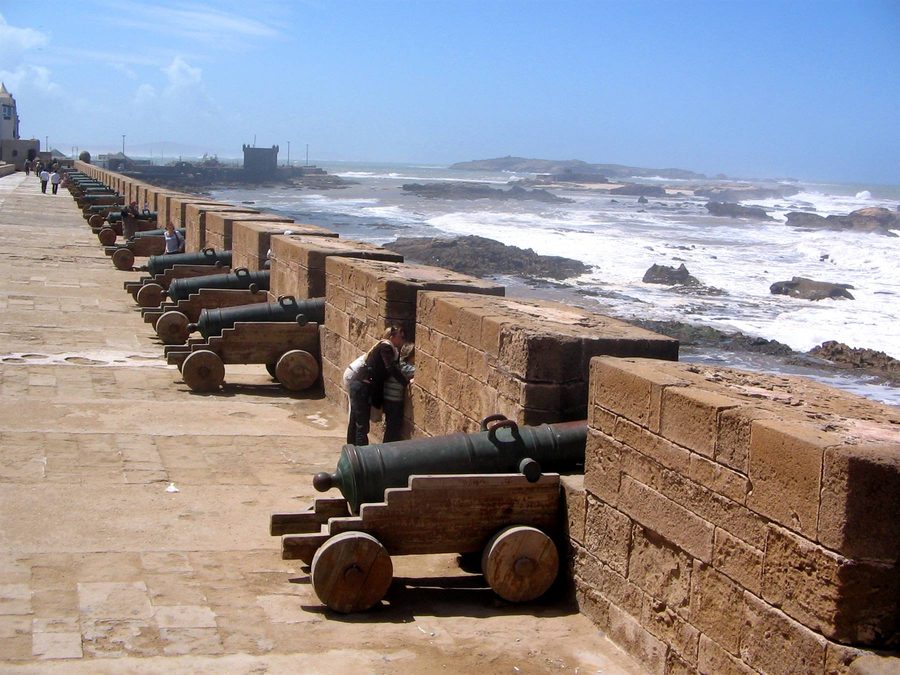
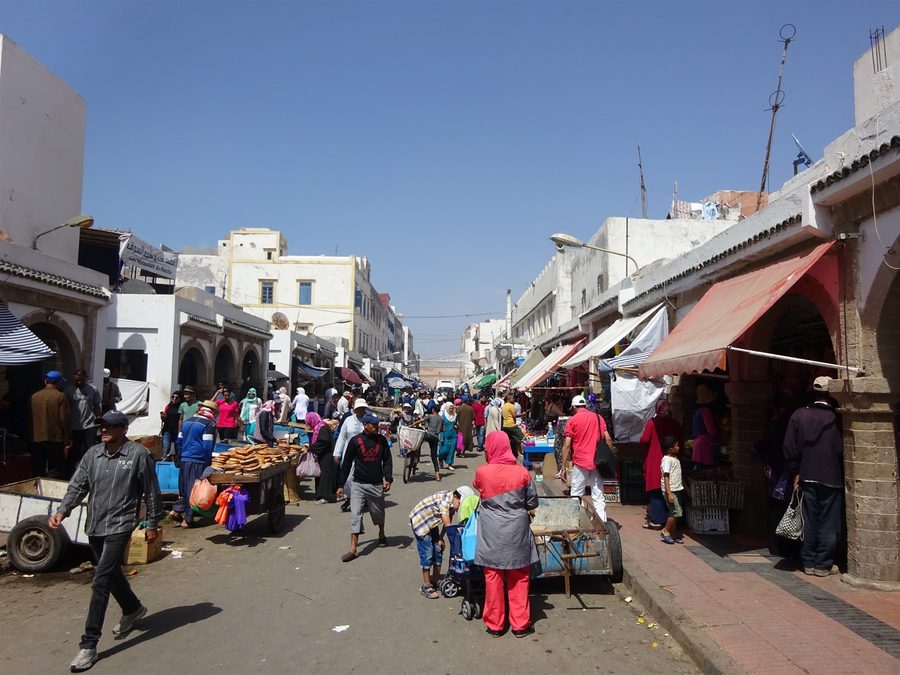
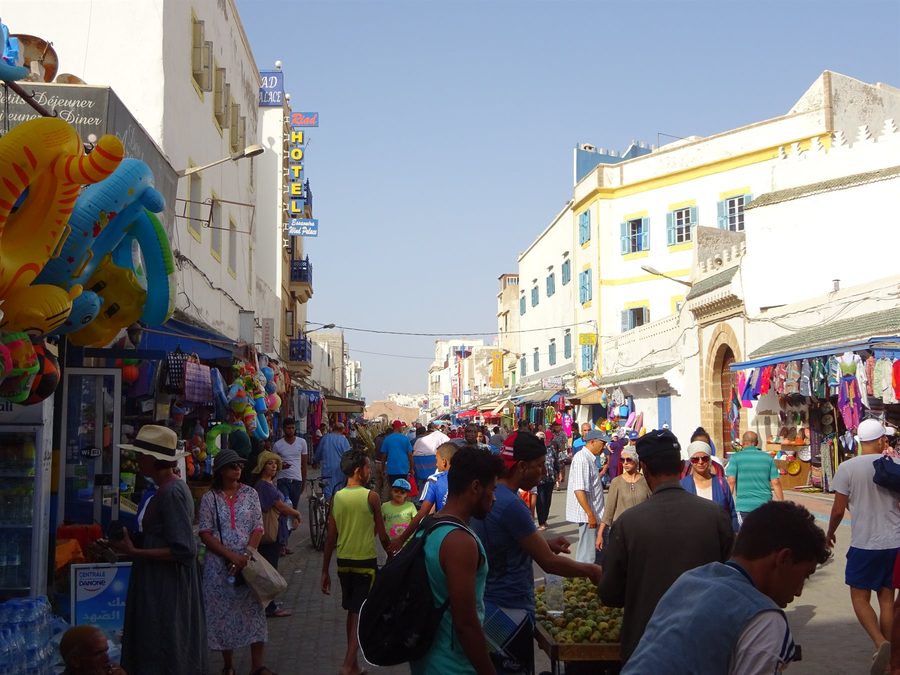
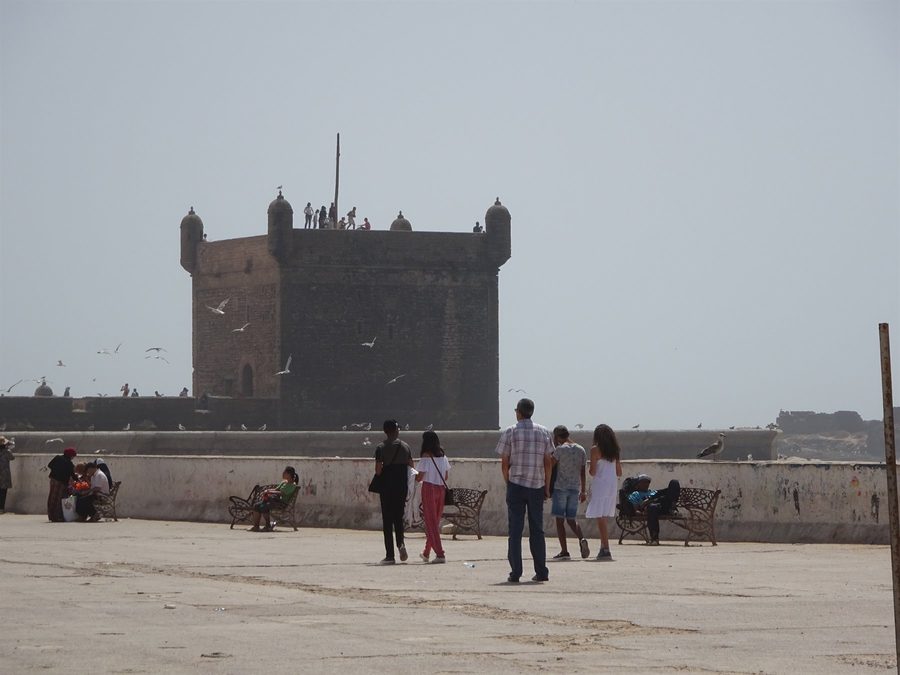
The wind arrives before the city and never leaves: here they call it the alizée, taros in Amazigh, and it sets the rhythm of everything. White houses with blue shutters look like Brittany, and it's no coincidence: the walls and the old town carry the signature of the architect who had drawn Saint-Malo, Brittany's most famous port. In 1764 the sultan Sidi Mohammed ben Abdallah made it his base, and from here the corsairs set out against the rebels of Agadir; but the place's history is older, it begins with the Phoenicians. The medina is quieter than Marrakech's: souvenir stalls, a blue cart crossing the market, passers-by between white walls. The afternoon spreads between the port and its blue boats, the walls dropping sheer to the sea and the Sqala du Port, with gulls as the background noise. The light here has always drawn artists, and the city keeps a lively art scene. On the beach you spend more time watching the sails than sunbathing: between surf and kite, the nickname 'Wind City of Africa' is earned. It's the natural close of the trip: the Morocco crossed in the previous days settles here, among gulls and salt air — a city born at the crossroads of the Chiadma Arabs to the north and the Haha Amazigh to the south.
Don't miss: Walk the ramparts as far as the Sqala du Port, among gulls and wind, with the harbour of blue boats just below.
The travellers' 60 photos change subject compared with the rest of the trip: gulls, blue boats and sails on the water take the place of monuments. what travellers photograph
Getting around
On a 1651-kilometre route in ten days, the rental car is the working tool: the south of the country has no rails, and many stages — valleys, mountains, coast — are reached only on wheels. Cars can be rented in every city, and they weigh on the budget: from around 350 dirham a day, and with a driver you climb towards 900. Driving is on the right, with care: local drivers are unpredictable, and inside the medinas the car doesn't enter. From Casablanca's Mohammed V airport the train gets you to Casa Voyageurs in 35 minutes (40 dirham), with departures every hour.
The train is cheap and frequent between the big cities: from Casablanca you get far, fast, but where the rails end you need wheels. Scheduled buses (CTM is the main company) cover the routes with no railway: they cost less than the train, take longer, and range from modern coaches to battered local buses. The big Mercedes grands taxis run fixed routes between nearby towns: cheap, but crammed.
Mountain roads change the timings: on the Atlas passes the kilometres stretch out, and in winter snow can close the High Atlas passes. On difficult stretches and in the desert you need someone who knows the ground: in M'Hamid you hire a local guide for the dunes, and for Atlas treks you go through the guides' gîtes. It should be said without beating around the bush: without your own vehicle, this trip doesn't happen.
What it costs
The currency is the dirham. It cannot be imported or exported: you arrive with euros, change them there and convert what's left before departure; customs checks are rare, the rule stands. ATMs are widespread everywhere and cards are accepted in the main tourist centres, but in the souks and small shops you need cash. One euro is worth roughly 11 dirham.
A mid-range day moves between 550 and 1000 dirham: a hotel room between 400 and 800, a dinner course between 70 and 150, monument tickets between 10 and 50. A city riad starts at 1000 dirham a night, and many riads post online prices in euros at an exchange rate favourable to the house: check in dirham before booking. At hotel check-in they ask for your passport number and the number on your entry stamp.
In the souks you bargain: you ask, you counter lower, you stay polite and, if need be, walk away; in low season prices drop at the markets too. Simple meals cost little: soup or a sandwich between 4 and 30 dirham. On Friday, the day of prayer, banks and shops may close early or altogether: withdraw cash on Thursday. The prices and figures on this page are indicative: check them before setting off.
What you eat
The tajine is the everyday meal: meat, fish or vegetables cooked long in the terracotta dish with the cone-shaped lid, which arrives at the table still steaming and is eaten with bread, straight off the dish. Along the route you move from road-stall tajines to mountain ones, to the Taliouine saffron version and, for those who try it, camel. On Friday, the day of prayer, couscous replaces everything: in homes it cooks for hours, and in restaurants you find it that day.
Mint tea is poured from on high, in a column, to raise the foam: it's the gesture that welcomes the guest, and the glass is accepted. In the medinas the bread goes to bake every morning at the neighbourhood oven. In the souks you buy spices measured out to order, olive oil and mountain honey; in Essaouira, the final stop, the fish souk and the open-air grills serve the Atlantic catch of the day.
Feast dinners stretch into diffas of seven courses, and breakfast is a stodgy mass of bread, honey and olives. Water is a scarce resource in the country: at the table you drink bottled, and on the road you don't waste it.
Understanding it
Berber and Arab dynasties have alternated here for a thousand years: the Almoravids took Aghmat in 1058, founded Marrakech and carried the empire to the gates of Barcelona; after came the French period and independence. Hassan II governed through the years of lead; Mohammed VI scaled back its harshest measures, and in 2011 a new constitution made Berber an official language. The Arab Spring spared Morocco, but youth unemployment remains close to 45%.
Moroccans number 32.6 million, a blend of Amazigh — the Berbers, the indigenous people of North Africa — and Arabs: the Amazigh presence is strong in the mountains and the south. Darija, Berber and French are spoken. Islam marks the rhythm of the days: the calls to prayer, Friday as prayer day, Ramadan that changes the pace.
The code of conduct: shoulders and knees covered, men and women alike; greet before you ask; never money, sweets or pens to children; ask before photographing people. You eat and you give with the right hand. During Ramadan you don't eat in public, and alcohol stays well away from mosques. The Hassan II in Casablanca can be visited; the other mosques remain for the faithful. In the neighbourhood hammam, split between men and women, discretion is the rule.
When to go
The best windows for this route are April-May and September-October. In spring the country is green, the orchards are in blossom and the temperatures turn reliably warm; around Easter accommodation prices shoot up. In May hotel rates come down and in Marrakech you travel at around 28°C. Autumn brings travellers back: the beaches empty out, prices rise a little and the desert becomes manageable again; in October the rain starts north of the Middle Atlas.
Summer has to be calculated: August averages 40°C in Marrakech and exceeds it inland, with the Atlantic coast cooler but taken by domestic tourism. June brings the Gnaoua festival to Essaouira on the third weekend, with the town packed; July touches 30°C. Winter is another story: January brings rain to the north and snow that blocks Atlas passes and trails, in December the High Atlas passes close, while Marrakech and the south fill up at Christmas and New Year with prices at the top.
Ramadan shifts by about eleven days each year: look it up in the calendar of the year you travel. Eid al-Adha, at the end of October or the start of November, stops transport for a few days: factor it in.
Health & safety
The numbers to save: 15 for ambulance and fire brigade, 19 for the police in cities, 177 for the police outside urban centres. Calls are dialled with the four-digit area code, even within the same town. Before leaving, travel insurance: on these roads you need it.
Water is the recurring theme: it is scarce and precious in the country, you drink it bottled and you don't waste it. The Atlas and desert sun charges quickly: hat, sunscreen and water within reach in the car. After heavy rain the river beds swell fast — the Ourika valley had severe floods in 1995 — and fords are judged before you cross them.
For High Atlas treks you lean on the gîtes and refuges (the Club Alpin Français runs a few, based in Casablanca); in village houses hospitality often includes the meal. In the desert you don't set off alone: in M'Hamid you hire local guides and work out the distances beforehand. Urban pharmacies handle common ailments; for serious cases the facilities are in the big cities.
In the cities the usual precautions apply: bags closed in crowded markets, care at night in the tourist squares, and alcohol kept away from mosques.
Frequently asked
How many days do you need for Morocco?
This guide plans 10 days and covers 1651 km in total. Across our 117 diaries the average length is 9.7 days: ten is the most common.
Which is the longest drive?
Fes to Merzouga: 413 km and about 7.5 hours. Start early and break the day at Midelt.
Where do the photographs come from?
From the travel diaries published on this site. Every photograph is credited to the traveller who took it, with a link to their diary.
When is the best time to go?
Looking at our diaries, January is by far the most popular month, followed by March and August.